Last Updated: October 21, 2026
- Top Pick: Fifty Places to Fly Fish Before You Die
- Best Value: Sweet Dreams, Pout-Pout Fish (A Pout-Pout Fish Mini Adventure)
- Premium Choice: The Strangest Fish
How long to wait before adding fish is answered by test readings, not by a number of days on the calendar. Most tanks take three to eight weeks, but the only reliable signal is a specific 24 hour test result rather than elapsed time. Start by measuring the water, then work through the steps below in order.
As an Amazon Associate we earn from qualifying purchases.
As an Amazon Associate we earn from qualifying purchases at no extra cost to you.


By David Nguyen
Measure First: How Long to Wait Before Adding Fish
Before changing anything, get numbers. How long to wait before adding fish depends entirely on where the tank sits in the nitrogen cycle, and that position is invisible without a test kit. Guessing from water clarity is the most common error here.
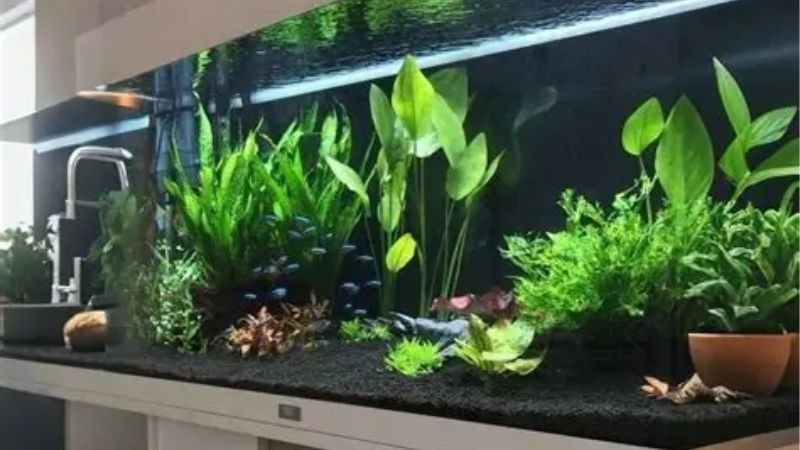
The four numbers to measure first
Test ammonia, nitrite, nitrate and temperature with a liquid kit before anything else. Ammonia and nitrite should both read 0 ppm in a finished tank, nitrate should be measurable and under 40 ppm, and temperature should sit at 76 to 80 °F (24 to 27 °C) throughout.
The readiness test is specific: dose ammonia to 2 to 4 ppm, wait 24 hours, then retest. A cycled tank returns 0 ppm ammonia and 0 ppm nitrite in that window while showing nitrate. Anything short of that means the colony cannot handle a fish load yet, whatever the calendar says.
Reading the numbers as a decision tree
Ammonia present with no nitrite means the cycle has barely started, so expect several more weeks. Ammonia falling with nitrite climbing means the first bacterial group is established and the second is still building, which is usually the longest phase of the wait.
Nitrite falling with nitrate appearing means the cycle is close, and this is when daily testing matters most. Zero readings across the board with no nitrate at all usually means nothing has started, often because no ammonia source was ever added to feed the bacteria.
| What you see | Test readings | Most likely cause | First action |
|---|---|---|---|
| Nothing changing for weeks | 0 ammonia, 0 nitrite, 0 nitrate | No ammonia source added | Dose ammonia to 2-4 ppm |
| Ammonia stuck high | 4+ ppm ammonia, 0 nitrite | Dose too high, stalling bacteria | Water change to bring under 4 ppm |
| Nitrite stuck high | 0 ammonia, high nitrite | Second stage still building | Wait and keep testing daily |
| Cloudy water, week one | Readings still moving | Bacterial bloom, normal | Do nothing, keep testing |
| Progress reversed | Ammonia returned after zero | Media rinsed in tap water | Stop, resume dosing, wait |
| Fish already added | Ammonia above 0.25 ppm | Cycling with fish present | Change 25-50%, stop feeding one day |
When waiting is not the problem
If readings never move over three weeks with a dosed ammonia source, check the basics rather than waiting longer. Chlorine or chloramine from an untreated refill kills the bacteria you are trying to grow, and cold water below 70 °F (21 °C) slows the process considerably.
A filter that is off, unplugged at night, or running without media also stalls everything, since the colony lives in the media rather than in the water. Confirm flow, temperature and dechlorination before assuming the tank simply needs more time.
The Steps in Order
Each step below has a number attached to it. Work through them in sequence and the question of how long to wait before adding fish answers itself from your own test readings rather than from somebody else’s general estimate of the timeline.
Step one: give the bacteria an ammonia source
Dose pure ammonia to 2 to 4 ppm, or use a small pinch of fish food left to decay in the tank. Higher doses stall the process rather than speeding it up, so retest and dilute with a partial water change if the reading climbs past 4 ppm at any stage.
Keep the heater at 78 to 80 °F (26 to 27 °C) and the filter running continuously. Warmth and oxygen both accelerate colony growth, which is why a tank cycling in a cold room in winter routinely takes the full eight weeks rather than the three often quoted.
Step two: test daily and record
Testing without recording wastes most of the information. A cycle is a curve, and a single reading cannot tell you whether nitrite is climbing, peaking or falling, which is precisely the distinction that determines how much longer the wait will be.
Test ammonia and nitrite daily once nitrite appears, and test nitrate every few days. Writing the numbers down matters, because the shape of the curve tells you far more than any single reading does, and it shows clearly at what point a stall has actually begun.
Do not change water unless ammonia passes 4 ppm or nitrite goes off the chart, since removing the ammonia removes the food source. Seeded media from an established tank shortens the wait considerably, provided it stays wet and is moved within an hour or so.
Step three: confirm, then stock slowly
Once a 2 to 4 ppm dose clears to zero ammonia and zero nitrite in 24 hours with nitrate present, the tank is ready. Do a water change to bring nitrate under 20 ppm, then add fish within a day or two so the colony keeps receiving a steady load to work on.
Add a small group first rather than the full stocking plan, and confirm the heater position and filter clearance before livestock arrives. Measure the gap behind the tank and the water line against the heater before ordering, since neither adjusts once fish are in.
What Not to Do While Waiting
Three actions undo weeks of progress, and all three still circulate as common advice on how long to wait before adding fish. Each one has a concrete and predictable consequence attached, rather than a vague warning about being careful with a new tank.
Do not add fish because a bottle says you can
Bottled bacteria can shorten the wait, and no product removes the need to confirm with a test. Adding fish on day one because of a label claim exposes them to ammonia and nitrite, both of which damage gill and skin tissue at levels well below what looks dramatic.
Do not change all the water to reset
A full change strips buffering capacity, swings temperature and pH, and removes the ammonia the bacteria need. Cloudy water in the first weeks is usually a bacterial bloom that clears on its own, so keep changes to 20 to 30 percent and let the readings guide you.
Do not rinse filter media under the tap
Chlorine and chloramine kill the colony directly, which is the single fastest way to restart a cycle that was nearly complete. Rinse sponges and bio media in a bucket of removed tank water instead, and replace only mechanical floss rather than the biological media.
Preventing the Same Wait Next Time
Once the tank is stocked, the aim is to keep the colony intact so the question never returns. That depends on a short weekly routine, on a few specific pieces of equipment, and on catching the early signs before the readings start climbing again.
The maintenance routine that protects the colony
Change 20 to 30 percent weekly with dechlorinated water matched to within 1 to 2 °F (about 1 °C), and vacuum part of the substrate each time. Test ammonia, nitrite and nitrate weekly, and never clean the filter and the substrate deeply in the same week.
Feed only what is eaten in one to two minutes. Overfeeding is the most common way an established tank produces ammonia again, and it usually shows up a week or two after a new fish arrives and the daily feeding quietly increases to match it.
Equipment that removes the risk at the root
A liquid test kit, an independent thermometer and a dechlorinator that states chloramine handling on its label cover most of the failure modes here. A battery air pump matters too, since a power cut stops flow and the colony begins dying within hours of losing oxygen.
Storm season makes that last point concrete. Atlantic hurricane season runs June through November and winter storms cause the same outages, so a tank stocked in autumn faces a realistic chance of losing filtration for a day before its first year is out.
Early signs worth watching
The useful signals arrive as numbers well before they arrive as visible problems, which is the entire argument for weekly testing in an established tank. By the time water looks wrong, the readings have usually been moving for several days already.
Ammonia above 0.25 ppm, any nitrite reading, or nitrate climbing week on week all indicate the colony is behind the load. Respond with a water change and reduced feeding rather than with additives, then look for the underlying cause in stocking, feeding or recent filter maintenance.
Fish behaviour follows the readings rather than replacing them. Gasping at the surface, clamped fins or sudden hiding are reasons to test the four numbers immediately, and to consult an aquatic vet if the water tests clean and the behaviour continues.
Frequently Asked Questions
These come up most often during the second and third week, when the readings have started moving but the tank is clearly not finished yet, and the temptation to stock it early is at its strongest. Deciding how long to wait before adding fish is hardest at exactly this point.
How long to wait before adding fish with bottled bacteria?
Still test before stocking anything. Some products shorten the wait to one or two weeks, and the confirmation test is unchanged: a 2 to 4 ppm ammonia dose must clear to zero ammonia and zero nitrite within 24 hours, with nitrate present in the tank.
Can I speed up the cycle safely?
Yes, within limits. Seeded media from a healthy established tank, water at 78 to 80 °F (26 to 27 °C), strong aeration and a steady ammonia source all help. Nothing removes the biological requirement, and heat above 84 °F (29 °C) offers no further benefit.
What if fish are already in the tank?
Test daily and change 25 to 50 percent whenever ammonia passes 0.25 ppm or nitrite appears. Feed lightly, avoid adding any more fish, and expect the process to take longer overall. The nitrogen cycle explainer covers why that exposure matters.
Does a water change restart the wait?
No. The bacteria live in the filter media and substrate, not in the water, so changing water does not remove them. Only chlorinated water passing through the media, or the filter stopping for an extended period, sets the process back meaningfully.
See More:
Stocking With Confidence
How long to wait before adding fish comes down to one measurement rather than a date: a 2 to 4 ppm ammonia dose clearing to zero ammonia and zero nitrite in 24 hours with nitrate present. Expect three to eight weeks, and let the readings decide. A maintenance schedule holds it there.
New Fish Acclimation Guide: How to Safely Introduce Fish to Your Aquarium
How Much Water to Change in Aquarium: Percentages That Work