Last Updated: September 25, 2026
Why are my aquarium plants dying is a question with a measurable answer, and the fastest route to it is a test kit rather than a new bottle of fertiliser. Six numbers narrow almost every case down to one of four causes, and the order you check them in decides how quickly the tank recovers rather than declines further.
As an Amazon Associate we earn from qualifying purchases.
As an Amazon Associate we earn from qualifying purchases at no extra cost to you. Prices and availability are accurate as of the date shown and are subject to change.

60+ Leaves Water Spangles (Salvinia Minima) – Live Floating Aquarium Plants for Freshwater/Aquariums/Aquatic/Pond Plant/Planted Tank/Aquascaping/Paludarium by Aquarium Plant Center (12 Plants)
Selected for "Why Are My Aquarium Plants Dying? Causes and How to Fix It": this listing is tanks (60+ Leaves Water Spangles (Salvinia Minima) – Live Floating Aquarium P), matching the equipment this article covers.
View on Amazon
Ultum Nature Systems Hedyotis Salzmannii Tissue Culture Live Plant for Aquarium, Freshwater Fish Tank, Aquascaping - 100% Snail Free in Vitro
Selected for "Why Are My Aquarium Plants Dying? Causes and How to Fix It": this listing is tanks (Ultum Nature Systems Hedyotis Salzmannii Tissue Culture Live Plant for), matching the equipment this article covers.
View on AmazonBy David Nguyen
Quick answer: Our top pick in 2026 is the Old leaves yellow, plant still growing — our #1 rated choice. See the full ranked comparison, alternatives and buying advice below.
Measure First: Six Readings That Narrow It Down
Before changing anything, get readings. Working out why are my aquarium plants dying without numbers usually leads to dosing a tank that is actually light-limited, or adding light to a tank that is short of nutrients, and both mistakes cost weeks of further decline. Readings take fifteen minutes.
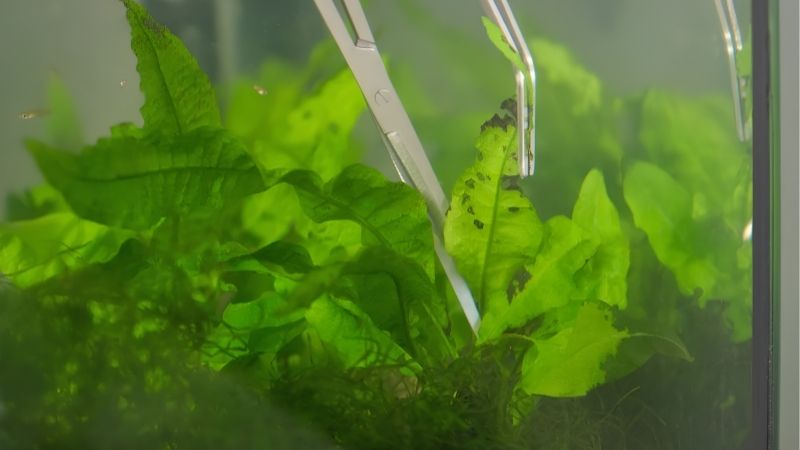
The Six Numbers to Read Before Changing Anything
Test ammonia, nitrite, nitrate and temperature first, in that order. Ammonia and nitrite should read 0 ppm in a stocked tank, nitrate somewhere between 10 and 25 ppm in a planted tank, and temperature inside 72-82 F (22-28 C) for the great majority of common species. Write the four down.
The fifth number is photoperiod, measured honestly rather than estimated. Anything above 8 hours in a low-tech tank feeds algae faster than plants, and anything below 5 hours starves them, so a timer reading is more useful here than an impression of how bright the tank looks. Read the timer, not the room.
The sixth is depth against light. A fixture that delivers roughly 30 micromoles at the substrate of a 12 in (30 cm) tank delivers far less at 21 in (53 cm), so the same light that grows carpets in one tank leaves the bed of a deeper tank effectively dark. Depth changes everything about light.
Reading the Symptom Against the Numbers
Symptoms overlap heavily, which is why the readings come first. The table below pairs what you see with the reading that usually accompanies it, so you can separate a nutrient problem from a light problem before spending anything. Work down the rows in order rather than guessing.
| What you see | Reading alongside it | Most likely cause | First action |
|---|---|---|---|
| Old leaves yellow, plant still growing | Nitrate under 5 ppm | Nitrogen shortage | Dose macros, retest in one week |
| New leaves pale, veins stay green | Nitrate normal, no dosing | Iron shortage | Dose a comprehensive micro mix |
| Pinholes spreading in mid-age leaves | Nitrate normal, stocked tank | Potassium shortage | Dose potassium separately |
| Leaves melt within 2 weeks of purchase | All four numbers normal | Emersed-to-submersed transition | Trim dead leaves, do not replant |
| Whole plant blackens at the base | All four numbers normal | Buried rhizome or crown | Lift, trim, tie to hardscape |
| Everything stalls, algae on glass | Light 9 h or more, nitrate over 40 ppm | Light and waste ahead of plant mass | Cut to 6 h, change 30 percent |
When It Is Not the Water at All
Most shop stock is grown emersed in humid greenhouses, and those leaves dissolve within a fortnight of going underwater. That looks like death but is a normal transition, and the giveaway is that roots and crown stay firm and pale while only the older leaves break down. Give those plants a fortnight.
Two other cases sit outside water chemistry entirely. Some species sold in aquarium sections are not aquatic and rot after a few weeks submerged, and goldfish, silver dollars and several cichlids eat plants steadily, which looks like decline until you watch the tank for ten minutes.
Fixes in Order
Change one thing at a time and wait. When people ask why are my aquarium plants dying after a month of effort, the usual reason is that light, dosing and layout were all changed together, leaving no way to tell which adjustment helped and which made things worse. Work through the steps in order.
Step 1: Fix the Photoperiod Before Anything Else
Set the light to 6-7 hours on a timer and leave it there for two weeks. This is the cheapest correction available and it addresses the most common underlying cause, because inconsistent manual switching produces effective photoperiods that drift by hours across a single week. A timer removes that variable.
If the tank sits near a window, count that daylight as part of the total. From March onward the additional hours are substantial, and a tank that behaved through winter can slide into algae and stalled growth by May without a single change to the fixture or its timer. Count daylight in the total.
Step 2: Correct the Deficiency the Readings Point To
Dose the shortage the table identified, not everything at once. Aim for nitrate 10-25 ppm, potassium 10-20 ppm and iron 0.1-0.5 ppm, dosing macros and micros on separate days so they do not react in the water column before the plants have a chance to use them. Dose on water change day.
Give it a fortnight before judging. Old damaged leaves never recover their colour, so the evidence appears only in new growth, and in a low-tech tank a plant may produce just one or two new leaves in that time. Judge the newest leaf, not the overall impression. Old damage stays visible for months.
Step 3: Check Planting Depth and Rhizomes
Lift anything blackening at the base. Anubias, java fern and bucephalandra rot within 10-14 days if their rhizome is buried, and sword and crypt crowns stop producing leaves when covered, both of which look identical to a nutrient problem from the front of the tank. Check the base before dosing anything.
Replant correctly rather than deeper. Rhizomes get tied to wood or rock with cotton thread, crowns sit level with the substrate surface, and stems go in 1-1.5 in (2.5-4 cm) deep and spaced about 1 in (2.5 cm) apart so light and flow reach the lower leaves. Depth discipline prevents repeat failures.
Tank Size, Placement and Fit
Check the physical match before blaming the plants. A fixture 4 in (10 cm) shorter than the tank leaves dim ends where growth stalls first, and a 20-gallon (76 L) tank holds only 17-18 gallons (64-68 L) of real water, so dosing by the box rating overshoots. Subtract substrate and hardscape first.
Flow and position matter as much. Aim the return along the back glass rather than into the planting, keep the tank out of direct sun, and measure the real numbers before you order: fixture length against tank length, and the gap behind the tank against filter depth. Both take a minute to check.
What Never to Do While Plants Are Failing
Three responses are common and all three make recovery slower. Each feels decisive at the time, which is exactly the problem: a failing planted tank needs stable conditions for a fortnight far more than it needs a dramatic intervention over a single weekend. Stability is the treatment.
Never Do a Full Water Change to Reset the Tank
A 100 percent change swings temperature, pH and hardness at once, and plants already under stress respond by melting further. It also strips the dissolved nutrients you have been dosing, so the tank restarts from zero while the underlying light or depth problem remains untouched.
Change 20-30 percent instead, matched to within 1-2 F (about 1 C) of tank temperature, and repeat weekly. Steady conditions across a fortnight do more for recovery than any single large intervention, and they leave the readings interpretable when you test again next weekend. Small changes stay measurable.
Never Rinse Filter Media in Tap Water
Municipal supplies carry chlorine or chloramine, and rinsing media under the tap kills the nitrifying colony outright. Standard dechlorinator does not neutralise chloramine unless the label states it explicitly, and boiling does not remove it either, which surprises people mid-crisis.
Rinse media in water siphoned straight from the tank. Losing the colony while plants are already failing adds an ammonia spike to the problem, and ammonia above 0.25 ppm turns a plant issue into a livestock emergency within a couple of days in a stocked tank. Rinse in tank water instead.
Never Dose Algaecide or Medication Blindly
Algaecides and several fish treatments contain copper, which is lethal to shrimp and snails at concentrations well below what fish tolerate. Many also damage plants directly, so a tank treated during a plant decline frequently ends up worse in both respects within a week. Identify the cause before treating.
Treat the cause instead: light hours, nutrients, depth. If symptoms in your fish cannot be explained by ammonia, nitrite, nitrate or temperature, that is the point to consult an aquatic vet or an experienced fish store rather than dosing something into a planted tank. Water numbers come first.
Stopping It Happening Again
Recovery takes about four weeks, and prevention is mostly a schedule. Keepers who stop asking why are my aquarium plants dying are usually the ones who fixed their photoperiod, dose on a routine, and check a small number of readings on the same day each week. Routine beats intervention every time.
The Maintenance Schedule That Prevents Relapse
Run a 20-30 percent water change weekly, adjusted to measured nitrate rather than a fixed rule, and dose immediately afterwards. Trim stems before they shade the plants beneath them, and remove decaying leaves promptly so they do not add to the organic load in the tank. Ten minutes weekly is enough.
Quarterly, replace root tabs in inert substrate and check your test reagents. Liquid nitrate kits read falsely low when the second bottle has not been shaken hard for a full minute, and expired reagents send people chasing deficiencies that do not exist in the water. Replace reagents once a year.
Equipment That Fixes the Root Cause
A timer is the highest-value purchase here, because photoperiod drift causes more plant decline than any nutrient shortage. Dimmable fixtures add control at a higher price, and a thermometer separate from the heater catches drift, since ageing heaters commonly wander 2-4 F (1-2 C).
Season matters more than most people expect. Summer room temperatures above 82-84 F (28-29 C) reduce dissolved oxygen and stress plants and fish together, while a cold winter room slows growth so much that the same weekly dose starts accumulating unused in the water column. Adjust doses with the season.
Early Warning Signs Worth Watching
Watch the newest leaf on each plant every week. Yellowing between the veins on new growth signals iron or magnesium, pinholes in mid-age leaves signal potassium, and both appear well before the plant is at risk, which makes them cheap problems if you catch them early. One weekly look is enough.
Watch the glass as well. A green film reappearing within three days of cleaning means light or nutrients are running ahead of what your plant mass can use, and cutting the photoperiod by two hours corrects it faster than any product sold for the purpose. Light hours are the first lever.
Frequently Asked Questions
These are the questions that follow once the readings are in hand and the obvious corrections have been made. Each answer keeps to numbers you can verify at home rather than judging progress by how the tank looks from across the room. Ask why are my aquarium plants dying with readings in hand and the answers get short.
Why are my aquarium plants dying when the fish are fine?
Because fish and plants fail for different reasons. Fish respond to ammonia, nitrite and temperature, while plants respond to light, carbon and nutrients, so a tank with perfect water for fish can still be too dark or too lean to support the plants in it. Test light hours, not just water.
Should I remove a plant that is melting?
Remove the dead leaves, not the plant. Crypts in particular can shed every leaf and regrow from the crown within a month if the roots stay undisturbed. Pull the plant out to inspect it and you break the new roots, which resets recovery by several more weeks. Leave the roots undisturbed.
Can old substrate cause plants to die?
Aquasoil loses much of its nutrient loading around 18-24 months, and inert gravel never had any. Neither actively kills plants, but both leave root feeders dependent on tabs, so decline that begins two years after setup often traces back to an exhausted bed. Add tabs before replacing anything.
How long should recovery take?
Expect two to four weeks before new growth appears in a low-tech tank, and longer for slow species such as anubias. If nothing has changed after a month of correct light and dosing, the limiting factor is usually depth, carbon or a species mismatched to the tank. Reassess the plant list then.
See More:
Conclusion
Why are my aquarium plants dying almost always resolves into one of four answers: photoperiod, a specific nutrient shortage, planting depth, or a plant that was never suited to the tank. Six readings separate them in fifteen minutes with a liquid test kit. Ask why are my aquarium plants dying with numbers, not impressions.
Fix the light first, dose the shortage the readings point to, correct rhizome and crown depth, then leave the tank alone for a fortnight. Steady conditions recover more planted tanks than any product, and the newest leaf on each plant will tell you whether it is working. That single leaf is the diagnosis.
Ready to decide? Our #1 pick for 2026 is the Old leaves yellow, plant still growing.
Live price & availability on Amazon.
Related Reviews & Guides


6 Best Aquarium Filters For 20 Gallon Tank 2026
6 Best Sump Tank Aquariums 2026