Last Updated: October 21, 2026
29 gallon aquarium setup ideas all run into the same constraint: 30 x 12 x 18 in (76 x 30 x 46 cm) of glass holding roughly 25 gallons of real water at about 330 lb (150 kg). This guide covers what that depth changes for light and stocking, which builds genuinely suit the shape, and what the tank costs to run over a full year.
As an Amazon Associate we earn from qualifying purchases.
As an Amazon Associate we earn from qualifying purchases at no extra cost to you.


By David Nguyen
How 29 Gallon Aquarium Setup Ideas Actually Work
Every plan for this tank meets the same three figures: volume, depth and weight. 29 gallon aquarium setup ideas succeed or fail on whether the lighting, filtration and stocking are matched to an 18 in (46 cm) water column rather than to a shallower tank of similar footprint.
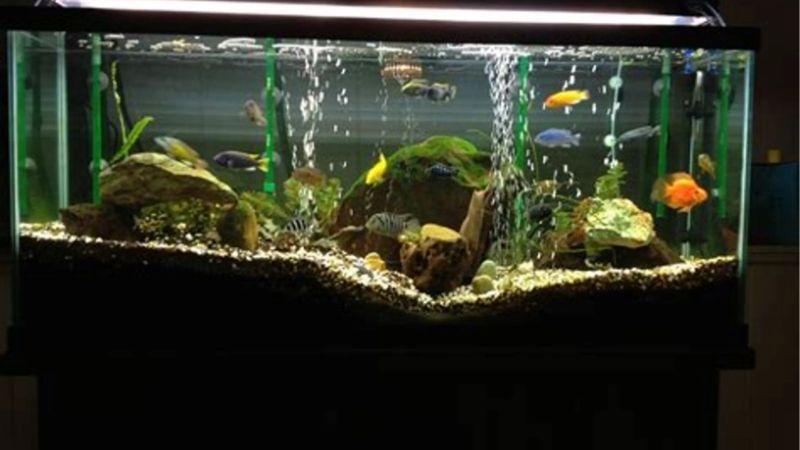
The numbers that define a 29 gallon
A standard 29 gallon measures 30 x 12 x 18 in (76 x 30 x 46 cm) and weighs roughly 330 lb (150 kg) once filled with water and substrate. It shares a footprint with the 20 gallon long, so it takes the same shelf length while adding 9 gallons (34 L) of depth above it.
Usable water sits nearer 25 to 26 gallons (95 to 98 L) once 1 to 2 in (2.5 to 5 cm) of substrate and hardscape are in place. Size turnover against that figure rather than the label, putting the filter target at 116 to 174 GPH (439 to 659 LPH) for four to six turnovers per hour.
Four items are not optional in any build: a filter in that flow range, a heater of 100 to 150 W, dechlorinator for every refill, and a liquid test kit. Background, decor and a second light are preferences, and every one of them can wait until the tank is cycled and running.
What 18 inches of depth changes
Depth is the reason a 29 gallon behaves differently from a 20 gallon long of the same footprint. Light has to travel 18 in (46 cm) to reach the substrate, so plant growth depends on PAR measured at that depth rather than on the wattage or lumens printed on the fixture box.
Surface area stays the same while volume rises, so gas exchange per gallon actually falls slightly. That matters on warm nights and in heavily stocked tanks, where an air stone or a filter outlet aimed to ripple the surface does more for oxygen than a larger filter.
Maintenance reach changes too. Planting, scraping and gravel vacuuming at 18 in (46 cm) means either long tools or wet shoulders, and that small inconvenience quietly decides whether the weekly routine actually gets done during a busy month or slips to a fortnight.
Normal ranges and action thresholds
For a tropical community, aim for 76 to 80 °F (24 to 27 °C), a pH held steady within whatever the tap water provides, and nitrate under 20 to 40 ppm. Stability beats any textbook value, and chasing a specific pH with adjusters causes more losses than accepting a stable one.
Treat these as action thresholds rather than targets: ammonia above 0.25 ppm, any nitrite above 0 ppm, or nitrate past 40 ppm all call for a water change immediately. Those three readings plus temperature are the four numbers to check before adjusting anything else in the tank.
Turning the Numbers Into a Real Build
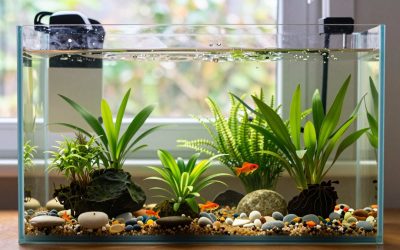
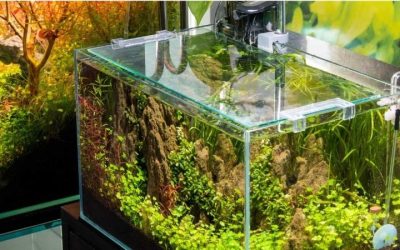
Practical 29 gallon aquarium setup ideas fall into a handful of families, each defined by what it asks of the light and the filter. The table sorts them by demand, and the sections below cover placement, equipment and stocking for each of them.
| Build type | Light demand at 18 in (46 cm) | Filter and heater | Typical stocking | Main risk |
|---|---|---|---|---|
| Low-tech planted | Low PAR, 15-30 at substrate | 116-174 GPH, 100 W | Small schools, snails | Slow growth mistaken for failure |
| High-tech planted | Medium to high PAR, 50+ | 174 GPH plus CO2, 150 W | Nano fish, shrimp | Light without CO2 feeds algae |
| Tall community | Low PAR, aesthetic only | 150-174 GPH, 150 W | Angelfish pair or gourami | Height mistaken for capacity |
| Species tank | Low PAR, dim preferred | Sponge or 116 GPH, 100 W | One species, larger group | Boredom leads to overstocking |
| Quarantine or grow-out | Minimal, bare bottom | Sponge filter, 100 W | Temporary only | Cycle lost between uses |
Tank size, placement and fit
Measure the stand top, the gap behind the tank and the ceiling clearance before ordering anything, because a filled tank cannot be moved. Hang-on-back filters need 4 to 6 in (10 to 15 cm) of clear wall, and a tall tank on a stand leaves little room to reach in from above.
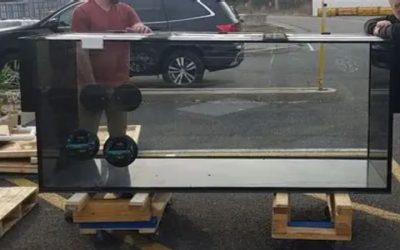
At 330 lb (150 kg) the tank needs a stand matched to its 30 x 12 in (76 x 30 cm) footprint, sitting level and across the floor joists rather than along one. Keep it out of direct sun to limit algae, away from vents, and close enough to an outlet for a drip loop in every cord.
Matching the filter and heater to the build
Filter ratings on the box are measured with no media fitted, so real flow drops 30 to 50 percent once cartridges, bio media and hoses are in place. Choose a unit rated above 174 GPH (659 LPH) if the tank will be heavily stocked or densely planted, since headroom costs little.
Heater sizing follows the gap between room and target temperature rather than volume alone. Plan 100 W for a warm room and 150 W where the room drops below 68 °F (20 °C), and verify the setting against a separate thermometer rather than the dial.
Stocking the depth honestly
Most 29 gallon aquarium setup ideas overrate height. It adds water, not floor space, so bottom dwellers gain nothing from the extra 6 in (15 cm) over a 20 gallon long. Corydoras and loaches share the same 30 x 12 in (76 x 30 cm) of substrate, so plan around that floor area.
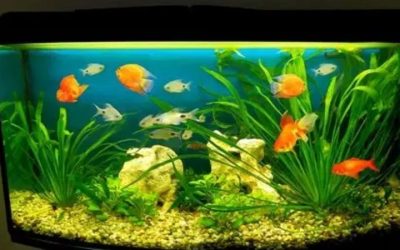
What the depth does suit is mid-water and tall-bodied fish. A pair of angelfish, a gourami group, or a large school of rasboras use the vertical space genuinely, and adult size rather than shop size decides whether they fit at all in this footprint.
Ideas That Sound Good and Fail Anyway
Three popular 29 gallon aquarium setup ideas cause most of the disappointment, and each one has a specific number that replaces the assumption behind it. All three still appear regularly on product boxes, in shop advice and in build threads online.
Myth: taller means more fish
Bioload is limited by biological filtration and by territory, not by water height alone. Nine extra gallons help dilute waste, but the same 30 x 12 in (76 x 30 cm) floor is shared, so a 29 gallon holds only modestly more fish than a 20 gallon long of identical footprint.
Myth: watts decide plant growth
Wattage describes power draw, not usable light at the substrate. At 18 in (46 cm) of depth the figure that matters is PAR at the bottom: roughly 15 to 30 for low-light plants and 50 or more for demanding species, which usually also requires injected CO2 to avoid algae.
Myth: heavy decor makes a better display
Dense hardscape displaces water, blocks flow and creates dead spots where waste settles and decomposes. Leave open swimming lanes and a clear path to the substrate for the siphon, since a build you cannot vacuum properly becomes a nitrate problem within a few months.
Running a 29 Gallon Past the First Year
Whichever of these 29 gallon aquarium setup ideas you choose, the ongoing work is nearly identical. The routine is short, the failures are predictable, and the recurring costs scale with the extra volume rather than jumping at any particular point.
The recurring schedule
Weekly: change 20 to 30 percent, roughly 6 to 9 gallons (23 to 34 L), matching new water to within 1 to 2 °F (about 1 °C) and dechlorinating it. Vacuum a third of the substrate each time, and test ammonia, nitrite and nitrate before deciding whether more is needed.
Monthly: rinse mechanical media in removed tank water, check the impeller for grit, and confirm the heater against an independent thermometer. Feed only what is eaten in one to two minutes, since overfeeding remains the most common cause of climbing readings in any tank.
What degrades and when
Heaters drift out of calibration and eventually fail stuck on or stuck off, which is why a separate thermometer matters more than the dial. Impellers wear and grow noisy, and LED fixtures lose output slowly enough that plants at 18 in (46 cm) notice long before your eye does.
Seasons expose all of it on a schedule. A colder room in winter pushes the heater to a much higher duty cycle, while dry heated air speeds evaporation, so the water line falls faster and minerals concentrate. Size wattage against the coldest room the tank sees.
The 12-month running cost
Running cost here behaves like a subscription rather than a one-off purchase, and the individual items are each cheap enough to overlook until several of them happen to fall due in the same month, which they always eventually do.
The recurring items are dechlorinator, food, mechanical media, replacement test reagents and electricity, all scaling with the 25 gallons of real water rather than the label. The heater dominates power use because it cycles against room temperature through the colder months.
Reagents expire whether used or not, and nitrate bottles read wrong when under-shaken, which quietly undermines every decision made from them. Note the purchase date on the box, and keep a written maintenance schedule so the weekly work does not depend on memory.
Frequently Asked Questions
These questions come up once the stand is chosen and the build is being planned in detail, usually in the last days before any of the equipment has actually been ordered, and while the stocking list is still being argued over with somebody else at home.
Is a 29 gallon better than a 20 gallon long?
For stability and for tall fish, yes. It adds 9 gallons (34 L) on the same footprint, which buffers swings further. For bottom dwellers and for ease of maintenance it offers nothing extra at all, and the 330 lb (150 kg) filled weight demands a stand rated for the load.
What light does a planted 29 gallon need?
Choose by PAR at 18 in (46 cm) of depth, not wattage. Low-light plants want roughly 15 to 30 at the substrate and no CO2; medium to high demand starts near 50 and generally requires injected CO2, otherwise the surplus light feeds algae instead of plants.
Can I keep angelfish in a 29 gallon?
A pair is workable given the 18 in (46 cm) height, provided tank mates are chosen for temperament and the tank is cycled first. Angelfish reach around 6 in (15 cm) in body length and considerably more in fin height, so plan the tank around adult size rather than shop size.
How long before fish can go in?
Three to eight weeks for a fishless cycle, regardless of build. The tank is ready when a dose of ammonia to 2 to 4 ppm clears to zero ammonia and zero nitrite within 24 hours with nitrate present. See how to cycle a fish tank for the process.
See More:
Choosing Your Build
Good 29 gallon aquarium setup ideas start from the same four figures: 25 to 26 gallons (95 to 98 L) of real water, 330 lb (150 kg) of supported weight, 116 to 174 GPH (439 to 659 LPH) of turnover, and PAR chosen at 18 in (46 cm) rather than watts on a box.
Pick the build family first, then buy the equipment against those numbers rather than against a photograph. If you are still deciding between sizes, the tank size comparison sets the 29 gallon against both the shallower and the larger alternatives.
How to Soften Aquarium Water Safely: Numbers First Guide
Aquarium Stocking Density & Bioload Guide: How Many Fish Can You Keep?