Last Updated: October 4, 2026
- Top Pick: Aqua Natural Substrate, Sugar White Sand, 10lb
- Best Value: Aqua Natural Substrate, Galaxy Sand, 10lb
- Premium Choice: Carib Sea ACS05839 Super Natural Sunset Gold Sand for Aquarium, 5-Pound
For most 55-gallon aquariums, plan on 1 to 2 inches of sand across the bottom. That usually means about 40 to 60 pounds for a light 1-inch layer, or 80 to 100 pounds for a deeper 2-inch bed. The exact amount depends on the tank’s footprint, the sand’s density, and whether you want a level or sloped layout.
The Short Answer
A standard rectangular 55-gallon aquarium has a bottom area of roughly 48 by 13 inches. Use these estimates as a shopping guide:
As an Amazon Associate we earn from qualifying purchases at no extra cost to you.


- 1-inch sand bed: approximately 40 to 60 pounds
- 1.5-inch sand bed: approximately 60 to 80 pounds
- 2-inch sand bed: approximately 80 to 100 pounds
- Sloped aquascape: approximately 60 to 90 pounds, depending on the front-to-back height difference
For a typical community fish tank, 60 pounds is a practical starting point. It creates a visible layer without taking up too much swimming space. Choose closer to 80 or 100 pounds if you keep bottom-dwelling fish, want rooted plants, or prefer a substantial aquascape.
Sand bags are commonly sold in 5-, 10-, 20-, or 50-pound sizes. For example, two 10-pound bags of aquarium sand provide only 20 pounds, which is generally too little for a full 55-gallon tank. A product such as Aqua Natural Sugar White Sand is sold in 10-pound bags, while Carib Sea Sunset Gold Sand is sold in 5-pound bags. At typical listed prices of about $15 per 10-pound bag and under $20 per 5-pound bag, covering a 55-gallon tank can cost roughly $45 to $165, depending on the depth, brand, and number of bags.
Standard Sizes
Tank capacity alone does not determine the amount of sand. Two aquariums with similar gallon ratings can have different lengths and widths, changing the floor area. The table below shows common aquarium dimensions and useful sand estimates. Dimensions are approximate outside dimensions; always check the manufacturer’s specifications before buying substrate or a stand.
| Nominal tank size | Approximate dimensions (inches) | Approximate dimensions (cm) | Sand for 1 inch | Sand for 2 inches |
|---|---|---|---|---|
| 10 gallon | 20.25 × 10.5 × 12.6 | 51.4 × 26.7 × 32.0 | 8–12 lb | 16–24 lb |
| 20 gallon long | 30.25 × 12.5 × 12.75 | 76.8 × 31.8 × 32.4 | 15–25 lb | 30–50 lb |
| 29 gallon | 30.25 × 12.5 × 18.75 | 76.8 × 31.8 × 47.6 | 15–25 lb | 30–50 lb |
| 40 gallon breeder | 36.25 × 18.25 × 16.9 | 92.1 × 46.4 × 42.9 | 30–40 lb | 60–80 lb |
| 55 gallon | 48.25 × 12.75 × 23.75 | 122.6 × 32.4 × 60.3 | 40–60 lb | 80–100 lb |
| 75 gallon | 48.5 × 18.5 × 21.1 | 123.2 × 47.0 × 53.6 | 55–75 lb | 110–150 lb |
These weight ranges allow for differences in grain size and density. Fine aragonite, colored sand, and coarse natural sand may not weigh the same by volume. A 55-gallon aquarium with a 48.25-by-12.75-inch footprint has about 615 square inches of bottom area. Every additional inch of average depth adds approximately 10.7 gallons of material by volume, so a two-inch bed is a significant amount of substrate.
How to Measure Your Space
- Measure the inside length and width. Use a tape measure to record the bottom area in inches. Measure inside the glass rather than relying only on the tank’s advertised gallon capacity.
- Decide on the average depth. One inch works for a simple decorative layer. One and a half to two inches is more useful for plants and bottom-dwelling fish. Avoid making the entire bed very deep unless you understand how to maintain it safely.
- Calculate the volume. Multiply length by width by average depth. For a 55-gallon tank: 48.25 × 12.75 × 1.5 equals about 923 cubic inches of sand volume.
- Convert the result into a shopping estimate. For many aquarium sands, 1 pound covers roughly 12 to 16 square inches at a 1-inch depth. Because products vary, use the manufacturer’s coverage guidance when it is available.
- Add a small allowance. Buy about 10 percent extra if you want a sloped foreground, expect to lose some sand during cleaning, or need to create planting pockets around rocks and driftwood.
- Rinse and add gradually. Rinse non-prewashed sand in a clean bucket until the water is substantially clearer. Add it before filling the tank, then pour water onto a plate or plastic bag to reduce clouding.
For a simple 55-gallon layout, a useful shopping plan is six 10-pound bags for a moderate layer. If the sand is unusually dense or the tank will have a full two-inch bed, eight to ten 10-pound bags may be more appropriate. Do not assume that a “55-gallon” bag quantity applies equally to a 55-gallon aquarium with a different footprint.
By Room or Use Case
Living Room Display
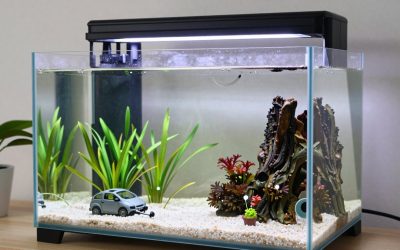
A living room aquarium is usually viewed from the front, so a gently rising slope can add depth. Use about 50 to 70 pounds for a 55-gallon tank, keeping the front edge near 1 inch and the back at 2 inches. A darker sand can make pale fish stand out, while white or light sand reflects more light and shows debris more readily. Keep the tank on a properly rated stand; a filled 55-gallon setup can weigh well over 600 pounds once water, glass, equipment, rocks, and substrate are included.
Planted Aquarium
For rooted plants, aim for an average depth of 1.5 to 2 inches, or approximately 70 to 100 pounds in a standard 55-gallon tank. Sand alone can compact around roots, so use plants suited to sandy substrate or place root-feeding plants in contained areas with enriched substrate. Leave enough open surface for cleaning and avoid burying plant crowns.
Community Fish Tank
A community setup with tetras, livebearers, gouramis, or similar fish generally needs only 1 to 1.5 inches of sand. About 50 to 70 pounds is usually sufficient. This depth is easier to vacuum and leaves more usable water volume than a very deep bed. Choose a smooth, rounded grain if fish will sift the substrate or rest on the bottom.
Bottom-Dweller Habitat
Corydoras, loaches, and some plecos benefit from a soft, smooth surface. Plan on 1.5 to 2 inches, or around 70 to 100 pounds. Avoid sharp crushed materials that may damage barbels or delicate undersides. Even with sand, use a gravel vacuum gently above the surface so waste is removed without constantly removing the substrate.
Budget Setup
If cost is the priority, start with a 1-inch layer using roughly 40 to 60 pounds. Buy substrate in larger bags when possible, but compare the price per pound rather than the package price alone. Small 5-pound specialty bags can cost more per pound than 10-pound or larger bags. A standard 55-gallon glass aquarium may itself cost around $250 to $350 before the stand, filter, heater, lighting, and substrate, so include sand in the full setup budget.
Common Sizing Mistakes
- Buying by gallon rating alone: A tall, narrow aquarium needs less sand than a long, wide aquarium with the same water capacity.
- Confusing water volume with substrate volume: A 55-gallon label describes approximate water capacity, not the number of pounds of sand required.
- Using one fixed pounds-per-gallon rule: Sand density varies substantially. Coverage by depth is more reliable than a general gallon formula.
- Forgetting the slope: A tank with a 1-inch front and 3-inch back does not have a 1-inch average depth.
- Adding too much substrate: Very deep sand can compact and make cleaning difficult. Add depth only when it serves a clear planting or design purpose.
- Skipping preparation: Unrinsed sand can cloud the water and clog mechanical filtration. Follow the product instructions, especially for live or prewashed substrate.
FAQ
Is 20 pounds of sand enough for a 55-gallon aquarium?
Usually not. Twenty pounds may create a thin, uneven dusting, especially across a standard 48-by-13-inch footprint. Plan on at least 40 to 60 pounds for a consistent 1-inch layer.
How deep should sand be in a 55-gallon tank?
One to two inches is suitable for most aquariums. Choose about 1 inch for easy maintenance, 1.5 inches for a more finished appearance, and up to 2 inches for many planted or bottom-dweller setups.
Can I mix sand with gravel?
Yes, but the materials usually separate over time, with finer sand settling below the gravel. For a stable appearance, use one primary substrate and add decorative gravel, rocks, or contained planting areas rather than relying on a perfectly blended mixture.
How many bags of sand do I need?
For 10-pound bags, expect about four to six bags for a 1-inch layer and eight to ten bags for a 2-inch layer. For 5-pound bags, double those quantities. Check the package’s coverage recommendation because grain size and density can change the final number.
Ready to decide? Our #1 pick for 2026 is the 10 gallon.
Live price & availability on Amazon.
Related Reviews & Guides
Swordtail Tank Mates: Space, Speed and Water Match
Best 125 Gallon Aquarium Kit For Large Fish: Top Compared