Last Updated: October 9, 2026
Quick answer: Our top pick in 2026 is the Shorten the lighting period — our #1 rated choice. See the full ranked comparison, alternatives and buying advice below.
The Short Answer
Yes—but only if you want clearer water, fewer free-floating algae cells, or an extra layer of protection against some waterborne organisms, and you can size the unit to your aquarium’s flow rate. An aquarium UV sterilizer is not a cure-all. It will not replace water changes, filtration, gravel cleaning, or responsible stocking, and it will not remove algae growing on glass, rocks, wood, or plant leaves.
For many freshwater and saltwater aquariums, UV is a useful convenience rather than an essential purchase. It is most worthwhile when an otherwise healthy tank repeatedly develops green water or when you want consistently polished-looking water. If your aquarium is already clear and stable, the improvement may be too subtle to justify the cost.
As an Amazon Associate we earn from qualifying purchases at no extra cost to you.


What You Actually Get
An aquarium UV sterilizer uses ultraviolet-C light inside a covered chamber. Water passes through the chamber, and the light damages the DNA of organisms that receive enough exposure. Those organisms are then unable to reproduce normally or are rendered inactive, depending on the organism and the UV dose.
In practical terms, the biggest visible benefit is often clearer water. A suspended algae bloom can make an aquarium look like pea soup, while UV can gradually clear the water as the affected cells pass through the unit. UV may also reduce some free-floating bacteria, parasites, and other microorganisms, but performance depends heavily on bulb output, water clarity, contact time, and flow rate.
That last point matters. A powerful lamp with water rushing through too quickly may provide less treatment than a smaller lamp operated at an appropriate flow. Look for a model with a stated aquarium-size range and flow guidance. “Up to 50 gallons” is not a complete performance specification by itself.
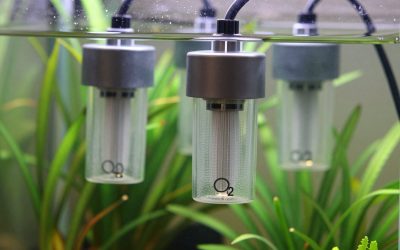
Most units are either internal or installed inline with a canister filter, sump, or dedicated pump. An internal model is generally simpler for a basic aquarium, while an inline unit can keep equipment out of the display. Either style needs a protective housing; exposed UV-C light can injure eyes and skin and should never be viewed directly.
The lamp also has a finite useful life. A bulb can still glow while producing less germicidal output, so replacement timing matters. Depending on the design and manufacturer, replacement may be needed roughly every 6 to 12 months for consistent performance. Clean the quartz sleeve or protective cover as directed, because mineral deposits and slime block UV transmission.
Pros
- Can clear green water. UV is particularly effective against free-floating algae that mechanical filtration alone may struggle to capture.
- Improves visual clarity. Water may look brighter and cleaner even when the aquarium’s chemistry was already acceptable.
- Offers supplemental microbial control. It can reduce some organisms passing through the chamber, provided the exposure time and lamp output are adequate.
- Works with freshwater and saltwater systems. The basic principle is the same, although saltwater setups may require more careful equipment placement and maintenance.
- Operates automatically. Once installed safely, a UV unit can run on a timer or continuously without daily dosing.
- Useful during recurring blooms. Aquarists dealing with repeated green-water episodes may find UV more predictable than repeatedly trying blackout periods or chemical clarifiers.
Cons
- It does not solve the cause. Excess light, overfeeding, nutrient accumulation, and inadequate maintenance can still produce new algae after the UV is turned off.
- It does not remove attached algae. Scrapers, brushes, improved lighting schedules, and nutrient management are still required for algae on surfaces.
- Performance varies widely. Wattage, flow rate, bulb age, water clarity, and chamber design all affect results. A small unit may be disappointing on a large or heavily stocked aquarium.
- It adds operating and replacement costs. Purchase prices commonly range from about $25 to $100 for small and medium aquarium units, with replacement lamps or modules adding to long-term ownership cost.
- It uses electricity and occupies space. Small models may draw around 3 watts, while larger units often use 5 to sterilizer units often use 5 to 20 watts or more, depending on design.
- It can interfere with some treatments. UV may reduce the effectiveness of certain medications or beneficial water treatments, so it is commonly switched off during medication unless the product instructions say otherwise.
- It is not a substitute for quarantine. Water passing through a UV chamber does not guarantee that every parasite or pathogen in a tank will receive a lethal dose.
Who Should Buy It
Consider a UV sterilizer if your main problem is persistent green water in an otherwise mature, properly filtered aquarium. It is also a sensible upgrade for aquarists who value exceptionally clear display water, maintain busy community tanks, or want supplemental control over free-floating microorganisms.
It may be a good fit for a 5- to 25-gallon aquarium when a compact 3-watt model is correctly installed and operated within its recommended range. For a larger aquarium, choose a unit rated for the actual water volume and confirm its recommended flow rather than relying only on the advertised wattage. A 50-gallon-rated internal unit, for example, may be more appropriate for a medium tank than a mini lamp intended for 5 to 25 gallons.
As a price reference, a small model such as the hygger 3W unit with a timer is listed around $25, while the AA GKM9W internal model rated for aquariums up to 50 gallons is listed around $65. Those prices illustrate the usual difference between compact, lower-capacity equipment and a larger internal unit, not a guarantee that either will solve every algae problem.
Who Should Skip It
Skip UV for now if your tank is new, cloudy because of a bacterial cycle, or suffering from clearly poor maintenance. First test ammonia, nitrite, nitrate, and pH; perform appropriate water changes; service the filter; reduce excess feeding; and adjust the lighting schedule. A UV device can make water look better while leaving the underlying imbalance untouched.
It may also be unnecessary if your aquarium is already clear and you are buying one only because it sounds protective. For disease prevention, quarantine new fish and plants, avoid overcrowding, and maintain stable water conditions. If your aquarium contains delicate plants or organisms that rely on specific microbial processes, ask whether continuous UV fits your setup before installing it.
Cheaper Alternatives
| Option | Cost | Trade-off |
|---|---|---|
| Shorten the lighting period | $0 | Often helps with algae, but does not directly clear an existing bloom and may reduce viewing time. |
| Regular water changes and gravel vacuuming | About $10–$30 for basic supplies | Addresses waste and nutrients, but requires recurring labor and will not instantly clear green water. |
| Fine mechanical filter media | About $5–$20 | Can trap suspended particles, but may clog quickly and generally does not eliminate microscopic algae as consistently as UV. |
| Live plants and better nutrient control | About $10–$60 or more | Provides a long-term ecological benefit, but plants need suitable light, nutrients, and care. |
| Compact 3W UV unit | About $25–$40 | Affordable for 5- to 25-gallon tanks, but limited capacity and potentially less effective at high flow rates. |
| Medium internal UV unit | About $50–$100 | More practical for medium aquariums, but costs more, takes display-tank space, and still needs bulb maintenance. |
FAQ
Will a UV sterilizer make my aquarium water crystal clear?
It can, particularly when the cloudiness is caused by free-floating algae or some suspended microorganisms. It will not necessarily fix brown tannins from driftwood, dust, bacterial blooms, or particles that the aquarium’s mechanical filter fails to capture. Correctly sized filtration and water maintenance remain important.
Should I run aquarium UV all the time?
Many aquarists run UV continuously or on a regular schedule when clearing green water. For routine use, follow the manufacturer’s instructions and consider switching it off during medications or treatments that should remain in the water. A timer can make scheduling easier, but it does not compensate for an undersized unit or excessive flow.
Does UV kill beneficial bacteria?
It can affect free-floating bacteria that pass through the chamber, but the majority of beneficial nitrifying bacteria live on filter media, substrate, and other surfaces. A properly established biological filter should not depend on large numbers of bacteria remaining suspended in the water. Still, avoid treating UV as a replacement for biological filtration.
What is the final buying verdict?
Buy one when you have a specific, recurring clarity problem and are willing to match the unit to your tank size and flow. For a small aquarium, a roughly $25 to $40 compact model may be a reasonable experiment. For a medium aquarium, spending about $50 to $100 can provide more capacity. If your tank is healthy and clear, put that money toward better filtration, test kits, plants, or maintenance supplies instead. That is the honest answer: aquarium UV is worth it for the right problem, not as a universal upgrade.
Ready to decide? Our #1 pick for 2026 is the Shorten the lighting period.
Live price & availability on Amazon.
Related Reviews & Guides

5 Best Cheap Aquarium Filters Under $20 in 2026

Zebra Danio Care: School Size, Flow and Temperature