Last Updated: October 4, 2026
The Short Answer
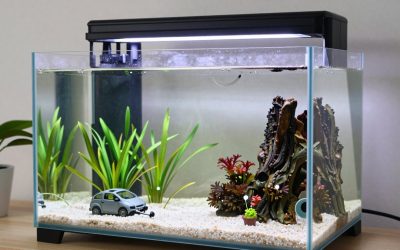
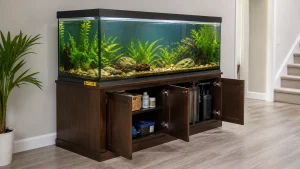
A standard 55 gallon aquarium is typically 48.25 inches long × 12.75 inches deep × 20.75 inches high (about 122.6 × 32.4 × 52.7 cm). It is commonly sold as a long, rectangular glass tank with a narrow front-to-back footprint.
That size makes a 55 gallon tank a practical choice for a living room, dining room, home office, or larger bedroom wall. However, the aquarium itself is only part of the space calculation. Once filled, a typical 55 gallon setup weighs roughly 600 to 700 pounds after accounting for water, glass, gravel or sand, rocks, equipment, and the stand.
As an Amazon Associate we earn from qualifying purchases at no extra cost to you.


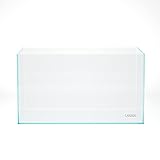
Plan for a stand at least as large as the tank’s full base—ideally about 49 to 50 inches long and 13 to 14 inches deep—plus clearance around the aquarium for cords, filters, feeding, and maintenance. For most homes, reserving an area about 54 inches wide × 20 inches deep × 30 to 36 inches high creates a more comfortable installation zone.
Standard Sizes
“55 gallon” describes water capacity, not one universal exterior measurement. The traditional 55 gallon aquarium is the long, narrow format found in many glass aquarium packages. Rimless and specialty tanks can use a shorter, deeper footprint while holding the same approximate volume.
| 55 Gallon Aquarium Style | Exterior Dimensions (Inches) | Exterior Dimensions (Centimeters) | Typical Empty Weight | Best For |
|---|---|---|---|---|
| Standard framed glass 55 gallon | 48.25 L × 12.75 D × 20.75 H | 122.6 L × 32.4 D × 52.7 H | About 78 lb | Community fish, long wall placement, traditional aquarium stands |
| Standard 55 gallon kit tank | About 48.25 L × 12.75 D × 20.75 H | About 122.6 L × 32.4 D × 52.7 H | About 78 lb before included equipment | First-time buyers wanting a coordinated hood, filter, and heater |
| Rimless 55 gallon, deeper format | 35.4 L × 19.7 D × 19.7 H | 90 L × 50 D × 50 H | Varies by glass thickness | Planted layouts, aquascaping, wider viewing depth |
The standard format offers nearly 4 feet of swimming length, but only about 13 inches of front-to-back depth. That narrow depth is important: it can limit large décor, broad hardscape arrangements, and the turning space available to larger fish. A deeper rimless tank with a 19.7-inch footprint gives far more room for layered plants and rocks, even though it is substantially shorter.
Examples of current-style 55 gallon purchasing options include a basic Tetra rectangular glass aquarium around $300, complete Tetra kits around $385 to $422, and premium low-iron rimless tanks around $630. In 2026, the final installed cost is usually higher than the tank price because a suitable stand, substrate, water conditioner, test kit, lighting, filter media, and décor can add several hundred dollars.
How to Measure Your Space
- Measure the finished wall area, not just the empty room. Use a tape measure to check width from trim to trim, door to corner, or furniture edge to furniture edge. For a standard tank, target at least 54 inches of open width so the 48.25-inch aquarium does not look squeezed into place.
- Measure depth from the wall outward. A 12.75-inch tank may appear shallow on paper, but the stand, power cords, filter tubing, and wall clearance increase the real depth. Allow 18 to 20 inches from the wall to the front edge of the setup.
- Check vertical clearance. The aquarium is about 20.75 inches tall, and many stands are 28 to 32 inches high. With a lid, light, and access space above, a total vertical zone of 60 inches is a sensible minimum. Avoid placing the tank under low shelving where you cannot remove a filter or lift the lid.
- Confirm the stand supports the entire bottom frame. A standard 55 gallon tank must sit flat on an aquarium-rated stand that supports all four corners and the full perimeter as required by its manufacturer. Do not place it on a dresser, console, or table unless it is specifically engineered for the finished load.
- Locate electrical access. Plan for at least two grounded outlets nearby. Most setups use a filter, heater, and light; planted tanks may add a second light, air pump, or CO₂ equipment. Keep a drip loop in every cord and do not run power strips where spills can reach them.
- Think through water changes. A 55 gallon aquarium is much easier to maintain when it is within practical hose distance of a sink, bathtub, or exterior door. Routine water changes commonly remove 10 to 20 percent of the water, or about 5.5 to 11 gallons at a time.
By Room or Use Case
Living Room Feature Wall
A standard 48-inch 55 gallon aquarium works especially well on a long, uninterrupted wall. Give it breathing room: leave at least 3 inches on each side and avoid pressing it directly against bulky furniture. A stand around 30 inches high places the viewing area at a comfortable seated and standing height. Because the finished setup can approach 700 pounds, position it near a wall rather than in the center of a traffic path, and verify that the floor is level.
Apartment or Condo
A 55 gallon tank can fit in many apartments, but weight and lease rules deserve extra attention. The filled load is comparable to several adults standing in one compact footprint. Place the aquarium against a structural or perimeter wall when possible, rather than in the middle of a room. Check building rules for aquarium limits, water-damage requirements, and floor-load concerns before purchase. A waterproof mat or tray beneath the stand can help contain small maintenance drips, but it does not replace proper insurance or careful installation.
Home Office
In an office, the 55 gallon’s 4-foot length creates an attractive focal point behind a desk or along a side wall. Keep at least 24 inches of walking clearance in front of the stand. Avoid direct sun from a nearby window, which can encourage algae and cause temperature swings. Choose quiet equipment: a properly sized filter and heater should be suitable for a work environment, while an air pump may add audible bubbling. Typical equipment demand is modest, often including a 150- to 200-watt heater and 30- to 60-watt LED lighting.
Freshwater Community Aquarium
The standard 55 gallon shape is well suited to fish that benefit from horizontal swimming space. Its long footprint is generally more useful than extra height for active community species. The narrow depth means décor should be planned carefully: build hardscape in low-to-medium layers, leave open swimming lanes, and avoid oversized rocks that consume much of the 12.75-inch footprint. A 48-inch light fixture is the usual fit for this tank length.
Planted or Aquascaped Display
For a planted display, a deeper 35.4 × 19.7 × 19.7-inch rimless design can be more flexible than a conventional 55 gallon. Its shorter length is easier to fit on a compact wall, while the 19.7-inch depth allows stronger visual layering from foreground plants to background stems. The tradeoff is that this style needs a purpose-built stand with a 35.4 × 19.7-inch top and often carries a higher price than a standard framed tank.
Common Sizing Mistakes
Buying a 48-inch tank for a 48-inch opening: Exact-fit installations leave no room for trim, cords, stand overhang, or hand access. Add side clearance before committing.
Calculating only the water weight: Fifty-five gallons of freshwater weighs about 459 pounds before the glass tank, stand, substrate, rocks, and equipment. Saltwater is slightly heavier, and heavy stone décor can raise the total substantially.
Using a stand that is too small: The tank should never overhang the stand. Even a small mismatch can create uneven stress on the glass and frame.
Forgetting top access: A tank may fit under cabinets but still be impossible to clean. Leave enough space to lift the lid, reach inside, and remove filter components.
Assuming every 55 gallon tank has the same footprint: Traditional tanks are long and narrow; rimless versions may be shorter and much deeper. Always compare the listed exterior dimensions, not the gallon label alone.
FAQ
What are the exact dimensions of a standard 55 gallon aquarium?
The most common standard 55 gallon aquarium measures approximately 48.25 inches long, 12.75 inches deep, and 20.75 inches high. Small variations can occur between brands, especially when measuring plastic trim, frames, lids, or rimless glass edges.
How much does a 55 gallon aquarium weigh when full?
Water alone weighs about 459 pounds. Add roughly 78 pounds for a typical empty glass aquarium, 75 to 150 pounds for a stand, and additional weight for substrate, rocks, equipment, and décor. A realistic finished weight is usually about 600 to 700 pounds, sometimes more with heavy hardscape.
What size stand do I need for a 55 gallon fish tank?
For a standard tank, use a stand specifically rated for a 48.25 × 12.75-inch 55 gallon aquarium. The stand top should fully support the tank’s base without overhang. Many dedicated stands measure roughly 49 inches long and 13 to 14 inches deep.
Is a 55 gallon aquarium too big for a bedroom?
Not necessarily, provided the room has adequate floor support, wall space, electrical access, and maintenance clearance. It is best for a larger bedroom with at least a 54-inch-wide wall section and 20 inches of usable depth. Consider equipment noise, light spill at night, and the substantial filled weight before placing one near a bed.
Ready to decide? Our #1 pick for 2026 is the Standard framed glass 55 gallon.
Live price & availability on Amazon.
Related Reviews & Guides
Best Small Aquarium Under 5 Gallons: Best Compared Buyer Guide

6 Best Timer Aquariums 2026