Last Updated: October 21, 2026
- Top Pick: hygger 400 GPH Quick Water Change Aquarium Pump Submersible Fountain Water Pump Fish Tank Pond Drain Transfer Pump with 3 Adaptors
- Best Value: hygger 215 GPH Quick Water Change Aquarium Pump Submersible Fountain Water Pump Fish Tank Pond Drain Transfer Pump with 2 Adaptors
- Premium Choice: Aquarium Water Change Diffuser for Rimless Fish Tanks (Black, Medium)
Can you change too much aquarium water has a practical answer rather than a theoretical one: yes, past roughly 50 percent in a single session, and much sooner than that in a tank that has drifted for months. What goes wrong is the swing in chemistry rather than the volume itself. Test the water first, then decide on the number.
As an Amazon Associate we earn from qualifying purchases.
As an Amazon Associate we earn from qualifying purchases at no extra cost to you.


By David Nguyen
Measure Before Deciding How Much Is Too Much
The safe maximum depends on how different the new water is from the old. Answering can you change too much aquarium water for a specific tank means comparing the two, which takes two tests and about five minutes standing at the tap.
The numbers that set the ceiling
Fifty percent is the working ceiling for a single change in a well-maintained tank, and 20 to 30 percent is the routine figure. Both are calculated on real water volume, which sits roughly 15 percent below the label once substrate and hardscape are counted.
Test the tank and the tap separately for pH, and compare them. A gap under about 0.3 pH units means large changes are comfortable, while a gap over a full unit means the tank has drifted and needs several small changes instead of one large one.
Temperature is the other limit. New water must land within 1 to 2 °F (about 1 °C) of the tank, and that tolerance tightens as the percentage rises, because the final temperature moves in proportion to how much of the volume is being replaced.
Reading the results to pick a safe maximum
Asking can you change too much aquarium water in the abstract has no answer, because the number depends on how far the replacement water sits from what is already in the tank.
The comparison between tank and tap is what turns a general rule into a number for your particular setup. Two tanks on the same street can have completely different safe maximums depending on how long each of them has gone between changes.
Tank and tap close together on pH and hardness means a 50 percent change is straightforward. A tank reading noticeably lower pH than the tap has been consuming carbonate hardness for months, and replacing half the water raises it sharply in minutes.
Nitrate above 80 ppm usually accompanies that situation, which is why the temptation to do one enormous change is strongest exactly when it is least advisable. Several 15 to 20 percent changes across consecutive days reach the same place safely.
| What you see | Reading | Likely cause | First action |
|---|---|---|---|
| Fish stressed after a big change | Ammonia 0, nitrite 0 | pH or temperature swing | Stabilise, split future changes |
| Tank pH well below tap | Gap over 1.0 unit | Carbonate hardness depleted | Change 15-20% daily instead |
| Nitrate above 80 ppm | Weeks without changes | Schedule lapsed | Several small changes, not one |
| Ammonia after a large change | 0.25 ppm or more | Filter serviced at the same time | Change 25%, feed less |
| Heater cracked or stopped | Temperature falling | Ran dry during a deep drain | Unplug before draining next time |
| Shrimp moulting or dying | TDS shifted sharply | Hardness swing from big change | Keep changes to 10-20% |
When volume is not the problem
If fish look stressed after every change regardless of size, the cause is usually untreated water or a temperature mismatch rather than the percentage. Check the dechlorinator covers chloramine, and compare tank and bucket on the same thermometer.
Ammonia appearing after a change points at the filter rather than the volume, since water changes remove nitrogen rather than bacteria. Servicing the filter in the same session, or rinsing the media under the tap, is the usual explanation.
Can You Change Too Much Aquarium Water: Finding Your Limit
Three steps settle the question for any particular tank. The answer to can you change too much aquarium water then becomes a number you can repeat rather than a judgement made at the bucket each week.
Step one: compare the tank against the tap
Test pH on both, and hardness if you have the kit. Small gaps mean the new water is chemically similar and large changes are low risk, while wide gaps mean any large replacement is effectively a transfer into different water without the acclimation.
Do this once when the tank is set up and again after any long gap in maintenance. Water supplies also change through the year, and a utility switching disinfectant or source will move the tap figures without anything at all happening in the tank.
Step two: split anything above the ceiling
Splitting a large correction is the single most useful technique in this whole article, and it costs nothing beyond spreading the work across a few evenings rather than forcing it into one session.
Where a correction larger than 50 percent is needed, break it into consecutive daily changes of 15 to 20 percent. Three days of 20 percent removes roughly half the nitrate while moving pH and hardness gradually enough that fish do not register it.
Measure the gap behind the tank and the water line against the heater before ordering equipment, since a deep drain that exposes a running heater is the most common hardware failure during a large change. Unplug the heater before the level drops.
Step three: refill in a way that does not undo it
Match temperature within 1 to 2 °F (about 1 °C), treat for chlorine and chloramine, and pour gently against the glass rather than onto the substrate. A carefully calculated change still causes a swing if the water going back in is four degrees off.
Restart the heater and filter only once the water covers both, then recheck temperature twenty minutes later. Feed lightly or skip a feeding that day, since fish gain nothing from a full portion straight after that scale of disturbance.
Changing Too Much Aquarium Water: Three Ways It Goes Wrong
Three habits turn a reasonable correction into a genuine problem in its own right, and each has a specific mechanism behind it rather than being a general caution.
Do not change 100 percent to reset a tank
A full change replaces the buffering system, the temperature and the dissolved solids at once, which is a larger shock than whatever prompted it. Cloudy water and algae both have causes that a complete change does nothing at all about.
Do not treat a big change as a substitute for finding the cause
Ammonia or nitrite in an established tank means the colony is behind the load. Changing water buys time and is the correct first response, and the fix sits in feeding, stocking or recent filter maintenance rather than in a larger percentage.
Do not combine a large change with a filter service
Both disturb the tank in different ways, and doing them together removes colony sites while the chemistry is already moving. Keep the filter service in a separate week entirely, and never rinse the media anywhere except in removed tank water.
Avoiding the Situation Altogether
Large corrections are only needed when small ones have been missed. A routine that holds nitrate steady means the question of whether you can change too much aquarium water rarely arises at all in practice.
The routine that removes the need
Change 20 to 30 percent weekly with matched, treated water, vacuum a rotating third of the substrate, and test nitrate immediately before each session. That schedule keeps tank and tap chemically close, which is what makes any future large change safe.
Feed only what is eaten in one to two minutes. Feeding sets the production rate the schedule offsets, so a quiet increase in portions is the usual reason a stable tank starts needing noticeably bigger changes a month or two later.
Equipment that keeps changes small
Nothing here is specialised, and the point of all of it is to make the weekly slot short enough that it happens. Large corrections are almost always the consequence of a weekly routine that became inconvenient.
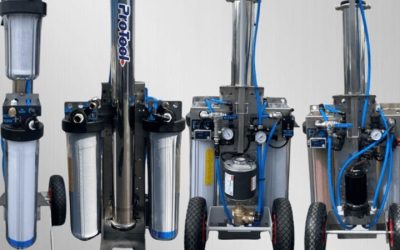
A gravel vacuum sized to the tank, a dedicated bucket and a dechlorinator rated for chloramine cover the basics. On tanks above 40 gallons (151 L) a faucet-connected changer removes the carrying, which is usually what decides whether the weekly slot happens.
Two thermometers are worth owning purely to check each other. Heaters drift out of calibration over months, and a tank running three degrees off its setting makes every temperature comparison made during a change quietly wrong.
Early signs a correction is building
Nitrate climbing week on week means removal has fallen behind production, and catching that early keeps the fix inside the normal percentage. Left for a month, the same trend then needs the split-change approach instead.
A widening gap between tank pH and tap pH is the other early signal, and it moves slowly enough to catch. Testing both once a month during winter is worth the two minutes, since evaporation concentrates everything that is left behind.
Frequently Asked Questions
These come up after a large change produced an unexpected reaction in the fish, or before one is attempted on a tank that has been left far too long.
Can you change too much aquarium water in one week?
Spreading changes across days is safer than one large session, so several 20 percent changes in a week are fine. The risk is concentration in time rather than total volume, since each individual swing stays small enough for fish to absorb.
Can you change too much aquarium water at 50 percent?
Yes, provided the new water is matched within 1 to 2 °F (about 1 °C), treated for chloramine, and chemically similar to the tank. It stops being safe where the tank and the tap differ by more than about a full pH unit.
Do water changes remove beneficial bacteria?
Not meaningfully. The colony lives in filter media and substrate rather than in the water column, which is why a 50 percent change is safe while rinsing the media under the tap sets a tank back by weeks.
What if the tank has been neglected for months?
Use several 15 to 20 percent changes on consecutive days rather than one large one. The goal is to move pH, hardness and dissolved solids gradually, since the accumulated difference is what causes harm rather than the nitrate figure itself.
See More:
Setting Your Own Ceiling
Can you change too much aquarium water comes down to two comparisons: how far the tap differs from the tank on pH and hardness, and how far the bucket differs on temperature. Keep single changes at 50 percent or below and split anything larger across days.

Aquarium Divider Acrylic Panel
Common Mistakes When Buying an Aquarium Rack: Top Smart Tips