Last Updated: October 21, 2026
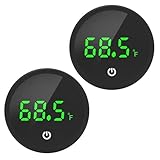
- Top Pick: QZQ Fish Tank Thermometer Aquarium Thermometer Wireless Touch Stick Digital Aquarium Thermometer LED Display ±1°F for Monitoring The Fish Tank Aquarium Temperature Accessories (Black)
- Best Value: Petbank LCD Digital Aquarium Thermometer Fish Tank Water Terrarium Temperature
- Premium Choice: 4Pcs Aquarium Thermometer Fish Tank Thermometer Reptile Fahrenheit Terrarium Water Temperature Indicator Test Digital with LCD Display Fahrenheit/Celsius
Aquarium water change temperature matching is the step most people skip and the one that causes the most visible trouble afterwards. New water should land within 1 to 2 °F of the tank temperature. This guide covers why that tolerance exists, what happens outside it, and how to hit the number reliably every week.
As an Amazon Associate we earn from qualifying purchases.
As an Amazon Associate we earn from qualifying purchases at no extra cost to you.


By David Nguyen
How Aquarium Water Change Temperature Matching Works
Fish do not regulate their own body temperature, so tank temperature is body temperature. Aquarium water change temperature matching exists because a fish cannot buffer a sudden shift the way a mammal can, and the tolerance is narrower than most people expect it to be.
The number that matters
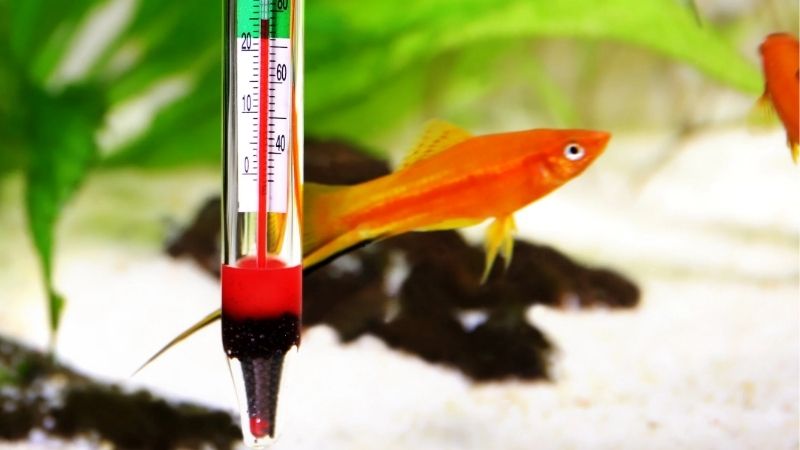
Keep new water within 1 to 2 °F of the tank, which is roughly 1 °C, measured on the same thermometer for both. That tolerance is generous for a 20 percent change and tight for a 50 percent one, because the final tank temperature moves in proportion to the volume replaced.
The arithmetic is simple enough to do at the bucket. Replacing 30 percent of a tank at 78 °F (26 °C) with water at 72 °F (22 °C) leaves the tank near 76 °F (24 °C), which is a two degree drop in a few minutes rather than the gradual change fish are built for.
Rate matters as much as size. A tank that drifts two degrees across a day is unremarkable, while the same two degrees arriving in five minutes during a refill is the version that produces clamped fins and hiding by the same evening.
What a mismatch actually does
The effect is physiological rather than behavioural, which is why it goes unnoticed at the moment it happens. Everything in a fish that depends on enzyme activity slows or accelerates along with the water it is sitting in.
Metabolic rate tracks temperature closely in fish, so a sudden drop slows digestion, immune response and gill function together. A sudden rise does the opposite and raises oxygen demand at the same moment that warmer water is holding less dissolved oxygen.
Neither effect is visible immediately. Clamped fins, sitting low in the tank and refusing food usually appear hours after the change rather than during it, which is why the cause is so often attributed to something else entirely afterwards.
Repeated small mismatches matter more than one bad week. A tank that drops three degrees every Sunday spends part of every week recovering, and that pattern shows up over months as poor growth and greater susceptibility to disease rather than as a sudden loss.
| Difference from tank | At a 20-30% change | At a 50% change | What to do |
|---|---|---|---|
| Within 1 °F (0.5 °C) | Ideal, no effect | Ideal, no effect | Proceed normally |
| 1-2 °F (about 1 °C) | Acceptable | Acceptable | Proceed, check after refill |
| 3-4 °F (about 2 °C) | Noticeable to fish | Avoid | Adjust the bucket first |
| 5-8 °F (3-4 °C) | Avoid | Do not proceed | Remix or add water slowly |
| Over 8 °F (4 °C) | Do not proceed | Do not proceed | Wait for the bucket to equalise |
| Unknown, no thermometer | Cannot be judged | Cannot be judged | Measure both before refilling |
Target ranges and action thresholds
Matching applies to the refill, and the tank itself has a separate target to hold between sessions. Both matter, and a tank that already drifts through the day has less tolerance for a mismatched bucket.
A tropical community holds at 76 to 80 °F (24 to 27 °C), goldfish prefer 65 to 72 °F (18 to 22 °C), and bettas sit at the upper tropical end. Whatever the target, the daily drift within it should stay under 2 °F (about 1 °C) between the morning and the evening.
Treat anything larger as an action threshold rather than a curiosity. A tank moving three or four degrees across a day points to an undersized heater, a failing one, or a room that swings further than the equipment can absorb on its own.
Hitting the Number in a Real Room
The rule is easy and the execution is where it fails, usually because the tap does not cooperate. Reliable aquarium water change temperature matching depends more on method and equipment than on the care taken at the moment of refilling.
Tank size, placement and fit
Measure the run from the tap to the tank and the height of the stand before buying a hose or changer, since equipment that will not reach forces bucket work and bucket work is where temperature gets guessed. Access decides how consistently the number is hit.
Placement affects the target as much as the refill does. A tank against an exterior wall, under a vent or beside a draughty window swings with the room, which means the temperature you match to on Sunday morning is not the one the tank holds at midnight.
How volume and percentage change the tolerance
The same two degree gap in the bucket produces a very different result depending on how much of the tank it replaces. That relationship is worth understanding before planning any larger correction.
Small changes forgive more. Replacing 20 percent of 40 gallons (151 L) with water two degrees off moves the tank by well under a degree, while the same mismatch on a 50 percent change in a nano tank moves it by most of that difference immediately.
This is why the 50 percent ceiling and the temperature rule interact. If a large correction is needed on a neglected tank, splitting it into several 15 to 20 percent changes across consecutive days makes both the chemistry and the temperature easier to control.
Differences by species and setup
Tolerance is not uniform across a tank, and the least tolerant animal in it sets the standard everyone else has to work to. Two groups in particular need the tighter end of that range applied to them at all times.
Species from stable tropical water tolerate less than those from seasonal streams, and fish already stressed by poor readings tolerate less than healthy ones. Fry and shrimp are the least forgiving, since a small body mass equilibrates almost instantly.
Shrimp add a second variable, because dissolved solids matter to them as much as temperature. A change that is matched for temperature but not for hardness can still trigger a moult, which is easily the most vulnerable moment in a shrimp’s cycle.
Beliefs That Cause Temperature Problems
Three ideas come up constantly around aquarium water change temperature matching, and each one of them produces a specific and entirely avoidable problem in the tank.
Myth: cold water is fine because rivers get cold
Rivers change temperature over hours and seasons, not over the five minutes a refill takes. The relevant variable is rate rather than absolute value, and no natural water body drops four degrees in the time it takes to empty two buckets into it.
Myth: letting water stand overnight is enough
This one survives because it was partly true decades ago, when chlorine was the only disinfectant in most municipal supplies and it did gas off given long enough standing in an open container.
Standing water does reach room temperature, which is usually still several degrees below a tropical tank. It also does nothing about chloramine, which does not gas off the way chlorine does, so the practice solves the smaller problem and leaves the larger one.
Myth: hot tap water is a safe way to warm the bucket
Hot water systems can carry more dissolved metals from pipework and tanks than the cold supply, particularly in older buildings. Mixing to temperature is normal practice, and using a thermometer rather than a hand test is what keeps it within tolerance.
Keeping the Number Right Long Term
Consistency is a matter of equipment and habit rather than attention. Once aquarium water change temperature matching is built into the routine it takes about thirty seconds, and the failures that remain after that are all equipment drifting quietly.
The weekly method
The method matters more than the effort, because a consistent procedure removes the judgement that goes wrong when you are in a hurry. Three habits between them account for almost every properly matched change.
Read the tank with an independent thermometer, mix the bucket to the same reading, then confirm with the same instrument rather than a second one. Using one device for both removes calibration differences, which is the most common source of a mismatch nobody notices.
Dechlorinate the bucket before it goes in, and confirm the product covers chloramine on the label. Pour gently against the glass rather than onto the substrate, and recheck the tank twenty minutes later once the new water has fully mixed through.
What drifts over time
Nothing here fails suddenly. Both instruments involved in temperature matching lose accuracy gradually, and because they are the tools used to check the work, their drift stays invisible until something else goes wrong.
Heaters lose calibration and eventually fail stuck on or stuck off, which is why the dial is never the reference. Budget units routinely run 2 to 4 °F (1 to 2 °C) away from their setting, and that error tends to grow rather than staying constant.
Thermometers drift too, particularly cheap stick-on strips reading through the glass. Owning two and comparing them occasionally is the cheapest early warning available for a failure that can otherwise cost an entire tank overnight.
Winter changes the practical side considerably. Tap water can arrive at 45 to 50 °F (7 to 10 °C) in cold months, which means more mixing, longer preparation and a much larger gap to close than the very same job requires in July.
What the habit costs
Two thermometers and a bucket are the whole investment, and the recurring cost is nothing beyond replacing a thermometer when it disagrees with its partner. Compared with a heater or a test kit, this is the cheapest reliability in the hobby.
The time cost is about thirty seconds per change once the routine is set. That is the entire price of avoiding the most common cause of fish looking unwell the evening after an otherwise correctly performed water change.
Frequently Asked Questions
These come up after a water change that followed every other rule correctly and still left the fish behaving oddly by the end of the same day.
How close does aquarium water change temperature matching need to be?
Within 1 to 2 °F, roughly 1 °C, measured on the same thermometer for tank and bucket. Tighter is better on large changes, and anything beyond 3 or 4 °F (about 2 °C) should be corrected in the bucket before any of the water goes in.
Is slow pouring a substitute for temperature matching?
Slowly is better than quickly, and it is not a substitute for matching. Trickling cold water in still lowers the tank, just over a longer period, so mixing the bucket to temperature in the bucket first remains the more reliable approach.
Does a small top-up need matching too?
Less so, because the volume is small enough that the effect is minimal. Topping up 1 gallon (3.8 L) on a 29 gallon (110 L) tank shifts temperature very little, though the water still needs treating for both chlorine and chloramine.
My fish hid after a water change. Was it temperature?
Possibly, and it is one of two likely causes alongside untreated water. Check the four readings, confirm the dechlorinator covers chloramine, and compare tank and bucket temperatures. If behaviour persists once the water tests clean, consult an aquatic vet.
See More:
Getting It Right Every Week
Aquarium water change temperature matching comes down to one instrument used twice: read the tank, mix the bucket to the same figure, and keep the gap inside 1 to 2 °F (about 1 °C) before any of that water reaches the fish.
Tighten that tolerance as the change size grows, split large corrections across days rather than forcing them into one session, and treat a heater dial as a suggestion rather than as a measurement at any point in the process.
Nano Aquarium Setup Guide: How It Works and What to Watch
Creative Fish Tank Decoration Ideas for Every Style