Last Updated: October 9, 2026
- Why Flow Rate Alone Does Not Tell the Full Story
- Submersible vs. External: When to Go Wet
- Top Submersible Pump Picks
- Pump Specifications at a Glance
- DC vs. AC Submersible Pumps
- Installation Tips That Extend Pump Life
- Matching Pump Flow to Different Aquarium Types
- Maintenance and Noise: Keeping a Pump Running Quietly
- Related Guides
- Frequently Asked Questions
- Related Articles
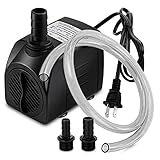
- Top Pick: Uniclife 80 GPH Submersible Water Pump 4W 2.4ft High Lift Quiet Pump for Fountain Aquarium Fish Tank
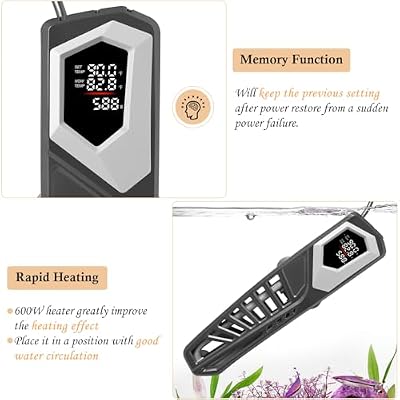
- Best Value: PULACO Large Flow: 800GPH Water Pump with 6.5 ft Tubing and 4 Nozzles
- Premium Choice: 90 GPH Mini Submersible Pump, Small Fountain Pump (5W 350L/H) for water feature, Aquariums, Fish Tank, Tabletop Fountain, Pet Fountain, Indoor or Outdoor Pond Fountain (AC Powered)

TL;DR: A quality aquarium submersible pump keeps water oxygenated, drives filtration, and powers sumps or waterfalls. This guide covers flow-rate math, head-pressure loss, noise management, and our top picks so you can match the right pump to your tank without overspending.
Best Aquarium Submersible Pump: Power, Flow, and Silence for Every Setup
Water movement is the heartbeat of any aquarium. Without adequate flow, detritus settles, dissolved oxygen drops, and biological media starves. The aquarium submersible pump you choose determines water quality, filter performance, and even livestock health — yet many hobbyists undersize or overpump without understanding the variables. This guide walks through the science and the shopping.
As an Amazon Associate we earn from qualifying purchases at no extra cost to you.





🛒 Best Price Today on Amazon
Prime members get fast, free shipping on everything above, plus member-only deals. New members get a 30-day free trial — cancel anytime.
Start 30-Day Prime Free Trial →See Today’s Amazon DealsWhy Flow Rate Alone Does Not Tell the Full Story
Manufacturers list gallons-per-hour (GPH) or liters-per-hour (LPH) at zero head — meaning the pump sitting flat with no resistance. Real-world performance drops with every foot of vertical lift, every elbow fitting, and every length of narrow tubing. A pump rated at 800 GPH at zero head may deliver only 400 GPH through a 4-foot return line to a sump. Always consult the pump’s head-pressure curve and subtract estimated losses before purchasing.
A general rule: target 5–10x total tank volume per hour for freshwater community tanks, 10–20x for planted tanks with CO2 diffusion, and 20–40x for high-flow reef systems where powerheads handle the rest. A 75-gallon reef return pump should push 750–1,500 GPH after head loss — not at the pump outlet.
Submersible vs. External: When to Go Wet
Submersible pumps run inside the sump or tank, cooled by water. They are simpler to plumb, self-priming, and quieter than comparably rated external centrifugal pumps. The trade-off: they add a small amount of heat to the water — relevant for chillers and cold-water setups — and accessing them requires getting your hand wet. External pumps win on heat management and serviceability but demand leak-proof plumbing fittings. For most hobbyists, submersible is the right default.
Top Submersible Pump Picks




As an Amazon Associate we earn from qualifying purchases. Product prices and availability are accurate as of the date/time indicated.



As an Amazon Associate we earn from qualifying purchases. Product prices and availability are accurate as of the date/time indicated.


As an Amazon Associate we earn from qualifying purchases. Product prices and availability are accurate as of the date/time indicated.
Pump Specifications at a Glance
| Feature | Entry-Level (<300 GPH) | Mid-Range (300–800 GPH) | High-Flow (>800 GPH) |
|---|---|---|---|
| Typical wattage | 5–15 W | 15–35 W | 35–100 W |
| Max head pressure | 3–5 ft | 5–10 ft | 10–20 ft |
| Best use case | Nano, HOB boost | Canister return, small sump | Sump return, display pump |
| Impeller type | Single-stage | Multi-stage or DC | DC brushless |
| Noise level | Moderate | Low–moderate | Very low (DC) |
| Flow control | Rarely included | Sometimes included | Usually included |
DC vs. AC Submersible Pumps
AC pumps are simple, inexpensive, and reliable — a fixed-speed motor drives water at one rate. DC (brushless) pumps add a controller that lets you dial flow anywhere from 10% to 100%, program ramp-up cycles, and reduce power consumption by 20–40% at partial flow. If you plan to integrate a pump with a reef controller, a dosing schedule, or a variable-flow refugium, the DC investment pays off. For a basic freshwater sump return, AC is fine.
Installation Tips That Extend Pump Life
Elevate the pump 1–2 inches off the sump floor on a small stand or suction-cup feet to prevent detritus ingestion. Use the largest diameter tubing the pump outlet accepts — reducing to smaller tubing downstream kills flow and strains the impeller. Prime the pump by submerging fully and tilting to purge air pockets before powering on. Schedule monthly impeller cleaning: magnesium and calcium deposits in saltwater tanks coat blades quickly, cutting output 15–25% before you notice.
For planted tank setups where surface agitation matters, review our aquarium air pump buyer’s guide alongside pump selection — the two work differently. If you also run a canister, see how filter flow interacts in our Fluval 207 canister filter review. Sump beginners should cross-reference the biological media filter guide for media placement around the pump intake.
Matching Pump Flow to Different Aquarium Types
No single flow rate suits every tank, which is why understanding turnover before you buy saves both money and frustration. Turnover is the number of times your pump moves the entire tank volume in an hour. A peaceful freshwater community of tetras, gouramis, or livebearers does well at roughly five to ten times turnover, providing enough circulation to spread oxygen and prevent dead spots without blasting the fish around. Heavily planted tanks running CO2 benefit from gentle, even flow that distributes nutrients and dissolved gas to every leaf, but excessive current can off-gas your CO2 and stress delicate stem plants.
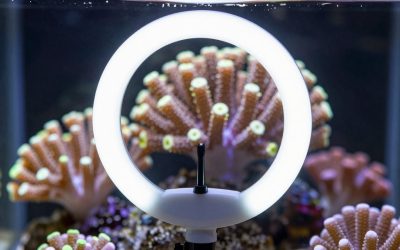
Reef and saltwater systems sit at the other extreme. Corals and many invertebrates rely on strong, varied water movement to deliver food, carry away waste, and keep detritus suspended so the filtration can capture it, so reef keepers often combine a submersible return pump with separate powerheads to reach the high turnover these animals expect. When sizing your pump, always factor in head pressure, the vertical lift and friction losses in the plumbing, because a pump rated for a high flow at zero head will deliver considerably less once it pushes water up to the display. Choosing a pump with a little headroom above your target lets you dial flow back rather than discovering too late that it cannot keep up.
Maintenance and Noise: Keeping a Pump Running Quietly
A submersible pump is cooled by the water it sits in, which makes it forgiving, but it still needs routine care to stay reliable. Over time, biofilm, algae, and mineral deposits build up inside the impeller housing and on the intake screen, gradually choking flow and forcing the motor to work harder. A simple monthly habit of unplugging the pump, removing the impeller, and rinsing it along with the intake sponge in tank water keeps performance steady. For stubborn calcium buildup, a soak in a diluted vinegar solution dissolves deposits, after which a thorough rinse removes any residue before the pump goes back in the tank.
Noise almost always signals something worth checking rather than a faulty pump. The most common cause is air being drawn into the intake, which produces a rattling or gurgling sound, so make sure the pump sits fully submerged and that the water level in a sump stays above the intake. A loose or worn impeller can cause vibration that transmits through the glass; replacing the small impeller assembly periodically, as the manufacturer recommends, restores quiet operation. Positioning the pump on a soft pad or away from direct contact with thin tank walls further dampens hum. With these small steps, a quality submersible pump should run silently for years and protect the oxygenation and filtration your livestock depend on.
Related Guides
- Best Aquarium Powerheads: Top Picks for Water Circulation and Flow
- Aquarium Stand Bracket
- Best Aquarium Sand: Top Picks for Freshwater and Marine Tanks 2026
- Quick Picks: Best Aquarium Canister Filters
Frequently Asked Questions
What flow rate should an aquarium submersible pump have for a 55-gallon freshwater tank?
Target 5–10x tank volume, so 275–550 GPH delivered at the outlet after accounting for head loss. If your pump sits 3 feet below the return outlet and runs through two elbows, purchase a pump rated 400–700 GPH at zero head to hit that real-world delivery.
Can I run a submersible pump continuously without overheating it?
Yes. Submersible pumps are designed for 24/7 operation and rely on surrounding water for cooling. Never run one dry, even briefly — a few seconds without water can melt impeller housing on cheaper units. Always ensure the pump stays fully submerged.
How loud is a submersible pump compared to an external pump?
Quality submersibles, especially DC brushless models, are nearly silent in the water column. Vibration transmitted through sump walls is the main noise source — use rubber feet or foam pads under the pump to decouple it. External pumps can generate more plumbing noise but keep heat out of the water.
Does a submersible pump raise tank temperature noticeably?
Modest pump sizes (under 25 W) add 0.5–1°F in a closed system. High-wattage pumps in sumps can add 2–4°F, which matters for cold-water species or chillers. Factor this into your thermal budget, especially in summer rooms. See our aquarium chiller guide if heat is a concern.
How often should I clean an aquarium submersible pump impeller?
Monthly in reef tanks due to calcium buildup, every 6–8 weeks in freshwater. Soak the impeller assembly in a 1:10 white vinegar solution for 30 minutes to dissolve mineral scale, then rinse thoroughly before reinstalling. Keeping a spare impeller on hand prevents downtime if one breaks during cleaning.
Ready to decide? Our #1 pick for 2026 is the Typical wattage.
Live price & availability on Amazon.
Related Reviews & Guides

Best Internal Filter for Small Aquarium: Smart Easy Picks
Best Aquascaping Scissors in 2026: Compared and Ranked