Last Updated: October 4, 2026
🛒 Best Price Today on Amazon
Prime members get fast, free shipping on everything above, plus member-only deals. New members get a 30-day free trial — cancel anytime.
Best Fish Tank Filter for 10 Gallon Aquariums
Finding the right filter for a 10-gallon tank is more nuanced than it seems. Too weak, and waste accumulates; too powerful, and the current stresses small fish or blows them around the tank. A 10-gallon aquarium is one of the most popular starter sizes, hosting everything from betta fish to small community setups with tetras, rasboras, or shrimp. The ideal filter provides mechanical, chemical, and biological filtration with a gentle, adjustable flow. Here are the top picks.
As an Amazon Associate we earn from qualifying purchases at no extra cost to you.



1. Aquarium Co-Op Sponge Filter
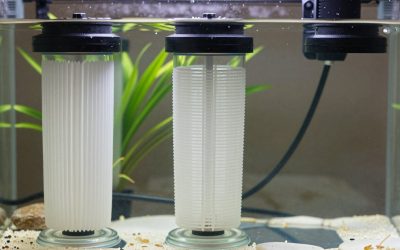
Sponge filters are a favorite among experienced hobbyists for small tanks, and Aquarium Co-Op’s version is the best on the market. It provides excellent biological filtration through a large sponge that colonizes beneficial bacteria, it’s completely safe for baby fish and shrimp, and it creates a gentle current ideal for bettas and other slow-water species. Pair it with a small air pump and airline tubing. The sponge rinses clean in old tank water during water changes and lasts years.
2. Marineland Penguin 100 Power Filter
If you prefer a hang-on-back filter, the Marineland Penguin 100 is rated for tanks up to 20 gallons, making it well-suited to a 10-gallon with a comfortable margin. Its BIO-Wheel rotating biological filter wheel maximizes nitrifying bacteria surface area. The filter is quiet, easy to maintain, and uses widely available Rite-Size B filter cartridges. It’s a reliable, low-maintenance choice for beginners who want set-it-and-forget-it convenience.
3. Fluval 107 Canister Filter
For aquarists who want premium filtration in a 10-gallon planted tank, the Fluval 107 canister filter is a compact powerhouse. Rated for tanks up to 30 gallons, it delivers 145 GPH with multiple media baskets for customizing your filtration stages. The AquaStop valve allows maintenance without disconnecting hoses, and the sound-dampening impeller design makes it nearly silent. It’s an investment but provides the cleanest water possible for delicate fish or breeding setups.
10 Gallon Filter Buying Guide
- Flow rate: Aim for 4–6x tank volume per hour (40–60 GPH for a 10-gallon); bettas prefer the lower end.
- Filter media: Prioritize biological media (sponge, ceramic rings) over chemical media for established tanks.
- Baffling strong flow: Point the outlet at the glass or use a pre-filter sponge to diffuse current for sensitive fish.
- Maintenance schedule: Rinse media in old tank water (never tap water) every 2–4 weeks.
- Noise: Hang-on-back filters can be noisy when water drops; keep water level high to minimize splash.
- Shrimp safety: Add a pre-filter sponge over any intake to protect baby shrimp.
Choosing Filtration for a 10-Gallon Tank
A 10-gallon tank is a popular size for beginners and nano setups, but its small water volume means stability depends heavily on good filtration. A filter performs three jobs: mechanical filtration traps debris, biological filtration houses the beneficial bacteria that process ammonia and nitrite, and chemical filtration, usually via activated carbon, removes dissolved impurities and odors. For a tank this size, look for a filter rated to turn over the water roughly four to six times per hour, which generally means a unit rated for tanks slightly larger than your own to give a comfortable margin.
Several filter styles suit a 10-gallon. Hang-on-back filters are easy to maintain and offer all three filtration types in one unit. Sponge filters, powered by an air pump, provide gentle biological filtration that is perfect for shrimp, fry, and betta tanks where strong flow is undesirable. Small internal filters tuck inside the tank and work well where space behind the tank is limited. Whichever you choose, make sure the flow is not so strong that it buffets small or long-finned fish.
Maintaining Your Filter the Right Way
The most important maintenance rule is to protect your beneficial bacteria, which live mostly in the filter media. Never rinse filter sponges or media under chlorinated tap water, as the chlorine kills the bacteria and can crash your cycle. Instead, swish the media gently in a bucket of old tank water removed during a water change.
- Rinse in tank water: Clean clogged media in dechlorinated or used tank water to preserve bacteria.
- Replace media gradually: If a cartridge must be replaced, do it in stages so you do not discard all your bacteria at once.
- Keep flow steady: Clean before flow drops noticeably, since a clogged filter loses both mechanical and biological efficiency.
Setting Up Your Filter Correctly
Getting a new filter running smoothly takes a few simple steps. Before switching it on, fill it and prime it according to the instructions so it does not run dry, and make sure the intake is fully submerged. Position the filter so its outflow agitates the surface for good gas exchange without blasting small fish across the tank. When you first set up the tank, remember the filter needs time to build its bacterial colony, so the tank must complete the nitrogen cycle before it is safe for fish. Seeding new media with a handful of established media from another tank can jump-start the cycle considerably.
Frequently Asked Questions
What size filter do I need for a 10-gallon tank?
Choose a filter rated to circulate the water about four to six times per hour, which often means picking a unit rated for a slightly larger tank. The extra capacity gives you a helpful margin without overwhelming small fish.
Is a sponge filter good for a 10-gallon tank?
Yes, sponge filters are excellent for 10-gallon tanks, especially those housing shrimp, fry, or bettas. They provide gentle, reliable biological filtration and are inexpensive and easy to maintain.
How often should I clean the filter?
Clean the filter media every few weeks, or sooner if the flow slows noticeably. Always rinse it in old tank water rather than tap water to protect the beneficial bacteria.
Should I turn the filter off at night?
No, the filter should run continuously. Turning it off deprives the beneficial bacteria of oxygen and flow, which can cause them to die off and lead to ammonia spikes.
Why is my filter so loud?
Noise usually comes from a low water level causing the outflow to splash, or from air trapped in the impeller. Topping up the water and making sure the intake is fully submerged usually quiets it down.
Final Thoughts
The best filter for a 10-gallon tank depends on what you’re keeping. Bettas and shrimp do best with gentle sponge filtration; community fish benefit from a hang-on-back unit; planted tanks reward the investment of a canister filter. Whichever you choose, prioritize biological filtration capacity and match flow rate to your livestock’s needs for a clean, stress-free aquarium.
Related Reviews & Guides
Best Energy Efficient RODI System: Top Expert Buying Guide
Best Fish Room Rack System For Breeders: Top Compared Guide