Last Updated: October 21, 2026
How to soften aquarium water begins with a test kit, not a bag of peat. You need GH, KH, pH and TDS written down before you change anything at all. This guide covers the target ranges in dGH and ppm, a blending formula worked through with real numbers, a diagnostic table, and the shortcuts that quietly kill fish.
As an Amazon Associate we earn from qualifying purchases.
As an Amazon Associate we earn from qualifying purchases at no extra cost to you.



By David Nguyen
Measure Before You Soften Anything
Softening is a chemistry change applied to a living system, so guessing is expensive. Working out how to soften aquarium water safely starts with four readings that tell you whether hardness is even the problem, and whether the tank is stable enough to be adjusted at all.
The Numbers That Decide Everything: GH, KH, pH and TDS
General hardness (GH) is the calcium and magnesium your fish, shrimp and snails actually use. Carbonate hardness (KH) is the buffer that stops pH falling. Record both in dGH/dKH and ppm, since 1 dGH is roughly 17.9 ppm CaCO3 and most kits print only one scale.
Soft-water species generally sit well at 2-8 dGH (36-143 ppm) and 1-4 dKH (18-72 ppm), with TDS held between 80 and 200 ppm. Before touching hardness, confirm ammonia 0 ppm, nitrite 0 ppm, nitrate under 40 ppm and a steady temperature inside the species range.
Reading Your Results: What Each Number Is Telling You
High GH with high KH is classic limestone tap water: wrong for soft-water fish, but stable. High GH with low KH is the dangerous pairing, because minerals are present while buffering is not, and pH can move several tenths overnight without anyone touching the tank.
KH under 3 dKH (54 ppm) in a stocked tank is where pH crashes happen, usually days after someone removed buffer chasing a number on a chart. The diagnostic table below maps what you are seeing to the readings that go with it, and to the first action worth taking.
| What you see | Readings that go with it | Most likely cause | First action |
|---|---|---|---|
| Fish healthy, breeding never happens | GH 12+ dGH (215+ ppm), KH 8+ dKH | Water too hard for soft-water spawners | Blend with RO water gradually |
| pH drifts down between water changes | KH under 3 dKH (54 ppm) | Buffer already exhausted | Stop softening, restore KH slightly |
| Shrimp fail to molt or die molting | GH under 4 dGH (72 ppm), TDS under 100 ppm | Over-softened, minerals stripped out | Remineralise to the species target |
| White crust on glass and heater | GH 15+ dGH (268+ ppm), TDS 400+ ppm | Evaporation concentrating minerals | Top off with RO, never with tap |
| Fish gasping at the surface | Ammonia above 0.25 ppm or temp above 84 °F (29 °C) | Not a hardness problem at all | Correct water quality and oxygen first |
When Hardness Is Not Actually Your Problem
Most fish sold as soft-water species have been farmed for generations in whatever the exporter’s tap water was. Stability beats ideal numbers: a steady 10 dGH (179 ppm) tank outperforms one swinging between 4 and 12 dGH weekly because someone is chasing a published range.
Clamped fins, flashing and refusing food are not hardness signatures. Test the four core numbers, check feeding volume and daily light hours, then look at the environment. If readings stay clean and behaviour persists, consult an aquatic veterinarian or an experienced fish store rather than dosing anything.
How to Soften Aquarium Water Step by Step
The order below matters, and each step gives you a checkpoint before the next change. This is the practical core of how to soften aquarium water without producing a pH crash three days later, and every stage assumes you already have the four baseline readings.
Step 1: Set a Target Range for the Livestock You Keep
Write one target range, not one number. Neocaridina shrimp do well around 6-10 dGH (107-179 ppm) with 2-5 dKH. Caridina shrimp want 4-6 dGH (72-107 ppm) and 0-2 dKH, which is a different tank entirely. Community tetras and rasboras are comfortable at 3-8 dGH.
Pick the narrowest range covering everything in the tank, then aim for the middle of it. If two species have no overlap, the answer is two tanks rather than a compromise suiting neither. Matching fish to your existing tap water is cheaper and far more stable long term.
Step 2: Blend With RO or Distilled Water, With the Math
Blending is the only method that moves GH and KH by a predictable amount. Reverse osmosis and distilled water read near 0 dGH and near 0 ppm TDS, so mixing either with tap water dilutes hardness in direct proportion. The result is a simple weighted average of two sources.
Worked example: tap runs 14 dGH (251 ppm) and you want 7 dGH (125 ppm) in a 20 gallon (76 L) tank. A 50/50 blend gets you there, so a 5 gallon (19 L) change is 2.5 gallons (9.5 L) tap and 2.5 gallons (9.5 L) RO. Test the bucket before it goes in.
Step 3: Peat, Botanicals and Driftwood as a Partial Tool
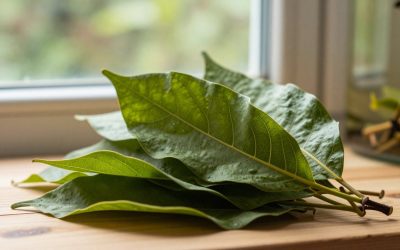
Peat granules, catappa leaves and driftwood release tannins and organic acids that nudge pH down and slightly reduce KH. They tint the water amber and work slowly. Treat them as a supporting method rather than the main one, because the effect is real but not predictable in advance.
The limitation deserves stating plainly: botanicals cannot strip calcium and magnesium out of hard tap water. At 15 dGH (268 ppm) no quantity of peat reaches 6 dGH. Botanicals also decay, need replacing every few weeks, and add bioload while they do it.
Step 4: Tank Size, Placement and Fit for Softening Gear
An RO unit needs a supply connection, a drain and storage for output. Countertop systems produce 50-100 GPD (189-379 LPD) but send 3-4 gallons (11-15 L) to waste per gallon made. You also need mixing containers sized to your largest water change, plus somewhere to keep them.
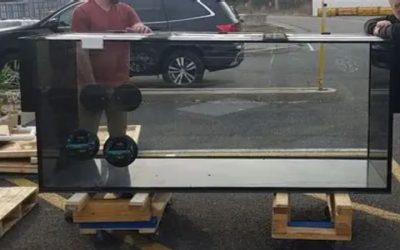
Weight is the constraint people underestimate. Water runs about 10 lb/gallon (roughly 1 kg/L), so a filled 55 gallon (208 L) tank passes 600 lb (272 kg) with substrate and rock. Measure before you order: cabinet height for an RO housing, and 4-6 in (10-15 cm) behind the tank for a hang-on-back filter.
What Never to Do When Adjusting Hardness
Almost every disaster in this topic traces to one of three actions. Each looks like progress on a test strip, and each moves the tank toward instability. Knowing how to soften aquarium water is mostly knowing which three shortcuts to refuse.
Never Dose pH-Down Products to Fix Hardness
Acid-based pH adjusters consume KH. Once KH falls below roughly 3 dKH (54 ppm) the tank loses its buffer, pH can drop overnight, then rebound after the next water change. Fish tolerate a stable unusual pH far better than a textbook pH that moves twice a week.
These products also leave GH untouched, so the calcium and magnesium making your water hard are still present. You end up with identical hardness, a destroyed buffer and a bottle you must keep repurchasing. Correct the source water instead of medicating the display tank.
Never Soften by Boiling, Freezing or Roof Runoff
Boiling precipitates some temporary hardness while concentrating everything else as water evaporates, and it does not remove chloramine. Freezing separates nothing usefully at aquarium scale. Both cost hours and produce a result you cannot measure or repeat next week.
Rainwater collected off a roof carries whatever sits on that roof, including metals from flashing and gutters. Copper is lethal to shrimp and snails at very low concentrations, which makes roof runoff one of the least controlled inputs you could possibly add to a tank.
Never Drop Hardness Faster Than Fish Can Adjust
Osmotic shock is a genuine failure mode. Keep changes near 1-2 dGH (18-36 ppm) per week, and match new water to within 1-2 °F (about 1 °C) of the tank. A fish moved from 15 dGH to 5 dGH in one day is measurably stressed even when it survives the night.
This is why blending wins. Each partial water change moves the tank a small calculable distance toward target, and you can stop at any point. Full-volume swaps remove that control completely and strip the established biofilm along with the minerals.
Keeping Soft Water Stable for Twelve Months
Softened water does not stay soft on its own. Evaporation, feeding, substrate and hardscape all push hardness back upward, which is why most setups that learned how to soften aquarium water correctly still drift out of range somewhere around month four or five.
A Blending Routine You Can Actually Keep
A baseline of 20-30% weekly, adjusted by measured nitrate, suits most freshwater tanks. Mix the same tap-to-RO ratio every time, test the bucket, then match temperature before adding. Twenty predictable minutes a week beats a two-hour rescue every second month.
Top-offs are a separate job. Evaporation removes water and leaves minerals behind, so replace evaporated volume with pure RO or distilled water only. Indoor heating in winter drives that loss much faster, concentrating GH, KH and nitrate together while the tank looks unchanged.
Gear That Drifts: Membranes, Resin, Meters and Reagents
RO membranes lose rejection slowly and silently. A TDS meter on the output is the only practical check: a healthy unit reads near 0 ppm, and a climbing figure means exhausted DI resin or a failing membrane. Replacement cartridges are a real recurring twelve-month cost.
Liquid reagents expire, and old nitrate reagent reads low unless bottle two is shaken hard. Strips drift quickly once opened in a humid room. Heaters drift too, with budget units commonly running ±2-4 °F (±1-2 °C) off the dial, so keep a separate thermometer and a GFCI outlet with a drip loop.
Early Signals That Hardness Is Climbing Again
Watch for white mineral crust at the waterline, on heater glass and around the filter outflow. That is dissolved solids leaving solution, and it usually shows before your next scheduled test. Shrimp failing to molt cleanly is a second early signal worth acting on immediately.
Test GH, KH and TDS monthly once stable, and again whenever you change source water, add hardscape or move house. Limestone rock and crushed coral dissolve continuously, so a tank can climb 3-4 dGH across a season while nothing visible appears to have changed at all.
Frequently Asked Questions
These four questions come up most often once the first blend is mixed and the readings start moving in the right direction.
Can I use bottled drinking water instead of RO water?
Usually not. Most bottled drinking water is mineralised and often reads 4-10 dGH (72-179 ppm), so it dilutes far less than expected. Distilled water works at small scale, though cost per gallon makes it impractical much above 20 gallons (76 L) of tank volume.
Does a household water softener work for the aquarium?
No. Domestic ion-exchange softeners trade calcium and magnesium for sodium, so GH falls while TDS stays high and sodium climbs. Fish and plants respond badly to that swap. Use RO or distilled water for blending and keep the house softener out of the loop entirely.
Will softening the water lower my pH automatically?
Often yes, because RO blending reduces KH alongside GH and lower buffering lets pH settle. Treat that as a consequence to monitor rather than a goal. Keep KH at or above roughly 2-3 dKH (36-54 ppm) in a stocked tank so pH does not become unstable.
Do I need soft water for a beginner community tank?
Generally no, and this is where how to soften aquarium water becomes optional. Farmed tetras, rasboras, corydoras and livebearers handle 5-15 dGH (90-268 ppm) provided the value stays steady and ammonia and nitrite read 0 ppm on a liquid test kit.
The Bottom Line on Softening Aquarium Water
The short answer to how to soften aquarium water: test GH, KH, pH and TDS, set a target range for your livestock, blend tap with RO water in a measured ratio, and move no faster than 1-2 dGH per week. Skip pH-down bottles, top off only with pure water, and put your membrane, reagents and heater on a replacement schedule. If your tap already suits your fish, leaving it alone is the better answer. For related parameters, look at the safe ammonia level in a fish tank, the causes behind cloudy aquarium water, and how to size an aquarium filter for your volume.
Is Aquarium Uv Sterilizer Worth It? An Honest Answer (2026)
Are Aquarium Test Strips Worth It? An Honest Answer (2026)