Last Updated: October 21, 2026
How to clear green aquarium water comes down to three methods that genuinely work, and a long list of popular ones that do not. A blackout takes three to four days, a UV steriliser three to seven, and nutrient control on its own one to four weeks. Which one fits depends entirely on what caused the bloom.
As an Amazon Associate we earn from qualifying purchases.
As an Amazon Associate we earn from qualifying purchases at no extra cost to you.




By David Nguyen
Check the Numbers Before You Pick a Method
Clearing is the second job. Deciding how to clear green aquarium water without first checking four readings usually produces a clear tank that greens again within a fortnight, because the surplus that fed the bloom is still sitting there untouched.
The Numbers That Decide Which Method Fits
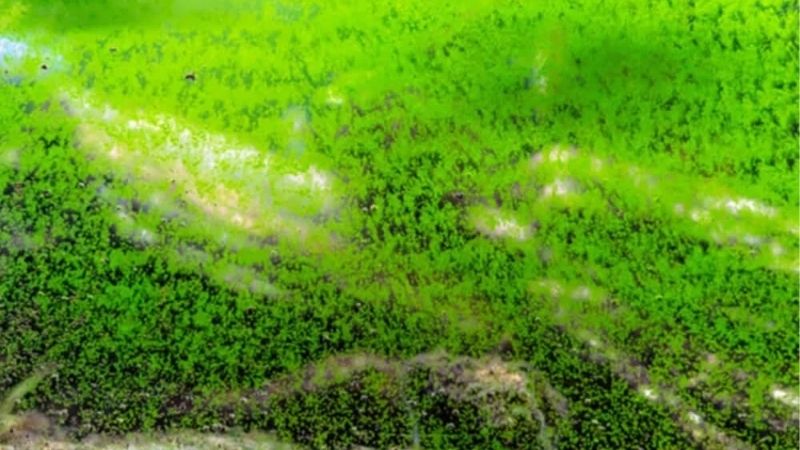
Test ammonia, nitrite, nitrate and temperature with a liquid kit. Ammonia and nitrite at 0 ppm mean the tank is cycled and you can proceed. Nitrate above 40 ppm means nutrient control has to be part of the plan whichever clearing method you choose.
Count light hours and check for daylight on the glass. Above eight hours of artificial light, or any direct sun, the driver is light and a blackout will be undone within weeks unless the schedule changes at the same time.
Note tank volume and stocking density too. A blackout in a warm, heavily stocked tank carries a real oxygen consideration, and that single fact decides whether you add an air stone before starting or proceed without one.
The Decision Tree: Matching Method to Cause
Light-driven blooms in a movable tank respond fastest to a blackout plus a shorter photoperiod. Nutrient-driven blooms in a heavily stocked tank need water changes and feeding cuts first, or the bloom simply returns once the lights come back on.
Recurring blooms, especially in tanks that cannot be moved away from a window, are the case for a UV steriliser. It is the only method that works continuously without ongoing intervention, and that reliability is what you are paying for.
Tanks with fry or shrimp narrow the options further. Chemical treatments are off the table entirely, and a blackout is workable but removes the biofilm grazing that young shrimp depend on, which leaves nutrient control as the slow but safe route.
| Situation | Readings and inputs | Best method | Expected time to clear |
|---|---|---|---|
| First bloom, planted tank, no window | Nitrate under 40 ppm, light over 8 hours | Blackout plus 6-hour timer | 3-4 days |
| Heavily stocked, overfed tank | Nitrate above 40 ppm | Water changes and feeding cuts | 1-4 weeks |
| Tank beside a window, cannot move | Direct sun on glass | UV steriliser, run continuously | 3-7 days |
| Tank under 3 months old | Ammonia or nitrite above 0 | Finish the cycle first | Varies, 3-8 weeks |
| Fry or shrimp present | Any | Nutrient control, no chemicals | 1-4 weeks |
When Clearing Is Not the Priority
If ammonia or nitrite reads above 0 ppm, that comes before any question of how to clear green aquarium water. Green water in an uncycled tank is a side effect of the ammonia present, and clearing it while the cycle is incomplete addresses the symptom while fish are still being harmed by the cause.
Watch fish behaviour through any dense bloom. Rapid gill movement or surface breathing before dawn means overnight oxygen depletion, and the response is an air stone immediately rather than waiting for whichever clearing method to finish.
Clearing Green Water Step by Step
These steps run in order, and the first two apply whichever method you pick. Every reliable route to how to clear green aquarium water starts by removing the surplus rather than the colour. Treat the clearing itself as the third step rather than the first one.
Step 1: Cut Light and Nutrients First
Set the light to six hours on a timer and block any window putting sun on the glass. Change 30-40% of the water with temperature matched to within 1-2 °F (about 1 °C), vacuuming substrate as you go, and cut feeding to once daily.
Give this three or four days on its own before adding anything else. In mild cases the tank clears without further intervention, and in every case it lowers the surplus that would otherwise refill the water column afterwards.
Add fast-growing plants at this stage if the tank is planted. Floating species and fast stems compete for exactly the nutrients the algae is using, and establishing them now means the competition is in place before the light comes back on.
Step 2: Run a Blackout, Correctly
Cover the tank completely so no light enters at all, including room light through the sides. Keep the filter running, add an air stone, and do not feed. Three to four days is the standard duration, and partial darkness simply does not work.
Expect dead algae after. Change 30-40% of the water when the cover comes off, clean mechanical media the following week rather than the same day, and restore light at six hours rather than returning to the previous schedule.
Step 3: Add UV Only If It Keeps Coming Back
A UV steriliser kills suspended cells as water passes through it, which makes it the reliable method for tanks that cannot escape daylight. Size it against real water volume and note that contact time matters, so pushing too much flow through reduces effectiveness.
The honest limitations: it does nothing about algae on glass, leaves or hardscape, the bulb loses output well before it stops lighting and needs replacing roughly annually, and it runs continuously so it adds to the twelve-month electricity cost.
Step 4: Tank Size, Placement and Fit
Moving the tank away from a window is the cheapest permanent fix available, and no equipment matches it. Two metres into the room changes the light budget more than any change of schedule or fixture, so consider it before buying anything.
Volume changes the timeline. A 5 gallon (19 L) tank clears and re-blooms faster than a 55 gallon (208 L) tank, because concentrations move four times as fast with a quarter of the dilution available to absorb any input.
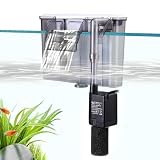
Measure before you order: an inline UV unit needs cabinet height and hose runs, an in-tank unit needs internal space, and a hang-on-back filter needs 4-6 in (10-15 cm) behind the tank. Check stand capacity against roughly 10 lb/gallon (about 1 kg/L) filled.
What Never to Do When Clearing Green Water
Three actions either restart the bloom or trade it for something worse, and all three appear in most advice on how to clear green aquarium water. All three are widely recommended, which is exactly why they keep producing the same result in tank after tank.
Never Empty and Refill the Whole Tank
A complete change swings temperature, pH and hardness at once, strips minerals, and leaves algae on every surface to reseed the water within days. It also risks the biological filter if substrate and media are disturbed at the same time.
Partial changes of 30-40%, repeated every few days, remove nutrients without the chemistry swing. That is slower to look at and considerably faster to actually resolve, because it reduces the surplus rather than briefly diluting it.
Never Use an Algaecide as the First Move
Killing a dense bloom chemically releases the nutrients held in those cells and consumes oxygen as the die-off decomposes. In a warm, stocked tank the sequence can produce an ammonia reading and a second bloom within a fortnight.
Copper appears in many of these products and is lethal to shrimp and snails at very low concentrations. Where invertebrates are present the category is simply unavailable, whatever the packaging claims about being invertebrate safe.
Never Run a Blackout Longer Than Four Days
Four days is enough for suspended algae and about the limit for plants. Longer blackouts cause stem plants to drop leaves and melt, adding decomposing plant matter to a tank that already has a nutrient surplus, which is the opposite of the goal.
Do not skip aeration during it either. Photosynthesis stops entirely in darkness while respiration continues, so dissolved oxygen falls across the period in exactly the tanks least able to spare it.
Preventing the Bloom From Returning
Clearing is a few days of work, and prevention is a schedule. Most tanks that needed how to clear green aquarium water once will need it again without both budgets changing.
A Schedule That Holds Year Round
Keep the light on a timer at six to eight hours and water changes at 20-30% weekly adjusted by measured nitrate. Test nitrate before the change, not after, since the pre-change figure is the one that tells you whether the routine is keeping pace.
Spring is the recurring trigger. Daylight lengthens from March and the sun sits higher, so a tank that was in shade through winter starts catching direct light in the same position, and blooms appear with nothing in the setup having changed.
Equipment That Degrades and How It Shows
UV bulbs lose output long before they stop glowing, which is why a unit that controlled algae in year one may fail quietly in year three. Replace the lamp roughly annually rather than waiting for a visible failure that never comes.
LED fixtures lose PAR across their life too, and filter flow drops 30-50% as media loads and impellers wear. Every powered device beside water belongs on a GFCI outlet with a drip loop and a UL or ETL mark.
The Twelve-Month Running Cost
Budget for a replacement UV lamp, continuous power for the unit, dechlorinator, mechanical media and test reagents. A UV steriliser is the only method here with a recurring consumable, and knowing that figure before buying is better than discovering it in month thirteen.
Against that, a timer costs once and prevents the most common cause outright. Fast-growing plants cost little and compete for the same nutrients continuously, which makes them the cheapest long-term control in a planted tank.
Frequently Asked Questions
These four come up most often once the first method has been tried and the tank sits somewhere between pea soup and clear.
Will a water change alone clear green water?
Rarely on its own. Suspended algae multiplies faster than partial changes remove it, so changes reduce the nutrients driving it rather than clearing the water directly. Pair them with a shorter photoperiod, and expect one to four weeks.
Do algae eaters help with green water?
No. Otocinclus, shrimp and snails graze surfaces, and suspended cells are not available to them. Freshwater mussels and daphnia filter feed on it, but neither is a practical addition to a typical display tank.
Can I do a blackout with fish and shrimp in the tank?
Yes, for three to four days, with the filter running and an air stone added. Fish tolerate short darkness well and fasting for that period is not harmful. Shrimp graze biofilm throughout and are generally unaffected.
Why did it come back a month later?
The driver was never removed. Knowing how to clear green aquarium water is separate from knowing what fed it, so check whether the light schedule crept back up, feeding increased, or the season brought daylight onto the glass again.
The Bottom Line on Clearing Green Aquarium Water
The short version of how to clear green aquarium water: cut the photoperiod to six hours and bring nitrate under 40 ppm first, then clear the remaining cells with a three to four day blackout, or with a UV steriliser if the tank cannot be moved out of daylight. Keep the filter running and add aeration throughout. Avoid algaecides entirely with shrimp or snails present, never empty the whole tank, and put the light on a timer afterwards, because the bloom returns whenever the surplus does.
Best Aquarium Cooling Fan for Hot Weather: Smart Top Picks

Aquarium Cichlid Fish Food Pellet Review