Last Updated: October 4, 2026
A stress coat product helps new fish through transport and handling, but it is not a medication or, in every case, a dechlorinator. The best stress coat for new fish supports the slime coat during acclimation, and choosing well means knowing whether it also conditions tap water, since making the water chemically safe comes first.
As an Amazon Associate we earn from qualifying purchases.
By David Nguyen
Quick answer: For most people in 2026, the best stress coat for new fish is the API Stress Coat — our #1 rated choice. See the full ranked comparison, alternatives and buying advice below.
How to Choose a Stress Coat Product
Choosing well means deciding whether you need a conditioner, wound support, or both, checking whether the product dechlorinates, understanding the slime-coat mechanism, and remembering it is not an antibiotic. These four points matter because the products overlap in name but differ in what they actually do for the fish.
Conditioner, Wound Support, or Both
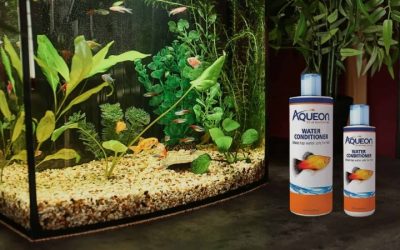
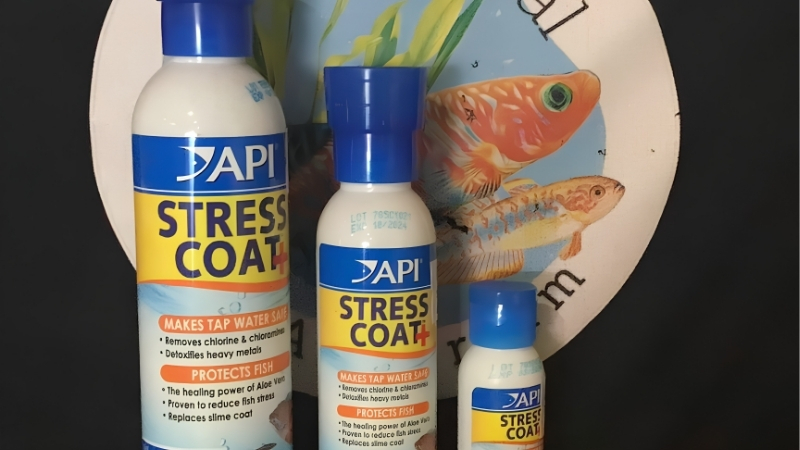
First decide what the fish actually needs, because these products are not all the same job. API Stress Coat combines slime-coat support with dechlorination, Aqueon Water Conditioner does the same, while Seachem StressGuard focuses on handling and wound stress and is not a tap-water dechlorinator.
So if you are adding new tap water and new fish, a combined conditioner-plus-slime product covers both, whereas pure wound support is a separate need. Match the product to whether you need water conditioning, tissue-stress support, or both, rather than assuming any stress product does everything.
Does It Dechlorinate?
This is the critical distinction, because not all stress products dechlorinate. API Stress Coat and Aqueon Water Conditioner neutralize chlorine and chloramine, but StressGuard makes no tap-water dechlorination claim, so using it alone on fresh tap water leaves the disinfectants in place.
So do not silently rely on StressGuard as your sole conditioner for new water, since it is primarily stress and wound support. Confirm whether your chosen product handles chlorine and chloramine, and if it does not, pair it with a proper dechlorinator so the water is chemically safe before the fish go in.
The Slime-Coat Mechanism
These products support the slime coat, but by different means, so the mechanism matters. StressGuard uses protein-active colloids that bind to exposed wound protein, aiding tissue stress, while API and Aqueon use their own conditioner and slime-support formulas, with API being aloe-based.
So the products are not interchangeable at the chemistry level, even where their goals overlap. Choose based on the specific support you want, such as wound-protein binding for an injured fish versus general slime-coat support for routine acclimation, rather than treating all slime products as identical.
It Is Not an Antibiotic
A stress coat product supports the fish, but it does not cure disease, so aloe does not cure infection and slime support is not a medication. It can help a stressed or lightly injured fish resist secondary problems, but an actual infection needs the appropriate treatment, not a stress product.
So set expectations accordingly: use these to ease transport, handling, and minor tissue stress, and reach for a real medication when a fish is sick. Note too that StressGuard is incompatible with copper medications, so check compatibility before combining any stress product with a treatment.
Top Picks
Three products plus the acclimation habit that reduces stress cover new-fish support, with the overall pick going to the combined conditioner and slime product. Prices are relative and current as of 09/2026, and because roles differ, match the choice to whether you need dechlorination, wound support, or gentle handling.
| Option | Best For | Dose / Role | Watch Out For |
|---|---|---|---|
| API Stress Coat | Best overall new fish and new water | 5 mL/10 gal; aloe slime + dechlorinate | Not a disease cure |
| Seachem StressGuard | Best transport and wound support | 2.5-5 mL/10 gal; binds wound protein | Not a dechlorinator; no copper meds |
| Aqueon Water Conditioner | Simple conditioner and slime support | 5 mL/10 gal; dechlorinates + slime | General support, not wound-specific |
| Gentle acclimation | First step that reduces stress | Slow drip; dim light; minimal netting | Takes patience; no product shortcut |
API Stress Coat – Best Overall for New Fish and New Water
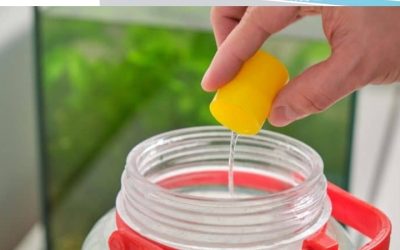
API Stress Coat is the best all-round pick for adding new fish to new water, an aloe-based slime-coat support that also dechlorinates chlorine and chloramine, dosed at 5 mL per 10 gallons, around $10 for 16 oz as of 09/2026. It covers water conditioning and slime support in one bottle.
That dual role makes it convenient for the common case of introducing fish during a water change. It is not a disease cure, so treat it as acclimation and slime support rather than medication, and it is marginally cheaper than the comparable Aqueon conditioner at the captured prices.
Seachem StressGuard – Best Transport and Wound Support
StressGuard is the targeted choice for transport and wound stress, using protein-active colloids that bind exposed wound protein, dosed at 2.5 to 5 mL per 10 gallons daily, around $10 for 3.4 oz as of 09/2026. It shines for fish that are injured or heavily handled.
Crucially, it is not a tap-water dechlorinator, so do not use it alone on new tap water; pair it with a conditioner. It is also incompatible with copper medications, so check compatibility before combining it with any treatment, and use it for its wound and stress focus rather than as a general conditioner.
Aqueon Water Conditioner – Simple Conditioner and Slime Support
Aqueon Water Conditioner is the straightforward combined option, restoring slime coat and reducing netting and transport stress while dechlorinating chlorine and chloramine, dosed at 5 mL per 10 gallons, around $10 for 16 oz as of 09/2026. It mirrors API’s dual role in an easy, round dose.
It offers general slime support rather than the wound-protein focus of StressGuard, so it suits routine acclimation over injury care. At a similar price and dose to API Stress Coat, the choice between them often comes down to brand preference and whether you want aloe-based support specifically.
Gentle Acclimation – First Step That Reduces Stress
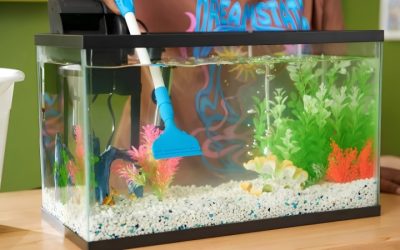
Before any product, the biggest stress reduction comes from gentle handling, since how you acclimate a fish matters more than what you pour in. Slow drip acclimation, dim lighting, and minimal netting reduce the shock that stress products then help the fish recover from.
This costs nothing and addresses the cause of transport stress directly, which is why it belongs first. Use a stress coat product to support the slime coat alongside careful acclimation, not as a substitute for it, and remember no bottle undoes the stress of a rushed, rough introduction.
Frequently Asked Questions
Stress-coat questions focus on whether it replaces a conditioner, medication compatibility, daily dosing, and disease. Each answer leads with the direct call, then the caveat that changes it for your particular product and situation, since these products differ in role.
Does a Stress Coat Replace a Conditioner?
Only if it dechlorinates, because not all stress products condition tap water. API Stress Coat and Aqueon Water Conditioner neutralize chlorine and chloramine, so they can double as your conditioner, but Seachem StressGuard makes no dechlorination claim and cannot replace one on its own.
So check the label before relying on a stress product for new water. If it does not dechlorinate, pair it with a proper conditioner so the water is chemically safe, and never assume a slime-coat or wound-support product handles chlorine and chloramine just because it is added at water changes.
Can I Mix It With Medications?
It depends on the product and the medication, so check compatibility first. Notably, Seachem StressGuard is incompatible with copper medications, so combining them is not safe, and other stress products may have their own interactions worth verifying before dosing alongside a treatment. When you are unsure, dose the stress product and the medication at separate times rather than mixing them in the same water at once.
So read both labels before mixing anything, and when in doubt, treat and support separately in time. A stress product can help a fish cope during illness, but it is not itself a medication, so coordinate it carefully with any treatment rather than assuming the two are automatically compatible.
Should I Dose It Daily?
It depends on the product and the situation, so follow the label. StressGuard is dosed at 2.5 to 5 mL per 10 gallons daily for ongoing handling or wound stress, while conditioner-type products like API Stress Coat are typically used with water changes and new additions rather than every day.
So match the frequency to the need: daily support for an injured or heavily stressed fish, versus as-needed dosing at water changes for routine acclimation. Do not over-dose out of habit, and taper support as the fish recovers rather than continuing daily indefinitely once the stress has passed.
Will It Cure a Sick Fish?
No, a stress coat product does not cure disease, since aloe and slime support are not medications. It can help a stressed or lightly injured fish resist secondary problems and recover from handling, but an actual infection or parasite needs the appropriate treatment, not a stress product.
So if a fish is genuinely sick, diagnose the problem and use a real medication, using the stress product only as supportive care if compatible. Setting this expectation avoids the mistake of dosing stress coat repeatedly while an untreated disease progresses in a fish that needs medicine.
Final Thoughts
The best stress coat for new fish supports the slime coat through acclimation, so API Stress Coat leads as the combined conditioner-slime pick, StressGuard excels at wound support, and Aqueon offers simple conditioning, all backed by gentle handling. Decide whether you need conditioning, wound support, or both, confirm whether the product dechlorinates, make the water chemically safe first, and remember none cures disease.
As an Amazon Associate we earn from qualifying purchases at no extra cost to you. Prices and availability are accurate as of the date shown and are subject to change.
Ready to decide? Our #1 pick for 2026 is the API Stress Coat.
Live price & availability on Amazon.
Related Reviews & Guides
How Long Does an Aquarium Cycle Take: Timeline and Delays
6 Best Fish Tank Stand 125-Gallons 2026