Last Updated: October 21, 2026
How to set up a freshwater aquarium is really a question about order of operations. The hardware goes together in an afternoon, but the biological filter that keeps fish alive takes three to eight weeks, and almost every early loss comes from stocking before that filter has been confirmed by a test.
As an Amazon Associate we earn from qualifying purchases.
As an Amazon Associate we earn from qualifying purchases at no extra cost to you.





By David Nguyen
Measure First: The Readings That Shape the Whole Build
Working out how to set up a freshwater aquarium starts with four sets of numbers: the tank itself, the water coming out of your tap, the temperature of the room, and the load the floor can carry. Getting these on paper first prevents the expensive corrections that follow a filled tank.
The Decision Numbers Before You Buy Anything
Write down capacity in US gallons and litres, footprint in inches and centimetres, and filled weight at roughly 10 lb per gallon (about 1 kg per litre) plus substrate. A 40 gallon (151 L) breeder passes 450 lb (204 kg), which rules out most shelving and flat-pack furniture immediately.
Then list the non-negotiable gear: filter, heater, dechlorinator, thermometer and a liquid test kit. Measure the stand length, the clearance behind the tank, the cabinet height and the floor rating before ordering, because a filled tank cannot be repositioned or returned once water is in it.
Read Your Tap Water Before You Choose Fish
Test tap water for pH, GH and KH before picking species, because matching fish to the water you already have is cheaper and far more stable than adjusting water to suit the fish. Record GH and KH as dGH and dKH plus ppm, since 1 dGH is roughly 17.9 ppm on most charts, and both numbers steer the species list.
Disinfectant matters just as much. Utilities dose chlorine or chloramine and some switch between them seasonally or during main repairs, so check your supplier notice for the current treatment and year. Chloramine needs a conditioner that states it on the label, and boiling does not remove it.
When a Problem Is Not About the Setup
If ammonia, nitrite, nitrate and temperature all read normal and fish still behave abnormally, stop adjusting the tank. Describe what you see factually, keep the parameters stable, and take the question to an aquatic veterinarian or an experienced local fish store rather than dosing blind.
Never start with a medication cabinet. Water readings come first, environment second, and disease only after both have been ruled out, because most early symptoms in a new tank are caused by ammonia or nitrite that a test kit would have shown days before the fish reacted to any of it.
| What you see | Reading to take | Most likely cause | First action |
|---|---|---|---|
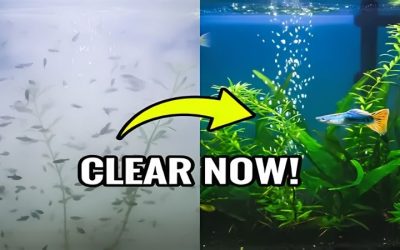
| Cloudy white water, week 1 | Ammonia, nitrite | Bacterial bloom on dissolved organics | Stop feeding, test daily, do not add clarifier |
| Fish gasping near the surface | Temperature, ammonia | Low oxygen or ammonia irritation | Add aeration, change 25 to 50 percent |
| Ammonia above 0.25 ppm | Ammonia, nitrite | Filter not yet established | Change water, cut feeding, keep testing |
| Nitrite above 0 ppm | Nitrite, nitrate | Second bacteria stage still growing | Change water, add no further fish |
| Temperature swinging 4 F (2 C) | Thermometer, room temp | Undersized heater or draughty spot | Recheck wattage, move away from vents |
The Steps in Order, With the Numbers for Each
This is where how to set up a freshwater aquarium becomes a sequence rather than a shopping list. Each step has a figure attached to it, and skipping ahead simply moves the problem later, usually into week two, when ammonia climbs and the fish are already living in the tank with nowhere else to go.
Step 1: Place the Stand, Level the Tank, and Check the Fit
Position the stand against a load-bearing wall, out of direct sunlight and away from heating vents or exterior doors. Level it in both directions before filling, because an out-of-level tank puts uneven stress on the seams and shows a visibly tilted waterline you cannot correct later.
Confirm the fit while everything is still dry. Hang-on-back filters want 4 to 6 in (10 to 15 cm) of clearance behind the glass, canisters need cabinet height plus lifting room, the light must match tank length, and the outlet should sit low enough that the cable forms a proper drip loop.
Step 2: Substrate, Hardscape, Water and Equipment
Rinse gravel or sand until the water runs clear, add hardscape before filling, then fill onto a plate to avoid excavating the substrate. Treat the whole volume with conditioner as it goes in, dosing for the entire tank volume rather than for the amount of new water alone, which is a common early slip.
Fit a heater sized at roughly 3 to 5 W per gallon when the room runs about 10 F (6 C) below target, and a filter that turns real water volume over four to six times per hour. Run everything for a full 24 hours and confirm the temperature holds steady at 78 to 80 F (26 to 27 C) without drifting.
Step 3: Cycle the Filter, Then Stock Slowly
Dose ammonia to 2 to 4 ppm and keep dosing as it falls. Over three to eight weeks nitrite appears and then disappears, and nitrate accumulates. The tank is cycled when a 2 ppm dose reads zero ammonia and zero nitrite 24 hours later, with nitrate clearly present on the final test result.
Then add one small group of fish, wait two to three weeks, and test twice weekly before adding any more. A liquid master test kit is what makes this stage readable, and its reagents expire, so check the printed expiry date rather than trusting an old box found at the back of a cupboard.
What Never to Do While Setting Up
Three habits cause most of the avoidable damage in the first month, and all three feel productive at the time. Knowing how to set up a freshwater aquarium properly includes knowing which instincts to override, because each of these actively removes the bacteria the tank is trying to grow.
Do Not Add Fish on Filling Day
An unfilled biological filter cannot process waste, so ammonia begins climbing within hours of the first feeding. Fish exposed to ammonia above 0.25 ppm or any measurable nitrite suffer gill and skin damage, and the damage accumulates quietly over the days before behaviour changes visibly.
If fish are already in an uncycled tank, feed sparingly, change 25 to 50 percent of the water whenever ammonia or nitrite reads above zero, and test daily. That is damage control rather than a method, and it will still take weeks for the filter to catch up with the load already in the tank.
Do Not Rinse Media Under the Tap or Change All the Water
Chlorine and chloramine kill nitrifying bacteria on contact, so rinsing a sponge under running tap water undoes weeks of progress in seconds. Rinse mechanical media in a bucket of water siphoned from the tank, and replace only one layer at a time so the colony always has somewhere to live.
A total water change is the same mistake at a larger scale. It strips the dissolved chemistry the fish have adjusted to and swings temperature and pH at once. Twenty to thirty percent weekly, matched to within 1 to 2 F (about 1 C), does far more good for the fish than any full reset ever will.
Do Not Chase pH With Chemicals
Buffering products move pH quickly and then let it drift back, and that swing is harder on fish than a stable value slightly outside the ideal range. A tank with low KH has little buffering capacity, which is exactly where sudden pH adjustments become dangerous rather than helpful.
Choose species suited to the water you have, and change chemistry slowly through substrate, driftwood or mineral additions if you must change it at all. Stability beats a number on a chart, and it costs nothing beyond picking fish that already suit the water coming out of your tap.
Preventing Repeat Problems: Schedule, Wear and Early Warnings
A new tank is not finished when the fish go in, it is finished when it survives its first summer and its first winter. This section covers how to set up a freshwater aquarium so that the system stays stable through seasonal swings, holiday absences and the predictable wear of hardware that never switches off.
The Maintenance Schedule That Prevents Most of This
Weekly: change 20 to 30 percent, matched for temperature and treated for chlorine or chloramine, adjusted by measured nitrate rather than by habit. Monthly: rinse mechanical media in old tank water, check the impeller for grit, clear the intake strainer and inspect the lid seal for hardening.
Quarterly work is verification rather than cleaning. Compare the heater dial against an independent thermometer, check flow against the rated GPH, and replace test reagents that have expired, since expired nitrate reagent in particular reads low and quietly hides a developing problem.
Equipment That Fixes the Cause Rather Than the Symptom
Filters using loose media instead of proprietary cartridges let you keep established bacteria while replacing only the floss, which prevents the repeat mini-cycles that follow every cartridge swap. That single design choice removes the most common cause of ammonia in an established tank.
A heater with a reliable thermostat and dry-run protection is the other structural fix, alongside a battery-backup air pump in areas with storm outages. Prices move constantly, so check them at the point of purchase rather than budgeting from a figure quoted somewhere else last year.
Early Warning Signs Worth Watching
Watch for flow dropping at the outlet, a heater light that stays on continuously, evaporation accelerating, and algae appearing on the glass within days of a cleaning. Each of those precedes a measurable water problem, which means they are cheap warnings so long as you act on them early.
Season sharpens all of them. Autumn heating dries indoor air and accelerates evaporation, which concentrates nitrate and leaves heaters running longer, while a summer heat wave pushes a tank past 84 F (29 C), where dissolved oxygen falls and fish begin gasping at the surface for air.
Frequently Asked Questions
These questions come up constantly for anyone working out how to set up a freshwater aquarium, and each one has a measurement behind it rather than an opinion, which is what makes the answer usable on the evening a problem appears rather than several days after the damage is done.
How long does the whole process take?
The hardware side of how to set up a freshwater aquarium takes an afternoon, while the filter takes three to eight weeks. That range reflects temperature, aeration and whether you seeded media from an established tank. Nothing about the wait is optional and no product removes it entirely.
Can I speed things up with bottled bacteria?
It can help, and the mechanism is real, but the colony still has to grow to match your bioload, which happens over weeks in response to a steady ammonia supply. Treat any bottled product as a head start rather than a replacement, and let the test results alone decide when you stock.
Do I need a heater if the room is warm?
Yes, for tropical species. Room temperature swings between day and night and between seasons, and it is that swing rather than the average that stresses fish. A heater holds the tank steady at 78 to 80 F (26 to 27 C) even when the room drops overnight or during a prolonged winter cold snap.
What should I do if fish are already in an uncycled tank?
Test ammonia and nitrite daily, feed lightly every other day, and change 25 to 50 percent of the water any time either reading rises above zero. Add nothing else to the tank until both hold at zero for a full week, and expect this to continue for several weeks before the readings settle.
See More:
Putting the Sequence Together
Knowing how to set up a freshwater aquarium is mostly a matter of respecting the order: measure the tap water, size the equipment to the room, build and level the tank, cycle the filter until a 2 ppm ammonia dose clears in 24 hours, and only then add the first small group of fish.
None of those steps can be swapped around. Tap water first, equipment sized to the room second, the build third, the cycle fourth, and stocking last of all, in small groups with a fortnight of testing between each one. Nearly every early loss comes from taking the five out of order.
Can You Cycle a Tank With Fish: Risks and Safer Options
How to Choose a Pond Aerator: A Simple Step-by-Step Guide