Last Updated: October 4, 2026
The best auto water testing device for reef use is the one covering the parameters you will actually act on. Parameter counts make for easy marketing, but sample volume, reagent cost and ecosystem requirements decide what ownership really looks like.
As an Amazon Associate we earn from qualifying purchases.
As an Amazon Associate we earn from qualifying purchases at no extra cost to you. Prices and availability are accurate as of the date shown and are subject to change.
By David Nguyen
Quick answer: For most people in 2026, the best auto water testing device for reef is the Neptune Trident — our #1 rated choice. See the full ranked comparison, alternatives and buying advice below.
How to Choose an Automated Reef Tester
Four questions cut through the specification sheets: which parameters are genuinely measured, how precise each result is, how much tank water and reagent each test consumes, and whether the device needs a particular controller to function. Automated testing is a subscription in practice, so the recurring side deserves equal attention.
Check Which Parameters Are Measured
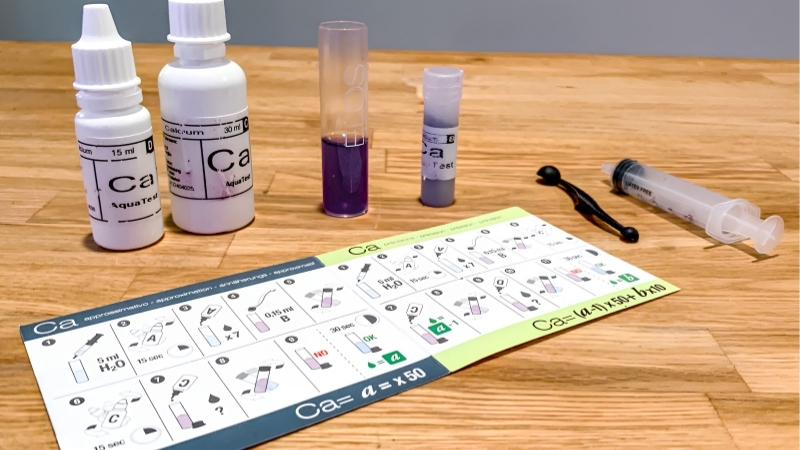
Coverage is split rather than universal. The Neptune Trident measures alkalinity, calcium and magnesium, while the separate Trident NP handles nitrate and phosphate, and the ReefBot Lab supports 18 parameters across 12 reagent slots. That split architecture is deliberate rather than a limitation of either unit.
Parameter count is not a precision score. A device covering 18 parameters using third-party reagent kits works differently from two dedicated analysers, so compare what each measures and how, rather than totalling the list. Check which specific tests each slot or module supports before assuming a parameter is covered. Some parameters overlap between devices, which complicates any direct comparison further.
Read the Precision Figures
Manufacturer precision varies by chemistry. Neptune quotes the Trident at plus or minus 0.05 dKH, plus or minus 15 ppm calcium and plus or minus 15 ppm magnesium, while the Trident NP lists plus or minus 1 ppm nitrate and plus or minus 0.01 ppm phosphate or 5%, whichever is higher. Read each figure against the parameter it describes rather than as a general accuracy claim.
Those figures matter most where you dose automatically. Alkalinity precision of 0.05 dKH is tight enough to drive closed-loop dosing, while a wider tolerance is fine for trend watching but risky as a control input. Calibration drift matters too, since an uncalibrated analyser driving a doser compounds errors.
Account for Sample and Reagent Use
Every automated test removes tank water and consumes reagent. The Trident uses under 7 mL per test with roughly 240 alkalinity and 120 calcium and magnesium tests per kit, while the Trident NP uses 30 mL per test with around 60 tests per two-month kit. Reagent kit life scales directly with how often you schedule each test. Daily testing exhausts a kit far faster than testing every second day.
Those sample volumes are not directly comparable because the chemistries differ. On a nano system the cumulative water removal matters, and on any system reagent replacement becomes a permanent recurring cost you should price before buying. Reagent shelf life also matters if you test infrequently.
Check Controller Dependence
The Trident requires the Apex ecosystem for communication and control, which makes it a natural fit for existing Apex owners and an expensive proposition for anyone starting fresh. ReefBot Lab connects over WiFi or Ethernet independently. Neither approach is inherently better; they suit different existing setups. Existing Apex owners face a very different calculation from newcomers.
Ecosystem lock-in shapes future purchases more than the device price suggests. Factor in what a controller costs if you do not own one, and confirm which features depend on cloud services rather than local operation. A controller requirement can easily exceed the analyser’s own price.
Top Picks
Three devices plus a full-chemistry comparison cover this category. Each entry lists manufacturer specifications, a relative price position as of 09/2026, and one genuine drawback worth weighing before ordering.
| Product | Best For | Key Spec | Watch Out For |
|---|---|---|---|
| Neptune Trident | Best for dosing control | Alk, Ca, Mg; plus/minus 0.05 dKH; under 7 mL/test | Requires the Apex ecosystem |
| Neptune Trident NP | Best for nutrient tracking | NO3 and PO4; 1 test/day; 30 mL per test | Larger sample volume per test |
| ReefBot Lab | Best parameter breadth | 18 parameters; 12 reagent slots; WiFi and Ethernet | Highest single-device price |
| Trident pair vs ReefBot | Full chemistry coverage | Pair is about $1,600 in hardware | Neither covers everything alone |
Neptune Trident: Best for Dosing Control
At roughly $800 as of 09/2026, the Trident automates alkalinity, calcium and magnesium at plus or minus 0.05 dKH and plus or minus 15 ppm on both metals, using under 7 mL per test with about 240 alkalinity and 120 calcium and magnesium tests per reagent kit. Alkalinity is the parameter most reefers want measured most often. Its tighter alkalinity tolerance is what makes closed-loop dosing practical.
It requires Apex for communication and control, so budget that if you are not already invested. Basic reagent runs under $60 at current manufacturer listing, making the real cost a function of how often you schedule tests. Tubing and syringe maintenance is part of ownership on any reagent-based analyser.
Neptune Trident NP: Best for Nutrient Tracking
Around $800 as of 09/2026, the Trident NP adds nitrate and phosphate through automated titration and colorimetric identification, quoting plus or minus 1 ppm nitrate and plus or minus 0.01 ppm phosphate or 5%, whichever is higher, on a one test per day schedule. Nutrient tracking suits systems running carbon dosing or heavy feeding schedules. Colorimetric identification handles phosphate where titration handles nitrate.
It consumes 30 mL per test with roughly 60 tests per two-month kit for under $80, so both water removal and reagent cost are higher per reading. The daily schedule also means it tracks trends rather than responding to rapid changes. Pair it with the standard Trident if you want alkalinity monitored more often.
ReefBot Lab: Best Parameter Breadth
Near $1,599 as of 09/2026, the ReefBot Lab supports 18 parameters across 12 reagent slots using third-party test kits, connecting over WiFi or Ethernet. It measures 17.3 by 12.5 by 12.5 inches, so confirm cabinet space before ordering. Third-party reagent support is the main structural difference from the Neptune approach. Ethernet connectivity is useful where WiFi coverage near a sump is poor.
Breadth is not accuracy, and using third-party reagents means results depend on the kits you choose. Shipping is listed as free worldwide, though duties vary by country and can add meaningfully to the landed cost. Twelve slots do mean fewer reagent swaps than juggling kits manually.
Comparing Full Chemistry Coverage
Covering alkalinity, calcium, magnesium, nitrate and phosphate with Neptune means both units, totalling roughly $1,600 in hardware as of 09/2026, before the Apex requirement and ongoing reagents. Reagents for both units then continue as a permanent monthly cost. That total excludes the controller entirely, which changes the comparison substantially.
That puts the pair about 2.8% above the ReefBot Lab, a hardware gap near under $50. Since the architectures differ completely, judge them on chemistry, reagent supply and ecosystem fit rather than treating that small price difference as decisive. Reagent availability in your region is worth checking before committing either way.
Frequently Asked Questions
Four questions come up repeatedly: whether one Trident covers everything, what the daily nutrient schedule means, how much water testing removes, and what reagents cost over a year.
Does one Trident test all five parameters?
No. The standard Trident covers alkalinity, calcium and magnesium only, and nitrate and phosphate require the separate Trident NP unit. Product naming does little to clarify the split between the two units. The two units are sold and priced independently of each other.
That split is the single most misunderstood point in this category. Budget for both units if you want full chemistry coverage from Neptune, which is what brings the hardware total to roughly $1,600. Buying one and discovering the gap later is a common and expensive surprise.
What does a one test per day schedule mean?
The Trident NP runs a single nutrient test daily, which tracks trends well but will not catch a rapid change between readings. Trend data over weeks is usually what drives nutrient decisions anyway. One reading a day is still far more data than most manual routines produce.
For nitrate and phosphate that cadence is usually appropriate, since these parameters move over days rather than hours. Alkalinity is the parameter that benefits from more frequent testing, and that is handled by the standard Trident instead. Manual spot tests remain useful when something changes suddenly.
How much tank water does testing remove?
It depends on the device and chemistry. The Trident uses under 7 mL per test while the Trident NP uses 30 mL, and those volumes are not comparable because the tests work differently. Multiply the per-test volume by your daily schedule to see the real figure.
On a large reef the cumulative loss is trivial, but on a small system frequent testing adds up alongside evaporation. Factor it into top-off behaviour if you run multiple tests daily on a nano tank. Automated top-off usually absorbs the difference without intervention.
What do reagents cost over time?
Neptune lists basic Trident reagent for under $60 and NP reagent for under $80 currently, with kit life depending entirely on your research schedule. Testing more frequently shortens kit life proportionally. Those figures are current manufacturer listings rather than street prices.
Recurring cost is the number that decides long-term value, not the purchase price. Add tubing, syringes and periodic calibration to that total, and remember automated testing increases dependency on keeping calibration current. Reef electronics and reagents both discount around Prime Day and Black Friday.
Final Thoughts
The best auto water testing device for reef systems is the one whose parameters you will act on, at a reagent cost you will keep paying. The Trident near under $900 suits Apex owners driving dosing, while ReefBot Lab covers far more parameters at roughly $1,599 with third-party reagent flexibility.
Ready to decide? Our #1 pick for 2026 is the Neptune Trident.
Live price & availability on Amazon.
Related Reviews & Guides

Aquarium Kalkwasser Stirrer
Best Magnetic Mount Wavemaker for Thick Glass: Top Picks