Last Updated: October 4, 2026
A shared BNC plug does not mean two probes are interchangeable, and the probe price is rarely the whole system cost. The best conductivity probe for saltwater monitoring is the one whose measurement range covers marine water and matches your existing controller, since these four span roughly $150 to under $300 before any interface.
As an Amazon Associate we earn from qualifying purchases.
As an Amazon Associate we earn from qualifying purchases at no extra cost to you. Prices and availability are accurate as of the date shown and are subject to change.
By David Nguyen
Quick answer: For most people in 2026, the best conductivity probe for saltwater monitoring is the Neptune Salinity Probe — our #1 rated choice. See the full ranked comparison, alternatives and buying advice below.
How to Choose a Conductivity Probe for Saltwater
Work through measurement range, controller compatibility, calibration and installation before looking at price. A cheaper probe can need extra electronics to become a working monitor, so the sensible pick balances the range it covers, the hardware it plugs into, and the total installed cost rather than the sticker figure alone.
Check the Conductivity Range First
Neptune’s saltwater calibration standard is 53,000 µS/cm, which is 53 mS/cm, so a probe needs a usable range that comfortably covers that point. The Atlas K 1.0 spans 5 to 200,000 µS/cm, so its measurement range brackets the marine calibration figure with room to spare on paper.
Do not read 53,000 µS/cm as a fixed target every reef must sit at exactly; it is a calibration reference, not an ideal salinity for all tanks. Use it to confirm a probe’s range reaches marine levels, then judge fit by controller and calibration rather than the range number by itself.
Compare Accuracy and Response Time
Atlas publishes ±2% accuracy and 90% response within 1 second for the K 1.0, which are concrete, listed figures. Numeric accuracy for the Neptune, GHL and HYDROS probes is not published on the pages checked, so those units should not be assigned an invented ± percentage to look comparable.
Treat the Atlas figures as that model’s spec, not a benchmark the others have failed. Where a maker does not publish accuracy, the honest approach is to describe each probe by what it actually states rather than implying one is more precise without matching data to support it.
Match Cable Length and Controller Hardware
Cable length varies: GHL lists 3 m or 9.8 ft, Atlas lists 1 m, and the HYDROS K-10 lists 3 ft. A longer cable helps reach a remote sump, but more cable does not make a probe more accurate, so length is a fit consideration rather than a quality ranking.
More important is which controller the probe is built for. GHL suits ProfiLux, Neptune suits Apex, and the HYDROS kit suits HYDROS, so match the probe to the hardware you already run rather than choosing on cable length or assuming any probe drops into any system.
Look at Calibration and Hidden Ecosystem Cost
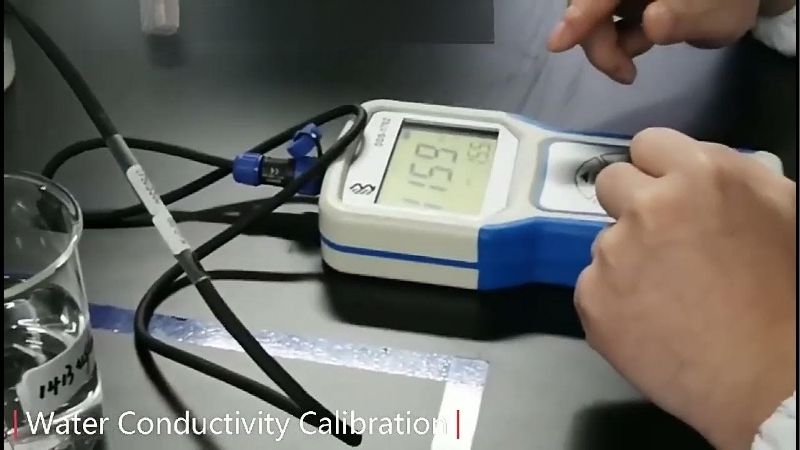
Calibration approach differs: the HYDROS kit ships with 28 and 35 ppt standards for two-point calibration, while Neptune uses a 53,000 µS/cm saltwater standard. Those consumables and the required controller or interface are real costs that sit outside the probe’s own price.
So the installed cost is the probe plus its electronics plus calibration fluids. A component-level sensor can look cheap until you add what it needs to read and display, which is why total ecosystem cost, not the probe sticker, decides the practical value here.
Top Picks
These four cover the main controller ecosystems, from a dedicated Apex probe to a DIY-friendly component, with prices checked September 18, 2026. They are not standalone monitors on their own, so use the table to match range and connection to the hardware you already own before choosing.
| Product | Best For | Key Spec | Watch Out For |
|---|---|---|---|
| Neptune Salinity Probe | Existing Apex owners | ppt; 53,000 µS/cm cal | ~under $300 probe-only |
| GHL Platinum Electrode | Existing ProfiLux systems | Platinum, BNC, 3 m | ProfiLux ecosystem required |
| Atlas Scientific K 1.0 | DIY/custom monitoring | 5-200,000 µS/cm; ±2% | Not a standalone display |
| HYDROS K-10 Kit | HYDROS saltwater systems | 20-2,000 mS/cm; 28/35 ppt | iV recommended, sold separately |
Neptune Salinity Probe: Best Fit for Apex Owners
The Neptune Salinity Probe reads salinity in ppt and is compatible with A2, A3 and PM2 hardware, using a 53,000 µS/cm saltwater calibration standard, priced around $300 as of September 2026. Its advantage is native Apex integration for owners already in that ecosystem.
The trade-offs are a high probe-only price and the fact that it is not a standalone monitor; it needs compatible Apex or PM2 hardware to read it. At roughly 76.6% more than the GHL electrode and 114.3% more than the Atlas probe, it earns its cost through Apex fit, not raw specs.
GHL Platinum: Strong ProfiLux Integration
The GHL Platinum Conductivity Electrode uses a platinum element with a BNC connector and a 3 m cable, priced around $175 as of September 2026. For a tank already running ProfiLux, it is the natural conductivity probe, with the longer cable helping reach a remote measurement point.
Its value depends heavily on whether you already own ProfiLux, since it is built for that ecosystem. A BNC plug looks universal but does not confirm compatibility with another brand’s controller, so treat this as a ProfiLux part rather than a drop-in for an Apex or HYDROS system.
Atlas Scientific K 1.0: Best for DIY Integration
The Atlas Scientific K 1.0 spans 5 to 200,000 µS/cm with ±2% accuracy and 90% response in 1 second, priced around $150 as of September 2026. Its wide range covers the marine calibration point, making it a strong choice for a custom or DIY monitoring build.
The catch is that it is a sensor component, not a finished aquarium monitor; it needs electronics or an interface to read and display. At only about 3.1% below the HYDROS kit, its low price reflects that you supply the surrounding system rather than a fully complete package.
HYDROS K-10: Practical High-Range HYDROS Option
The HYDROS Salinity Kit K-10 uses a K=10 probe spanning 20 to 2,000 mS/cm, rated 0 to 80°C, and ships with 28 and 35 ppt calibration fluids, priced around $150 as of September 2026. It is the practical conductivity option for a HYDROS-based saltwater system.
Its main caveat is that the iV module HYDROS recommends is sold separately, so the installed cost rises beyond the kit price. It sits only about 3.1% above the Atlas probe, but the two are different products for different systems and their near-identical prices should not be swapped.
Frequently Asked Questions
Buyers ask what conductivity range marine water needs, whether a K 1.0 suits saltwater, whether a BNC plug means probes swap, and how many calibration points to use. The answers below stay with published figures and keep calibration references separate from measurement-range limits.
What Conductivity Range Do I Need for Saltwater?
Neptune’s saltwater calibration reference is 53,000 µS/cm, so a probe should have a usable range that covers that level comfortably. That figure is a calibration point, not a rule that every reef must always read exactly 53 mS/cm, so use it to check coverage rather than as a target.
Actual tank salinity depends on your livestock and husbandry. Choose a probe whose range brackets the marine calibration figure, then set your own salinity within the range your system needs, since the standard exists to calibrate the probe, not to dictate one salinity for all reefs.
Is a K 1.0 Probe Suitable for Marine Conductivity?
By range, yes: the Atlas K 1.0 reaches 200,000 µS/cm, so it covers the 53,000 µS/cm marine calibration point with margin. Range coverage confirms the probe can read saltwater levels, which is the first requirement for a marine conductivity sensor.
Coverage alone does not make it plug-and-play, though. Controller compatibility and temperature compensation still have to be handled by the electronics you pair it with, so a K 1.0 suits marine use when built into a system that reads and compensates it correctly.
Does a BNC Connector Mean Probes Are Interchangeable?
No. GHL uses a BNC connector with a 3 m cable, and the HYDROS K-10 also uses BNC but with a 3 ft cable, yet the matching plug does not confirm electrical or controller compatibility between the two. The mechanical connector is only part of the picture.
Signal handling and controller support differ by brand, so a probe that physically plugs in may still not read correctly on another maker’s hardware. Match the probe to its intended controller rather than assuming a shared BNC plug makes probes swap freely between systems.
One-Point or Two-Point Calibration?
It depends on the probe and controller. The HYDROS kit ships with 28 and 35 ppt fluids for a two-point calibration, while Neptune sells a 53,000 µS/cm saltwater standard for its probe, so the recommended procedure varies by system.
Follow the specific instructions for your probe and controller rather than applying one routine to every brand. Two-point calibration generally brackets the reading range, but the exact standards and steps differ, so use the fluids and method the maker specifies for your hardware.
Final Thoughts
The best conductivity probe for saltwater monitoring is the one whose range covers marine water, whose connection matches your controller, and whose calibration and interface costs you have accounted for, not simply the cheapest probe. Weigh range, controller fit, calibration and total installed cost together, and treat a shared BNC plug as a mechanical detail rather than proof of compatibility.
Ready to decide? Our #1 pick for 2026 is the Neptune Salinity Probe.
Live price & availability on Amazon.
Related Reviews & Guides
Best Protein Skimmer Under 500 Dollars: Top Picks Guide
Popbloom RL180 vs Kessil A360XE Value Comparison: Top Compared