Last Updated: November 23, 2026
As an Amazon Associate, I earn from qualifying purchases.
Off-peak electricity changes what a good water heater is. On a time-of-use tariff, the question is no longer only how efficiently a unit heats water, but when it heats it. A storage tank is already a battery of sorts: 50 gallons of hot water made during cheap overnight hours can carry a household through expensive morning and evening peaks with the compressor mostly idle. A heat pump water heater strengthens that strategy twice over — it uses far less electricity per gallon heated than a resistance tank, and the right models can coordinate with the utility itself. The best compact heat pump water heaters for homes with off peak electricity are therefore the models whose listings state a grid-facing capability: demand-response enablement, or a Smart Grid operating mode. Features that are not stated in a listing are not claimed in this guide.
That standard produces a short, honest list, and the shortness matters. On Amazon US, heat pump water heaters are scarce, 50 gallons is the smallest capacity verified there, and only two verified models state a capability directly relevant to off-peak operation. One is the Rinnai REHP50, described in its listing as demand-response enabled and able to communicate with participating utilities to reduce use during peak hours. The other is the ACiQ 50 Gallon Hybrid, whose five operating modes include a Smart Grid mode alongside Energy Saver, Hybrid, Electric and Vacation. Neither capability is a promise that your specific utility program will enroll your specific heater — program participation, incentives and control arrangements are set by the utility — but both are the documented starting points an off-peak household should shop from.
Quick Picks
- Best demand-response pick: Rinnai REHP50 — demand-response enabled per its listing, 50 gallons of storage, 3.75 UEF, 73-gallon first-hour delivery.
- Best built-in Smart Grid mode: ACiQ 50 Gallon Hybrid — Smart Grid among five named operating modes, touchscreen and Wi-Fi control, 3.75 UEF.
The Picks
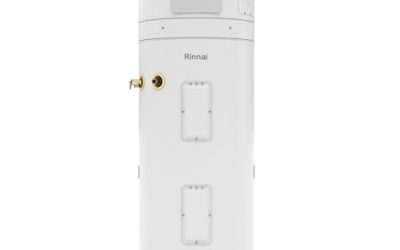
Rinnai REHP50 Electric Heat Pump Water Heater, 50 Gallon

The REHP50’s off-peak case rests on one listing-stated capability: it is demand-response enabled, meaning it can communicate with participating utilities to cut use during peak hours. That is precisely the coordination an off-peak tariff rewards. Instead of the heater deciding on its own when to recover after a shower, a demand-response arrangement lets grid conditions influence that timing, so recovery energy is less likely to be bought at peak prices. Whether your utility runs such a program, and whether this model is eligible for it, are questions for the utility’s program list — the listing establishes the capability, not the enrollment.
The storage and efficiency underneath the capability are well matched to time-shifting. The tank holds 50 gallons, which is the thermal buffer the whole strategy depends on: heat a full tank in cheap hours and the morning peak draws down stored hot water rather than electricity. Efficiency is 3.75 UEF with ENERGY STAR certification, so even the electricity that is used goes roughly three and three-quarter times as far as in a standard tank under test conditions. First-hour delivery is 73 gallons, the strongest figure among the 50-gallon hybrids verified for these guides, giving a household more hot water per heating cycle to shift. The unit runs on a 240V, 30A circuit, is glass-lined steel, and carries a 10-year tank and parts warranty with one year of labor.
Placement supports the strategy too. The listing states zero clearance on the top, back and sides, easing installation in the garage or utility space where off-peak homes usually put the tank. It is about 67 inches tall and roughly 212 pounds, and like every heat pump it still needs a substantial volume of surrounding air — around 1,000 cubic feet, a louvered door or ducting — because zero clearance describes wall spacing, not air supply. The listing does not state a noise level or minimum operating temperature.
Specifications
- Capacity: 50 gallons; first-hour delivery 73 gallons
- Efficiency: 3.75 UEF; ENERGY STAR certified
- Off-peak capability stated: Demand-response enabled; communicates with participating utilities
- Electrical: 240V, 30A; 3/4-inch MNPT inlet and outlet
- Clearance: Zero clearance on top, back and sides per listing
- Size and weight: About 67 inches tall; about 212 lb
- Warranty: 10-year tank and parts, 1-year labor
Pros
- Demand-response capability is stated in the listing — the core off-peak feature
- 50 gallons of storage plus a 73-gallon first-hour rating give a large shiftable buffer
- Zero-clearance installation suits garages and utility spaces
Cons
- Program enrollment and any incentives depend on your utility, not the listing
- Noise level and minimum operating temperature are not stated
- Still requires ample surrounding air volume
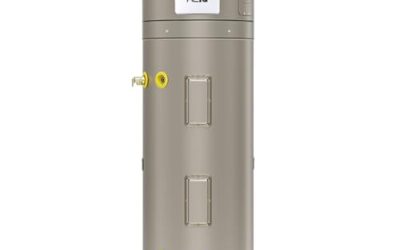
ACiQ 50 Gallon Hybrid Heat Pump Water Heater

The ACiQ approaches off-peak operation from inside the appliance. Among its five operating modes — Energy Saver, Hybrid, Electric, Vacation and Smart Grid, selected on an LED touchscreen — the Smart Grid mode is the one built for grid-aware operation, giving the heater a mode intended to respond to utility conditions rather than only to the thermostat. Wi-Fi control, also part of the listing, means mode selection does not require standing at the tank, which is how a household actually adapts a heater to a tariff: switch behavior when the schedule, the season or the household changes, from wherever you are.
The supporting figures are a 50-gallon tank, a 3.75 UEF efficiency rating with ENERGY STAR certification, and a 69-gallon first-hour rating for households of three to five. Fifty gallons is a workable off-peak buffer for that household size: a full tank heated in cheap hours covers the typical morning peak, and the heat pump’s efficiency limits the cost of the midday top-ups that remain. As with the Rinnai, the existence of a Smart Grid mode does not by itself enroll you in a utility program — confirm compatibility with your provider’s demand-response or grid-services offering before counting on automated coordination.
The listing is also the most explicit here about placement limits, which off-peak shoppers need because these units often land in garages. It states a noise level of 49.5 dBA, requires 700 to 1,000 cubic feet of air circulation and proper condensate drainage, and rules out unheated spaces below 37°F — a real constraint where an unheated garage is also the coldest room in the house. The warranty runs 12 years on tank and parts with online registration. Electrical requirements are not stated in the listing, so confirm them from the product documentation before installation.
Specifications
- Capacity: 50 gallons; first-hour rating 69 gallons
- Efficiency: 3.75 UEF; ENERGY STAR certified
- Operating modes: Energy Saver, Hybrid, Electric, Vacation, Smart Grid
- Controls: LED touchscreen; Wi-Fi
- Noise: 49.5 dBA stated
- Placement: 700–1,000 cubic feet of air; condensate drainage; not below 37°F
- Warranty: 12-year tank and parts with online registration
Pros
- A named Smart Grid mode, built into the heater’s own control set
- Touchscreen and Wi-Fi make adapting modes to a tariff practical
- Stated noise, air-volume and minimum-temperature limits
Cons
- Utility program compatibility still has to be confirmed with your provider
- Electrical requirements are not stated in the listing
- Long warranty depends on online registration, and unheated spaces below 37°F are excluded
How to Choose
Start with your tariff, not the appliance. Read your utility’s off-peak hours and check whether it runs a demand-response or grid-services program for water heaters, and which capabilities it requires. If a program exists, a demand-response or Smart Grid model is the rational shortlist — the two picks above. If it does not, your off-peak strategy rests on storage and timing discipline alone: size the tank so a full off-peak heating cycle covers your peak window, which is why first-hour ratings matter alongside gallons. Then verify the unglamorous constraints — air volume, condensate drainage, minimum room temperature and circuit — because a heater that cannot live in your garage or utility room cannot shift anything. Finally, treat any incentive or bill-saving figure as the utility’s to confirm; listings establish capabilities, not program payments.
FAQs
How does a storage tank help with off-peak electricity?
Hot water stores energy. Heating a full tank during cheap hours and drawing it down during peak hours moves most of the heating energy into the off-peak window, especially in a heat pump unit that uses relatively little electricity per gallon.
What is demand response in a water heater?
It is the ability to communicate with a participating utility program and adjust operation in response to grid conditions, typically reducing use during peak periods. Program terms, eligibility and any incentives are set by the utility.
Is a Smart Grid mode the same as demand response?
They are related but described differently by manufacturers. The ACiQ lists Smart Grid as one of its operating modes; the Rinnai is described as demand-response enabled. In both cases, confirm compatibility with your own utility’s program.
Why are there only two picks?
Because this guide only credits off-peak capabilities that a listing actually states. On Amazon US, heat pump water heaters are scarce, and most listings state no grid-facing feature at all.
Conclusion
For off-peak households, the Rinnai REHP50 offers listing-stated demand-response communication on a 50-gallon, high-first-hour platform, while the ACiQ builds a Smart Grid mode into its own touchscreen controls. Either gives an off-peak tariff something to work with: efficient heating, stored hot water, and a documented way to coordinate with the grid. Confirm your utility’s program first, and the choice between them becomes straightforward.
7 Best Barn Stall Mats (November 2026)

Hugo Spritz Recipe: Prosecco, Elderflower and Mint