Last Updated: November 23, 2026
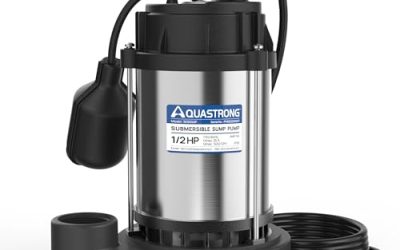
Utility room drainage is a different job from a flooded basement perimeter. The water usually arrives in a pit or basin from predictable indoor sources — a laundry sink overflow, a water heater discharge, condensate, a leaking supply line, or groundwater under the slab — in a room full of appliances you would rather keep dry. The best submersible sump pumps for utility room drainage are therefore chosen on fit and switching as much as raw power: a float that works in a narrow basin without snagging, a standard discharge, and enough flow at real lift height to move water out faster than it comes in. Every pick below is submersible and automatic — the automatic part matters, because the leak you care about starts while nobody is watching.
As an Amazon Associate, I earn from qualifying purchases.
Quick Picks
- Best overall: Zoeller M53 Mighty-Mate (53-0001) — cast iron, oil-filled motor, vortex impeller, 1-1/2-inch discharge.
- Best flow for the size: WAYNE CDU790 — 1/3 HP, up to 4,600 GPH as listed, integrated vertical float for narrow pits.
- Best for heavy inflow: WAYNE CDU980E — 3/4 HP, up to 5,490 GPH as listed, cast iron and stainless steel.
- Best compact and light: Liberty Pumps 237 — 1/3 HP, vertical magnetic float switch, finned aluminium housing, about 11 lb.
1. Zoeller M53 Mighty-Mate — Best Overall
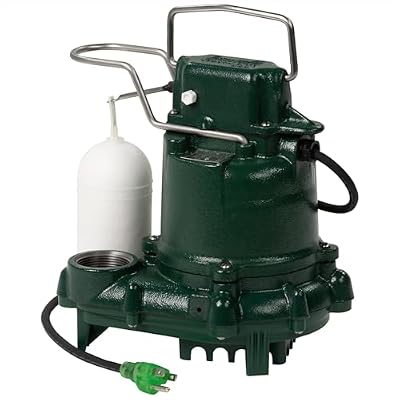
The M53 is the conservative choice for a utility room pit: a cast iron, oil-filled motor housing that sheds heat while submerged, a vortex impeller that is less prone to clogging on lint and grit from a laundry area, and a float-activated automatic switch. Its performance is published at working heights — 43 GPM at 5 feet and 34 GPM at 10 feet in the manufacturer’s figures — which is the honest way to judge whether it will clear a basin.
Specs from the listing
- Type: submersible sump pump, automatic
- Motor: 1/3 HP as listed (manufacturer describes the M53 motor as 3/10 HP), 115V, oil-filled, cast iron housing
- Flow: 43 GPM at 5 ft and 34 GPM at 10 ft in manufacturer figures; maximum lifting height 19.25 ft as listed
- Impeller: vortex
- Discharge: 1-1/2-inch NPT
- Weight as listed: 21 lb
- Model: 53-0001
Pros
- Cast iron, oil-filled construction suited to sitting submerged for long periods
- Vortex impeller handles small solids and debris better than a screened paddle design
- Performance published at 5 and 10 feet of lift, not just a headline maximum
Cons
- Heaviest of the 1/3 HP picks here, which matters when you lift it out of a deep basin for servicing
- Needs a basin wide enough for its float to travel freely — check your pit diameter
- No battery backup; a power outage stops it like any mains-only pump
2. WAYNE CDU790 — Best Flow for the Size

The CDU790 is built around a narrow-pit problem utility rooms often have: its integrated vertical float switch travels on a fixed path instead of swinging on a tether, so it can switch reliably in a basin as small as 11 inches in diameter as listed. Wayne publishes a full flow curve — 4,600 GPH at zero feet, falling to about 3,060 GPH at 10 feet — so you can match it to your actual lift. Its construction mixes a cast iron base with a stainless steel motor housing, a sensible combination for a pump that lives in damp air and standing water.
Specs from the listing
- Type: submersible sump pump, automatic, integrated vertical float switch
- Motor: 1/3 HP, cast iron and stainless steel construction
- Flow as listed: up to 4,600 GPH; manufacturer curve gives about 3,060 GPH at 10 ft
- Basin: for pits 11 inches in diameter and larger as listed
- Discharge: 1-1/2-inch NPT
- Use as listed: indoor use only
Pros
- Vertical float suits narrow utility room basins where a tethered float would hang up
- Full published flow curve makes sizing against lift straightforward
- Strong flow at 10 feet for a 1/3 HP pump
Cons
- Indoor use only, as listed
- Vertical float still needs to be kept clear of inlet pipes and basin walls
- Mains-powered only, with no built-in backup
3. WAYNE CDU980E — Best for Heavy Inflow

Choose the CDU980E when the problem is volume: a high water table, a pit that also takes perimeter drainage, or water arriving faster than a 1/3 HP pump could clear it. At 3/4 HP with up to 5,490 GPH as listed, it has clear headroom, with cast iron and stainless steel construction and a vertical float switch. Headroom is not free, though: a larger pump in a small basin cycles more often, which is harder on a switch and motor, so pair this output with a basin that gives it a reasonable run time per cycle.
Specs from the listing
- Type: submersible sump pump, automatic, vertical float switch
- Motor: 3/4 HP, cast iron and stainless steel construction
- Flow as listed: up to 5,490 GPH
- Basin: for pits 11 inches in diameter and larger as listed
- Discharge: 1-1/2-inch NPT
- Warranty as listed: 5-year
Pros
- Highest flow here, for pits that take serious inflow
- Vertical float works in a standard narrow basin
- Long warranty term as listed and durable metal construction
Cons
- Can short-cycle in a small basin, so basin size matters more with this pump
- More pump than a laundry-only drainage job needs
- Mains-powered only
4. Liberty Pumps 237 — Best Compact and Light

The 237 takes a different approach. Its motor housing is deep-finned, powder-coated aluminium, designed for cooling, and its switch is a vertical magnetic float — no swinging arm and no tether to snag in a crowded utility basin. At about 11 lb as listed, it is the easiest of these pumps to lift out for cleaning, and its vortex impeller passes solids up to 3/8 inch as listed by the manufacturer.
Specs from the listing
- Type: submersible sump pump, automatic, vertical magnetic float (VMF) switch
- Motor: 1/3 HP, 115V
- Housing: powder-coated aluminium, deep-finned; polypropylene and stainless steel components as listed
- Discharge: 1-1/2-inch
- Solids handling: up to 3/8 inch as listed
- Weight: about 11 lb
Pros
- Magnetic vertical float has no arm or tether to catch in a tight basin
- Light and compact, so servicing is a one-hand lift rather than a hoist
- Finned housing is designed to run cool while submerged
Cons
- Lower flow than the Wayne models, so it is not the pick for heavy groundwater inflow
- Aluminium and engineered materials feel less substantial than cast iron, even though they resist corrosion
- Check pit depth, since its height and switch travel still need room
How to Choose for a Utility Room
Measure the basin first. Diameter decides the float type: vertical and magnetic floats work in narrow pits, while a tethered float needs swing room. Depth decides how much water each cycle removes before the pump shuts off.
Size flow at your lift, not at zero feet. Add the vertical rise from the basin to the discharge exit plus friction from elbows. Then compare pumps on their flow at that height, using a published curve where one exists.
Add a check valve and an alarm. A check valve stops discharged water running back into the basin and doubling the pump’s work. A simple high-water alarm is cheap insurance in a room containing a water heater, furnace, or laundry equipment.
FAQs
How big should a utility room basin be?
Big enough for the pump, free float travel, and a reasonable volume between switch-on and switch-off levels. Follow the pump listing’s minimum diameter — 11 inches for the Wayne models here — and go larger if the pump short-cycles.
Conclusion
For most utility room pits, the Zoeller M53 is the dependable default, and the WAYNE CDU790 is the better fit where the basin is narrow or you want a published flow curve to size against. Step up to the WAYNE CDU980E for heavy inflow, or choose the Liberty 237 where a light, compact pump with a magnetic float makes servicing easier. Measure the basin, check flow at your lift, and fit a check valve and alarm — those details protect the room more than any single headline flow figure.
7 Best Gun Cabinets (November 2026)

Best Tricep Exercise Machines in 2026: Top Picks Compared