Last Updated: October 4, 2026
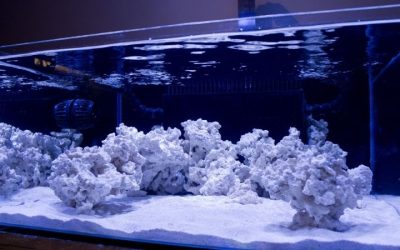
Aragonite is the default reef substrate, but grain size is what makes or breaks a sand bed. The best aragonite sand for saltwater tank builds is the one whose grain matches your flow, your sand-sifting livestock and the look you want, because a fine sand that storms in high flow is the wrong tool.
As an Amazon Associate we earn from qualifying purchases.
By David Nguyen
How to Choose Aragonite Sand
Most aragonite sands share the same chemistry, so the real decision is physical. Grain size drives how the bed behaves in flow, which sand sifters can work it, whether you start live or dry, and how much you need for the depth you want. These four criteria matter more than brand.
Grain Size and Flow
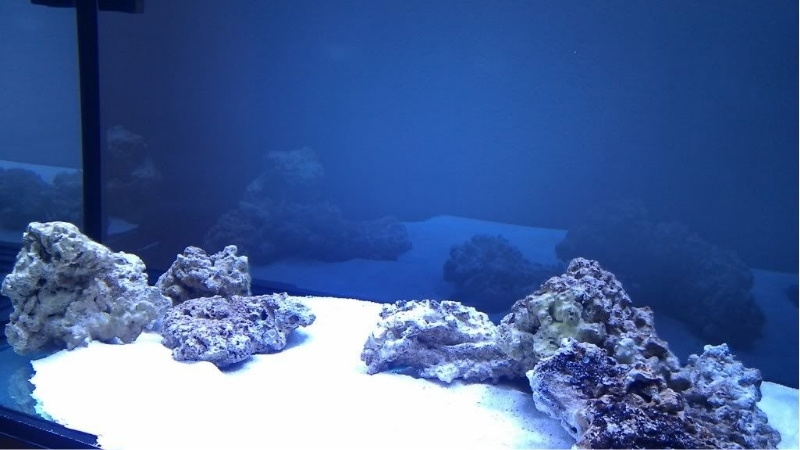
Grain size decides how easily sand moves under your pumps. CaribSea Special Grade runs 1.0–2.0mm and is positioned for medium flow, while Bahamas Oolite is a fine 0.25–1.0mm grain suited to low flow (CaribSea, 2026). Smaller grains are displaced more readily by local water velocity near the substrate.
That said, tank behavior also depends on pump direction and aquascape, not grain alone. A fine sand can sit fine in a low-flow corner but blow into drifts under a powerhead. Match the grain to your realistic flow, then aim pumps across the surface rather than down into the bed.
Sand-Sifting Fish and Invertebrates
If you keep sand sifters, grain size affects whether they can actually work the bed. Gobies, some wrasses and nassarius snails handle fine to medium grains well, and a grain like Fiji Pink at 0.5–1.5mm (CaribSea, 2026) sits in a comfortable middle for many of them.
Very coarse or very fine beds can frustrate certain sifters, so check your intended livestock before committing. A medium grain is the safest default for mixed sifting fauna, while a fine oolite suits animals and looks that favor a smooth, gently rippling surface over a chunky bed.
Live Sand vs Dry Sand
Arag-Alive products ship wet with bacteria, while dry aragonite starts sterile. Live sand can seed beneficial bacteria, but it does not instantly cycle an aquarium; a tank still needs to establish its nitrogen cycle before it is safe for livestock, regardless of what the bag is labeled.
Dry sand is cheaper and cleaner to store but relies on your system to colonize it over time. Either works; the choice is about convenience and budget, not a shortcut past cycling. Plan to monitor parameters and cycle properly whichever you pick, and do not rush stocking on a live-sand claim.
Sand Depth and Required Pounds
How much you buy depends on footprint and target depth, and denser sands pack differently. CaribSea lists average densities from 85 lb/ft³ for Special Grade to 96 lb/ft³ for Bahamas Oolite (CaribSea, 2026), so a finer, denser sand covers slightly less volume per pound than a coarser one.
Decide on a shallow bed or a deeper one first, then estimate pounds from your tank’s length and width. Buying a little extra avoids a thin bed with bare patches, and keeping the bag’s density in mind helps you judge coverage before the sand is even in the tank.
Best Aragonite Sands for Saltwater Tanks
These four span a medium-flow default, a sifter-friendly grain, a fine low-flow look and a value mixed grade. They are separated by grain size and how the bed behaves, not by price, since cost per pound is not performance. Confirm current pricing before buying, as retailer figures move.
| Product | Best For | Key Spec | Watch Out For |
|---|---|---|---|
| Special Grade Arag-Alive | Best overall | 1.0–2.0mm; medium flow | Can drift under strong jets |
| Ocean Direct Original | Best value | 0.25–6.5mm mixed grade | Broad grain, less uniform |
| Fiji Pink Arag-Alive | Sand sifters | 0.5–1.5mm; low–medium flow | Finer than Special Grade |
| Bahamas Oolite | Fine low-flow look | 0.25–1.0mm; low flow | Blows around in high flow |
CaribSea Special Grade Arag-Alive
Special Grade takes the top slot because its medium 1.0–2.0mm grain and medium-flow positioning make it the most forgiving default (CaribSea, 2026). At an average density of 85 lb/ft³ and around $35 for 20 lb at BRS as of 09/2026, it balances stability against a natural reef look.
The grain resists storming in typical reef flow while still looking like a proper sand bed. The main watch-out is very strong, downward-aimed jets, which can still scour any bed. For most mixed reefs wanting a bed that stays put without going gravel-coarse, it is the safest overall choice here.
CaribSea Ocean Direct Original
Ocean Direct is the value pick, with a broad 0.25–6.5mm mixed grade at around $25 for 20 lb at BRS as of 09/2026 (CaribSea, 2026). That works out near $1.18 per pound, roughly 30% below Special Grade, which makes it attractive for filling a deeper bed on a budget.
The trade-off is uniformity: the wide grain range gives a more varied, less consistent look and behaves less predictably in flow than a graded sand. For keepers who prioritize cost and do not mind a mixed texture, it stretches the substrate budget without leaving reef chemistry behind.
CaribSea Fiji Pink Arag-Alive
Fiji Pink is the sifter-friendly choice, a small 0.5–1.5mm grain rated for low to medium flow (CaribSea, 2026). At an average density of 90 lb/ft³ and about $35 for 20 lb at BRS as of 09/2026, it sits in a comfortable middle for gobies, wrasses and snails that work the bed.
The finer grain gives a smooth, attractive surface many aquascapers prefer. Because it is finer than Special Grade, keep flow moderate and aimed across the bed to stop it drifting. For a sifting-focused tank at gentle to medium flow, it is a strong, natural-looking pick.
CaribSea Bahamas Oolite
Bahamas Oolite is the fine, low-flow aesthetic option, a 0.25–1.0mm grain at a dense 96 lb/ft³ and around $35 for 20 lb at BRS as of 09/2026 (CaribSea, 2026). Its smooth, rippling look suits nano and low-flow displays where a delicate surface is the goal.
The clear caveat is flow: this fine a grain blows around easily under strong pumps, so it belongs in gentle systems or shielded areas. Keep powerheads off the bed and it stays put; push high flow and it will drift. Within low-flow tanks, its look is hard to beat.
Frequently Asked Questions
Buyers usually ask the same things about reef sand: whether live sand cycles a tank, which grain resists blowing around, how deep the bed should be, and whether they can mix grades. Short answers first, then the practical caveats.
Does live sand instantly cycle an aquarium?
No. Arag-Alive live sand carries beneficial bacteria that can help seed a system, but it does not instantly cycle a tank. Your aquarium still has to establish its nitrogen cycle before it is safe to stock, and that takes time regardless of what the substrate is labeled.
Use live sand as a head start, not a shortcut, and test parameters through the cycle as usual. Adding livestock too early on a live-sand claim is a common way to lose fish, so let the system prove it is processing ammonia and nitrite before you trust it.
Which grain size resists blowing around?
Coarser grains stay put better under flow. A medium grain like Special Grade at 1.0–2.0mm resists displacement more than a fine oolite at 0.25–1.0mm, because smaller particles are moved more readily by local water velocity near the substrate. Grain size is the biggest lever here.
Placement matters too, so even a coarse bed will scour under a powerhead aimed straight down. Match grain to flow, then aim pumps across the surface rather than into it. That combination keeps almost any aragonite bed stable in a typical reef.
How deep should a sand bed be?
It depends on the goal. A thin decorative layer of an inch or so is simple and easy to keep clean, while deeper beds are used for specific biological or aesthetic reasons. Decide the purpose first, then buy enough sand for that depth across your tank’s footprint.
Denser sands like Bahamas Oolite cover slightly less volume per pound, so factor density into your estimate. Buying a little extra avoids thin, bare patches, and it is easier to remove a handful than to source a second bag mid-setup to finish the bed.
Can I mix aragonite grain sizes?
Yes, and it is common to blend a coarser base with a finer top for looks and stability. Mixing lets you tune both appearance and how the bed behaves, for example a stable medium grade with a finer sand for a smoother surface where flow is gentle.
Just be aware that in strong flow the finer fraction can migrate and separate over time, leaving the coarse behind. Keep flow reasonable across mixed beds, and expect some sorting; it is cosmetic rather than harmful, and a light re-level during maintenance sets it right.
Final Thoughts
The best aragonite sand for saltwater tank builds is the one whose grain matches your flow, your sifters and your desired look, with price a secondary factor since cost per pound is not performance. Special Grade is the forgiving default, Ocean Direct stretches the budget, and Fiji Pink and Bahamas Oolite suit sifters and fine low-flow looks. Match grain to flow first.
As an Amazon Associate we earn from qualifying purchases at no extra cost to you. Prices and availability are accurate as of the date shown and are subject to change.
6 Best Wavemakers For Saltwater Aquarium 2026

Best Popbloom Reef Light with Wifi Control: How to Pick