Last Updated: October 4, 2026
Quiet marketing is everywhere, but real noise also depends on mounting, hard plumbing, cabinet resonance and speed. The best quiet return pump for a living room tank is the one that delivers your flow at head with good vibration control, since no standardized dB test is available to rank these four by number.
As an Amazon Associate we earn from qualifying purchases.
As an Amazon Associate we earn from qualifying purchases at no extra cost to you. Prices and availability are accurate as of the date shown and are subject to change.
By David Nguyen
Quick answer: For most people in 2026, the best quiet return pump for a living room tank is the Sicce Syncra Silent 3.0 — our #1 rated choice. See the full ranked comparison, alternatives and buying advice below.
How to Choose a Quiet Return Pump
Size for real flow rather than maximum GPH, avoid running an oversized pump at an unnecessary extreme, control vibration as well as motor noise, and compare power, head and controller features. In a living room, how a pump is installed matters as much as the pump itself.
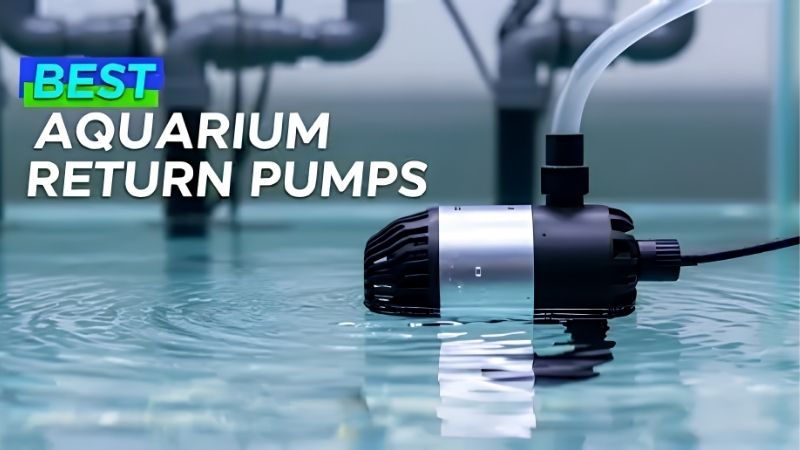
Size for Real Flow, Not Maximum GPH
BRS notes that advertised GPH falls once plumbing creates head pressure, so the nameplate figure is not what reaches your tank. Sizing a quiet pump starts with the flow you actually need at your head, not the maximum printed on the box.
So calculate your target flow after head loss, then choose a pump that delivers it. A pump sized on zero-head GPH may end up strained or oversized in practice, which affects both performance and noise, so real delivered flow is the right basis for the choice.
Avoid Running an Oversized Pump at an Unnecessary Extreme
A controllable pump lets you adjust output, which helps, but there is no universal setting like “50% is quietest.” The right level depends on your plumbing, pump and tank, so tuning is about finding what works for your setup rather than applying a fixed percentage.
So use adjustability to dial in appropriate flow rather than assuming a magic quiet point. Running a pump far from its intended range, whether too high or unnecessarily throttled, is not automatically quieter, so tune by result in your installation instead of a rule of thumb.
Control Vibration as Well as Motor Noise
Noise is not only the motor: Sicce uses a ceramic shaft and bearings and markets the Syncra Silent family around reduced noise, though the actual dB remains unverified. Much of what you hear can be vibration transmitted through mounting and plumbing rather than the motor itself.
So plan for vibration isolation alongside the pump choice. A soft mount and flexible plumbing connections can reduce transmitted noise regardless of the pump’s own sound, which is why vibration control is part of a quiet installation rather than a pump spec you can read off the box.
Compare Power, Head and Controller Features
These pumps range from a 25W VarioS 2 to a 72W Vectra S2 power supply, but operating draw is not directly equivalent to noise. A wattage figure describes power, not sound, and the Vectra’s 72W is a power-supply rating rather than a constant pump draw.
So compare power, head and features for capability, not as a noise proxy. Head rating tells you how the pump handles your plumbing, and controller features affect tuning, so weigh those alongside flow rather than assuming a lower-wattage pump is automatically quieter.
Top Picks
These four span a simple AC pump to smart controllable DC returns, with prices checked September 2026. No verified dB data exists to rank them by number, so use the table to match flow and head to your tank, then plan vibration isolation for a living-room install.
| Product | Best For | Key Spec | Watch Out For |
|---|---|---|---|
| Sicce Syncra Silent 3.0 | Simple AC setup | 714 GPH / 9.9 ft | No electronic speed control |
| ReefRun G2 4000 | Controllable value | 530-1,060 GPH / 16-38W | No verified dB |
| Vectra S2 | Mobius smart control | 1,400 GPH / 11.5 ft | Premium price |
| VarioS 2 | Compact controllable return | 792 GPH / 13.1 ft | 5 presets, not app-first |
Sicce Syncra Silent 3.0
The Sicce Syncra Silent 3.0 delivers 714 GPH with a 9.9-ft max head at 48W, priced around $150 as of September 2026. As a simple AC pump with ceramic shaft and bearings, it is the straightforward budget option in this group.
Its limit is no electronic speed control, so you cannot throttle it electronically like the DC pumps. Its actual dB is unverified, so treat the Silent branding as a design intent rather than a measured figure, and plan vibration isolation to keep it quiet in a living room.
Red Sea ReefRun G2 4000
The Red Sea ReefRun G2 4000 offers 530 to 1,060 GPH with an 11.2-ft max head at 16 to 38W, priced around $195 as of September 2026. As a controllable value pick, its adjustable range lets you tune flow to your sump and overflow.
No verified dB figure exists for it, so its noise cannot be ranked by number against the others. Use its head and flow range to size it for your plumbing, and rely on installation and vibration control rather than a sound spec to keep it quiet.
EcoTech Vectra S2
The EcoTech Vectra S2 delivers 1,400 GPH with an 11.5-ft max head and Mobius control, priced around $400 as of September 2026. Its smart control and higher flow suit a living-room tank wanting app tuning and more delivered flow after head loss.
Its 72W figure is a power-supply rating, not a constant pump draw, so do not compare it directly to the others’ pump wattages. At about 105% more than the ReefRun, it is the premium pick, so the spend should track the Mobius control and flow rather than an assumed noise advantage.
Reef Octopus VarioS 2
The Reef Octopus VarioS 2 delivers 792 GPH with a 13.1-ft max head at 25W across 5 speed settings, priced around $300 as of September 2026. Its compact size and adjustable presets suit a controllable return where space is limited.
It offers 5 preset speeds rather than an app-first design, so control is stepped rather than fully smart. Its 25W draw is the lowest here, but that does not by itself mean it is the quietest, so judge noise by installation rather than reading it from the wattage.
Frequently Asked Questions
Owners ask what dB counts as quiet, whether plumbing makes a quiet pump loud, whether DC is always quieter, and whether a living-room tank should use a smaller pump. The answers below treat noise figures as unverified and keep sizing tied to real flow.
What dB Level Is Quiet for a Return Pump?
This is unverified for these four models, because the sources checked have no standardized, comparable dB test. So there is no reliable number to call quiet across them, and any single dB figure would be misleading without a common measurement basis.
So judge quietness by installation and reputation rather than a published decibel value. Marketing terms like Silent or virtually silent describe intent, not a measured sound level, which is why a good mount and plumbing matter more than a dB claim on the box.
Can Plumbing Make a Quiet Pump Sound Loud?
Yes. Vibration transmitted through hard plumbing and the cabinet can make a mechanically quiet pump audible, and flow resistance also changes operating conditions. BRS specifically notes that tubing, fittings and head pressure materially change how a pump behaves.
So a pump’s own sound is only part of the story. Soft mounting, flexible connections and reducing resonance in the stand can cut transmitted noise substantially, which is why installation often matters more than the pump’s rated quietness for what you actually hear.
Is DC Always Quieter Than AC?
Not always. BRS generally describes modern DC return pumps as quieter, but installation and specific pump design still matter, so DC is a tendency rather than a guarantee. An AC pump mounted well can be quieter than a poorly installed DC pump.
So avoid treating DC as automatically silent. Use the general trend as a starting point, but weigh the specific pump and how it is installed, since mounting and plumbing can outweigh the AC-versus-DC distinction for real-world noise.
Should a Living-Room Tank Use a Smaller Pump?
Only if a smaller pump still delivers the required flow after head pressure. Undersizing a pump to reduce noise is not a safe sizing method, since a pump that cannot meet your flow needs creates problems that quiet operation does not offset.
So size for real delivered flow first, then manage noise through control and vibration isolation. A correctly sized pump tuned and mounted well is the right approach for a living room, rather than deliberately choosing an underpowered pump for the sake of quiet.
Final Thoughts
The best quiet return pump for a living room tank comes down to real flow at head, vibration isolation and controllability, not the word Silent on the box. Size for delivered flow after head loss, plan for vibration control and mounting, and treat noise claims as unverified, since no standardized dB data exists to rank these pumps by number.
Ready to decide? Our #1 pick for 2026 is the Sicce Syncra Silent 3.0.
Live price & availability on Amazon.
Related Reviews & Guides



6 Best LED Lighting For Reef Tank 2026

How Much Does Reef Automation Cost To Set Up: Top Compared