Last Updated: September 25, 2026
Asking how long do rodi filters last before replacement has no single answer, because each stage ages differently and your water decides the pace. Sediment goes by pressure drop, carbon by chemical capacity, the membrane by rejection, and DI resin by output TDS.
As an Amazon Associate we earn from qualifying purchases.
As an Amazon Associate we earn from qualifying purchases at no extra cost to you. Prices and availability are accurate as of the date shown and are subject to change.
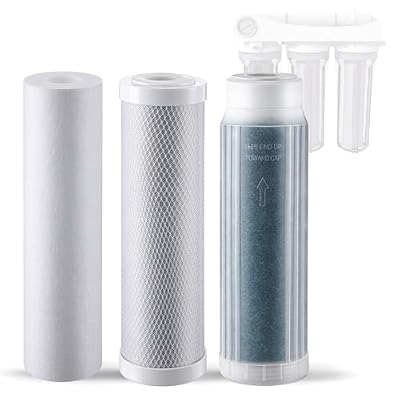
3-Stage RODI Filter Kit, Compatible with Aquatic Life, 10-Inch Replacement
Selected for "How Long Do RODI Filters Last Before Replacement: Best Guide": this listing is filtration (3-Stage RODI Filter Kit, Compatible with Aquatic Life, 10-Inch Replace), matching the equipment this article covers.
View on Amazon
CFS RODI 10" Filter Kit Sediment, Carbon & Color Changing DI Resin
Selected for "How Long Do RODI Filters Last Before Replacement: Best Guide": this listing is filtration (CFS RODI 10" Filter Kit Sediment, Carbon & Color Changing DI Resin), matching the equipment this article covers.
View on Amazon
AQUATICLIFE 10-Inch Sediment Pre-Filter, Aquarium RODI Reverse Osmosis Deionization Water Filter Replacement Cartridge, 5-Micron.
Selected for "How Long Do RODI Filters Last Before Replacement: Best Guide": this listing is filtration (AQUATICLIFE 10-Inch Sediment Pre-Filter, Aquarium RODI Reverse Osmosis), matching the equipment this article covers.
View on Amazon
NSF Certified 3 Stage Reverse Osmosis RO Water Filters Replacement
Selected for "How Long Do RODI Filters Last Before Replacement: Best Guide": this listing is filtration (NSF Certified 3 Stage Reverse Osmosis RO Water Filters Replacement), matching the equipment this article covers.
View on AmazonBy David Nguyen
Quick answer: For most people in 2026, the best how long do rodi filters last before replacement is the Sediment filter — our #1 rated choice. See the full ranked comparison, alternatives and buying advice below.
How RO/DI Filter Life Actually Works
Each stage fails in its own way, which is why one replacement schedule for the whole system wastes money on some cartridges while running others past their useful life. Understanding the mechanism behind each one gives you a trigger worth acting on. Sediment, carbon, membrane and resin each deserve their own trigger.
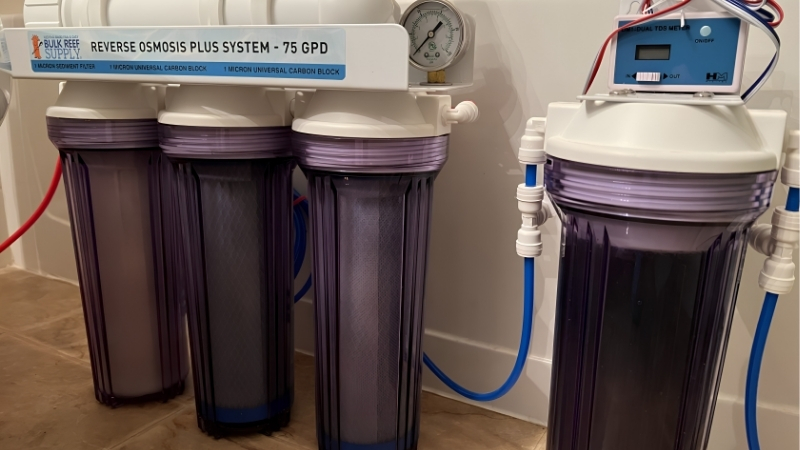
Sediment Filters Age by Pressure Drop
Sediment cartridges trap particles until flow resistance climbs. Common guidance puts them somewhere around three to twelve months, but that range reflects how dirty the source water is rather than a fixed lifespan. Fine sediment filters load faster than coarse ones on the same supply. Municipal main work can dump particulate into a system overnight.
The reliable indicator is a pressure gauge before and after the housing. When pressure falls noticeably, the cartridge is loading up, and on well water or after municipal main work that can happen within weeks rather than months. Replacing sediment on time also protects the carbon stage behind it from premature loading. Note the starting pressure when everything is new so you have a baseline to compare against.
Carbon Blocks Age by Chemical Capacity
Carbon has a finite capacity to adsorb chlorine and chloramine. Guidance typically lands around six to twelve months, though some sources suggest three to six, and chloramine or high production volume pushes replacement earlier. Two carbon stages in series extend contact time, which matters on chloraminated supply. Utilities that switch disinfectant seasonally complicate this further.
There is no pressure signal here, which makes carbon the stage most often stretched too far. Chlorine breaking through destroys a thin-film membrane permanently, so this is the cartridge worth replacing early rather than late. Chlorine damage is cumulative and irreversible, so there is no recovery once it happens. Carbon costs a fraction of a membrane, which makes early replacement straightforward economics.
Membranes Age by Rejection Performance
Published expectations for RO membranes span roughly one to five years across different guidance, which is a wide range precisely because feed chemistry, volume produced and carbon maintenance all shape the outcome. Gallons produced matters more than the date on the invoice. That spread is why manufacturers quote ranges rather than a single number.
Calculate rejection to know where yours stands. Feed water at 250 ppm reading 5 ppm after the membrane is 98% rejection; the same feed reading 20 ppm is 92%, and that decline means the membrane is passing far more dissolved load downstream. A declining trend gives you time to order a replacement before water quality suffers.
DI Resin Ages by Output TDS
Deionisation has the clearest endpoint of all: when final output TDS rises above zero, the resin is finished for reef use. That operational trigger is more reliable than any calendar interval could be. Resin exhausts gradually rather than stopping suddenly, so the first reading above zero is early warning. Reef keepers treat any reading above zero as the signal to act.
Colour-changing resin helps as a secondary cue, with roughly 75% of the cartridge changed often cited as a visual signal, but resin can exhaust for specific ions before colour makes that obvious. Treat the meter as primary and colour as confirmation. Two cues pointing the same way is stronger than either alone.
What Filter Life Looks Like in Practice
The same system behaves very differently on different supplies. These four situations cover most homes, and the thresholds below give a starting frame rather than a rule. Your own readings decide where you sit, not the averages quoted online.
| Factor | Normal Range | Watch-out Threshold | What to Do |
|---|---|---|---|
| Sediment filter | Steady inlet pressure | Noticeable pressure drop | Replace cartridge, check source |
| Carbon block | Roughly 6-12 months | Chloramine supply or high volume | Shorten interval, add carbon stage |
| Membrane rejection | At or near rated percentage | Several points below rating | Plan membrane replacement |
| Final output TDS | 0 ppm | Any reading above 0 | Replace DI resin |
Clean Municipal Supply, Low Sediment
On filtered municipal water with little particulate, sediment cartridges often reach the upper end of their range and pressure stays stable for months. Carbon then becomes the stage that sets your service rhythm. Households on treated supply generally get the most predictable service intervals.
Even here, do not assume the membrane is immortal. Check rejection a couple of times a year, because a slow decline is easy to miss when final output still reads zero thanks to fresh resin masking the problem. Fresh resin is very good at hiding a tiring membrane for a while. Checking rejection two or three times a year is enough on stable supply.
Well Water With Visible Particulate
Wells load sediment cartridges fast, sometimes within weeks after heavy rain or pump work. A pressure gauge stops you guessing, and adding a coarser pre-sediment stage ahead of the fine one extends the life of everything behind it. Sediment loading is the fastest-moving variable on private supplies.
Iron, manganese and hardness all shorten membrane life as well. On difficult well water, expect the shorter end of the one to five year membrane range and budget accordingly rather than hoping for the longer figure. Sediment prefilters are cheap, so running two stages is usually false economy to avoid.
High TDS Feed Water
High dissolved solids load the DI stages heavily. If your membrane passes 20 ppm rather than 5 ppm, four times the dissolved concentration reaches the resin, which shortens its working life substantially. Hard water regions feel this most acutely across a year of production.
Avoid translating that into an exact multiple of resin life, since exchange capacity depends on which ions are present rather than concentration alone. What is certain is that better rejection upstream reduces resin spending downstream. Upgrading to a higher-rejection membrane often pays for itself through lower resin spending. Track resin consumption in gallons produced rather than weeks elapsed.
High Carbon Dioxide After the Membrane
Dissolved carbon dioxide passes straight through the membrane and converts to carbonic acid in the DI chamber, which loads anion resin heavily even when your TDS readings look reasonable. Carbon dioxide levels vary seasonally on some municipal supplies.
Systems splitting DI into cation, anion and mixed bed cartridges show this clearly, with the anion stage exhausting first. Replacing only that cartridge costs far less than discarding partially used media across all three. Keeping a spare anion cartridge avoids an emergency order before a scheduled water change. Systems with a single combined DI canister cannot take advantage of this at all.
Frequently Asked Questions
Four questions come up constantly: whether a blanket six-month schedule works, what a climbing reading means, when to change resin, and how to read the wide membrane lifespan figures.
Should I replace everything every six months?
No, and doing so wastes money. Stages age at different rates driven by different mechanisms, so a single interval inevitably replaces some cartridges early while leaving others in service too long. Bundled kits encourage this habit, which suits sellers more than owners.
Fit a pressure gauge and a TDS meter, then replace each stage on its own trigger. That approach usually costs less across a year while producing more reliable water than a fixed calendar routine. A gauge and a meter together cost less than one unnecessary full cartridge set.
My TDS is climbing. Is the membrane bad?
It depends which reading climbed. A rising final output number with healthy rejection points at spent DI resin, while falling rejection measured after the membrane points at the membrane itself. One number alone cannot separate the two failures.
That is why two monitoring points matter more than one. Without the post-membrane reading you cannot distinguish the cheap repair from the expensive one, and people routinely replace the wrong part. Inline meters make that check effortless once fitted.
Do I change DI resin at 1 ppm?
For reef use, yes. The operational target is zero TDS, so any reading above that means the resin is no longer doing its job completely. Silica in particular can slip through before other ions signal exhaustion. Zero is a practical target rather than a laboratory claim about purity.
Some keepers stretch slightly for freshwater use, but saltwater systems benefit from the discipline. Keep a spare cartridge on hand so a reading above zero does not delay a scheduled water change. Resin is the cheapest stage to replace, which makes the discipline easy.
Why do membrane lifespans vary so much?
Because guidance spans roughly one to five years and the deciding factors are local. Feed chemistry, total gallons produced and whether chlorine ever reached the membrane all matter more than age. Two identical systems on different supplies can differ by years.
A membrane protected by fresh carbon on moderate municipal water reaches the upper end; one exposed to chloramine breakthrough can fail in months. Measure rejection rather than counting years since installation. Log gallons produced alongside your readings to build a picture over time.
Final Thoughts
The honest answer to how long do rodi filters last before replacement is that performance triggers beat calendar dates every time. Watch pressure across the sediment stage, protect the membrane with timely carbon changes, track rejection, and replace resin the moment output stops reading zero.
Ready to decide? Our #1 pick for 2026 is the Sediment filter.
Live price & availability on Amazon.
Related Reviews & Guides

Best Rimless AIO Tank for a Desk Reef: Top Top Picks
DC vs AC Protein Skimmer Pump Which Is Better, Explained