Last Updated: September 25, 2026
Best aquarium water conditioner choices depend on what your tap water actually contains. Chlorine alone is easy; chloramine releases ammonia when broken and needs a product that binds it, which is the difference that decides most purchases before concentration or heavy metal binding come into the choice at all.
As an Amazon Associate we earn from qualifying purchases.
As an Amazon Associate we earn from qualifying purchases at no extra cost to you. Prices and availability are accurate as of the date shown and are subject to change.

API TAP WATER CONDITIONER Aquarium Water Conditioner 4-Ounce Bottle, TAP WATER COND. 4 OZ
Selected for "Best Aquarium Water Conditioner: Dose, Range and Safety": this listing is water treatment (API TAP WATER CONDITIONER Aquarium Water Conditioner 4-Ounce Bottle, T), matching the equipment this article covers.
View on Amazon
API Fishcare 52Q API TAP Aquarium Water Conditioner 32-Ounce Bottle
Selected for "Best Aquarium Water Conditioner: Dose, Range and Safety": this listing is water treatment (API Fishcare 52Q API TAP Aquarium Water Conditioner 32-Ounce Bottle), matching the equipment this article covers.
View on Amazon
API TAP WATER CONDITIONER Aquarium Water Conditioner 16-Ounce Bottle
Selected for "Best Aquarium Water Conditioner: Dose, Range and Safety": this listing is water treatment (API TAP WATER CONDITIONER Aquarium Water Conditioner 16-Ounce Bottle), matching the equipment this article covers.
View on Amazon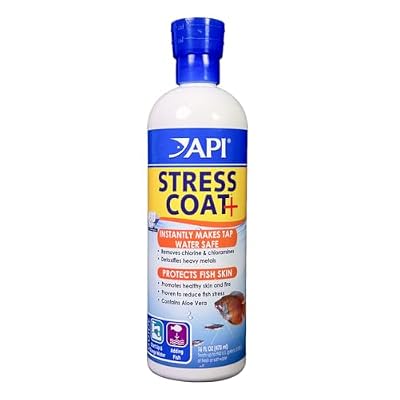
API Stress Coat Aquarium Water Conditioner 16-Ounce Bottle
Selected for "Best Aquarium Water Conditioner: Dose, Range and Safety": this listing is water treatment (API Stress Coat Aquarium Water Conditioner 16-Ounce Bottle), matching the equipment this article covers.
View on AmazonBy David Nguyen
Quick answer: For most people in 2026, the best aquarium water conditioner is the Standard dechlorinator — our #1 rated choice. See the full ranked comparison, alternatives and buying advice below.
Start With What Comes Out of Your Tap
Choosing the best aquarium water conditioner starts with a phone call or a website check rather than a shelf. Four criteria settle it, and the first is a fact about your supply rather than anything printed on a bottle.
The Deciding Number: What Your Supply Actually Contains
Water suppliers use either chlorine or chloramine, and the two behave quite differently. Chlorine dissipates and is neutralised readily; chloramine is a chlorine and ammonia compound, so breaking that bond releases ammonia straight into the tank.
That ammonia is the reason ammonia-binding conditioners exist. Where the supply uses chloramine, a product that only handles chlorine leaves a measurable ammonia spike after every water change, which is a common and easily missed cause of stress.
Suppliers also switch between the two, sometimes seasonally. A conditioner that suited your tap water two years ago may no longer match what comes out of it, which is worth rechecking rather than assuming once and never revisiting.
Two More Criteria With Numbers Attached
Concentration decides cost per year more than bottle price does. Standard-strength products typically dose around 5 ml per 10 gallons (38 L), while concentrated ones commonly dose around 1 ml per 10 gallons, so a small concentrated bottle can outlast a large standard one.
Coverage is the third figure. Some conditioners neutralise chlorine and chloramine only; others also bind heavy metals including copper, which matters for invertebrate tanks and for anyone on older household plumbing.
Tank Size, Placement and Fit
Measure your actual change volume before choosing a bottle size, since a 20 gallon (76 L) tank on a weekly 25% change uses only 5 gallons (19 L) of new water and will take years to finish a large concentrated bottle.
Store it away from heat and light, and check the cap seals properly. Conditioners have a long shelf life sealed, and a bottle left open in a warm cupboard loses effectiveness in ways that produce no visible sign at all.
Keep a syringe or a graduated measure with the bottle rather than relying on the cap. Concentrated products dose in single millilitres, and a cap poured by eye is the most common route to consistently overdosing a small tank.
The Options by What the Water Needs
Four types cover essentially every supply. Each is matched below to a situation, because the best aquarium water conditioner depends on whether your supply uses chloramine, whether you keep invertebrates, and how much you dose weekly.
Standard Dechlorinator: For Chlorine-Only Supplies
Main numbers: dosing around 5 ml per 10 gallons (38 L), neutralising chlorine within a minute or two of contact. It is the cheapest option per bottle and entirely adequate where the supply does not use chloramine.
It suits freshwater tanks on a confirmed chlorine supply. It does not suit chloramine areas, since the ammonia released after the bond breaks is left in the water, and it does not suit anyone unsure which their supplier uses.
Concentrated Conditioner With Ammonia Binding: The General-Purpose Default
Main numbers: dosing around 1 ml per 10 gallons (38 L), handling chlorine, chloramine and the released ammonia, typically converting it to a less toxic form for roughly 24-48 hours while the filter processes it.
It suits most keepers, particularly on chloramine supplies or where a tank is still cycling. It does not suit heavy-handed dosing, since overdosing these products can reduce dissolved oxygen, so raise aeration if you exceed the label rate.
Conditioner With Heavy Metal Binding: For Invertebrates and Old Plumbing
Main numbers: the same dechlorination function plus a chelating agent that binds copper, lead and zinc. Copper is lethal to shrimp and snails far below drinking water limits, which is why this matters in an invertebrate tank.
It suits shrimp keepers, marine tanks and homes with older copper plumbing, particularly where water has stood in the pipes overnight. It does not remove the need for RO/DI in a reef, since it binds metals rather than removing dissolved solids.
Plain Sodium Thiosulfate: For Volume Users
Main numbers: the active dechlorinating ingredient sold on its own, at a fraction of the cost per treated gallon. Fish rooms and pond keepers use it because branded conditioner becomes a significant recurring expense at that scale.
It suits large volumes on a chlorine supply where cost dominates. It does not suit chloramine, since it does nothing about the released ammonia, and it does not suit anyone uncomfortable measuring a powder accurately by weight.
| Option | Typical dose | Neutralises | Cost per gallon treated | Best for |
|---|---|---|---|---|
| Standard dechlorinator | About 5 ml per 10 gallons | Chlorine | Low | Confirmed chlorine supplies |
| Concentrated with ammonia binding | About 1 ml per 10 gallons | Chlorine, chloramine, ammonia | Lowest per gallon | Most tanks, chloramine supplies |
| With heavy metal binding | Varies by product | Plus copper, lead, zinc | Moderate | Shrimp, snails, older plumbing |
| Plain sodium thiosulfate | By weight, measured | Chlorine only | Very low | Fish rooms, ponds, high volume |
| Letting water stand | Not applicable | Some chlorine, no chloramine | None | Not reliable, avoid |
Head to Head, and When Not to Buy
Two types get compared constantly, and there are cases where the conditioner is not what needs changing. The best aquarium water conditioner is often the one already open, dosed correctly to the actual change volume.
Standard Versus Concentrated
Standard products win on bottle price and on being harder to overdose, since the dose is large enough to measure with an ordinary cap. For a single small tank on a chlorine supply, that simplicity is worth something.
Concentrated products win clearly on cost per gallon treated and on covering chloramine and ammonia. The trade is precision, since 1 ml per 10 gallons (38 L) needs a syringe or a graduated cap rather than a guess.
When a Different Conditioner Is the Wrong Fix
Fish stressed after a water change is more often a temperature or a volume problem than a conditioner one. Match new water within 1-2 °F (about 1 °C) and keep changes to 20-30% before concluding that the product is at fault.
Persistent ammonia in a running tank is a cycling or feeding issue rather than something a conditioner solves. Ammonia binders buy 24-48 hours; they do not replace an established filter, and relying on them week to week hides the real problem.
The Cheaper Route That Works
Buying a concentrated product in a mid-size bottle is usually the lowest annual cost for a single tank. Very large bottles look cheaper per millilitre and frequently expire before a small tank finishes them.
Dose to the water being added rather than to the whole tank where the label allows it. Treating 5 gallons (19 L) of new water instead of a 20 gallon (76 L) tank uses a quarter of the product for the same result.
Using It and the 12-Month Cost
The best aquarium water conditioner is used every week for years, so dosing habit matters more than product choice. This section covers technique, what interferes with test readings, and the safety points worth knowing.
Dosing Technique That Matters
Add conditioner to the new water and stir before it goes into the tank where practical, since that neutralises chlorine before it ever meets fish or filter media. Where a hose fills the tank directly, dose the tank first.
Follow the label rate rather than estimating generously. These products work within minutes at the stated dose, and overdosing concentrated ammonia binders can reduce dissolved oxygen, so increase surface agitation if you have exceeded the rate.
Interference With Test Kits
Ammonia-binding conditioners convert ammonia to a bound form that some test kits still detect as present. A reading taken shortly after dosing can therefore look alarming while the fish are unaffected, which causes a lot of unnecessary reaction.
Wait 24 hours after dosing before drawing conclusions from an ammonia test, and test before the water change rather than after. That single scheduling change removes most of the confusion these products create around readings.
Note also that a bound ammonia reading is not the same as a dangerous one. The binding lasts roughly 24-48 hours and gives the filter time to process it, which is the intended behaviour rather than a sign that something has gone wrong.
Storage, Shelf Life and Timing
Sealed bottles keep for years, and an opened one kept cool and capped tightly holds well beyond a typical usage period. Write the opening date on the label, since the product gives no visible sign when it has weakened.
On timing, conditioners see their deepest discounts in late June and again in late November, which suits buying a mid-size bottle. A sale changes nothing about what your supply contains, and prices move constantly, so check at purchase.
Best Aquarium Water Conditioner Questions
These arrive during the first few water changes, which is when dosing habits form. Every answer about the best aquarium water conditioner stays with what the supply contains and what the label states.
How do I know if my supply uses chloramine?
Check your water supplier’s published quality report, which most publish online, or call them. It is worth knowing rather than guessing, since the whole product choice depends on it and the answer can change over time.
Can I just let water stand overnight?
Not reliably. Some chlorine dissipates given time and agitation, but chloramine does not break down usefully that way, and heavy metals are unaffected. Standing water is not a substitute for a conditioner in any modern supply.
Can I overdose it?
Yes. Concentrated ammonia-binding products can reduce dissolved oxygen when heavily overdosed, so follow the label rate and increase aeration if you have exceeded it. Doubling a dose deliberately is rarely useful and occasionally harmful.
Does conditioner remove nitrate or phosphate?
No. It neutralises chlorine and chloramine and, in some products, binds heavy metals and ammonia temporarily. Nitrate and phosphate are removed by water changes and export, not by anything a conditioner does.
See More:
Conclusion
The best aquarium water conditioner for most keepers is a concentrated product handling chlorine, chloramine and the ammonia released when chloramine breaks, dosing around 1 ml per 10 gallons (38 L) of new water.
Add heavy metal binding for shrimp, snails or older plumbing. Confirm what your supply uses before choosing, dose the new water rather than the whole tank, follow the label rate, and wait 24 hours before reading an ammonia test after dosing.
Ready to decide? Our #1 pick for 2026 is the Standard dechlorinator.
Live price & availability on Amazon.
Related Reviews & Guides

Best Aquarium Heater With Over Temperature Protection Guide
Best Aquarium Lid for Jumping Fish: Top Compared Mesh Picks