Last Updated: October 21, 2026
How to raise aquarium pH safely almost always means raising carbonate hardness instead, because a low reading is usually a buffering problem rather than a pH problem. The limit is 0.2 to 0.3 units in twenty-four hours, and slower is better. Test the KH first, then work through the steps in the order they are given below.
As an Amazon Associate we earn from qualifying purchases.
As an Amazon Associate we earn from qualifying purchases at no extra cost to you.





By David Nguyen
Measure Before Raising Anything
Knowing how to raise aquarium pH safely means first accepting that a low reading is a symptom with several possible causes, and the correct response differs for each of them. Working out how to raise aquarium pH safely starts with three readings that separate a genuine problem from a tank that simply reads lower than a chart suggested.
The numbers to take first
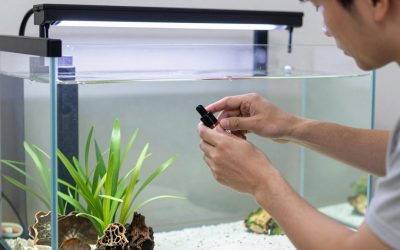
Test pH and KH on both the tank and the tap. Carbonate hardness is the decisive figure here: below about 3 dKH (54 ppm) the water has almost no buffer left and pH can fall sharply overnight, which is the situation that genuinely needs correcting.
The safe rate of change is 0.2 to 0.3 pH units in twenty-four hours. Because the scale is logarithmic, a single unit represents a tenfold change in acidity, so what looks like a small adjustment on paper is a substantial event for the fish absorbing it.
Check ammonia at the same time. Raising pH shifts ammonia toward its more toxic free form, so a tank carrying any ammonia reading at all should have that dealt with by water changes before the pH is moved in an upward direction.
Reading the results to find the cause
Comparing the tank against the tap separates the two situations that look identical on a single test. One is a maintenance problem that corrects itself, and the other is a property of the water supply that will not.
Tank KH well below tap KH points at consumption, since nitrification uses carbonate hardness continuously and long gaps between water changes let it run down. The fix is the maintenance routine rather than anything added to the tank.
Tank and tap both low means the supply itself is soft, which is common in some regions. Here the choice is between adding a mineral source permanently or, more sensibly in most cases, keeping species that suit soft acidic water.
| Situation | KH reading | What to do | What to avoid |
|---|---|---|---|
| pH falling between changes | Below 3 dKH (54 ppm) | More frequent water changes | Dosing pH-up products |
| Tap is soft, tank matches it | Below 3 dKH (54 ppm) | Crushed coral in the filter | Rapid mineral additions |
| Driftwood or peat present | Any | Remove or reduce the source | Fighting it with buffers |
| Planted tank, pH low by day | Adequate, 4 dKH or more | Nothing, this is CO2 | Correcting a normal swing |
| pH crashed suddenly | Near zero | Small changes, restore KH slowly | One large corrective change |
| pH fine, fish look unwell | Any | Test ammonia, nitrite, temperature | Adjusting pH as a first move |
When raising pH is the wrong response
A planted tank with CO2 injection reads lower during the photoperiod and recovers overnight, often by half a unit or more. That daily pattern is the system working as intended, and correcting it removes the CO2 the plants are being given.
Blackwater setups run deliberately at 5.5 to 6.5 and their inhabitants do well there. A low reading matters when it arrived suddenly or keeps moving, not when it has been the stable condition of the tank for months on end.
How to Raise Aquarium pH Safely, Step by Step
The work is gradual and mostly involves adding a slow mineral source rather than dosing the water. These three steps cover the process without producing the swing that causes most of the harm attributed to pH itself.
Step one: restore the routine, which often raises aquarium pH safely on its own
Change 20 to 30 percent weekly with matched, treated water and test KH again after a fortnight. In tanks running on ordinary tap water this alone usually restores the buffer, because each change replaces the carbonate hardness that nitrification consumed.
Where the tank has drifted for months, split the correction across consecutive days at 15 to 20 percent rather than doing one large change. The accumulated difference between tank and tap is what causes harm, not the nitrate figure on the kit.
Step two: add a slow mineral source
Where the routine alone is not enough, the aim is a source that dissolves at its own pace rather than a dose that arrives all at once. Slow is the entire point of the method rather than an inconvenience.
Crushed coral, aragonite sand or limestone dissolve gradually and raise both KH and GH over weeks rather than hours. Start with a small amount in a media bag in the filter, measure after seven days, and add more only if the reading has barely moved.
Measure the filter chamber and the gap behind the tank before ordering a media bag or a reactor, since neither can be fitted comfortably once the tank is running. A bag that does not sit in the flow path does very little regardless of what it contains.
Step three: check that you are raising aquarium pH safely
Test pH daily for the first week after adding a mineral source. If the reading is moving faster than 0.2 to 0.3 units a day, remove part of the material, since coral dissolves faster in soft acidic water than most people expect it to.
Aeration also raises pH slightly by driving off dissolved carbon dioxide, which is useful in a tank with adequate KH and does nothing lasting in one without it. Treat it as a small supporting measure rather than as the method itself.
How to Raise Aquarium pH Safely: What Not to Do
Three approaches cause most of the damage attributed to low pH, and each has a mechanism behind it rather than being a matter of preference.
Do not dose baking soda as a routine fix
Sodium bicarbonate raises carbonate hardness quickly, which is the opposite of what a fish needs, and it adds no general hardness at all. Used at all, it belongs in the change water in small measured amounts rather than poured into a stocked tank.
Do not chase a species chart
Most commercially bred fish are raised in ordinary tap water and adapt well to a stable figure outside their published wild range. Moving the tank to match a chart introduces a swing, and the swing does more harm than the original reading did.
Do not raise pH while ammonia is present
Higher pH shifts ammonia toward the free form that damages gill and skin tissue, so raising the reading during a cycling problem increases the exposure. Deal with ammonia by water changes and reduced feeding first, then look at pH afterwards.
Raising Aquarium pH Safely and Then Holding It
A raised pH stays put only while the buffer behind it does, so the work after the adjustment matters more than the adjustment itself. Most successful corrections quietly reverse a few months later for the same reason they were needed originally.
The routine that maintains it
Keep changing 20 to 30 percent weekly with the same water recipe every time, and test KH monthly rather than only when something looks wrong. Consistency in the replacement water is what holds a reading, since every change nudges the tank back toward it.
Feed only what is eaten in one to two minutes. Heavier feeding means more nitrification, and more nitrification consumes carbonate hardness faster, which is the quiet mechanism behind a buffer that runs down again despite an unchanged schedule.
What drifts afterwards
Nothing about a raised pH is permanent, because both the source holding it up and the water around it change over months. Two effects work against the correction, and they run in opposite directions.
Crushed coral dissolves and eventually stops working, more slowly as the water it sits in becomes less acidic. Check the volume in the bag every few months and top it up rather than assuming a one-off addition lasts the life of the tank.
Evaporation pushes the other way in winter. Indoor heating dries the air and the water line falls faster, so topping up with tap water concentrates minerals while topping up with pure water dilutes the buffer you have just restored.
Early signs worth acting on
The reading gives warning long before anything visible happens in the tank, which is the argument for testing carbonate hardness monthly rather than only when a pH result looks surprising.
KH drifting back toward 3 dKH (54 ppm) is the warning that matters, and the response is more frequent water changes rather than a larger mineral addition. Catching it early keeps the correction inside the normal weekly routine.
Fish gasping or hiding after an adjustment points at the rate rather than the destination. If unusual behaviour continues once the water tests within range, consult an aquatic vet rather than making further chemistry changes on top of the ones already made.
Frequently Asked Questions
These come up when a test kit shows a lower pH than a species chart suggests, or when a tank that was stable for months starts reading acidic between changes.
How to raise aquarium pH safely without chemicals?
Restore the water change routine first, then add crushed coral or aragonite in a media bag in the filter. Both dissolve slowly and raise carbonate hardness alongside pH, which is what keeps the new reading stable rather than temporary.
How fast can pH be raised?
No more than 0.2 to 0.3 units in twenty-four hours, and slower where fish are already stressed. The scale is logarithmic, so that apparently small figure represents a substantial change in acidity for anything living in the water.
Can aeration raise aquarium pH safely on its own?
Slightly, by driving off dissolved carbon dioxide, and only where carbonate hardness is adequate to hold the result. In a tank with almost no KH the effect disappears within hours, which is why aeration supports a fix rather than being one.
How to raise aquarium pH safely after an overnight crash?
Carbonate hardness ran out, usually after a long gap in water changes in a heavily stocked tank on soft water. Restore it gradually with small daily changes rather than one large correction, since the swing back up carries its own risk.
See More:
Raising It Properly
How to raise aquarium pH safely comes down to three rules: test carbonate hardness before anything else, move no more than 0.2 to 0.3 units a day, and add a slow mineral source rather than dosing the water directly.

Quick Picks: Cichlid Fish Tank Setup African
Amano Shrimp Care Guide: The Ultimate Algae Eater for Your Tank