Last Updated: September 25, 2026
Ask electric vs manual gravel vacuum which is better and the honest answer is neither, universally. A manual siphon is the cleaner fit when you clean gravel during a partial water change, while an electric filter-return unit shines for spot cleaning between changes — the right one depends on the job.
As an Amazon Associate we earn from qualifying purchases.
By David Nguyen
Quick answer: Our top pick in 2026 is the Water export — our #1 rated choice. See the full ranked comparison, alternatives and buying advice below.
How Electric and Manual Work
The two tools move water in fundamentally different ways, which is why one is not simply stronger than the other. Understanding how each works — and what it does with the water — shows why the better choice depends on the task.
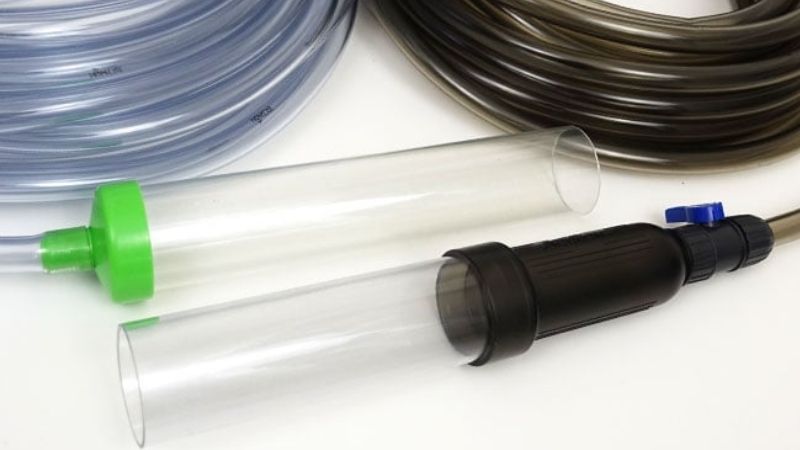
Electric Uses Motor/Pump
Electric cleaners use a motor to drive flow. The Fluval ProVAC runs on plug-in power with two speeds and a pause, and the hygger HG292 draws 15W for a stated 360 GPH — the pump does the lifting, not gravity. Corded units like the Fluval and hygger need an outlet nearby, while the EHEIM batteries free you from the cord.
That powered flow lifts solids from gravel steadily. But GPH from a pump is not comparable to a gravity siphon flow, and a bigger number is not automatically stronger cleaning, since conditions differ between designs. A 15W pump like the hygger runs continuously, so it draws standby power that a hand siphon never does.
Some Electric Return Water
Many electric units are filter-return designs. The EHEIM Quick Vacpro captures debris in an internal filter and passes the water back to the tank, so it cleans gravel without removing any water. The captured debris still has to be rinsed from an internal sponge, a small recurring chore and cost.
That is convenient for quick cleanups, but it removes solids without exporting the dissolved waste a water change does. A filter-return unit tidies the substrate; it does not lower nitrate the way replacing water does. It also leaves the water in the tank, so parameters barely move, which suits a light mid-week touch-up.
Manual Uses Gravity
A manual siphon runs on gravity alone. The Aqueon Mini, a simple gravity siphon around $10, pulls water and debris into a bucket set below the tank — no motor, no batteries, just head difference. It needs the bucket set below the tank to run, so a low outlet is the only setup requirement.
Because it removes water as it cleans, a manual siphon pairs naturally with a partial change. Its flow is not published as a comparable GPH, but the mechanism is simple and reliable, with nothing to fail electrically. That simplicity is why a $10 siphon outlasts most electric units, with no motor or battery to fail.
Electric Does Not Mean No Water Change
The biggest myth is that electric ends water changes. Filter-return units clean gravel but keep the water in the tank, so they do not export dissolved waste — electric does not eliminate the need for a real change. No vacuum removes the dissolved nitrate and phosphate that only replacing water actually exports.
Some electric units, like the Fluval with its water-change adapter, can remove water, bridging the gap. But cleaning and changing water are different jobs, so plan a partial change regardless of which vacuum you use. Even then, cleaning and exporting waste are separate jobs, so plan the change volume rather than trusting the vacuum alone.
What It Looks Like in Practice
In practice, the choice tracks the task. Spot cleaning, routine changes, sand beds and running cost each favor one tool or the other. The table frames when each architecture is the cleaner fit.
| Factor | Manual | Electric | What to Do |
|---|---|---|---|
| Water export | Removes water | Filter-return keeps it | Pair electric with a change |
| Substrate | Any; gentle on sand | Several not for sand | Use manual on fine sand |
| Cost | ~$10 siphon | ~$59-74 powered | Match spend to frequency |
| Best use | Change + clean together | Spot cleaning between | Choose by the session |
Spot Cleaning
For quick spot cleaning, electric wins. A filter-return unit like the EHEIM lifts a mulm patch without draining the tank, so you can tidy a visible mess mid-week without setting up a bucket and hose. Lifting a single mulm patch takes seconds with a filter-return unit and no bucket to set up.
That convenience suits between-change touch-ups. It does not replace the periodic export of waste, though, so treat spot cleaning as maintenance between real changes, not a substitute for them. A filter-return unit is ideal for a display tank where you want the glass tidy for guests without a full change.
Routine Water Change
For the weekly change, manual is the cleaner fit. A gravity siphon removes water and cleans gravel in one pass, which is exactly what a partial change needs — no filter-return step keeping the water in the tank. A gravity siphon at about $10 also has nothing to break, unlike a motor or battery that eventually fails.
An electric unit with a water-change adapter can do this too, but at higher cost. For the core routine of cleaning gravel while replacing water, the simple siphon does the job directly and cheaply. But at $59 or more it is a costly way to do what a $10 siphon already handles on the weekly change.
Sand/Fine Substrate
On sand, manual is safer. Several electric units — the EHEIM and NICREW among them — are rated for gravel of at least 2 mm and not for sand, which they would pull in. Model-specific sand limits are hard constraints.
A controlled siphon hovered above sand lifts detritus without the substrate. So for a sand bed, the gentle manual approach beats forcing a gravel-rated powered unit onto fine grains. Several powered units are rated only for gravel of 2 mm or more, so sand simply rules them out.
Low Maintenance Cost
On running cost, manual is far cheaper. The Aqueon Mini is about $10, while the Fluval and EHEIM run roughly $59 and $74 — the Aqueon is over 80% below either, though these are product examples, not a fixed category multiplier.
Electric units also add filter media and, for the EHEIM, batteries as recurring costs. Match the spend to how often you clean: frequent spot cleaning may justify electric, while an occasional change hardly needs it. A rechargeable pack for the EHEIM saves on batteries but the maker notes weaker suction at 4.8V versus 6V.
Frequently Asked Questions
Electric-versus-manual questions center on power, water removal and who each suits. Each answer opens with the verdict, then the practical detail.
Electric more powerful?
Not in a way you can rank. A pump GPH is not comparable to a gravity siphon flow, so electric is not simply stronger — the numbers describe different mechanisms and conditions differ.
Electric offers steady, hands-free flow; manual offers simple, controllable suction. Choose by the task, not a power claim, since neither is universally more powerful. For a large tank cleaned often, that hands-free operation can be worth the running cost and standby draw.
Does electric remove water?
Only some do. Filter-return units like the EHEIM keep water in the tank, while the Fluval water-change adapter can remove it. Check the architecture, since not all electric cleaners export water.
If lowering nitrate is the goal, you need water removed or a paired change. A filter-return unit alone cleans the gravel but leaves the dissolved waste behind. A filter-return unit can actually mask a rising nitrate problem by keeping the tank looking clean between changes.
Manual better for beginners?
Often, yes. A manual siphon is cheap, simple and pairs cleaning with the water change a beginner needs to learn anyway. There is little to break and nothing to power.
Electric can be tempting for convenience, but it adds cost and the myth that it replaces changes. For a first tank, mastering the manual siphon and a regular change routine is the stronger foundation. Learning the siphon also teaches a beginner how much water they change, which builds good maintenance habits early.
Which for weekly maintenance?
Usually manual, since weekly maintenance means a partial water change. A gravity siphon cleans gravel and removes water in one step, which is what the weekly routine calls for.
Keep an electric unit for mid-week spot cleaning if you like. But for the core weekly change, the manual siphon is the more direct tool, with electric as a supplement rather than a replacement. Pairing a cheap siphon with an optional powered unit gives you both the weekly change and quick touch-ups.
Final Thoughts
On electric vs manual gravel vacuum which is better, there is no universal winner: a manual siphon is the cleaner fit for the weekly water change and for sand, while an electric filter-return unit shines for quick spot cleaning between changes. Match the tool to the session, remember electric does not replace a water change, and treat pump GPH as non-comparable to a gravity siphon rather than a strength ranking.
As an Amazon Associate we earn from qualifying purchases at no extra cost to you. Prices and availability are accurate as of the date shown and are subject to change.
Ready to decide? Our #1 pick for 2026 is the Water export.
Live price & availability on Amazon.
Related Reviews & Guides



Quick Picks: Best Fish Tank Stands for 20–55 Gallon Tanks
Best Mesh Lid for Aquarium: Top Compared DIY Screen Picks