Last Updated: October 4, 2026
There is no single correct pH, so there is no single best buffer either. The best ph buffer for freshwater aquarium use is the one matched to your species’ target pH, your source-water KH, and whether the tank is planted, because a buffer resists pH movement toward a target rather than being a one-size cure.
As an Amazon Associate we earn from qualifying purchases.
By David Nguyen
Quick answer: For most people in 2026, the best ph buffer for freshwater aquarium is the Seachem Neutral Regulator — our #1 rated choice. See the full ranked comparison, alternatives and buying advice below.
How to Choose a pH Buffer
Choosing well means picking a target before a product, understanding what buffering actually does, checking planted-tank compatibility, and accepting there is no universal pH. These four points matter because a buffer that suits an alkaline-water species can be wrong for a soft-water community, and phosphate content changes what belongs in a planted tank.
Pick the Target First
Before buying anything, test your pH and KH and decide the target your species actually need, because the buffer follows the goal, not the other way around. A neutral community, a planted tank, and an alkaline hard-water setup call for different products, so define the destination first.
This is why no single buffer is best for every tank, since the right chemistry differs by species and setup. Do not assume pH 7 is ideal for every freshwater fish, because many species thrive above or below it, so match the target to what you keep before choosing a buffer to hold it.
Buffering Is Not pH Adjusting
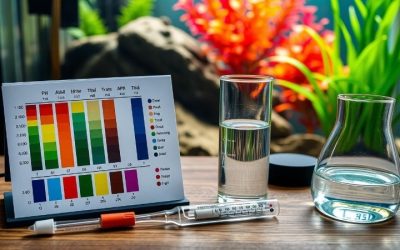
A buffer works by holding alkalinity so pH resists movement, which is different from a pH Up or Down product that simply shoves the number. So a buffer is not a pH adjuster, and understanding your source-water KH is essential, since low KH lets pH swing while high KH resists change.
This distinction matters because chasing a pH number without buffering capacity leads to unstable swings. Note too that a product like Alkaline Buffer changes more than pH, raising KH by about 2.8 dKH at its stated dose, so treat buffering as managing alkalinity and stability, not just moving a single reading.
Phosphate and Planted Compatibility
Buffers split into phosphate-based and phosphate-free, and that decides planted-tank suitability. Phosphate buffers such as API Proper pH 7.0 are explicitly not recommended with live plants, while phosphate-free options like Seachem’s Alkaline and Acid Buffers suit planted systems better.
So a planted tank should favor phosphate-free buffering to avoid feeding algae, while a non-planted community can use a phosphate buffer. Check the label for phosphate content and the manufacturer’s planted-tank guidance before dosing, since the wrong choice can trigger algae in a planted display.
No Universal pH Target
The honest bottom line is that stability around a species-appropriate target beats chasing neutral. Different fish and plants want different pH, so the goal is a steady value your inhabitants tolerate, held by adequate buffering, rather than forcing every tank to pH 7.
So decide the target from your species, use source-water KH to understand how hard it will be to hold, and pick the buffer that maintains it. A stable pH slightly off neutral is far better for the fish than a neutral reading that swings, which is why matching to the species comes first.
Top Picks
Four buffers cover neutral, preset, alkaline, and adjustable acidic use, with no single overall winner because the right target differs by tank. Three of these have unverified US prices as of 09/2026, so treat cost as unconfirmed except where noted, and choose by target chemistry and planted compatibility rather than price.
| Option | Best For | Dose / Effect | Watch Out For |
|---|---|---|---|
| Seachem Neutral Regulator | Neutral non-planted community | 5 g/10-20 gal; targets ~pH 7.0 | Phosphate buffer; precipitates Ca/Mg |
| API Proper pH 7.0 | Simple preset neutral | 2 tsp/10 gal; sets pH 7.0 | Not recommended with live plants |
| Seachem Alkaline Buffer | Planted tank raising pH/KH | 6 g/20 gal; ~+2.8 dKH | Raises KH too, not just pH |
| Seachem Acid Buffer | Adjustable planted system | 2 g/20 gal; ~-0.6 dKH | Use with Alkaline to target ~6-8 |
Seachem Neutral Regulator – Neutral Non-Planted Community
Neutral Regulator targets about pH 7.0 at 5 grams per 10 to 20 gallons, making it a straightforward choice for a neutral non-planted community. It is a phosphate buffer that also softens water by precipitating calcium and magnesium, which shapes where it fits best.
Its US price was not verified for this guide, so confirm current cost before buying. Because it is phosphate-based, it is less suited to planted tanks where phosphate can feed algae, so reserve it for non-planted communities aiming at a stable neutral target.
API Proper pH 7.0 – Simple Preset Neutral
API Proper pH 7.0 is the simple preset option, setting and stabilizing pH 7.0 at 2 teaspoons per 10 gallons, around $10 for 8.8 oz as of 09/2026. It appeals to keepers who want a fixed neutral target without managing separate acid and alkaline components.
The key restriction is that its manufacturer says it is not for use with live plants, since it is phosphate-based. So it belongs in a non-planted neutral community, not a planted display, and keepers with plants should choose a phosphate-free buffer instead of this preset product.
Seachem Alkaline Buffer – Planted Tank Raising pH/KH
Alkaline Buffer raises and buffers pH in the 7.2 to 8.5 range at 6 grams per 20 gallons, adding roughly 2.8 dKH at that dose. Being phosphate-free, it suits planted tanks and alkaline-water species that need pH and carbonate hardness lifted together.
Its US price was not verified for this guide, so check current cost first. Remember it changes KH as well as pH, so it is not a pH-only adjuster, and pair it with Acid Buffer when you need to dial a specific target rather than simply raising alkalinity.
Seachem Acid Buffer – Adjustable Planted System
Acid Buffer lowers pH and alkalinity at 2 grams per 20 gallons, reducing KH by about 0.6 dKH, and is designed to work in ratio with Alkaline Buffer to target roughly pH 6 to 8. Together they give an adjustable, phosphate-free system for planted tanks.
Its US price was not verified for this guide, so confirm cost before buying. Do not compare its grams against Alkaline Buffer’s as strength, since they do opposite jobs, and use them as a pair to hit a specific target rather than treating either as a standalone pH fix.
Frequently Asked Questions
pH-buffer questions focus on whether pH 7 is universal, buffers versus pH Up and Down, dealing with high KH, and planted-tank compatibility. Each answer leads with the direct call, then the caveat that changes it for your particular species and source water.
Is pH 7 Ideal for Every Fish?
No, because pH 7 is not ideal for every freshwater fish, and many species thrive above or below neutral. Soft-water species often prefer acidic conditions while rift-lake and hard-water fish want alkaline water, so the right target depends entirely on what you keep. Research your specific species’ preferred range first, then let that number, rather than a default of seven, guide the buffer you choose.
So define your target from your species rather than assuming neutral is best, then buffer to hold it steadily. A stable pH slightly off 7 suits the fish far better than a neutral reading that swings, which is why matching to the inhabitants comes before choosing any buffer.
Is a Buffer the Same as pH Up or Down?
No, a buffer holds alkalinity so pH resists movement toward a target, while pH Up and Down products simply push the number without necessarily providing lasting stability. So a buffer is not a pH adjuster, and it works by managing buffering capacity rather than forcing a reading.
This matters because shoving pH without buffering capacity leads to swings that stress fish. Understand your source-water KH first, since low KH lets pH drift while high KH resists change, then use a buffer to establish and hold a stable, species-appropriate target.
What if My KH Is High?
High KH resists pH change, so lowering pH in hard, high-alkalinity water takes more than a splash of acid buffer and can be an uphill battle. A phosphate-free acid buffer used in ratio with an alkaline buffer can target a range, but persistent high KH may need addressing at the source.
For soft-water species in naturally hard tap water, many keepers use RO water remineralized to a target rather than fighting high KH with chemicals. Understand your source KH first, then decide whether to buffer, blend with RO, or simply keep species suited to your water.
Which Buffer Is Safe for Planted Tanks?
Phosphate-free buffers are the planted-safe choice, since phosphate buffers can feed algae in a planted display. Seachem’s Alkaline and Acid Buffers are phosphate-free and suit planted systems, while API Proper pH 7.0 is explicitly not recommended with live plants. If you also run phosphate-removing media, phosphate-free buffering avoids the conflict of the two fighting over the same nutrient in your water.
So check the label for phosphate content and the manufacturer’s planted guidance before dosing. In a planted tank, use the phosphate-free pair to target a range, and reserve phosphate-based buffers like Neutral Regulator or API Proper pH for non-planted communities.
Final Thoughts
The best pH buffer for freshwater aquarium use is matched to your target, since there is no universal pH or single winner. Neutral Regulator and API Proper pH 7.0 suit non-planted neutral communities, while the phosphate-free Alkaline and Acid Buffers fit planted setups. Pick the target from your species first, understand your source-water KH, choose phosphate-free for planted tanks, and aim for stability over neutral.
As an Amazon Associate we earn from qualifying purchases at no extra cost to you. Prices and availability are accurate as of the date shown and are subject to change.
Ready to decide? Our #1 pick for 2026 is the Seachem Neutral Regulator.
Live price & availability on Amazon.
Related Reviews & Guides

Best Fish Food for Tropical Fish: Compared by the Numbers
Best 125 Gallon Fish Tank And Stand 2026