Last Updated: September 25, 2026
Best aquarium gravel vacuum selection is decided by tube diameter against substrate type, and by hose length against the distance from tank to drain. Get those two wrong and the tool either lifts your substrate into the bucket or will not reach the sink at all. Priming method and flow control decide most of the rest.
As an Amazon Associate we earn from qualifying purchases.
As an Amazon Associate we earn from qualifying purchases at no extra cost to you. Prices and availability are accurate as of the date shown and are subject to change.
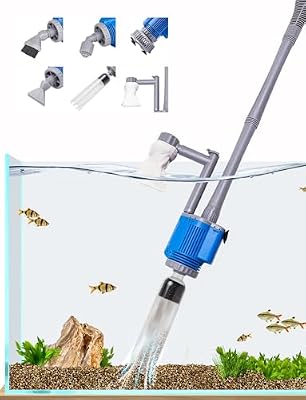
UPETTOOLS Aquarium Gravel Cleaner - Electric Automatic Removable Vacuum Water Changer Sand Algae Cleaner Filter Changer 110V/28W
Selected for "Best Aquarium Gravel Vacuum: Tube Size, Reach and Speed": this listing is filtration (UPETTOOLS Aquarium Gravel Cleaner - Electric Automatic Removable Vacuu), matching the equipment this article covers.
View on Amazon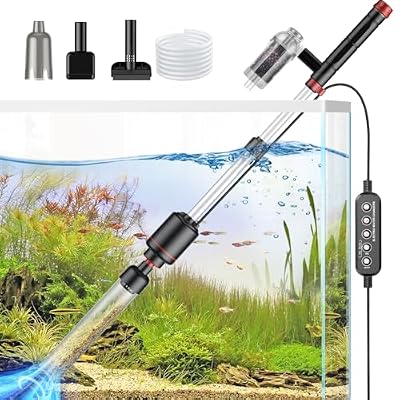
24W Aquarium Vacuum Gravel Cleaner: 8 in 1 Electric Fish Tank Cleaner
Selected for "Best Aquarium Gravel Vacuum: Tube Size, Reach and Speed": this listing is tanks (24W Aquarium Vacuum Gravel Cleaner: 8 in 1 Electric Fish Tank Cleaner), matching the equipment this article covers.
View on AmazonBy David Nguyen
Matching Suction to Your Substrate
Choosing the best aquarium gravel vacuum means matching suction to substrate. Four figures settle it, and the first of them decides whether the tool cleans the gravel or simply removes it into the bucket along with the water.
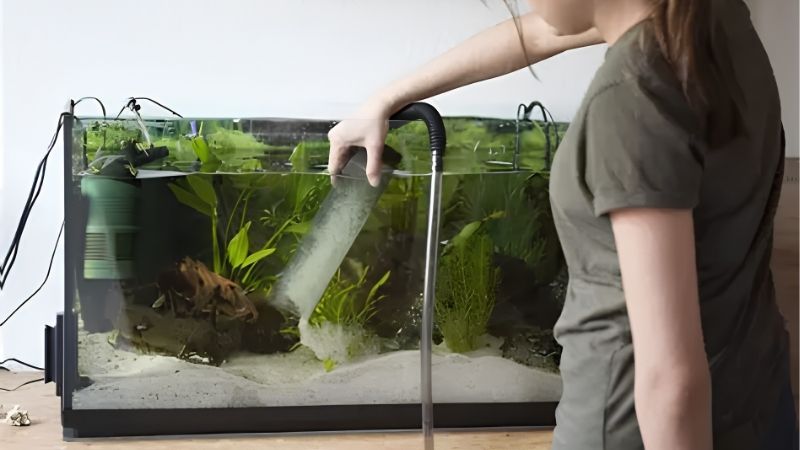
The Deciding Number: Tube Diameter Against Substrate
Wide tubes at 1.5-2 in (38-51 mm) move a lot of water and suit coarse gravel, lifting debris while the substrate falls back down. Narrow tubes at 0.75-1 in (19-25 mm) suit sand and nano tanks, where a wide tube simply removes the bed.
Substrate type sets the choice more than tank size does. Fine sand needs a narrow tube held just above the surface so detritus lifts without the sand following it, while gravel of 3-5 mm can take a wide tube pushed fully into the bed.
Two More Criteria With Numbers Attached
Hose length has to clear both the tank height and the route to a drain. Add 4-6 ft (1.2-1.8 m) beyond the straight-line distance for slack around furniture, since a hose stretched tight pulls the vacuum out of the tank mid-siphon.
Priming method decides whether the tool is pleasant to use. Self-priming vacuums with a shake or a pump start in a few seconds, while plain tubes need mouth siphoning or a pitcher of water, which is worth avoiding for hygiene alone.
Tank Size, Placement and Fit
Measure the tank depth against the rigid tube before ordering, since the tube should reach the substrate with 4-6 in (10-15 cm) still above the rim so you are not reaching into the water up to your elbow.
Check the route to the drain as well. A tap-driven water change system needs a faucet with a removable aerator and a thread that matches the adapter, which is worth confirming before ordering rather than after the box arrives.
The Options by Tank Size and Routine
Four types cover essentially every tank. Each is matched below to a situation, because the best aquarium gravel vacuum depends on tank volume, substrate and how far the water has to travel to reach a drain.
Standard Siphon Vacuum: The Default for Gravel Tanks
Main numbers: a rigid tube 1.5-2 in (38-51 mm) across and 10-16 in (25-41 cm) long, on a 6 ft (1.8 m) hose to a bucket. It removes water and debris together, so the weekly change and the substrate clean happen in one pass.
It suits tanks from 20-75 gallons (76-284 L) with gravel substrate. It does not suit sand, where the wide bore lifts the bed, and it does not suit anyone whose tank is more than a bucket-carry from a drain.
Narrow-Tube Nano Vacuum: For Sand and Small Tanks
Main numbers: a tube around 0.75-1 in (19-25 mm) with a shorter body, moving water slowly enough to lift detritus off sand without pulling the sand with it. Flow is gentle, which is the point rather than a limitation.
It suits nano tanks, shrimp tanks and any sand substrate. It does not suit large gravel tanks, since removing 15 gallons (57 L) through a narrow bore takes considerably longer than most people are willing to stand there for.
Tap-Driven Water Change System: For Tanks Far From a Drain
Main numbers: a long hose, commonly 25-50 ft (7.6-15 m), driven by a venturi at the faucet that both creates suction and refills afterwards. No buckets are carried, which is the entire argument for it.
It suits tanks above 55 gallons (208 L) and anyone whose tank is in a different room from the sink. It does not suit low mains pressure, and it uses tap water to generate suction, so a share is discarded to drain during removal.
Battery or Electric Vacuum: For Spot Cleaning Only
Main numbers: a self-contained unit that filters debris into an internal bag and returns the water to the tank. Nothing is removed, so this is a cleaning tool rather than a water change tool despite how it is often marketed.
It suits spot-cleaning a small tank between changes, or lifting debris from a planted carpet where a siphon would disturb the layout. It does not suit a weekly water change, and it does not lower nitrate at all.
| Option | Tube diameter | Removes water | Suits substrate | Best for |
|---|---|---|---|---|
| Standard siphon vacuum | 1.5-2 in (38-51 mm) | Yes, to a bucket | Gravel 3-5 mm | 20-75 gallon gravel tanks |
| Narrow-tube nano vacuum | 0.75-1 in (19-25 mm) | Yes, slowly | Sand and fine substrate | Nano, shrimp and sand tanks |
| Tap-driven system | 1.5-2 in (38-51 mm) | Yes, straight to drain | Gravel, sand with care | Large tanks far from a sink |
| Battery or electric vacuum | Not applicable | No, returns the water | Any, gently | Spot cleaning between changes |
| Plain hose, no vacuum head | Hose bore only | Yes | None, disturbs everything | Emergency drain only |
Head to Head, and When Not to Buy
Two types get compared constantly, and there is a case where the tool is not the problem at all. The best aquarium gravel vacuum is often the one already owned, used with a different technique.
Bucket Siphon Versus Tap-Driven System
The bucket siphon wins on cost, on control over exactly how much water leaves, and on not being tied to a faucet thread. It loses on carrying weight, since 5 gallons (19 L) of water weighs around 42 lb (19 kg) per trip.
The tap-driven system wins decisively above 55 gallons (208 L), where bucket trips become the reason water changes get skipped. It loses on water used to generate suction and on needing a compatible tap in reach of the tank.
When a New Vacuum Is the Wrong Fix
Sand being pulled into the tube is a technique problem before it is a tool problem. Hold the tube 1-2 in (2.5-5 cm) above the surface and pinch the hose to reduce flow, and most of the issue resolves without buying anything.
Nitrate that stays high after vacuuming points at feeding or stocking rather than at cleaning. Measure the feed portion and test nitrate before the change for a fortnight before concluding that the substrate is the source.
The Cheaper Route That Works
A length of clear hose and a plastic bottle with the base cut off makes a workable wide-bore vacuum for very little. It is less comfortable to hold than a moulded tube, and it does exactly the same job.
Pinching the hose is the free flow control that most people never use. Squeezing it partially closed slows the siphon enough to work over sand or around plants, which removes the main reason for owning two different vacuums.
Using It and the 12-Month Cost
The best aquarium gravel vacuum is a simple tool that fails in dull ways. This section covers the technique that actually lowers nitrate, what wears out, and the hygiene points worth observing around anything that carries tank water.
Technique That Changes the Result
Work in sections rather than skimming the whole floor. Push the tube fully into gravel in one area until the water clears, lift, move a few inches and repeat, covering a third of the tank at each weekly change.
Do not vacuum the whole bed in one session in a lightly filtered tank, since the substrate holds a share of the bacterial colony. Rotating sections keeps that population intact while still removing the detritus that drives nitrate.
Work under decor rather than around it. Detritus collects where flow does not reach, so lifting an ornament or moving a rock once a month exposes more accumulated waste than a careful pass over open gravel ever will.
What Wears Out
Hoses stiffen and crack at the ends where they are repeatedly flexed, usually within two or three years. Cutting an inch off the perished end restores a good seal and costs nothing, which is worth trying before replacing the whole tool.
Self-priming pumps and valves are the parts that fail first on assisted vacuums, and they are rarely sold separately. Plain siphon designs have nothing to fail, which is a real argument for simplicity in a tool used weekly.
Hygiene, Storage and Timing
Keep the vacuum and bucket for aquarium use only, and never wash either with soap, since residue is difficult to rinse away completely and carries into the tank on the next change. Label the bucket if the household is likely to borrow it.
Drain and dry the hose after use rather than coiling it wet, since standing water in a hose grows biofilm within days. On timing, maintenance tools discount most deeply in late June and late November, and prices move constantly.
Best Aquarium Gravel Vacuum Questions
These arrive when a weekly change starts feeling like a chore. Every answer about the best aquarium gravel vacuum stays with tube size and technique, since those two decide almost everything about how the job goes.
Can I use a gravel vacuum on sand?
Yes, with a narrow tube held 1-2 in (2.5-5 cm) above the surface, or a wide tube with the hose pinched to slow flow. The aim is lifting detritus off the bed rather than pushing the tube into it.
How much of the substrate should I clean?
About a third at each weekly change, rotating sections. Cleaning the whole bed every week removes more of the substrate bacterial population than is helpful in a lightly filtered tank, and it is rarely necessary anyway.
Do I need one for a bare-bottom tank?
Not a gravel head, but you still need a siphon to remove water. A plain hose works, and a wide vacuum tube is easier to aim at detritus collecting in corners, so most keepers use one regardless.
Why does my siphon keep stopping?
Usually the bucket has risen too close to the tank water line, since a siphon needs a height difference to run. Lower the bucket, and check that the hose is not kinked where it passes over the tank rim.
See More:
Conclusion
The best aquarium gravel vacuum for a gravel tank of 20-75 gallons (76-284 L) is a self-priming siphon with a 1.5-2 in (38-51 mm) tube on a 6 ft (1.8 m) hose, cleaning a third of the bed each week.
For sand or nano tanks, use a 0.75-1 in (19-25 mm) tube held just above the surface. Above 55 gallons (208 L), or where the tank is far from a drain, a tap-driven system removes the bucket trips that cause changes to be skipped.
Best Algae Scraper for Acrylic Aquarium: Top Top Picks
Best Python Water Changer Alternative: Top Top Picks