Last Updated: October 21, 2026
- Top Pick: Tetra No More Algae Tablets for Aquariums, 8 Count
- Best Value: Neat&Tidy Siamese Algae Eater (Pack of 6 Fish) – Aquarium Exotic Freshwater Live Fish
- Premium Choice: Blackfoot Mystery Feeder Apple Snails – x6 Live Freshwater Algae Eaters & Tank Cleaners for Aquarium, Puffers, Loaches, and Community Tanks
Best algae eaters for freshwater tank setups is a question with six sensible answers and one wrong one, and the wrong one is sold in every shop. What matters is minimum tank size, group size and which algae the animal actually eats, because almost all of them eat considerably less than their reputation in the shop suggests.
As an Amazon Associate we earn from qualifying purchases.
As an Amazon Associate we earn from qualifying purchases at no extra cost to you.




By David Nguyen
Adult Size, Group Size and What They Eat
Livestock is a permanent addition, so the criteria for the best algae eaters for freshwater tank use differ from anything you would apply to equipment. Choosing the best algae eaters for freshwater tank conditions means matching four numbers before considering what any of them eat.
The Deciding Numbers: Adult Size, Minimum Tank and Group Size
Adult size, not shop size, sets the minimum tank. A bristlenose pleco reaches 4-5 in (10-13 cm) and needs 20-29 gallons (76-110 L). A siamese algae eater reaches around 6 in (15 cm) and realistically needs 55 gallons (208 L).
Group size is the second number. Otocinclus are shoaling and need six or more, amano shrimp behave far better in groups of six or more, and a single specimen of either is both stressed and less effective at the job.
Temperature and hardness come third. Most of these species suit 72-80 °F (22-27 °C), and snails need GH above roughly 6 dGH (107 ppm) for shell maintenance, which rules them out in very soft water without remineralising.
The Other Criteria: What They Eat and What They Add
Match the animal to the algae you actually have. Nerite snails handle green spot and diatoms, otocinclus take diatoms and green dust, amano shrimp take soft hair algae, and essentially nothing reliably eats black beard or cyanobacteria.
Every one of them adds bioload, which adds the nutrients feeding the algae. A group of six otocinclus in a 20 gallon (76 L) tank is a real addition to the waste load, so grazers work best in a tank already close to balanced.
Lifespan is the criterion nobody checks. Nerites live one to three years, amano shrimp two to three, bristlenose plecos five or more, and a siamese algae eater can pass ten. You are choosing a tankmate for years, not a cleaning product.
Tank Size, Placement and Fit
Filtration has to suit the animal, not just the volume. Shrimp need a sponge filter or a pre-filter sponge on the intake, because juveniles are drawn into unguarded intakes and lost without anyone noticing they hatched.
Measure before you order: intake diameter against the pre-filter sponge you intend to buy, 4-6 in (10-15 cm) behind the tank for a hang-on-back filter, and stand capacity against roughly 10 lb/gallon (about 1 kg/L) filled. A 55 gallon (208 L) tank passes 600 lb (272 kg).
The Options by Need
These six cover the realistic range of best algae eaters for freshwater tank stocking. Each is grouped by the situation it fits rather than ranked, because the best algae eaters for freshwater tank use vary completely with volume and algae type.
For Glass and Green Spot: Nerite Snails
Nerites are the most effective grazer for green spot algae and diatoms on glass and hardscape, and they work in anything from 5 gallons (19 L) upward. One per 5-10 gallons (19-38 L) is a reasonable stocking level.
Who they suit: anyone with hard green dots on the glass and water above roughly 6 dGH (107 ppm). Who they do not: soft water keepers, and anyone who dislikes the hard white eggs they scatter over hardscape, which persist for months without hatching in freshwater.
For Nano Tanks: Neocaridina Shrimp
Neocaridina work in tanks from 5 gallons (19 L) up, want 6-10 dGH (107-179 ppm) with 2-5 dKH, and graze soft algae and biofilm continuously. They breed readily, so a starting group of ten becomes a self-sustaining colony.
Who they suit: nano keepers wanting continuous light grazing and a colony that maintains itself. Who they do not: anyone using medication or fertiliser containing copper, which is lethal to them at very low concentrations, and anyone expecting them to clear an established outbreak.
For Soft Hair Algae: Amano Shrimp
Amano shrimp are the most effective grazer for soft hair and thread algae, reach around 2 in (5 cm), and need groups of six or more in tanks from 10 gallons (38 L). They will not breed in freshwater, so the group stays the size you bought.
Who they suit: planted tanks with hair algae and no copper exposure. Who they do not: tanks with larger fish that will eat them, and anyone hoping for a fix rather than help, since they slow new growth without clearing a mat.
For Diatoms and New Tanks: Otocinclus
Otocinclus reach about 2 in (5 cm), need groups of six or more, and suit tanks from 10 gallons (38 L) at 72-79 °F (22-26 °C). They are the most effective fish for diatoms and green dust film on leaves and glass.
Who they suit: established planted tanks with mature biofilm. Who they do not: brand new tanks, where they frequently starve, and anyone unwilling to supplement with vegetables once the visible algae is gone, since a clean tank does not feed them.
For Community Tanks: Bristlenose Pleco
Bristlenose reach 4-5 in (10-13 cm) and need 20-29 gallons (76-110 L) minimum, plus driftwood, since they rasp on it as part of their diet. They graze green film and diatoms across glass, hardscape and broad leaves.
Who they suit: community tanks of 20 gallons (76 L) and up wanting one durable, long-lived grazer. Who they do not: nano keepers, and heavily planted tanks where their substantial waste output raises the nutrient load driving the algae in the first place.
For Black Beard Algae: Siamese Algae Eater, With Caveats
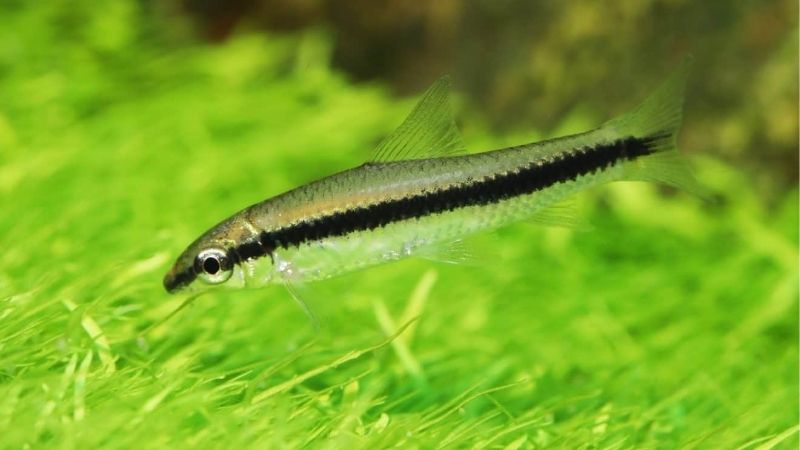
Siamese algae eaters are among the very few fish reported to eat black beard algae, and they do it inconsistently and mostly when young. They reach around 6 in (15 cm) and realistically need 55 gallons (208 L) as adults.
Who they suit: large community tanks where a 6 in active fish is appropriate. Who they do not: almost everyone else, and note they are frequently sold misidentified, with flying fox and chinese algae eater both appearing under the same label in shops.
| Option | Adult size and group | Minimum tank | Recurring cost | Who it suits |
|---|---|---|---|---|
| Nerite snail | 1 in (2.5 cm), any number | 5 gallons (19 L) | None beyond GH maintenance | Green spot on glass, hard water |
| Neocaridina shrimp | 1.5 in (4 cm), 10+ to start | 5 gallons (19 L) | Mineral supplement, food | Nano tanks, continuous grazing |
| Amano shrimp | 2 in (5 cm), 6+ | 10 gallons (38 L) | Replacements, no breeding | Soft hair algae in planted tanks |
| Otocinclus | 2 in (5 cm), 6+ | 10 gallons (38 L) | Vegetable supplements | Diatoms in established tanks |
| Bristlenose pleco | 4-5 in (10-13 cm), 1 | 20-29 gallons (76-110 L) | Driftwood, sinking food | Community tanks, green film |
| Siamese algae eater | 6 in (15 cm), 1-3 | 55 gallons (208 L) | Food, larger filtration | Large tanks with black beard |
Direct Comparisons and Who Should Not Buy
Two of the best algae eaters for freshwater tank shortlists get confused constantly, and one very popular option should not be on any list at all. This section covers both, plus the cheaper approach that works better than any of them.
Siamese Algae Eater Versus the Fish Sold as One
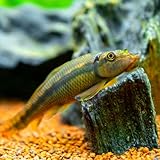
Three species appear under similar names. The true siamese algae eater has a black stripe running through the tail fin, the flying fox has a stripe stopping at the tail base and eats far less algae, and the chinese algae eater becomes territorial and stops eating algae as it matures.
Check the tail stripe before buying, and be prepared for shop staff to be uncertain. Buying the wrong one means a fish that grows large, contributes nothing to the algae, and in the chinese algae eater’s case may harass tankmates as an adult.
Who Should Not Buy a Common Pleco
The common pleco is the most frequently sold algae eater and the least appropriate. It reaches 18 in (46 cm) or more, needs a tank measured in hundreds of gallons as an adult, and produces waste volumes that overwhelm normal filtration.
It also stops eating algae as it matures, shifting toward prepared food and driftwood. Anyone sold one for a 20 gallon (76 L) tank has bought a decade-long problem, and rehoming adults is genuinely difficult because so few keepers have the space.
The Cheaper Approach That Works Better
Fixing the driver costs nothing. A timer holding the photoperiod at six to eight hours, water changes at 20-30% weekly adjusted by measured nitrate, and fast-growing plants competing for nutrients do more than any grazer, and they work on every algae type.
Grazers belong in a tank that is already balanced, where they handle the light film that appears between water changes. Buying livestock to solve an outbreak adds bioload to a tank that already has a surplus, which is the wrong direction.
Manual removal is the other free option. A blade scraper on glass tanks, a soft pad on acrylic and a few minutes during each water change clears more algae in a month than any of these six animals will, and it works from day one.
Living With Them: Failures and Twelve-Month Costs
The best algae eaters for freshwater tank use are animals with lifespans measured in years, so the running commitment matters far more than the purchase. This is also where most of the disappointment with algae eaters comes from.
Where Each Group Typically Fails
Otocinclus commonly arrive already starved from the supply chain and die in the first fortnight, which is why an established tank with biofilm matters so much. Amano shrimp are lost to unguarded filter intakes and to any copper entering the tank.
Snails suffer shell erosion in soft or acidic water, showing as pitting and thinning at the growing edge. Plecos outgrow tanks bought for them, and siamese algae eaters lose interest in algae as they mature, which is the most common complaint about them.
What They Cost to Keep Across a Year
None of these animals are Amazon purchases, and the money in a grazer tank goes on equipment and consumables instead: a pre-filter sponge for shrimp, driftwood for a bristlenose, a mineral supplement where GH needs maintaining, and sinking or vegetable food once visible algae is gone.
Prices for all of it change constantly, so check at the time of purchase. The figure worth calculating is the twelve-month total including food and any water parameter maintenance, because a grazer in a clean tank still needs feeding every week of the year.
Safety and Compatibility Checks Before Buying
Copper is the hard constraint. Many medications and some plant fertilisers contain it, and it is lethal to shrimp and snails at very low concentrations, so every product entering a tank with invertebrates needs checking first.
Live animals also ship badly in temperature extremes, and heat waves in July and August or hard freezes in winter both cause losses in transit. Buying locally during those periods, or waiting for milder weather, avoids a problem no seller can fully control.
Frequently Asked Questions
These four come up most often when someone is deciding which grazer to add and how many of them.
How many algae eaters do I need?
Fewer than most people buy. One nerite per 5-10 gallons (19-38 L), six otocinclus or amano shrimp as a group, and one bristlenose per tank. Overstocking grazers adds bioload that feeds the algae you are trying to remove.
Will they clear an existing outbreak?
No. Grazers maintain a corrected tank rather than fixing an uncorrected one. Cut the photoperiod, bring nitrate under 40 ppm and remove growth by hand first, then add livestock once the tank is stable.
What eats black beard algae or cyanobacteria?
Effectively nothing reliable. Siamese algae eaters take black beard inconsistently when young, and no grazer touches cyanobacteria. Both need conditions corrected instead, which is flow and carbon stability for one, and flow and organics for the other.
Can I keep shrimp and fish together?
With small peaceful species, yes. Anything with a mouth large enough will eventually eat adult shrimp, and almost everything eats the young, so a breeding colony needs either a species tank or dense planting and no medium-sized fish.
See More:
The Bottom Line
For most people the default among the best algae eaters for freshwater tank setups is nerite snails, because they work from 5 gallons (19 L) up, handle the green spot and diatoms that actually appear on glass, and add almost no bioload. The lower-cost option is neocaridina shrimp, which breed into a self-sustaining colony and graze continuously for the price of one starting group. Avoid the common pleco entirely, check the tail stripe before buying anything sold as a siamese algae eater, and remember that none of them substitutes for a timer and a water change schedule.
Best Aquarium Canopy For Large Display Tanks: Top Compared
How Much Weight Can an Aquarium Stand Hold: Top Expert Guide