Last Updated: October 9, 2026
- Top Pick: Tetra Complete 55 Gallon Fish Tank Kit for Freshwater & Saltwater Fish
- Best Value: Coralife BioCube, Aquarium Kit, Integrated 24-hour Timer, Customizable LED Lighting, for Saltwater and Freshwater Environments, 32 Gallon
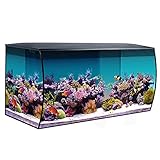
- Premium Choice: Fluval Flex 32.5 Marine Salt Water Aquarium Kit – Fish Tank for Fish, Coral & More – Comes with LED Lights, Filtration System & More – 32.5" x 15.75" x 15.35" – 123 L, 32.5 Gal. – Black
🛒 Best Price Today on Amazon
Prime members get fast, free shipping on everything above, plus member-only deals. New members get a 30-day free trial — cancel anytime.
Starting Your First Saltwater Aquarium: What You Need to Know
Setting up a saltwater aquarium is more complex than a freshwater setup, but with the right saltwater aquarium starter kit and guidance, beginners can build a thriving marine system from day one. Modern all-in-one reef-ready tanks include built-in filtration, lighting, and circulation, dramatically simplifying the setup process. Whether you dream of a fish-only tank or a small reef with corals, starting with a quality kit saves money, avoids compatibility issues, and sets you up for success. Here are the best starter options.
As an Amazon Associate we earn from qualifying purchases at no extra cost to you.



1. Coralife LED BioCube Aquarium Kit
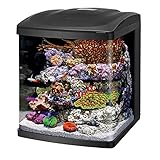
The Coralife BioCube is one of the most popular all-in-one saltwater starter tanks available. It comes with an LED lighting system capable of supporting soft corals, a three-stage integrated filtration chamber, and a quiet return pump — all in a compact, stylish design. The 16 and 32-gallon sizes are ideal for beginners who want a manageable volume that is large enough for a small community of marine fish and beginner corals like mushrooms, zoanthids, and soft polyps. BioCube's widespread popularity means extensive support resources are available online.
2. Innovative Marine Nuvo Fusion All-in-One Reef Tank
Innovative Marine's Nuvo Fusion tanks are premium all-in-one reef systems favored by hobbyists who want a clean, modern aesthetic with excellent filtration engineering. They feature large rear filtration chambers with space for a protein skimmer, a powerful return pump, and a rimless glass design that provides a stunning view from all angles. The Nuvo Fusion is available in sizes from 10 to 40 gallons and is designed with reef-keeping in mind from the ground up, making it one of the most upgrade-friendly beginner reef systems on the market.
3. Red Sea Max Nano Complete Reef System
The Red Sea Max Nano is a premium complete reef system designed for beginners who want high-end performance in a compact form. It includes a capable LED lighting system engineered for mixed reef keeping, a well-designed integrated filtration system, and Red Sea's signature build quality. The Max Nano kit typically includes salt mix, test kits, and other consumables that make it a genuinely comprehensive package for first-time reefers. It is priced at the higher end of the starter spectrum but delivers a professional-grade experience from the start.
Buying Guide: Starting Your Saltwater Tank Right
- Tank size: Bigger is more stable in saltwater. A 20-30 gallon tank is the ideal beginner size — small enough to be manageable but large enough to buffer parameter swings.
- Lighting: Fish-only tanks need basic lighting; reef tanks require full-spectrum LED lights capable of supporting coral photosynthesis. Confirm light specs before purchasing.
- Cycling: All saltwater tanks require a nitrogen cycle (4-8 weeks) before adding fish. Use live rock and beneficial bacteria supplements to accelerate the process.
- Essential equipment: In addition to your tank kit, you will need a refractometer for salinity, a quality test kit, a protein skimmer, and a trusted salt mix.
- Livestock order: Add fish slowly — start with the hardiest species (damsels, clownfish) and wait weeks between additions to allow biological filtration to catch up.
What a Saltwater Starter Kit Includes and Why
A saltwater aquarium has more moving parts than a freshwater tank, and a good starter kit assembles the essentials into one package. At its core are the tank itself, a filtration system, and lighting, but saltwater setups add several specialized items. You will need marine salt mix to recreate seawater, a hydrometer or refractometer to measure salinity, and a heater to hold the warm, stable temperature reef and marine fish require. Many all-in-one marine tanks include a built-in filtration compartment and a return pump, simplifying what would otherwise be a complex plumbing job.
Beyond the kit, live rock or dry rock provides biological filtration and structure, and a protein skimmer is commonly added to remove dissolved organic waste before it breaks down. Saltwater systems also rely on water movement from powerheads to keep oxygen levels high and detritus suspended for removal. A starter kit removes much of the guesswork for beginners by pre-matching compatible equipment, but understanding what each component does helps you maintain and eventually upgrade the system with confidence.
Setting Up and Cycling a Saltwater Tank
Setting up a saltwater tank begins with mixing salt water to the correct salinity, typically around 1.024 to 1.026 specific gravity for a reef or marine fish tank, measured accurately with a refractometer. The salt mix should be combined with purified water, ideally RO/DI water, and circulated until fully dissolved and at temperature before testing. Rushing this step or guessing at salinity is a common beginner error that stresses livestock, so precise measurement is essential.
Like freshwater tanks, saltwater systems must be cycled to establish beneficial bacteria before fish go in, and live rock often jump-starts this process. Allow the nitrogen cycle to complete, confirming with test results that ammonia and nitrite read zero, which usually takes several weeks. Add livestock slowly, beginning with hardy species, and maintain the system with regular partial water changes using freshly mixed salt water to replenish trace elements and export waste. Marine aquariums reward patience and consistency; stable parameters matter even more than in freshwater, and a well-cycled, carefully stocked tank is far more likely to thrive.
Frequently Asked Questions
What does a saltwater starter kit include?
Kits typically bundle a tank, filtration, lighting, and often a return pump, while saltwater also requires marine salt mix, a heater, and a salinity tester. Many all-in-one marine tanks integrate the filtration into the back of the tank.
What salinity should a saltwater tank be?
A marine or reef tank is usually kept around 1.024 to 1.026 specific gravity, measured with a refractometer. Accurate, consistent salinity is essential to keep marine livestock healthy.
Do I need live rock in a saltwater tank?
Live rock provides biological filtration and structure and helps jump-start cycling. Dry rock works too and becomes biologically active over time once bacteria colonize it.
How long does it take to cycle a saltwater tank?
Cycling usually takes several weeks, often aided by live rock. The tank is ready when test results confirm ammonia and nitrite both read zero.
Is a protein skimmer necessary for beginners?
A protein skimmer removes dissolved organic waste before it breaks down and is highly recommended for most marine tanks. Small or lightly stocked systems can sometimes manage without one through diligent water changes.
Final Thoughts
A quality saltwater aquarium starter kit removes the guesswork from your first marine setup. All-in-one tanks like the BioCube, Nuvo Fusion, and Red Sea Max Nano provide everything you need in an integrated package, letting you focus on learning the craft rather than troubleshooting equipment compatibility. Start small, cycle properly, and add livestock slowly for the best chance of long-term reef success.
Related Reviews & Guides

Refugium Setup for Beginners: Sizing, Light and Harvest
Best Wavemaker for SPS Dominant Reef: Smart Top Picks