Last Updated: September 25, 2026
The right water-change tool depends on where the dirty water goes and how deep your tank is. The best aquarium siphon for water changes matches a bucket-or-faucet workflow to your setup, and because these tools are not flow-tested alike, you choose by reach and priming, not a suction number.
As an Amazon Associate we earn from qualifying purchases.
By David Nguyen
Quick answer: For most people in 2026, the best aquarium siphon for water changes is the Python No Spill 25 ft — our #1 rated choice. See the full ranked comparison, alternatives and buying advice below.
How to Choose a Water Change Siphon
Picking a siphon starts with the destination: a bucket or the sink. From there, priming method, tube length and whether you want refill decide the tool. Faucet and gravity systems are not comparable on speed, so match the workflow to your tank.
Where Dirty Water Goes
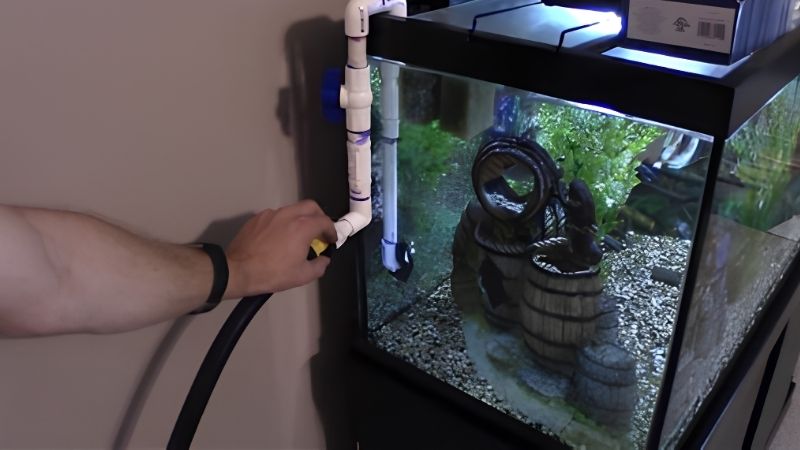
The first choice is bucket versus drain. A gravity siphon like the Aqueon Large 16 empties into a bucket that sits lower than the tank, while a faucet-connected changer like the Python No Spill 25 sends water straight to the sink.
If you dread carrying buckets on a big tank, the faucet route wins; if your tank is small or a faucet is far, a bucket siphon is simpler and cheaper. Match the destination to your space before comparing anything else. A 5-gallon bucket of water is about 42 lb, so on a 55 a faucet changer saves several heavy trips per session.
Pick Priming Method
How the siphon starts matters day to day. The Python Pro-Clean Large uses a squeeze starter, faucet changers begin with tap pressure, and a plain siphon needs a shake-and-dunk or lower-outlet start — no mouth-priming required on any of these.
A squeeze bulb or faucet start is easier if you change water often. A gravity siphon needs its outlet below the tank to run, so plan your bucket height; the priming method is convenience, not cleaning power. Faucet changers also refill through the same hose, turning a two-step chore into one for freshwater tanks.
Match Tube to Tank Depth
Tube length should suit tank depth. The Aqueon Changer uses an 11-in tube, the Aqueon Large a 16-in tube, and the Python Pro-Clean Large a pair of 16-in tubes — deeper tanks want the longer intake to reach the substrate.
A tube too short leaves you reaching, too long is awkward in a shallow tank. Match the intake to your tank height so gravel cleaning is comfortable, since depth, not gallons alone, drives the right tube choice. For a deep planted tank, a 16-in tube reaches the substrate without your sleeve going in, unlike an 11-in one.
Decide Whether Refill Matters
Refill capability separates the systems. The Python No Spill and Aqueon Water Changer both drain and refill through the same faucet hose, turning a two-step chore into one, while a bucket siphon only removes water.
For freshwater, faucet refill saves time; for saltwater or dosed tanks, you still prepare water separately. Decide whether the one-step refill is worth the higher price and a compatible faucet, since a bucket siphon costs far less if you refill by hand anyway. Reef and dosed tanks still need premixed, conditioned water, so plan a separate mixing container for those.
Top Picks
Four siphons span faucet-connected changers to simple bucket units, differing in workflow, tube length and priming rather than measured speed. Faucet and gravity tools are not comparable on flow, so pick by your routine. Prices are relative and shift.
| Product | Best For | Key Spec | Watch Out For |
|---|---|---|---|
| Python No Spill 25 ft | Best Overall | 25 ft; faucet drain+refill; ~$55 | Needs compatible faucet |
| Aqueon Water Changer 25 ft | Best faucet alternative | 25 ft; 11 in tube; drain+refill; ~$46 | Faucet fit required |
| Aqueon Siphon Large 16 in | Best Value | 16 in tube; 6-ft hose; ~$16 | Bucket only, no refill |
| Python Pro-Clean Large + Squeeze | Best for bucket cleaning | 2×16 in tube; squeeze start; ~$25 | Manual, bucket only |
Python No Spill 25
The Python No Spill 25 ft earns Best Overall for a complete faucet drain-and-refill workflow, around $55 as of 09/2026 [Python/Chewy, 2026]. It removes and replaces water through one hose, ending bucket carrying on medium and large tanks.
It needs a compatible faucet, so confirm your tap threads first. At about 19% above the Aqueon changer it is the pricier faucet option, but the smooth all-in-one workflow is why it leads for regular water changes. Threads vary, so keep the included adapter handy; an aerator that will not unscrew is the usual snag.
Aqueon Water Changer 25
The Aqueon Water Changer 25 ft is the value faucet alternative at about $46, roughly 16% below the Python [Aqueon/Chewy, 2026], with an 11-in tube and the same drain-and-refill capability. It covers the faucet workflow for less.
Like any faucet changer it requires a matching tap, so an adapter may be needed. Against the Python the difference is mostly fittings and finish, so if budget matters it is the sensible faucet pick. The 11-in gravel tube also doubles as a substrate cleaner, so a water change and a vacuum happen in one pass.
Aqueon Large 16
The Aqueon Siphon Large is the value bucket option at about $16, with a 16-in tube and a 6-ft hose, rated for 40-gallon-plus tanks. It is a simple, reliable gravity siphon with no faucet dependence.
It only removes water, so you refill by hand, and it needs its outlet below the tank to run. For a straightforward bucket routine on a larger tank, though, it does the core job at the lowest price here. The bucket clip holding the outlet is a small but real convenience that stops the hose whipping out mid-drain.
Python Pro-Clean Large + Squeeze
The Python Pro-Clean Large adds a squeeze starter to a dual 16-in tube setup with a 6-ft hose, about $25. The squeeze bulb primes the siphon quickly without mouth-starting or awkward shaking.
It is still a bucket-only, manual tool, so no faucet refill. For owners who want easy priming and gravel cleaning into a bucket, the squeeze start is the draw, though it costs more than a plain siphon. For a nano or a tank near the sink, a bucket siphon is far cheaper than a faucet system you rarely need.
Frequently Asked Questions
Siphon questions come down to frequency, sizing and whether faucet reach beats a bucket. Each answer opens with a practical verdict, then the detail for your tank.
How often siphon?
Usually weekly, alongside your partial water change. Siphoning the gravel during the weekly change removes trapped waste while you swap water, so the two jobs share one session for most tanks.
Heavily stocked tanks may need it more often, planted tanks less. Let nitrate and visible detritus guide the interval rather than a fixed date, adjusting as your bioload changes. Pairing the siphon with the weekly change means the water you pull for cleaning is the water you were replacing anyway.
Size for 40 gal?
A larger tube or a faucet changer suits a 40-gallon. The Aqueon Siphon Large 16-in tube is rated for 40-gallon-plus tanks, and a faucet system like the Python handles the volume without repeated bucket trips.
On a tank that size, bucket count adds up fast, so many owners prefer the faucet route. Match the tube length to the tank depth and the workflow to how much water you move each week. A 20% change on a 55 is about 11 gallons, roughly three buckets, which is where a faucet system earns its price.
25 ft better than 6 ft?
Not better, different. A 25-ft faucet hose and a 6-ft bucket siphon are not comparable on performance — one routes to a sink under faucet pressure, the other drains to a nearby bucket by gravity.
Choose by destination, not the feet. If the sink is far and you want no buckets, 25 ft helps; if a bucket sits beside the tank, 6 ft is plenty, so length reflects the route rather than suction. Drain speed on either depends on head and tube diameter, not a longer hose, so ignore length as a suction claim.
Need mouth-start?
No. None of these require mouth-priming: faucet changers start on tap pressure, the Python Pro-Clean uses a squeeze bulb, and a plain siphon starts with a shake-and-dunk or a lower outlet.
Mouth-starting risks swallowing tank water and is unnecessary. Use the squeeze starter or the lower-outlet method instead, both cleaner and just as effective. A quick submerge-and-cap of the tube also primes a plain siphon without any bulb at all.
Final Thoughts
The best aquarium siphon for water changes is the one whose workflow fits your tank: a faucet changer like the Python No Spill 25 for bucket-free drain-and-refill, or a simple bucket siphon like the Aqueon Large for a cheaper, smaller routine. Match the destination, tube length and priming to your setup — and since faucet and gravity tools are not flow-tested alike, choose by workflow and reach, not a suction figure.
As an Amazon Associate we earn from qualifying purchases at no extra cost to you. Prices and availability are accurate as of the date shown and are subject to change.
Ready to decide? Our #1 pick for 2026 is the Python No Spill 25 ft.
Live price & availability on Amazon.
Related Reviews & Guides




Cichlid Aquarium Filtration Guide: How It Works in Practice

Quick Picks: Best Aquarium Breeding Boxes and Fry Separators