Last Updated: September 25, 2026
There is no one calendar that fits every tank, but the best aquarium maintenance schedule for beginners starts the same way: daily observation, a weekly partial water change, and filter service on your model schedule — then adjust by stocking, species and what your water tests actually show.
As an Amazon Associate we earn from qualifying purchases.
By David Nguyen
Quick answer: For most people in 2026, the best aquarium maintenance schedule for beginners is the Observe fish and equipment — our #1 rated choice. See the full ranked comparison, alternatives and buying advice below.
Aquarium Maintenance Schedule for Beginners
A starter routine is a framework, not a fixed law. Watch the tank daily, change a little water weekly, and service the filter on its own schedule. The table below is a starting point that measured water quality and your specific gear can override.
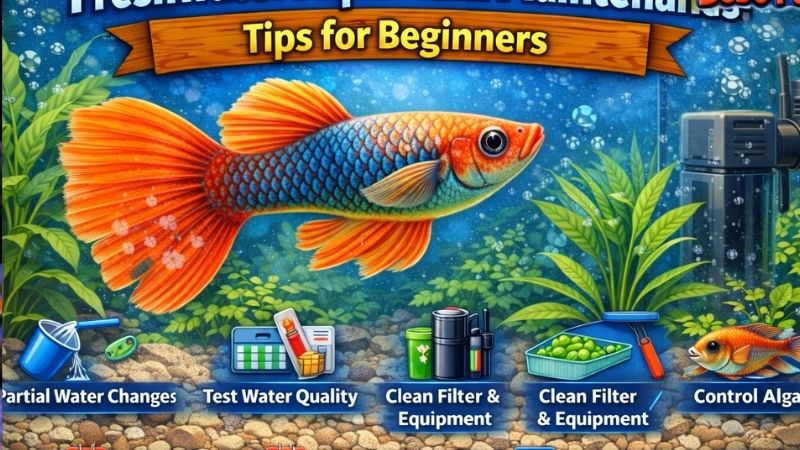
| Task | Frequency | Note | Exception |
|---|---|---|---|
| Observe fish and equipment | Daily | Behavior, temp, flow | Illness or spike = act now |
| Partial water change | Weekly | ~10-20% for many tanks | Heavy stocking = more |
| Inspect filter flow | Weekly | Check for clogging | Slowed flow = clean sooner |
| Service or clean media | ~Monthly | Rinse in tank water | Follow the filter manual |
| Test water | Weekly at first | Ammonia, nitrite, nitrate | New tanks = more often |
Daily: Check Fish and Equipment
The daily task is observation, and it costs nothing. Watch for normal behavior, feeding response and color, and confirm the heater and filter are running. Most problems show as a behavior change before a test does. Counting heads and watching how fish take food catches illness a day or two before a water test would.
If something looks off — gasping, clamped fins, a dark heater light — act that day rather than waiting for the weekly slot. A quick daily glance catches the issues a fixed calendar would otherwise miss until they worsen. A cheap digital thermometer confirms the heater at a glance, since a stuck heater is a top cause of overnight losses.
Weekly: Partial Water Change
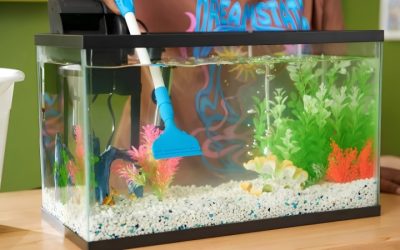
A weekly partial change is the backbone. Aqueon offers about 10% weekly as general starting guidance, and Fluval a roughly 20% weekly example [Aqueon; Fluval, current] — both starting points that depend on stocking and test results, not fixed rules.
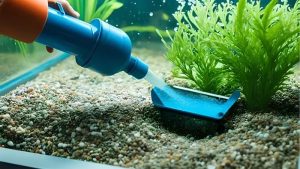
Note that 10% weekly and 25% once or twice a month are different schedules, not the same amount spread out. Pick one rhythm and adjust the percentage to your nitrate readings rather than treating any single number as exact. A python-style changer makes the weekly habit easier to keep, which matters more than the exact percentage you pick.
Weekly: Inspect Filter Flow
Check the filter weekly even if you clean it monthly. Flow that drops signals a clogging sponge or cartridge, and catching it early keeps biological filtration steady. Aqueon suggests inspecting QuietFlow cartridges weekly while replacing about monthly. A quick look also flags a snail or plant fragment blocking the intake, an easy fix that restores flow immediately.
A slowing filter is a cue to service sooner than the calendar says. Replacement cartridges are a recurring cost in this hobby, so favoring rinsable media over disposable ones where your filter allows trims the ongoing spend. Proprietary cartridge filters add a recurring cost here, so a model with rinsable sponge media trims the yearly spend.
Monthly: Service What Needs It
Monthly is for deeper service, guided by the manual. Fluval suggests media cleaning around a month as starting guidance, and an Aqueon QuietFlow cartridge is model-specified at about monthly — both while inspecting weekly rather than on a rigid date.
Do not replace all filter media at once, since that discards the bacteria colony. Rinse mechanical media in tank water and stagger any swaps, because a generic calendar cannot override what your specific filter manual instructs. Swap at most half the media in a session and wait a couple of weeks before the rest to protect the colony.
Adjust for Your Aquarium
The starting schedule bends to your tank. Heavier stocking, water-test results, a new setup and a marine system each change the numbers. Treat the calendar as a default and let these conditions move it up or down.
Increase Frequency for Heavy Stocking
Stocking drives waste, and waste drives maintenance. A lightly planted community may thrive on a 10% weekly change, while a heavily stocked or messy-fish tank needs more frequent or larger changes to hold nitrate down.
Match the change to the load, not a fixed percentage. Big eaters like cichlids or a crowded tank push you toward larger or twice-weekly changes, so scale the routine up as bioload rises rather than sticking to the beginner default. A quick nitrate test each week tells you whether the current schedule is keeping pace with the bioload.
Use Water Tests
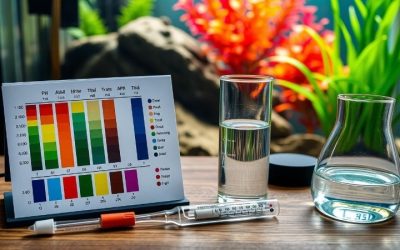
Tests turn a guess into a decision. Checking ammonia, nitrite and nitrate tells you whether your change schedule is keeping up; rising nitrate means change more, stable low readings mean your current rhythm works.
A liquid test kit is a recurring but worthwhile consumable, since reagents expire. Let the numbers override the calendar — an abnormal test result is a reason to act regardless of what day the schedule says. Reagents typically carry a shelf life of a couple of years, so check the date rather than trusting an old kit.
Treat New Tanks Differently
A new tank is not on the normal schedule. During cycling, ammonia and nitrite spike, so test every few days and change water to protect fish rather than following a settled weekly rhythm meant for a mature tank.
Avoid deep-cleaning the filter while the colony establishes. Once readings stabilize — ammonia and nitrite at zero, nitrate present — you can shift to the regular routine, so let the tests, not the calendar, signal the transition. Adding a bottled bacteria culture can speed a new tank, but tests, not the bottle, confirm when cycling is done.
Keep Freshwater and Saltwater Numbers Separate
Marine schedules are not freshwater schedules. Fluval marine guidance of about 15 to 20% every one to two weeks is specific to saltwater and should not be copied silently onto a freshwater tank, which has different parameter needs.
Saltwater adds salinity, alkalinity and trace elements to manage, so its routine and test set differ. Keep the two frameworks separate, since a marine and a freshwater calendar are not interchangeable numbers. A refractometer is the reliable tool for salinity, since a swing there stresses coral faster than a small nitrate change.
Frequently Asked Questions
Beginner schedule questions circle around how much and how often. Each answer starts with a practical number, then the condition that changes it for your tank.
Change water weekly?
For most tanks, yes — a weekly partial change is a solid default. Many beginners run about 10 to 20% weekly, but the right amount depends on stocking and nitrate, so it is a starting point rather than a rule.
A lightly stocked, planted tank may stretch the interval, while a crowded one needs more. Let your nitrate test decide the frequency instead of locking to a fixed weekly figure. Overstocked or messy-fish tanks such as cichlids often need twice-weekly changes to hold nitrate down.
How much water?
Often around 10 to 25% at a time, adjusted to your tank. Aqueon general starting guidance is about 10% weekly or 25% once or twice a month — different rhythms, not the same amount rearranged.
Larger, less frequent changes suit stable tanks; smaller, frequent ones suit sensitive livestock. Match the volume to your test results, since the percentage is a starting point that stocking and nitrate move. Whatever the size, matching new water to tank temperature avoids shocking fish during the change.
How often clean filter?
Inspect weekly, service roughly monthly, following the manual. Fluval suggests media cleaning around a month, and cartridge filters like Aqueon QuietFlow are model-specified at about monthly while checked weekly.
Clean sooner if flow drops, and never swap all media at once. Rinse mechanical media in tank water to protect bacteria, because your filter own manual overrides any generic monthly rule. A visibly slowed return or a straining impeller is your cue, not the calendar date on the wall.
Rinse biological media under tap?
No. Chlorinated tap water kills the beneficial bacteria that biological media hosts, which is the opposite of what maintenance should do. Rinse it gently in old tank water instead.
Swish the media in a bucket of removed tank water to clear debris without stripping the colony. Save tap rinsing for non-biological parts, and only when they are not returning to the tank immediately. Reusing the removed tank water for this rinse means no dechlorinator is needed for the media step.
Final Thoughts
In practice, the best aquarium maintenance schedule for beginners is a flexible framework, not a fixed calendar: observe daily, change a little water weekly, service the filter on its own schedule, and let stocking, species and water tests move the numbers. Keep freshwater and saltwater routines separate, and treat every interval here as a starting point your tank can override.
As an Amazon Associate we earn from qualifying purchases at no extra cost to you. Prices and availability are accurate as of the date shown and are subject to change.

Aquarium Maintenance Logbook: Document & Track Feeding, Tank Conditions, Water Test Readings & Other Important Information | Fish Keeping Record Book for Aquarists of All Levels
Selected for "Best Aquarium Maintenance Schedule for Beginners: Top Smart": this listing is stands and furniture (Aquarium Maintenance Logbook: Document & Track Feeding, Tank Condition), matching the equipment this article covers.
View on Amazon
THE COMPLETE FRESHWATER AQUARIUM HANDBOOK: From First Tank Setup to Advanced Aquarium Management: Clear Advice for Confident Freshwater Fish Keeping
Selected for "Best Aquarium Maintenance Schedule for Beginners: Top Smart": this listing is tanks (THE COMPLETE FRESHWATER AQUARIUM HANDBOOK: From First Tank Setup to Ad), matching the equipment this article covers.
View on Amazon
Reef Tank & Aquarium Water Quality Logbook: Comprehensive Marine & Saltwater Maintenance Tracker Journal | Monitor Water Parameters, Nitrogen Cycle, and Dosing Schedules
Selected for "Best Aquarium Maintenance Schedule for Beginners: Top Smart": this listing is stands and furniture (Reef Tank & Aquarium Water Quality Logbook: Comprehensive Marine & Sal), matching the equipment this article covers.
View on Amazon
THE NO-STRESS AQUARIUM KEEPER'S BIBLE: A Beginner’s Guide to Freshwater Fishkeeping, Tank Setup, Cycling, Filtration, Water Quality, Feeding, Cleaning, Algae Control, Aquascaping, and Healthy Fish
Selected for "Best Aquarium Maintenance Schedule for Beginners: Top Smart": this listing is tanks (THE NO-STRESS AQUARIUM KEEPER'S BIBLE: A Beginner’s Guide to Freshwate), matching the equipment this article covers.
View on AmazonReady to decide? Our #1 pick for 2026 is the Observe fish and equipment.
Live price & availability on Amazon.
Related Reviews & Guides
Aquarium Fish Disease Prevention: Best Products to Keep Your Fish Healthy
Aquarium GH vs KH: What Each One Measures and Why It Matters