Last Updated: October 21, 2026
Every water change introduces chlorine, chloramine, and heavy metals straight from the tap, and untreated water can burn gill tissue in minutes. A quality conditioner neutralizes those threats instantly while some formulas go further, adding slime coat protection or beneficial bacteria to buffer the shock of new water. Knowing the difference between a basic dechlorinator and a full-spectrum conditioner will save your fish real stress.
Below we compare six popular options for 2026, from budget-friendly bottles to all-in-one formulas built for sensitive or heavily stocked tanks. We break down what each one actually removes, how far a bottle stretches, and which type fits your setup best.
As an Amazon Associate we earn from qualifying purchases at no extra cost to you.



⚡ Save on Your Next PC — Amazon Prime
Prime members get fast free shipping on the systems above, plus early access to Prime Day & Black Friday PC deals. New members get a 30-day free trial.
Watch: Aquarium Water Conditioner vs. Dechlorinator: What’s the Difference? — Video Review
How to Choose
- Chloramine coverage: Municipal water often carries chloramine, not just chlorine, so confirm the label lists both since a chlorine-only dechlorinator leaves ammonia behind after breaking the bond.
- Dosage rate: Check milliliters or capfuls per gallon; a 16-ounce bottle at 1 tsp per 10 gallons treats far more water than one dosed at 5 mL per gallon.
- Slime coat support: Formulas with aloe vera or similar polymers replace the fish’s protective mucus layer, which matters most after netting, shipping, or fin damage.
- Heavy metal detox: Look for conditioners that bind copper, lead, and zinc, especially in older homes with copper piping feeding the tap.
- Tank type and bioload: Reef and planted tanks often need conditioners free of phosphate or dye additives, while heavily stocked freshwater tanks benefit from ammonia-detoxifying formulas.
The Best Picks Reviewed
API Tap Water Conditioner 16 oz
This is the workhorse dechlorinator most fish keepers start with. It neutralizes chlorine, chloramine, and ammonia instantly and detoxifies heavy metals, and at a dose of just 1 capful per 10 gallons, a 16-ounce bottle stretches through roughly 640 gallons of water changes. It skips extra slime coat additives, which keeps it simple and affordable for routine maintenance on established tanks.
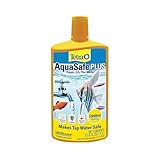
Tetra AquaSafe Plus 33.8 oz
The largest bottle in this lineup, AquaSafe Plus adds vitamin B1 and biopolymers that support slime coat regeneration on top of standard dechlorination. At 5 mL per 10 gallons, the 33.8-ounce size covers around 670 gallons, making it a solid pick for multi-tank households or anyone tired of reordering every month.
Natural Rapport All-in-1 Dechlorinator 16 oz
This one markets itself as a true all-in-1, handling chlorine, chloramine, and ammonia while also conditioning water for both fresh and saltwater setups. It’s a good middle-ground choice if you want broad-spectrum protection without stepping up to a premium slime coat formula, and the 16-ounce bottle keeps upfront cost low.
API Stress Coat 16 oz
Stress Coat is built for moments that matter most: new fish introductions, fin nips, or post-treatment recovery. Its aloe vera-based formula accelerates slime coat production and eases stress-related damage while still neutralizing chlorine and chloramine. Dosed at 1 capful per 10 gallons, it’s less about daily upkeep and more about giving fish a real recovery boost.
TankFirst Complete Conditioner 500 ml
TankFirst leans into instant action, claiming to strip chlorine and chloramine and detoxify ammonia the moment it hits the water. The 500 mL bottle is smaller than most on this list, so it suits nano tanks or fish keepers who want to try a newer formula before committing to a larger size.
Frequently Asked Questions
Do I need a conditioner if my tank uses well water?
Well water typically lacks chlorine and chloramine but can carry high levels of dissolved metals or fluctuating pH, so a conditioner with heavy metal detoxification is still worth using, even if chlorine removal isn’t the priority.
Can I use too much water conditioner?
Overdosing rarely harms fish since most formulas are designed with a safety margin, but it wastes product and won’t speed up detoxification. Stick to the labeled dose per gallon rather than guessing higher for “extra safety.”
Does conditioner replace a water test kit?
No. Conditioner neutralizes chlorine, chloramine, and some metals on contact, but it doesn’t tell you your ammonia, nitrite, or pH levels. Pair any conditioner with regular testing, especially during a new tank’s cycling period.
Is Stress Coat necessary for every water change?
Not necessarily. Slime coat formulas like Stress Coat shine after handling, transport, or minor injuries, but a standard dechlorinator like API Tap Water Conditioner is sufficient for routine weekly maintenance on healthy, established fish.
Final Thoughts
For everyday water changes on a budget, API Tap Water Conditioner delivers reliable chlorine and ammonia neutralization at a low cost per gallon. If you want one bottle to handle both routine dechlorination and slime coat support, Tetra AquaSafe Plus 33.8 oz offers the best value given its size and added benefits. And when a fish is recovering from stress or injury, API Stress Coat remains the go-to choice for accelerating that healing process.
Best Aquarium Silicone Sealant Fish Safe: Top Compared Guide

6 Best Hows To Use An Aquarium Siphon 2026