Last Updated: October 4, 2026
An RO/DI system is only as good as its match to your tap water, so source chemistry and monitoring matter more than a headline GPD number. The best rodi water filter system for aquariums is the one whose stage count fits your chlorine or chloramine, with real pressure and TDS monitoring, not just the highest rated output.
As an Amazon Associate we earn from qualifying purchases.
By David Nguyen
Quick answer: For most people in 2026, the best rodi water filter system for aquariums is the BRS 4 Stage Value Plus — our #1 rated choice. See the full ranked comparison, alternatives and buying advice below.
How to Choose an Aquarium RO/DI System
Choosing RO/DI comes down to four things: matching the stages to your source water treatment, reading GPD ratings honestly, monitoring pressure and TDS, and accounting for wastewater. A rated output is a lab figure, so the right system is the one built for your specific tap chemistry.
Match Chlorine or Chloramine Treatment
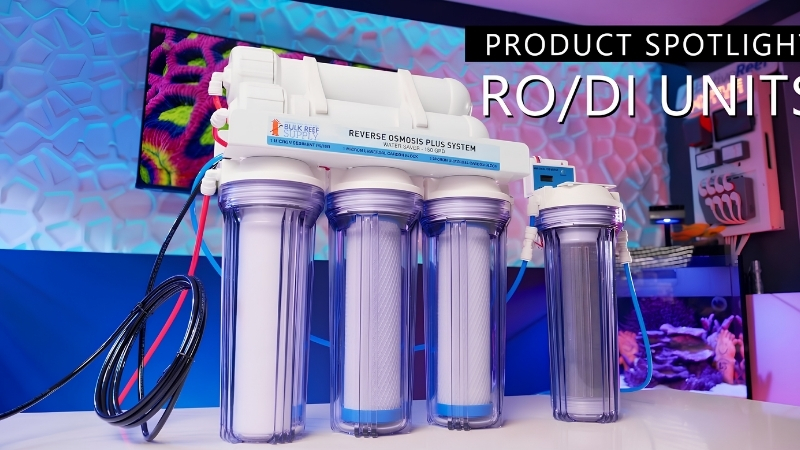
Start with what is in your tap. Chloramine needs more carbon contact than chlorine, which is why BRS offers a 5-stage Premium Plus with a second carbon block for chloramine-treated supplies, while a standard 4-stage suits chlorinated water.
Call your water utility or check the annual report to learn whether they use chlorine or chloramine, since it changes the correct configuration. Buying a 4-stage for chloramine water risks premature DI exhaustion, so match the stages to the source before comparing anything else.
Understand GPD Ratings
Gallons-per-day figures are rated under set conditions, not guaranteed at your tap. The Aquatic Life Twist-In and BRS 4 Stage both rate 75 GPD, while the SpectraPure Eliminator 4 offers 90 or 150 GPD options for higher throughput.
A 90 GPD rating is mathematically 20% above 75 GPD, but real production depends on pressure, temperature and the test standard, so treat it as a ceiling rather than a promise. Two systems with the same GPD can differ in real output at your pressure.
Monitor Pressure and TDS
Monitoring is what keeps output honest. The BRS 4 Stage Value Plus includes dual TDS meters and a pressure gauge, so you can see membrane performance and DI exhaustion directly instead of guessing when to change media.
The Aquatic Life Twist-In lists a 30 to 80 PSI range with about 65 PSI suggested, and low pressure drops both output and rejection. A booster pump helps where pressure is weak, and TDS meters tell you when filters need replacing before quality slips.
Account for Wastewater
RO systems produce wastewater alongside purified water, and the ratio affects running cost and plumbing. Higher-output or premium units publish rejection and waste ratios, which help you plan drainage and estimate the recurring cost of making water.
Factor the reject line into where you install the system, since it needs a drain. Over a year, wastewater and replacement media are the ongoing costs that matter more than the sticker price, so weigh the filter-replacement ecosystem when choosing a brand.
Top Picks
These four span budget to premium as of September 2026, across 75, 90 and 150 GPD ratings. GPD figures come from different test conditions, so compare them as ceilings rather than guarantees. Match stages to your source water and prioritize monitoring before headline output or price.
| Product | Best For | Key Spec | Watch Out For |
|---|---|---|---|
| BRS 4 Stage Value Plus | Best Overall | 75 GPD; dual TDS + gauge | Higher price than basic kits |
| Aquatic Life Twist-In | Best Value | 75 GPD; 30-80 PSI; ~under $100 | Fewer monitoring extras |
| BRS 5 Stage Premium Plus | Best For chloramine | 75 GPD; second carbon block | Overkill for chlorine-only water |
| SpectraPure Eliminator 4 | Best For high output | 90 / 150 GPD options | GPD depends on pressure/temp |
BRS 4 Stage Value Plus
The BRS 4 Stage Value Plus is the balanced pick, a 75 GPD system with dual TDS meters and a pressure gauge at around $225 as of September 2026. Built-in monitoring makes membrane and DI management straightforward for reef and freshwater use.
It costs more than basic kits, and it is a standard 4-stage aimed at chlorinated water, so chloramine supplies want the 5-stage instead. The monitoring is the value here, since knowing your TDS and pressure prevents wasted media and off-spec water.
Aquatic Life Twist-In
The Aquatic Life Twist-In is a 75 GPD, 4-stage system at around $100 as of September 2026, roughly 56.4% below the BRS 4 Stage. Its twist-in cartridges simplify filter changes for buyers who want easy maintenance at a low price.
It includes fewer monitoring extras, so budget for a handheld TDS meter to track DI exhaustion. It lists a 30 to 80 PSI range with about 65 PSI suggested, so on low-pressure supplies expect reduced output unless you add a booster pump.
BRS 5 Stage Premium Plus
The BRS 5 Stage Premium Plus adds a second carbon block specifically for chloramine-treated water, which needs more carbon contact than chlorine. For homes on chloramine, the extra stage protects the membrane and DI resin from premature exhaustion.
For chlorine-only supplies it is more than you need, so match the configuration to your utility treatment. Confirm your source chemistry first, since the fifth stage earns its place on chloramine water but adds cost and media changes otherwise.
SpectraPure Eliminator 4
The SpectraPure Eliminator 4 offers 90 or 150 GPD options with published rejection and waste ratios, suited to larger tanks or fast water production. The higher throughput cuts the time to fill storage for big or multiple systems.
Those GPD figures depend on pressure and temperature, so real output can fall short of the rating on a cold or low-pressure line. A 90 GPD figure is 20% above 75 on paper only, so size for your actual conditions rather than the headline number.
Frequently Asked Questions
These questions come up once source water and output are on the table. Each answer opens with the direct response, then the caveat, because stages, GPD, pressure and TDS decide RO/DI performance together rather than any single rating on the box.
Do Reef Tanks Need Zero TDS?
Reef tanks generally want water very close to zero TDS, and the only way to confirm that is to measure DI output with a meter. A rated system does not guarantee zero at the tap without verification.
Use an inline or handheld TDS meter and replace DI resin when the reading climbs. Aim for the source and product guidance rather than a fixed number, and verify rather than assume the membrane and DI are still performing.
Is 75 GPD Enough?
It depends on your daily water demand and storage. For many tanks 75 GPD is plenty when you make water into a reservoir overnight, while large or multiple systems benefit from a 90 or 150 GPD unit.
Estimate weekly change volume and top-off needs, then size output and storage together. Because real production falls below the rating at low pressure or cold temperatures, keep some margin rather than sizing exactly to the headline GPD.
Why Is Real Output Lower Than the Rating?
Because ratings assume set pressure and temperature. Lower feed pressure and colder water both reduce membrane output and rejection, so a 75 GPD system can produce noticeably less on a cold, low-pressure line.
Check your feed pressure against the operating range and add a booster pump if it is low. Warmer feed water and adequate pressure bring output closer to the rating, so treat GPD as a ceiling set by conditions.
Four or Five Stages for Chloramine?
Use a source-specific configuration: chloramine generally needs the extra carbon of a 5-stage like the BRS Premium Plus, while chlorine is handled by a standard 4-stage. The right count depends on your utility treatment.
Confirm whether your supply uses chlorine or chloramine before buying, since the wrong choice risks early DI exhaustion. Matching stages to the source is more important than adding stages for their own sake.
Final Thoughts
The best rodi water filter system for aquariums is the one matched to your source water, with real pressure and TDS monitoring, rather than the highest headline GPD. Weigh a under-$100 value unit against a under-$250 monitored system as of September 2026, confirm chlorine versus chloramine first, and treat GPD ratings as ceilings set by pressure and temperature.
As an Amazon Associate we earn from qualifying purchases at no extra cost to you. Prices and availability are accurate as of the date shown and are subject to change.
Ready to decide? Our #1 pick for 2026 is the BRS 4 Stage Value Plus.
Live price & availability on Amazon.
Related Reviews & Guides


Aquarium Corner Filters: Reviews and Buying Guide (2026)
Best Heater for Betta Fish: Wattage, Accuracy and Safety