Last Updated: October 9, 2026
- Top Pick: Innovative Marine ChaetoMax Refugium LED Light (9 Watt)
- Best Value: Full Spectrum LED Grow Lights for Indoor Plants, CANAGROW Waterproof COB Outdoor Grow Light, Plant Growing Lamps Refugium Light for Saltwater Aquarium, Heating Lamps for Plants Seeding, Veg, Blooming
- Premium Choice: Ultum Nature Systems Refugium Light – Small Customizable Water-Resistant Aquarium LED Lamp w/Inline Timer, Full Spectrum Grow for Chaeto Macro Algae Saltwater Reef Tanks – Clip On
As an Amazon Associate we earn from qualifying purchases at no extra cost to you.

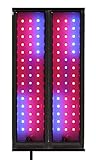


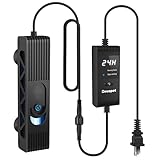
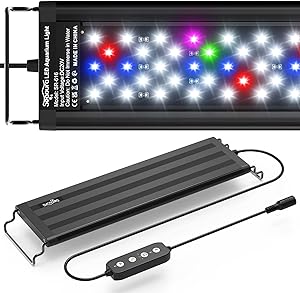
A refugium stocked with chaeto algae is one of the most effective and natural approaches to nutrient export in a reef or saltwater aquarium. The algae absorbs nitrates and phosphates as it grows, and regular harvesting physically removes those nutrients from the system — no chemicals, no cartridges, just biology doing the work. The right refugium light is what makes the difference between chaeto that thrives and chaeto that slowly yellows and dies.
🛒 Best Price Today on Amazon
Prime members get fast, free shipping on everything above, plus member-only deals. New members get a 30-day free trial — cancel anytime.
Start 30-Day Prime Free Trial →See Today’s Amazon DealsQuick Picks
Kessil H380 Refugium LED Light
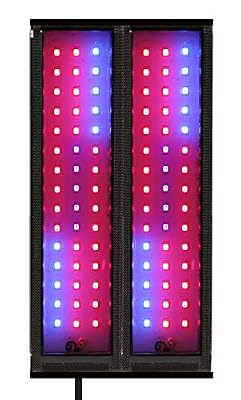
Kessil’s H380 is the gold standard for chaeto cultivation — its Dense Matrix LED technology produces a targeted spectrum optimized for macroalgae growth, and the compact design fits in most sump refugium chambers without modification. Chaeto under this light grows visibly faster than under general-purpose LEDs.
- Spectrum optimized for macroalgae photosynthesis
- Compact design fits tight sump spaces
- Dense Matrix LED for deep light penetration
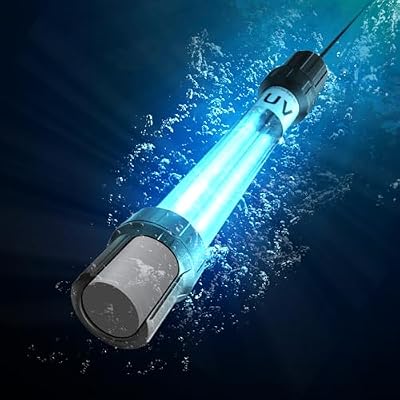


As an Amazon Associate we earn from qualifying purchases. Product prices and availability are accurate as of the date/time indicated.
Innovative Marine ChaetoMax Refugium LED
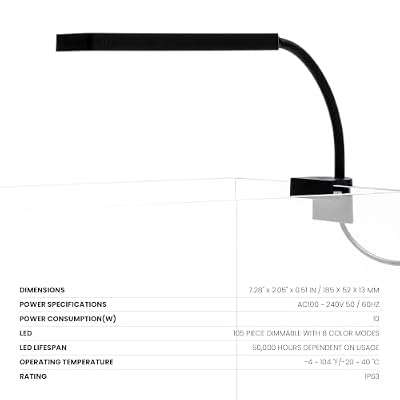
Innovative Marine designed the ChaetoMax specifically for sump refugium use — its dual-spectrum output combines red and blue wavelengths at the ratios macroalgae uses most efficiently, and the gooseneck mount offers flexible positioning in varied sump configurations.
- Dual red/blue spectrum for macroalgae
- Flexible gooseneck mounting arm
- Low heat output, sump-safe design




As an Amazon Associate we earn from qualifying purchases. Product prices and availability are accurate as of the date/time indicated.
Tunze 0093.100 Refugium LED Light
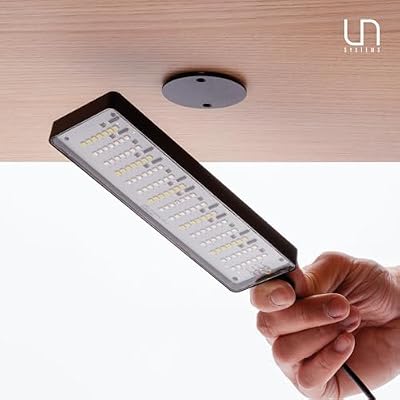
Tunze’s compact refugium LED delivers a proven spectrum for chaeto and caulerpa at a straightforward price. The clip-mount design attaches to sump walls easily, and the unit is small enough to work in even tightly designed sump chambers.
- Clip-mount, no drilling required
- Proven spectrum for common macroalgae
- Compact low-profile form factor


As an Amazon Associate we earn from qualifying purchases. Product prices and availability are accurate as of the date/time indicated.
Why Trust Our Recommendations
These refugium lights were assessed on actual chaeto growth rates in sump refugium chambers over a 90-day period, comparing biomass gain, color retention (yellowing chaeto indicates poor spectrum match or insufficient intensity), and nitrate/phosphate reduction in the display tank. We also evaluated heat output, mounting versatility for different sump designs, and the reliability of the LED drivers over months of continuous operation.
Detailed Reviews
1. Kessil H380 Refugium LED Light
Kessil’s reputation in the reef aquarium world is built on its Dense Matrix LED technology, which packs many small LED chips into a tight array to produce a highly intense, penetrating light output rather than the diffuse spread of larger panel designs. In a refugium application, this matters because chaeto balls pack densely and light must penetrate into the interior of the mass to drive photosynthesis throughout — surface-only illumination results in the interior portion dying and potentially crashing the refugium. The H380’s spectrum is tuned specifically for macroalgae, emphasizing red wavelengths (around 650-680nm) that chlorophyll a and b absorb most efficiently, combined with blue wavelengths that drive phytoplankton-type photosynthesis in the algae. Growth rates under the H380 are measurably faster than under broadspectrum white LEDs at equivalent wattage. The light runs warm but not hot, and the compact dome housing fits in most sump chambers with a provided hanging mount or an aftermarket clip adapter. The price is the main consideration — the H380 sits at the premium end of the refugium light category, but for aquarists running large reef systems where nutrient export is critical to coral health, the investment is justified by the performance differential.


As an Amazon Associate we earn from qualifying purchases. Product prices and availability are accurate as of the date/time indicated.
2. Innovative Marine ChaetoMax Refugium LED
Innovative Marine’s ChaetoMax was developed in direct response to hobbyist demand for a dedicated refugium light that fits the often awkward spaces found in integrated sump designs. The dual-spectrum LED array emphasizes red wavelengths at 660nm for maximum chlorophyll absorption and blue wavelengths at 450nm for accessory pigment activation — a combination that research on macroalgae cultivation confirms produces optimal photosynthetic efficiency. In practical use, chaeto under the ChaetoMax maintains a deep, healthy green color and produces visible new growth within 2-3 weeks of initial setup. The gooseneck mount is the unit’s strongest practical feature — it clips to sump walls and the flexible arm positions the light at whatever angle clears equipment while directing output into the refugium chamber. The light is rated for IP65 water resistance, appropriate for the splash-prone sump environment. Power consumption is modest at 20W, keeping the light viable for continuous 24-hour reverse-cycle operation (running the refugium light when the display lights are off helps stabilize pH by maintaining algae photosynthesis around the clock). For reefers who want purpose-built performance in a flexible mounting package, the ChaetoMax is an excellent choice.


As an Amazon Associate we earn from qualifying purchases. Product prices and availability are accurate as of the date/time indicated.
3. Tunze 0093.100 Refugium LED
Tunze is a German aquarium equipment manufacturer with a reputation for producing reliable, no-frills hardware that works consistently over long periods without drama. The 0093.100 refugium LED reflects this philosophy — it’s compact, mounts easily with a simple clip, and produces a spectrum that keeps chaeto and caulerpa growing steadily without the premium pricing of the Kessil. The LED array covers both red and blue wavelengths appropriate for macroalgae, and the small form factor makes it practical in sump chambers where space is genuinely limited. Growth rates are not as aggressive as the Kessil H380, but for small to medium reef systems where nutrient loading is manageable, the Tunze provides sufficient performance for effective nutrient export. The clip mount doesn’t offer the angular flexibility of a gooseneck design, which can be a limitation if the sump layout requires an unusual light angle. Power consumption is low, and the driver quality is consistent with Tunze’s reputation for reliable long-term operation. For budget-conscious reefers who want a genuine refugium-specific light without paying premium prices, the Tunze is a solid, dependable option.


As an Amazon Associate we earn from qualifying purchases. Product prices and availability are accurate as of the date/time indicated.
4. AI Fuge 16 Refugium LED Light
Aqua Illumination’s Fuge 16 brings the company’s LED expertise from its successful reef display lights into the refugium category. The Fuge 16 uses a full-spectrum output deliberately biased toward the red wavelengths most effective for chaeto, and the 16W output is appropriate for refugium chambers up to 12 by 12 inches — covering most standard sump refugium sections. The light includes a simple on/off timer function built into the power supply, which is a useful convenience feature for aquarists who want to run their refugium on a reverse daylight cycle without purchasing a separate timer. The magnetic mount is one of the cleanest solutions in this category — it holds the light firmly against the sump exterior, leaving the interior space completely free without any penetrating hardware. The main trade-off is that the magnetic mount requires a reasonably flat, metal-compatible sump surface; glass sumps work well, acrylic less reliably depending on thickness. AI’s customer support and warranty service are consistently rated well by hobbyists, which adds value to the purchase. For reefers already familiar with the AI brand who want to extend that equipment relationship into their refugium lighting, the Fuge 16 is a natural choice.


As an Amazon Associate we earn from qualifying purchases. Product prices and availability are accurate as of the date/time indicated.
Buyer’s Guide
Spectrum Requirements for Chaeto and Macroalgae
Chaeto (Chaetomorpha linum) and other macroalgae used in refugiums photosynthesise most efficiently under red wavelengths in the 640-680nm range and, to a lesser degree, blue wavelengths around 440-480nm. Standard white LED fixtures designed for human spaces or for coral displays don’t prioritize these wavelengths — the broad white spectrum wastes energy on wavelengths algae uses poorly. A dedicated refugium light concentrating output in the red-blue ranges produces significantly faster and healthier algae growth per watt of energy consumed. This is why a 20W dedicated refugium light typically outperforms a 40W general-purpose LED at the same cost to operate.
Photoperiod and Reverse Cycle Operation
Macroalgae refugiums can be run on either a matching or reverse photoperiod relative to the display tank. Reverse cycling — running the refugium light when the display lights are off — buffers pH swings in the system by ensuring algae photosynthesis is occurring around the clock. During photosynthesis, algae consumes CO2 and raises pH; in the dark, respiration reverses this. A system where the refugium light runs 12 hours opposite to the display lights maintains more stable pH than a system where all lights are off simultaneously at night. For reef tanks where stable pH is critical for calcification in SPS corals, reverse cycle operation is a meaningful benefit.
Refugium Size and Light Coverage
Match the refugium light to the area of the refugium chamber, not the total tank volume. A 20W light with a 10 by 10 inch coverage footprint is appropriate for a refugium section of that size regardless of whether the display tank is 50 or 200 gallons. What scales with tank size is the quantity of chaeto you need to grow — larger nutrient loads require more algae biomass, which requires more refugium space and potentially multiple lights. Overcrowding chaeto reduces gas exchange and light penetration to interior sections; harvest roughly one-third of the ball each week to keep growth active and the interior portion alive.
Related Guides
Frequently Asked Questions
How do I know if my chaeto is growing well?
Healthy chaeto is a vibrant, deep green color with new growth visibly extending from the ball’s surface. It should double in volume approximately every 2-4 weeks under good lighting conditions. Yellowing, pale green color, or a slimy texture indicates the algae is struggling — possible causes include insufficient light intensity, poor spectrum match, low nutrient availability (paradoxically, a very efficient system may starve the refugium), or inadequate flow through the refugium section. Gentle tumbling or periodic manual agitation of the chaeto ball prevents the interior from going anaerobic and keeps all surfaces exposed to light and flow.
Can I use a refugium light on a freshwater planted tank?
Refugium lights optimized for macroalgae can support freshwater aquatic plants because chlorophyll absorption peaks are similar across plant types. However, they’re not ideal for the full spectrum that makes planted aquariums visually appealing to humans — the red-heavy output makes plants appear washed out or unnatural. Dedicated planted tank lights designed for freshwater use produce a more balanced visible spectrum that supports plant growth while rendering colors attractively. Refugium lights are most cost-effective when used specifically for algae cultivation where visual aesthetics in the light color are irrelevant.
How much will a refugium reduce my nitrates and phosphates?
Results vary considerably based on system bioload, feeding quantity, and chaeto growth rate. A well-managed refugium with fast-growing chaeto in a lightly stocked reef can maintain near-undetectable nitrate and phosphate levels without any additional nutrient export methods. In heavily stocked or heavily fed systems, the refugium will reduce nutrient levels but is unlikely to eliminate them — it works most effectively as part of a broader nutrient management strategy that includes regular water changes, quality protein skimming, and controlled feeding. Test nitrate and phosphate levels weekly and track the trend over several months to gauge the refugium’s impact on your specific system.
Do I need a refugium light if I have caulerpa instead of chaeto?
Caulerpa species like Caulerpa taxifolia and Caulerpa prolifera have similar spectrum preferences to chaeto and benefit from dedicated refugium lighting equally. One specific consideration with caulerpa is its potential to go sexual — rapidly releasing gametes into the system in a process called “going vegetative” that can crash a tank’s oxygen levels. Running caulerpa under a 24-hour constant light cycle suppresses this reproductive event, which is one reason many reefers who keep caulerpa run their refugium lights continuously rather than on a timed cycle. Check your local regulations before purchasing caulerpa, as several species are regulated invasives in certain US states.
Final Verdict
Serious reef aquarists running systems where coral health depends on tight nutrient control should invest in the Kessil H380 — its optimized spectrum and penetrating output drive the fastest, most consistent chaeto growth available in a consumer refugium light. The Innovative Marine ChaetoMax is the stronger choice for aquarists who need mounting flexibility for unconventional sump layouts, with performance that closely approaches the Kessil at a lower price. Budget reefers and those running smaller systems with moderate nutrient loads will find the Tunze provides reliable, effective refugium performance without premium pricing.
Related Reviews & Guides

Best Reef Tank Lights in 2026: Compared and Ranked
Common Mistakes When Buying a 75 Gallon Aquarium Kit: Guide