Last Updated: October 4, 2026
- Top Pick: Anubias Barteri – Low Light and Easy Aquatic Plant
- Best Value: SubstrateSource Anubias Live Aquarium Plants – Potted Freshwater Plant for Fish Tanks, Terrariums – Beginner Friendly Low Light (Barteri, 5 Pots)
- Premium Choice: Potted Anubias Plants | Live Freshwater Aquatic Plants for Aquariums and Terrariums – Low Light, Low Maintenance (Anubias Barteri, 1, Count)
Anubias Barteri Care: Light, Rhizomes and Algae
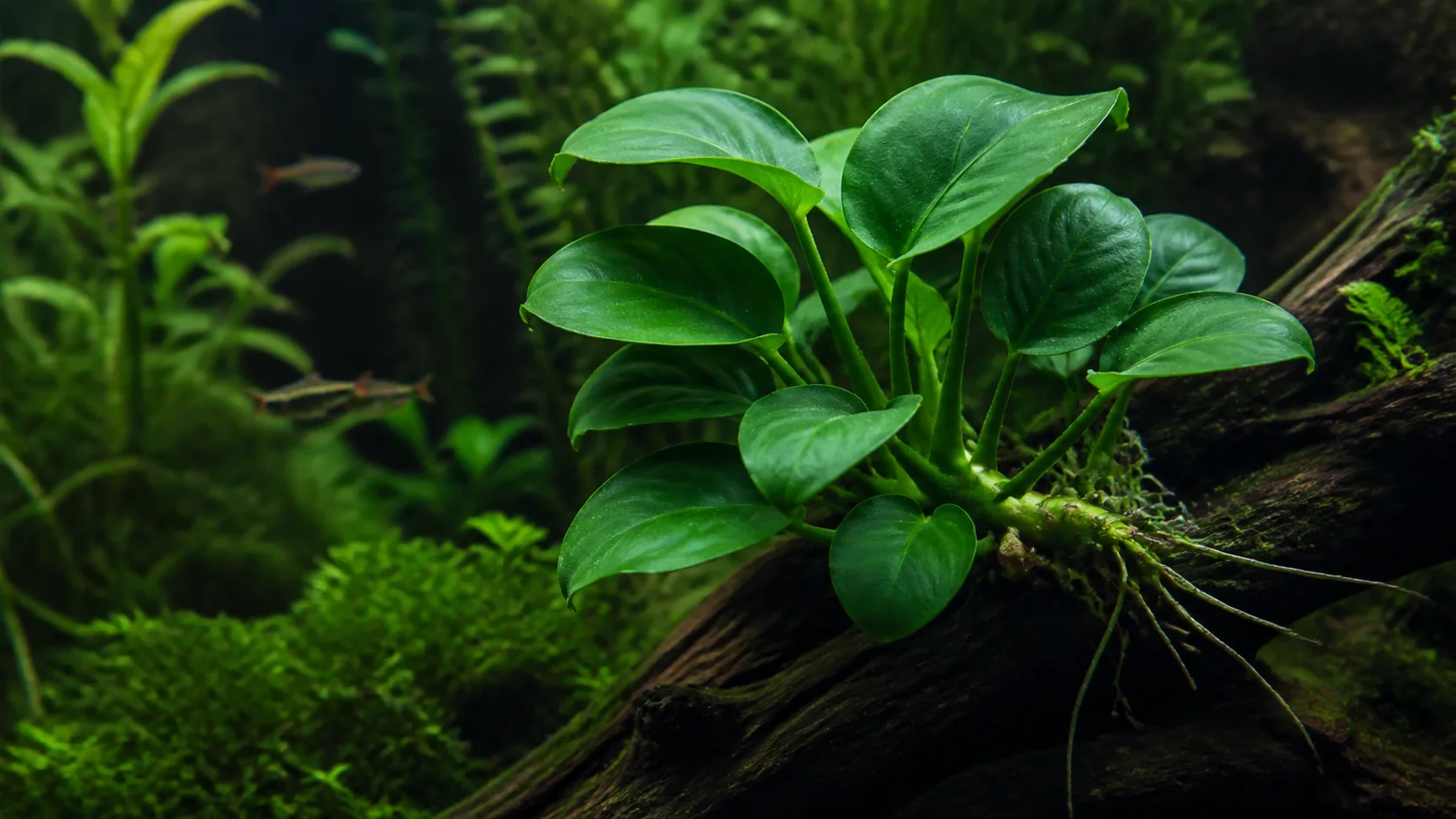
Anubias barteri is less a plant you push into gravel than a plant you position. Its thick, horizontal rhizome creeps across wood or stone, sending roots downward and leaves upward. That architecture explains both its usefulness and its most common failure: roots may enter the substrate, but the rhizome needs exposure to circulating water. A buried rhizome can soften and decay.
The name also covers more variation than a shop label suggests. Anubias barteri is an accepted African species, while forms sold as nana, broad leaf, or coffeefolia may be varieties, cultivars, or inconsistent trade names. Kew’s Plants of the World Online record is the right place to check botanical identity and native distribution. A label affects expected size, but the same attachment-first method works across commonly sold forms.
As an Amazon Associate we earn from qualifying purchases at no extra cost to you.

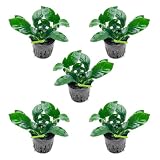


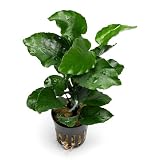


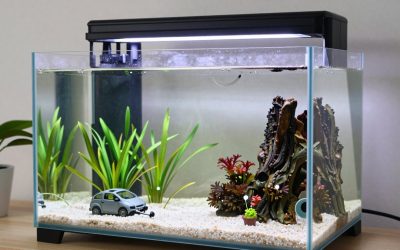
Editorial illustration; not evidence for species identification.
Start with a secure, exposed rhizome
Remove rock wool and inspect the plant before it enters the aquarium. Healthy rhizome tissue should feel firm rather than hollow or slippery. Trim only clearly dead roots or mushy tissue with clean scissors. Do not divide a tiny plant merely to multiply it; each section needs roots, leaves, and enough stored tissue to establish.
The safest mounting options are:
- wedge the roots gently into a natural crevice while leaving the rhizome visible;
- tie the plant loosely with cotton thread or fishing line, checking that the tie does not cut tissue;
- use a very small amount of aquarium-safe cyanoacrylate gel on roots or the underside of a firm rhizome, never coating a long section.
Roots usually grip rough wood or porous rock over time. Until then, stability matters because repeated movement delays attachment. If the plant must sit near the substrate, rest the rhizome on top and allow only roots to penetrate. For related epiphyte placement ideas, compare the site’s Java fern and Anubias guide.
Light should match its slow production
Anubias makes durable leaves slowly. It therefore cannot replace an algae-coated leaf as quickly as a stem plant can. Bright light is not automatically better: on an exposed piece of hardscape, intense or prolonged lighting often gives algae a stable surface. Tropica’s commercial Anubias plant listings consistently classify common forms as slow, undemanding plants, which is useful guidance but not an independent trial of every aquarium condition.
Begin with moderate-to-low intensity and a consistent photoperiod. Change one variable at a time. If new leaves remain compact and healthy but old leaves accumulate green spot algae, reduce direct exposure, shorten an unnecessarily long lighting window, or shade the rhizome with taller plants. Do not plunge the whole aquarium into darkness as a routine response. Fish and other plants still need a stable day-night rhythm.
Placement can solve more than equipment adjustment. The side of a branch, the base of a rock, or an area beneath floating-plant gaps often suits Anubias better than the brightest central ledge. The site’s comparison of low-light aquarium plants can help build a layout in which several slow growers receive similar light.
Water, nutrients, and realistic growth
There is no defensible universal “perfect” pH or temperature for every cultivar and aquarium. Native distribution data describe wild occurrence, not a narrow captive prescription. In an established freshwater tank, prioritize stable conditions appropriate to the animals, complete dechlorination, measurable filtration, and avoidance of sudden swings. Anubias is commonly maintained across ordinary tropical-community conditions, but cold or extreme chemistry should be judged for the entire stocking plan.
The plant takes nutrients through leaves and roots. In a stocked aquarium, fish food and waste may supply much of its modest demand, but that does not prove every nutrient is sufficient. A complete aquarium fertilizer can be useful when new growth shows a persistent pattern across multiple plants. Follow the product label and calculate for actual water volume; never improvise concentrated doses. Root tabs placed beneath an epiphyte are often less direct than water-column nutrition and should not touch the rhizome.
Yellowing is a symptom, not a diagnosis. An old shaded leaf may simply be senescing. Widespread pale new growth, pinholes, or distorted leaves may reflect nutrition, unstable carbon availability, damage, or poor circulation. Compare patterns using the plant nutrient deficiency guide, then confirm with maintenance records before adding anything.
Supplemental carbon dioxide can accelerate growth, but it is not required for a basic display. If used, it must be controlled around livestock and paired with adequate gas exchange. Rapid changes in dissolved gas can distress fish. Seek an experienced aquatic professional when fish gasp, plants deteriorate despite stable measurements, or the system’s gas balance is uncertain.
Algae control without damaging leaves
First remove the cause of excess opportunity: overly strong light, accumulated organics, stagnant pockets, or inconsistent maintenance. Gently rub soft deposits during a water change and siphon loosened material. Remove a badly damaged leaf by cutting its stalk near the rhizome; do not scrape with a blade that wounds living tissue.
Algae-eating animals are not tools. Each species has its own adult size, social needs, diet, and water requirements, and none guarantees clean Anubias. Chemical “algaecides” may affect plants, microbes, invertebrates, or fish. Use only products explicitly compatible with the whole aquarium and exactly as labeled; unexplained animal distress belongs with a qualified aquatic veterinarian, not an escalating sequence of online remedies.
Better prevention is physical spacing. Keep leaf clusters open enough for gentle circulation and remove trapped debris with a baster before siphoning. Rinse mechanical filter media as the manufacturer recommends, using aquarium water when preserving biofilm matters. Avoid pointing a powerful jet directly at leaves simply to prevent settling.
Pruning, propagation, and recovery
Cut individual failing leaves rather than shearing the entire crown. A leaf with a small blemish can still photosynthesize, so cosmetic damage alone is not an emergency. When the rhizome has become long and vigorous, divide it with a clean blade. Retain several healthy leaves and roots on each piece, then remount both sections with exposed cut surfaces and good circulation.
After shipping, a plant may lose older leaves while retaining a firm rhizome. Hold conditions steady and watch the newest growth. By contrast, spreading softness, foul tissue, or a rhizome buried beneath adhesive or substrate calls for immediate inspection. Remove decayed material back to firm tissue and correct the mounting problem.
Quarantine or inspect plants for hitchhiking snails, eggs, algae, and decaying nursery material. Any dip has species-specific risks and can injure Anubias, so do not use unsourced bleach or pesticide recipes. A separate observation container with clean equipment is the conservative choice.
Disposal is part of responsible care
Anubias is not native to most places where it is kept. Never release plants, fragments, aquarium water, or attached animals into a pond, drain, creek, or stormwater system. The U.S. Fish and Wildlife Service aquatic invasive species program explains why aquarium release can harm ecosystems, while regional law determines what may be possessed or transported. UF/IFAS provides additional aquatic plant identification and management resources relevant to invasive-risk awareness.
Seal unwanted material in a bag for household waste where local rules allow, or dry/freeze it before disposal if local guidance recommends that method. Ask the relevant environmental agency when rules are unclear. Compost only when local authorities explicitly consider that safe and there is no route to natural water.
A useful weekly check
Look for a firm rhizome, one or more clean growing points, intact new leaves, and roots beginning to grip. Clear debris, note algae location, and resist changing light and fertilizer simultaneously. Slow growth makes Anubias an excellent recorder of long-term conditions, but a poor plant for instant feedback. Correct placement, restrained lighting, and patient observation do more for it than a shelf of additives.
Sources
- Kew Plants of the World Online: Anubias barteri search
- Tropica aquarium plant database
- UF/IFAS Center for Aquatic and Invasive Plants
- U.S. Fish and Wildlife Service: Aquatic Invasive Species
Related Reviews & Guides
Rummy-Nose Tetra Care: Stable Water and Schooling
Best Large Fish Holding Tank For Outdoor Use: Top Smart