Last Updated: September 25, 2026
Planted tank PAR guide figures get quoted constantly and understood rarely, because a single number means nothing without knowing where it was measured. PAR falls sharply with distance through water, so the reading taken at the surface and the reading down at the substrate can easily differ by more than half.
As an Amazon Associate we earn from qualifying purchases.
As an Amazon Associate we earn from qualifying purchases at no extra cost to you. Prices and availability are accurate as of the date shown and are subject to change.

SEAOURA Aquarium Planted Light with 24/7 Timer for 48-54in Fish Tank
Selected for "Planted Tank PAR Guide: Numbers, Depth and Real Readings": this listing is lighting (SEAOURA Aquarium Planted Light with 24/7 Timer for 48-54in Fish Tank), matching the equipment this article covers.
View on AmazonSEAOURA Full Spectrum Aquarium Light with 24/7 Timer for 12-18in Fish Tank
Selected for "Planted Tank PAR Guide: Numbers, Depth and Real Readings": this listing is lighting (SEAOURA Full Spectrum Aquarium Light with 24/7 Timer for 12-18in Fish ), matching the equipment this article covers.
View on Amazon
SEAOURA LED Aquarium Light with 24/7 Timer for 18-24in Fish Tank
Selected for "Planted Tank PAR Guide: Numbers, Depth and Real Readings": this listing is lighting (SEAOURA LED Aquarium Light with 24/7 Timer for 18-24in Fish Tank), matching the equipment this article covers.
View on Amazon
SEAOURA WRGB DIY LED Aquarium Light with Thermometer for 24-30in Fish Tank
Selected for "Planted Tank PAR Guide: Numbers, Depth and Real Readings": this listing is lighting (SEAOURA WRGB DIY LED Aquarium Light with Thermometer for 24-30in Fish ), matching the equipment this article covers.
View on AmazonBy David Nguyen
Quick answer: Our top pick in 2026 is the Very low — our #1 rated choice. See the full ranked comparison, alternatives and buying advice below.
What PAR Measures and the Numbers That Matter
Any useful planted tank PAR guide has to begin by separating measurement from marketing, because PAR is the only one of the common lighting figures that actually describes what a plant can photosynthesise with. Lumens and Kelvin simply describe how the light appears to a human eye instead.
The decisive numbers: the three working bands
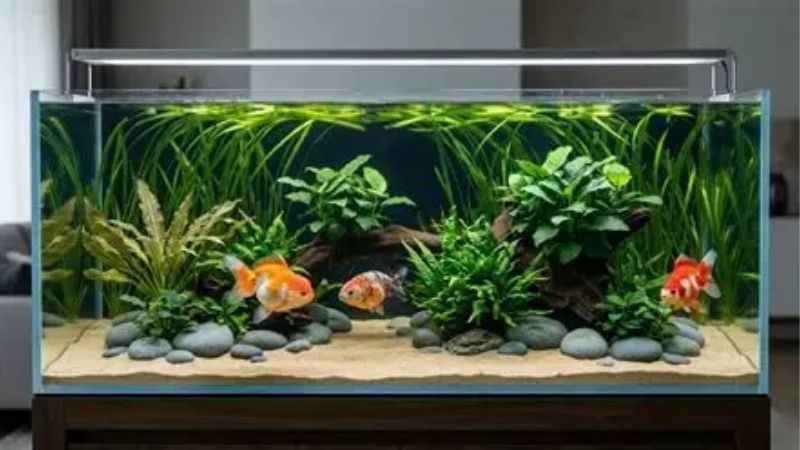
PAR covers roughly 400 to 700 nanometres and it is measured in micromoles per square metre per second of usable light energy. The working bands used by most planted tank keepers are approximately 10–30 for low light, 30–50 for medium and above 50 for high light, all measured at the substrate.
This planted tank PAR guide uses those boundaries because of what happens on either side of them. Below 30, plants can generally meet their carbon needs from what is dissolved in the water, while above 50 the demand outruns that supply, which is the point where injected carbon dioxide stops being optional.
The substrate qualifier is the part that gets dropped most often. A fixture advertised at 80 PAR is usually quoting a figure measured at a stated distance in air or just below the surface, and the reading that decides how plants grow is the one taken where the plants actually sit.
Why depth and mounting height change everything
Light attenuates as it travels down through water, so PAR falls steadily with depth. A fixture producing a medium reading at the top of a 21 inch (53 cm) tank can easily deliver a low reading at the substrate, which is why identical fixtures behave differently on different tanks.
Mounting height compounds that same effect once more before the light has even reached the water. Raising a fixture a few inches (several cm) on its legs reduces PAR at the substrate noticeably, which is the cheapest adjustment available to you and the one most people overlook entirely.
Spread matters here alongside raw intensity. A narrow fixture over a wide tank produces a bright strip beneath it and much lower readings at the front and back, so a single quoted PAR figure describes one point in the tank rather than the conditions across the whole planted area.
Normal ranges against readings that need action
Most freshwater planted tanks sit quite comfortably in the low or lower medium bands, and that is usually a deliberate choice rather than a compromise. It supports a wide plant list, needs no carbon injection at all, and leaves a large margin for error in fertilising and maintenance.
Action is needed only when the plant list and the band disagree. Carpeting species failing at 20 PAR, or persistent algae at 60 PAR without carbon injection, are both mismatches rather than faults, and the fix is changing one side of that equation rather than simply adding more fertiliser.
| Band | PAR at substrate | Carbon needed | Typical plant list |
|---|---|---|---|
| Very low | Under 10 | None | Mosses, anubias, very slow growth |
| Low | 10–30 | None | Java fern, crypts, vallisneria |
| Medium | 30–50 | Liquid carbon helps | Wider list, some stem plants |
| High | 50–80 | Injected CO2 required | Carpets, red stems, heavy trimming |
| Very high | Above 80 | Injected CO2 essential | Competition aquascapes only |
What This Means for a Real Tank
The bands themselves are constant, but applying a planted tank PAR guide depends on the specific geometry in front of you. A shallow nano and a deep display tank fitted with the same fixture end up in different bands, and the plant list has to follow the reading rather than the packaging.
Tank size, placement and physical fit
Fixture length should cover most of the tank’s length, since a narrow unit will leave the two ends measurably darker than the centre section. Legs, hanging kits and rimless mounting all change the distance down to the water, and that distance is one of the largest single influences on the eventual reading.
Weight sets the wider limits here as well: a full tank runs near 10 lb per gallon (about 1 kg per L), so a 55 gallon (208 L) setup passes 600 lb (272 kg) and needs a purpose-built stand. Measure the tank length and rim width with a tape before ordering any fixture or hanging hardware.
How the picture changes across 10, 20 and 55 gallon tanks
A 10 gallon (38 L) tank holds only about 10 inches (25 cm) of water, so very little attenuation occurs and most fixtures end up landing in the medium band or higher. The usual problem in nano tanks is reducing PAR rather than achieving it, which makes dimming genuinely valuable there.
A 55 gallon (208 L) tank standing at around 19 inches (48 cm) deep is a very different exercise entirely. The same fixture loses a great deal on the way down, so either a stronger unit is needed, or the planting has to be arranged around species that tolerate the lower substrate reading.
Estimating PAR without buying a meter
Most keepers never need a meter at all, and reliable estimation is entirely possible. Manufacturer PAR charts for the specific fixture, read at your actual water depth and mounting height rather than at the headline distance, give a perfectly workable starting figure for planning the plant list.
Plant behaviour then corrects that estimate for you. Stems stretching with long gaps between nodes indicate the reading is lower than assumed, while algae returning within days of cleaning the glass indicates it is higher, and both of those are more reliable than any specification sheet.
Where a meter is genuinely useful, borrowing one from a local club for a single afternoon is usually enough. A single mapping session across the substrate reveals the spread and the dark corners, and that layout knowledge does not change unless the fixture or the tank itself changes.
Myths Around PAR Numbers
Several beliefs attach themselves to any planted tank PAR guide, and they lead people towards purchases that change nothing at all. Every one of them confuses a measurement with a specification, or treats a single number as though it described an entire tank rather than one point in it.
The myth that a higher PAR fixture grows plants better
More light only helps for as long as light is the limiting factor. Above roughly 50 PAR without injected carbon, plants become carbon limited and the extra light is taken up by algae, so a higher-rated fixture on a low-tech tank reliably produces problems rather than any extra growth.
The useful sequence actually runs the other way round. Confirm nutrients first, with nitrate at 20–40 ppm rather than stripped to zero, then consider carbon, and only then intensity. Following that order solves far more slow-growth complaints than any fixture upgrade will ever do.
The myth that quoted PAR figures are comparable
Manufacturers measure at different distances, in air or in water, and with different meters and different mounting arrangements. Two fixtures quoting exactly the same number can deliver noticeably different readings on your own tank, so the figures are indications rather than specifications.
Read the measurement conditions rather than just the headline. A figure quoted at 6 inches (15 cm) in air tells you very little about a substrate reading through 19 inches (48 cm) of water, and that gap accounts for most disappointment after an apparently well-researched purchase.
The myth that one reading describes the tank
PAR varies enormously across any single tank. The reading directly beneath the fixture can easily be double what the front corners receive, which is why plants often thrive in the middle of a tank and yet struggle at the ends under exactly the same schedule and fertiliser routine.
Plan the layout around that variation instead of trying to fight it. Put the demanding species where the reading is highest and shade-tolerant plants around the edges, which uses the fixture’s own natural spread rather than requiring a larger unit to even out the whole footprint.
Living With the Numbers Over Time
Any planted tank PAR guide describes a moment in time rather than a permanent state of affairs, because output falls slowly over time, plants grow upward into the light, and the readings that mattered at setup shift over the following years without anything visibly changing in the tank.
What to check periodically, and how often
Wipe the fixture lens or its cover down every few months, since condensation deposits a mineral film on it that reduces output measurably. On open-top tanks this builds faster, and it is easily the most common reason a fixture appears dimmer when nothing has actually failed inside it.
Review the whole lighting schedule seasonally alongside that, and keep the photoperiod at a consistent six to eight hours on a timer. Ambient daylight stretches considerably from late spring into midsummer, which raises the effective light budget of any tank standing near a window.
What degrades and how it shows up
LED output declines gradually across the years, which shows up first as slower plant growth rather than as anything that looks visibly dimmer. A fixture sitting in the medium band when it was new may have drifted towards the low band by its fifth or sixth year of continuous service.
Plants themselves will also change the readings over time. Tall stems and floating cover shade out everything beneath them, so a carpet that received adequate light at planting can be well below its band a few months later purely because the plants above it have grown into the light.
The twelve month cost of running to a target band
Costs here scale with the band rather than with the fixture. A low light tank needs only a timer, modest fertiliser and occasional trimming, while a high light tank commits you to carbon dioxide, a full fertiliser routine, weekly trimming, and considerably more water changes as well.
That ongoing commitment is really the main expense. Prices move constantly across budget, mid-range and premium fixtures, so check the figures at the time of purchase, but the ongoing cost of a high band tank is measured in hours and in consumables rather than in the fixture price.
Frequently Asked Questions
These questions come up repeatedly once people stop treating PAR as though it were one single headline number, because any planted tank PAR guide only becomes genuinely useful once the reading is tied to a specific depth, a specific mounting height and a specific point in the tank.
What PAR do I actually need?
Match it to the plant list rather than simply aiming high. Java fern, anubias, crypts and vallisneria all grow well at 10–30 PAR without any carbon injection, while carpets and red stems generally need 50 or more, along with injected carbon dioxide and a proper fertiliser routine.
Do I need a PAR meter?
Most keepers never do need one. Manufacturer charts read at your real depth, combined with watching how plants and algae respond, give enough information for planning. Borrowing a meter from a local club for a single mapping session covers the rare case where real precision matters.
Why do my plants grow well in the middle but not the corners?
Because PAR falls away quite sharply towards the outer edges of any fixture’s spread. The reading beneath the unit can be double what the corners receive, so either move the demanding species inward, or accept the variation and plant shade-tolerant species at the front and back edges.
Does adding more hours raise PAR?
No, it does not. PAR is an intensity measurement taken at a moment, so a longer photoperiod increases the total daily light without changing that reading at all. Extending the hours to compensate for low intensity generally feeds algae rather than driving any faster plant growth.
Can I reduce PAR without buying a dimmable light?
Yes, simply by raising the fixture. Adding a few inches (several cm) of height reduces the substrate reading noticeably and costs you nothing, and floating plants achieve a similar result while also providing cover for fish and consuming nutrients that would otherwise feed algae.
See More:
Conclusion
The practical use of any planted tank PAR guide lies in matching one band to your plant list: 10–30 at the substrate for low light species without carbon, then 30–50 for a wider plant list, and above 50 only where injected carbon dioxide and a full fertiliser routine are both in place.
Treat all quoted figures as indications rather than as specifications, since measurement conditions vary widely between manufacturers, and remember that the reading changes with depth, mounting height and position across the tank. Plant behaviour is the more reliable long-term guide.
Ready to decide? Our #1 pick for 2026 is the Very low.
Live price & availability on Amazon.
Related Reviews & Guides




Best Canister Filter for 55 Gallon Planted Tank in 2026: Compared and Ranked
Best Aquarium Scissors for Trimming Plants: Top Top Picks