Last Updated: October 4, 2026
For most planted 40-gallon aquariums, plan on 2 to 3 inches of substrate across the bottom, with a deeper 4- to 6-inch layer toward the back for rooted plants. In a common 40-gallon breeder measuring about 36 × 18 inches, that means roughly 40 to 60 pounds of substrate, depending on the material and the slope you want.
The Short Answer
A practical starting point for a planted 40-gallon tank is:
As an Amazon Associate we earn from qualifying purchases at no extra cost to you.

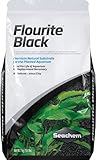
- Low-maintenance plants: 30 to 40 pounds for a mostly level 2-inch bed
- Typical planted layout: 40 to 60 pounds for a 2- to 3-inch average depth
- Heavily planted or sloped layout: 60 to 75 pounds for a deeper rear section
For a 36 × 18-inch footprint, every 1 inch of substrate requires approximately 2.8 gallons by volume. In cubic measurements, that is about 648 cubic inches or 10.6 liters per inch of depth. Substrate weight varies because sand, gravel, aquasoil, and porous volcanic materials have different densities. A 5-pound bag will not always cover the same area as 5 pounds of another product.
For most buyers, purchasing three 15- to 20-pound bags is safer than buying a precise minimum. Extra material helps create a front-to-back slope, fill low spots, and avoid a thin area around plant roots. Unopened excess can usually be stored for a future aquascape or used during a partial substrate replacement.
Standard Sizes
“40 gallon” describes capacity, not one universal footprint. Confirm the tank’s inside dimensions before ordering substrate. The following sizes are common reference points:
| Tank type | Approximate dimensions | Dimensions in centimeters | Substrate for 2 inches | Substrate for 3 inches |
|---|---|---|---|---|
| 40-gallon breeder | 36 × 18 × 16 in | 91.4 × 45.7 × 40.6 cm | About 5.6 gal / 21 L | About 8.4 gal / 32 L |
| 40-gallon standard | 36 × 15 × 16 in | 91.4 × 38.1 × 40.6 cm | About 4.7 gal / 18 L | About 7.0 gal / 26.5 L |
| 40-gallon tall | 30 × 12 × 24 in | 76.2 × 30.5 × 61.0 cm | About 3.1 gal / 12 L | About 4.7 gal / 18 L |
The 40-gallon breeder needs the most substrate because its floor is wider. A 2-inch layer in that tank is approximately 648 cubic inches, while a 3-inch layer is approximately 972 cubic inches. An average planted setup commonly uses a 2-inch layer in front and 4 to 6 inches in back, producing a total average depth near 3 inches.
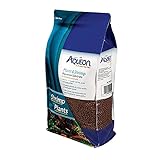
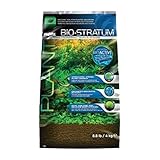
Product packaging can make comparisons confusing. A 5-pound bag of planted-tank substrate may cost roughly $13 to $20, while an 8.8-pound bag of premium volcanic soil may cost about $30 to $35. A larger 15.4-pound bag of inert planted substrate may cost approximately $25 to $30. These prices are useful budgeting ranges, but coverage should be checked by volume or the manufacturer’s stated footprint rather than price alone.
How to Measure Your Space
- Measure the inside length and width. Use the aquarium’s interior floor dimensions, not the outside dimensions of the glass or frame. Measure in inches for the simplest calculation.
- Choose the front depth. A 2-inch front layer is suitable for many beginner layouts. Use about 3 inches if you want more room for rooted plants or a thicker visual base.
- Choose the rear depth. A planted slope often rises to 4, 5, or 6 inches at the back. This creates height and gives larger plants more root space.
- Calculate volume. Multiply length × width × average depth, then divide by 231 to estimate gallons of substrate volume. For liters, multiply the cubic-inch result by 0.0164.
- Convert volume to product weight. Check the bag’s coverage information. If it is not listed, use the weight as an estimate only and buy 10% to 20% extra for a sloped layout.
- Account for hardscape. Rocks, wood, and mesh planting baskets occupy space. However, they also displace substrate unevenly, so do not reduce your order too aggressively. Extra material is more useful than discovering the back corner is shallow.
For example, a 40-gallon breeder with a 2-inch front and 5-inch rear section may average about 3 inches overall. At 36 × 18 inches, that requires around 8.4 gallons, or approximately 32 liters, of substrate volume before allowing for hardscape displacement.
By Room or Use Case
Living Room Display Tank
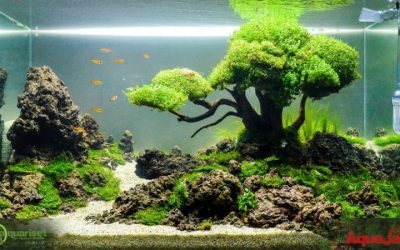
A living room aquarium benefits from a pronounced slope because it makes the tank look deeper from across the room. Use 2 inches in front and 5 to 6 inches in back, especially if the aquarium is viewed from the front only. Plan on roughly 50 to 70 pounds for a 40-gallon breeder, depending on substrate density and hardscape.
Dark aquasoil or black gravel can emphasize green plants, while pale sand creates a brighter, more minimalist appearance. Avoid making the entire bottom extremely deep unless the plants require it; excessive depth can be difficult to clean and may compact over time.
Beginner Low-Tech Planted Tank
For low- to moderate-light plants such as Anubias, Java fern, Cryptocoryne, and Vallisneria, a 2- to 3-inch layer is usually practical. A 40-gallon breeder will often need 40 to 55 pounds. Inert products such as mineralized gravel or planted-tank clay substrates generally require a liquid or root-tab fertilization plan.
Active aquasoil can provide nutrients for rooted plants, but it may affect water chemistry and can break down with age. Follow the product’s preparation and water-change instructions rather than assuming every planted substrate behaves the same way.
Heavily Planted Aquascape
A dense layout with stem plants, carpeting plants, and large root feeders benefits from a deeper rear bed. Use 3 inches in front and 5 to 6 inches in back, supported with rock, mesh, or buried dividers if necessary. Budget for 60 to 75 pounds in a 40-gallon breeder.
Layering different materials can reduce cost, but keep fine sand from covering a deep layer of coarse material. A coarse base can trap debris, while very fine sand may compact. Choose a grain size that suits the plants and bottom-dwelling fish.
Tank With Bottom-Dwelling Fish
Corydoras and other bottom-oriented fish are generally better served by smooth sand or rounded fine gravel. Use about 1.5 to 2.5 inches across most of the floor, with deeper planting pockets rather than a uniformly deep bed. This often requires 35 to 50 pounds for a 40-gallon breeder.
Common Sizing Mistakes
- Using the tank’s listed gallons as the calculation. Substrate is determined by floor area and depth, not water capacity.
- Ignoring the footprint. A 40-gallon tall tank needs significantly less substrate than a 40-gallon breeder.
- Buying only enough for a flat layer. A sloped aquascape can require 25% to 50% more material than a level bed.
- Confusing pounds with liters. Weight differs substantially between dense gravel and porous volcanic soil.
- Making the front too deep. A thick front layer can reduce swimming space and make algae or debris harder to spot.
- Skipping a substrate barrier. Without support, a rear slope can migrate forward during maintenance or when fish dig.
FAQ
How many bags of substrate do I need for a planted 40-gallon breeder?
Most planted 40-gallon breeders need about 40 to 60 pounds. That may mean three 15-pound bags, four 15-pound bags, or a combination of 5-, 8.8-, and 15.4-pound packages. Buy closer to 60 pounds if you want a high rear slope or use porous material with lower weight per volume.
Is 2 inches of substrate enough for a planted 40-gallon tank?
Two inches is enough for many beginner plants, especially when root tabs are used in inert substrate. For heavy root feeders and a more natural slope, use 3 inches on average, with 4 to 6 inches in the back.
Can I use sand in a planted 40-gallon aquarium?
Yes. Sand works well for many plants, but very fine sand can compact and may be difficult for deep-rooted species. A 1.5- to 2.5-inch layer is a reasonable starting depth, with separate deeper planting areas when needed.
Should I buy extra substrate?
Yes. Purchase approximately 10% to 20% extra beyond the calculated amount, or more for a dramatic slope. Extra substrate helps compensate for packaging variation, hardscape adjustments, and the gradual settling that occurs after filling the tank.
Ready to decide? Our #1 pick for 2026 is the 40-gallon breeder.
Live price & availability on Amazon.
Related Reviews & Guides



Staghorn Algae Aquarium Guide: Ammonia and CO2 Instability
Freshwater Planted Aquarium: Setup Guide and Best Products 2026