Last Updated: September 25, 2026
Hornwort aquarium care is unusual because the plant has no true roots at all. Ceratophyllum demersum absorbs everything through its stems and needles, which is why it can float, be anchored, or drift around a tank without any of those choices affecting how well it actually grows. Placement is a convenience choice.
As an Amazon Associate we earn from qualifying purchases.
As an Amazon Associate we earn from qualifying purchases at no extra cost to you. Prices and availability are accurate as of the date shown and are subject to change.
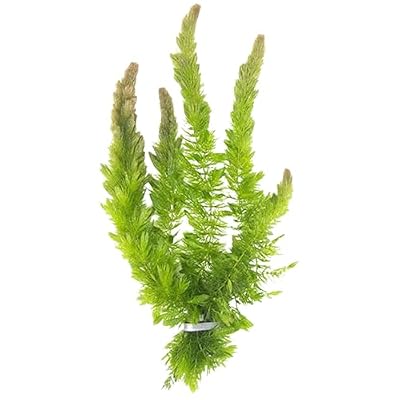
Hornwort Aquarium Plant, 3-5 Stems, Live Freshwater Plant, Low Light
Selected for "Hornwort Aquarium Care: How It Grows and What to Watch For": this listing is lighting (Hornwort Aquarium Plant, 3-5 Stems, Live Freshwater Plant, Low Light), matching the equipment this article covers.
View on Amazon
Marcus Fish Tanks Hornwort Ceratophyllum Live Aquarium Plant Planted Tank Beginner - Buy 2 G 1 F
Selected for "Hornwort Aquarium Care: How It Grows and What to Watch For": this listing is tanks (Marcus Fish Tanks Hornwort Ceratophyllum Live Aquarium Plant Planted T), matching the equipment this article covers.
View on Amazon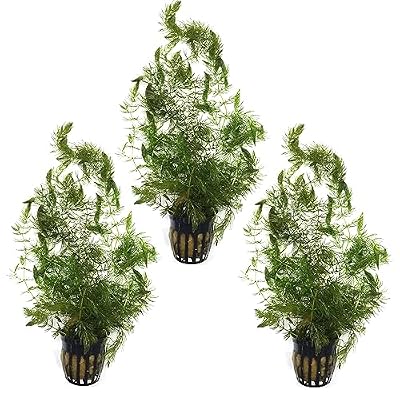
Live Hornwort Aquarium Plants (3-Pot Pack) – Ceratophyllum Demersum – Fast Growing Natural Water Filter & Nitrate Sponge for Fish Tanks & Ponds – Live Floating Plant for Guppy Fry & Shrimp Cover
Selected for "Hornwort Aquarium Care: How It Grows and What to Watch For": this listing is filtration (Live Hornwort Aquarium Plants (3-Pot Pack) – Ceratophyllum Demersum – ), matching the equipment this article covers.
View on Amazon
Marcus Fish Tanks 3X Oxygenating Hornwort Coontail Ceratophyllum Demersum
Selected for "Hornwort Aquarium Care: How It Grows and What to Watch For": this listing is tanks (Marcus Fish Tanks 3X Oxygenating Hornwort Coontail Ceratophyllum Demer), matching the equipment this article covers.
View on AmazonBy David Nguyen
Quick answer: Our top pick in 2026 is the Heavy needle drop after moving it — our #1 rated choice. See the full ranked comparison, alternatives and buying advice below.
A Plant Without Roots and What That Changes
Sensible hornwort aquarium care starts with two facts: it has no roots, and it grows faster than almost anything else you can buy. Together those explain the plant’s main uses as nitrate export and fry cover, and its main nuisance, which is shedding needles across the whole tank.
The Deciding Numbers: Temperature Range, Light, Growth Rate and Size
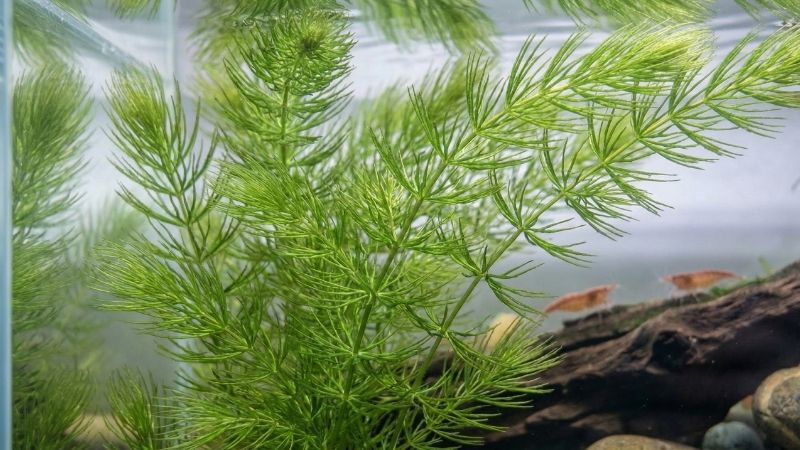
Hornwort tolerates an exceptionally wide range, roughly 59-86 F (15-30 C), pH 6.0-7.5 and GH up to 15 dGH (268 ppm) or beyond. That span covers unheated coldwater tubs and tropical community tanks alike, which is why it turns up in goldfish tanks and outdoor ponds equally often. Few aquarium plants match that range.
Growth is the headline number. Under 20-50 micromoles of PAR a stem can add 2-4 in (5-10 cm) a week, and in a bright, well fed tank it grows faster still. That rate is what makes it effective at stripping nitrate from an overstocked tank between water changes. Growth is the whole mechanism.
Stems reach 24 in (60 cm) or more and keep going, so mature length is limited by your trimming rather than by the plant. A 10-gallon (38 L) tank suits two or three stems; anything larger becomes a weekly job rather than a monthly one in warm conditions. Trim to suit the tank size.
No Roots: What That Changes
Hornwort produces rhizoids rather than roots, and burying the stem base in substrate causes it to rot within a week or two. It can be anchored with a plant weight or wedged between rocks, but it is not planted in any meaningful sense and never develops a root ball. Treat it as a floating plant.
Because everything is absorbed through the stems and needles, root tabs do nothing for it. Feed the water column instead, aiming for roughly 10-25 ppm nitrate and 0.1-0.5 ppm iron, and in a well stocked tank fish waste will supply much of the nitrogen on its own. Root tabs do nothing for it.
Normal Behaviour Versus Action Thresholds
Hornwort sheds needles, sometimes dramatically, and that behaviour causes more worry than anything else about it. The table below separates normal responses from genuine problems, pairing what you see with a reading so you can act on evidence rather than on appearance alone. Most rows need no action.
| What you see | Reading alongside it | What it means | What to do |
|---|---|---|---|
| Heavy needle drop after moving it | Parameters normal | Normal response to relocation | Siphon debris, leave stems in place |
| Needle drop after a water change | Temperature gap over 2 F (1 C) | Shock from mismatched water | Match replacement water closely |
| Stem base black and mushy | Parameters normal | Buried stem rotting | Trim above the rot, do not bury |
| Pale, thin new growth | Nitrate under 5 ppm | Nitrogen shortage | Dose macros, retest in a week |
| Growth over 4 in (10 cm) weekly | Nitrate 20 ppm or higher | Normal in a fed, lit tank | Trim and remove surplus stems |
| Stems clogging the filter intake | Any | Loose fragments circulating | Fit an intake guard, trim regularly |
Hornwort in Real Tanks
Practical hornwort aquarium care is mostly containment and cleanup. The plant delivers real benefits in nutrient export and shelter, but it sheds, it fragments, and every fragment keeps growing, so an unmanaged tank ends up with hornwort in places nobody put it. Loose fragments are the real issue.
Tank Size, Placement and Fit
Float it or anchor it at the back, and keep it clear of filter intakes where loose needles collect and reduce flow. Two or three stems suit a 10-gallon (38 L) tank, while a 55-gallon (208 L) tank absorbs a dozen without the trimming becoming a weekly chore. Scale the quantity to the tank.
Surface clearance matters when floating. Measure the real numbers before you order: the gap between your water line and the light fixture, since floating stems pressed against a warm lamp scorch, and the space behind the tank for a filter if you are adding one. Both take a minute to check.
Coldwater, Goldfish and Pond Use
The wide temperature tolerance makes hornwort one of very few plants that works in an unheated tank at 59-68 F (15-20 C). Goldfish will eat it, but it grows fast enough to keep pace, which is more than can be said for most soft-leaved species in that situation. Growth outpaces the grazing.
In outdoor ponds it performs the same nutrient export role, though this is precisely where escape risk becomes a serious concern. Never move plants between an indoor tank and an outdoor pond casually, and never dispose of trimmings anywhere they can reach natural water. Bag them and bin them instead.
Fry Cover, Shrimp and Nutrient Export
A floating mat of hornwort is excellent fry cover, and the dense needles trap infusoria that newborn fish and shrimplets graze on. Breeders use it for that reason, and it needs none of the maintenance that artificial spawning media require between batches of fry. The dense needles do the work.
It also strips nitrate quickly, which helps in a heavily stocked tank but never replaces water changes. Hold nitrate in the 10-25 ppm range for the plants and well under 40 ppm for the fish, and keep changing 20-30 percent weekly however green the tank looks. Plants supplement, never replace.
Myths, Mistakes and the Rules Around This Plant
Two ideas cause most of the frustration in hornwort aquarium care, and the third item here is not a myth at all but a legal and environmental point that applies to this species far more than to almost any other plant sold for freshwater aquariums. It deserves genuine attention here.
Myth: Needle Shedding Means the Plant Is Dying
Shedding is how hornwort responds to change. Moving it, a large water change, or a temperature shift of a few degrees all trigger it, and a stem can drop most of its needles and still regrow fully within two to three weeks under stable conditions. Shedding is a response, not decay.
The practical problem is mess rather than plant health. Loose needles collect in filter intakes and settle across the substrate, so siphon them out at the next water change and fit an intake guard if the filter is drawing them in and losing flow steadily. Check the impeller monthly too.
Myth: It Should Be Planted in the Substrate
Burying the stem base rots it, usually within one to two weeks, because hornwort has no roots to anchor with and no root tissue to protect the buried section. Anchor it with a plant weight, wedge it between rocks, or simply let it float at the surface. Floating is the simplest option.
Floating is the lowest effort option and produces the fastest growth, since the plant sits directly under the light with access to atmospheric carbon dioxide. The cost is shading, which matters in tanks under 20 gallons (76 L) where other plants compete for the same light. Thin the surface mat regularly.
Not a Myth: Disposal Rules Genuinely Apply Here
Hornwort is listed as invasive, restricted or prohibited in a number of states and countries, and those lists are revised periodically. Check your local authority before buying it and before discarding it, because rules differ considerably between neighbouring jurisdictions. Hornwort aquarium care includes checking that.
Never release plants or trimmings into natural waterways, and never tip tank water into a storm drain. Bag surplus stems and put them in household waste, or dry them out completely first. A single fragment can establish a colony, which is exactly why the restrictions exist. Treat disposal as routine work.
Long-Term Care, Trimming and Twelve-Month Costs
Across a year, hornwort aquarium care is a trimming schedule rather than a feeding one. The plant costs almost nothing to run and propagates itself from every fragment, so the real commitment is the routine of cutting it back and removing what you have cut. Budget time rather than money.
The Trimming and Cleanup Routine
Cut stems to length with scissors and remove the top sections rather than the bases, since the growing tips are the most vigorous part. In a warm, well lit tank expect this every one to two weeks, and less often below 72 F (22 C) or in dimmer conditions. Temperature sets the pace here.
Siphon shed needles during the same session, paying attention to the substrate surface and behind hardscape where they collect. Left in place they break down and add to the organic load, which raises nitrate and can feed algae in a tank that is otherwise well managed. Siphon at every water change.
What Degrades: Equipment and Water Chemistry
Filter intakes suffer most in a hornwort tank. Needles pack against the guard and reduce real flow well below the rated GPH, and impellers wrapped in plant fragments run hot and wear faster, so check both during monthly maintenance rather than waiting for a noise. Flow loss comes before noise.
Water chemistry shifts also show up as shedding. A supplier switching from chlorine to chloramine produces needle drop after a water change, and standard dechlorinator does not neutralise chloramine unless the label states so explicitly. Boiling does not remove it either. Read the dechlorinator label closely.
Twelve-Month Cost and Seasonal Demand
Running costs are close to nothing: a comprehensive liquid fertiliser lasting most of a year, and an intake guard if your filter needs one. Prices change constantly, so check them at the moment of purchase rather than relying on older figures. Any hornwort aquarium care numbers quoted elsewhere may already be stale.
Seasonal swings matter in rooms without climate control. Summer temperatures above 82-84 F (28-29 C) speed growth while reducing dissolved oxygen, and winter cold slows the plant enough that a dosing schedule set in July leaves surplus nutrients sitting in the water by January. Adjust seasonally.
Frequently Asked Questions
These come up in the first months, usually after a heavy shedding episode or once the plant has grown far faster than expected. Most hornwort aquarium care questions reduce to shedding, trimming and how to dispose of the surplus safely. Almost all come down to shedding being normal.
Why did my hornwort drop all its needles at once?
Almost always a response to change: relocation, a large water change, or a temperature swing of a few degrees. Siphon the debris out, leave the stems in place, and expect regrowth within two to three weeks provided the tank conditions then stay stable. Do not discard the bare stems.
Can I plant hornwort in gravel?
Not really. The plant has no roots, and a buried stem base rots within one to two weeks. Anchor it with a plant weight or wedge it between rocks if you want it upright at the back, or simply float it, which grows fastest of all and needs no anchoring whatsoever. Floating suits most tanks best.
Is hornwort safe for goldfish tanks?
Yes, and it is one of the few plants that suits them. Goldfish graze on it, but growth of 2-4 in (5-10 cm) a week keeps pace with the damage, and the wide tolerance down to 59 F (15 C) covers unheated tanks that most tropical plants cannot handle. Growth keeps pace with the grazing.
Does hornwort help with algae?
Indirectly, by consuming the nitrate and phosphate that algae would otherwise use, and fast growth makes it effective at that. It is not a treatment though, so fix light hours and feeding levels rather than relying on any plant to control an algae problem on its own. Cutting the photoperiod works faster.
How do I get rid of surplus hornwort?
Bag it and put it in household waste, or dry it out completely before disposal. Do not put it in a natural waterway, a storm drain or a compost heap that drains toward one, and check your local authority first, since this species is restricted in some regions. Rules change, so check yearly.
See More:
Conclusion
The essentials of hornwort aquarium care are simple: no roots, so float or anchor rather than plant it; 59-86 F (15-30 C) and 20-50 micromoles of PAR; growth of 2-4 in (5-10 cm) every week; and a trim every one to two weeks in warm conditions. Those numbers cover almost every tank.
Expect needle shedding after any change and siphon the debris rather than worrying about it. Feed the water column, keep it away from filter intakes, and take the disposal rules seriously, because this is one plant where careless handling has consequences beyond your own tank. That last point matters most.
Ready to decide? Our #1 pick for 2026 is the Heavy needle drop after moving it.
Live price & availability on Amazon.
Related Reviews & Guides

6 Best Aquarium Tank Backgrounds 2026

Aquascape Tweezers Scissors Curved Tool