Last Updated: September 25, 2026
Freshwater shrimp tank setup is a mineral and stability exercise, not a stocking one. Neocaridina want GH 6-12 dGH, KH 2-8 dKH and TDS 150-250 ppm held steady, filtration that cannot draw in shrimplets, and zero copper anywhere in the system. Everything else in the build follows from those four conditions rather than the other way round.
As an Amazon Associate we earn from qualifying purchases.
As an Amazon Associate we earn from qualifying purchases at no extra cost to you. Prices and availability are accurate as of the date shown and are subject to change.

Generic Shrimp Up Aquatics™ 20+ Mixed Color Neocaridina Shrimp Live Freshwater Aquarium Inverts Live Arrival! Mixed
Selected for "Freshwater Shrimp Tank Setup: How It Works and What to Watch": this listing is aquarium equipment (Generic Shrimp Up Aquatics™ 20+ Mixed Color Neocaridina Shrimp Live Fr), matching the equipment this article covers.
View on Amazon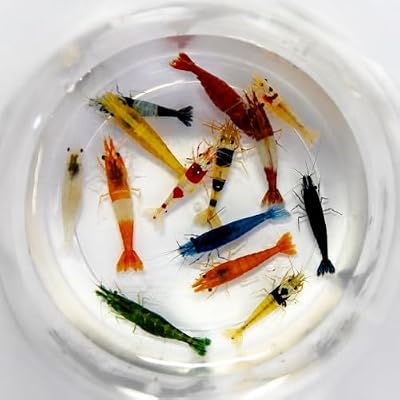
Seam Oasis 10+1 Adult Neocaridina Candy Skittle Live Shrimp Mixed Colors Freshwater USA
Selected for "Freshwater Shrimp Tank Setup: How It Works and What to Watch": this listing is aquarium equipment (Seam Oasis 10+1 Adult Neocaridina Candy Skittle Live Shrimp Mixed Colo), matching the equipment this article covers.
View on Amazon
SunGrow 3 Pack Shrimp Cholla Wood, Aquarium Driftwood Decor for Fish Tank Setup, Shelter Hideout and Grazing Surface, Habitat Enrichment for Shrimp Snail Pleco, 6 Inch Branch
Selected for "Freshwater Shrimp Tank Setup: How It Works and What to Watch": this listing is tanks (SunGrow 3 Pack Shrimp Cholla Wood, Aquarium Driftwood Decor for Fish T), matching the equipment this article covers.
View on Amazon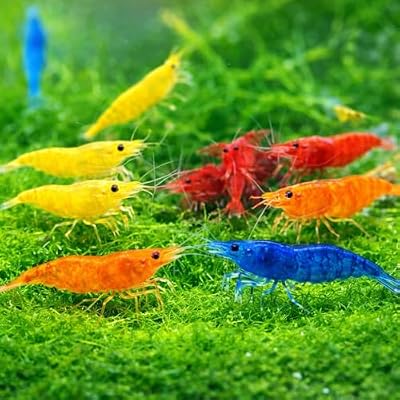
Seam Oasis 15+ Mixed Color High Grade Neocaridina Live Freshwater Shrimps for Aquarium Bignner Friendly Neocardina Shrimps Fully Mature Breeding Age Size 0.75-1 inches in Length Live Arrival Guarantee
Selected for "Freshwater Shrimp Tank Setup: How It Works and What to Watch": this listing is aquarium equipment (Seam Oasis 15+ Mixed Color High Grade Neocaridina Live Freshwater Shri), matching the equipment this article covers.
View on AmazonBy David Nguyen
What Actually Keeps Shrimp Alive
A freshwater shrimp tank setup fails or succeeds on chemistry rather than equipment. Shrimp moult throughout their lives, and every moult draws minerals from the water, so general hardness and total dissolved solids matter here in a way they never do in a fish tank.

The Decision Numbers: GH, KH, TDS, Temperature and Copper
For Neocaridina, the common cherry shrimp group, target GH 6-12 dGH (107-215 ppm), KH 2-8 dKH (36-143 ppm), pH 6.5-7.8, TDS 150-250 ppm and 70-74 °F (21-23 °C). Caridina bee shrimp sit much softer, at GH 4-6 dGH and TDS 100-150 ppm.
Copper is the number with no safe working range. It is lethal to shrimp at concentrations far below anything considered acceptable in drinking water, where the US EPA Lead and Copper Rule, first set in 1991, uses an action level of 1.3 mg/L. Check plant fertilisers, snail treatments and any fish medication before it goes near this tank.
Why Moulting Drives Every Other Number
A shrimp grows by shedding its exoskeleton and building a larger one, and the calcium and magnesium for that come from the water rather than from food. GH is therefore not a comfort setting; it is the supply line, and a tank running under 4 dGH produces failed moults.
Stability matters as much as the value. A shrimp mid-moult has almost no osmotic protection, so a large water change that swings TDS by 50 ppm in one go can kill animals that were healthy an hour earlier. Small, frequent changes beat large, occasional ones here.
Target Ranges and Action Thresholds
The table below covers the two groups most people start with plus the readings that require a response. Note how much narrower the Caridina column is; that difference is why mixing the two groups in one tank suits neither of them properly.
| Measurement | Neocaridina target | Caridina target | Action threshold |
|---|---|---|---|
| GH | 6-12 dGH (107-215 ppm) | 4-6 dGH (72-107 ppm) | Under 4 dGH (72 ppm) |
| KH | 2-8 dKH (36-143 ppm) | 0-2 dKH (0-36 ppm) | KH 0 with unstable pH |
| pH | 6.5-7.8 | 5.8-6.8 | Daily swing over 0.3 |
| TDS | 150-250 ppm | 100-150 ppm | Change over 20 ppm in a day |
| Temperature | 70-74 °F (21-23 °C) | 68-74 °F (20-23 °C) | Above 80 °F (27 °C) |
| Ammonia | 0 ppm | 0 ppm | Any reading above 0 ppm |
| Nitrite | 0 ppm | 0 ppm | Any reading above 0 ppm |
| Nitrate | Under 20 ppm | Under 20 ppm | Above 20 ppm |
| Copper | None detectable | None detectable | Any suspected source |
Ammonia deserves a stricter reading here than in a fish tank. The 0.25 ppm figure often quoted as a threshold for fish is already a serious number for invertebrates, so treat any detectable ammonia as an immediate small water change rather than as something to monitor.
Building It in a Real Room
A freshwater shrimp tank setup is small and light compared with most builds, which changes the problems rather than removing them. Small volumes swing faster, so placement and equipment sizing carry more weight than the modest footprint suggests.
Tank Size, Placement and Fit
Measure the lid gap against your filter and heater cable runs before ordering, since shrimp tanks need a close-fitting lid to slow evaporation, and evaporation is what concentrates TDS between top-ups. Even a 10 gallon (38 L) tank drifts noticeably in a dry heated room.
Position away from direct sun and away from any radiator or vent. A 5 gallon (19 L) tank tracks room temperature almost exactly, so a spot that swings 6 °F (3 °C) across a day will move the tank the same amount, and shrimp respond to that far more than fish do.
How 5, 10 and 20 Gallon Builds Differ
Five gallons (19 L) works and is the common starting point, but it holds roughly 4 gallons (15 L) of actual water and offers almost no buffer against a mistake. A single overfeeding can move nitrate and TDS enough to matter within two days.
Ten gallons (38 L) is the size most keepers wish they had started with, and 20 gallons (76 L) is where a colony becomes self-sustaining with very little intervention. Bigger is genuinely easier here, which is the opposite of how nano tanks are usually marketed.
Substrate, Plants and Biofilm
Neocaridina do best on inert sand or fine gravel, because active soil substrates strip KH and pull pH down into Caridina territory. Caridina need exactly that soil, which is the practical reason the two groups are usually kept in separate tanks.
Plants are food infrastructure rather than decoration. Java moss, anubias and similar slow growers carry the biofilm that shrimp graze all day, and a tank with heavy moss cover feeds a colony almost entirely on its own between the two or three small feeds a week.
Myths That Kill Shrimp Colonies
Three ideas cause most of the early losses in a freshwater shrimp tank setup. Each one sounds entirely reasonable, each is repeated constantly in nano tank marketing, and each is paired below with the measurement that should replace it in your own build.
Myth: Shrimp Are an Easy Beginner Animal
Shrimp are undemanding once conditions are right and extremely unforgiving while they are not. They tolerate a narrower ammonia range than almost any common fish, and they cannot be treated with most standard aquarium products because so many contain copper.
The replacement is a sequencing rule. Cycle the tank fully over three to eight weeks, let biofilm develop for another two to four weeks after that, then add ten to fifteen shrimp rather than starting a colony on day one in fresh water.
Myth: Shrimp Clean the Tank So They Need No Feeding
Shrimp graze biofilm and soft algae, which covers most of their diet in a mature planted tank but not all of it, and certainly not in a newly planted one. A colony left entirely to forage in a young tank stops growing and then simply fails to reproduce at all.
Feed a small amount two or three times a week, sized so that nothing remains after two hours. Blanched vegetables and a quality shrimp pellet both work; the limiting factor is quantity, since uneaten food in a 5 gallon (19 L) tank raises ammonia quickly.
Myth: Change Water Like Any Other Tank
A 50% change is normal maintenance in a fish tank and a serious event in a shrimp tank, because it swings TDS and GH within minutes. Deaths that appear a day or two after a large change are usually moult failures caused by that swing.
Replace the habit with 10-15% weekly, dripped in slowly or poured against the glass, using water matched for temperature and remineralised to the same TDS as the tank. Top up evaporation with pure water only, since evaporation removes water and leaves minerals behind.
Running the Tank Past the First Year
A freshwater shrimp tank setup is low maintenance once stable, which is exactly why the slow drifts go unnoticed. This section covers the routine, the things that change quietly, and what the tank costs to keep running across twelve months.
The Weekly and Monthly Routine
Weekly: a 10-15% water change with matched temperature and TDS, plus a TDS reading before and after. That single meter is the most useful tool in this hobby, because it detects drift long before GH, KH or pH kits show anything worth acting on.
Monthly: squeeze the sponge filter in old tank water, check the moss for trapped detritus, and test GH and KH. Quarterly, check reagent expiry dates and confirm your remineraliser has not caked, since a compacted powder doses inconsistently by volume.
What Drifts and What It Does
TDS climbs steadily as evaporation is topped up carelessly with tap water instead of pure water, and the rise is slow enough that nobody notices until moults start failing. A meter reading taken weekly turns that into a two-minute correction.
Air pump diaphragms stiffen over one to two years and sponge filters clog gradually, both cutting flow. Heaters drift 2-4 °F (1-2 °C) across a year, which in a 5 gallon (19 L) tank is enough to push a colony out of its breeding range.
The 12-Month Running Cost
Recurring spend is modest but constant: remineraliser powder, replacement air stones and diaphragms, a small amount of food, test reagents including GH and KH, and the TDS meter calibration solution that most people forget to buy alongside the meter itself.
On timing, heaters, lights and small tanks see their deepest discounts in late June and again in late November, which suits a planned build. A discount changes nothing biological: the tank still needs three to eight weeks of cycling plus biofilm time, and prices move constantly.
Freshwater Shrimp Tank Setup Questions
These come up while the tank is still cycling but before any shrimp are ordered. Each answer points at a reading rather than a rule of thumb, because in a freshwater shrimp tank setup the numbers decide the outcome long before anything is visible in the tank.
How long before shrimp can go in?
Three to eight weeks to cycle, then a further two to four weeks for biofilm to establish on plants and hardscape. Adding shrimp to a tank that is technically cycled but still sterile is the most common single reason a first colony fails to establish at all.
Can shrimp live with fish?
With small, peaceful species that cannot fit a shrimplet in their mouth, and even then adult survival is better than juvenile survival. A colony intended to breed does far better in a species-only tank, since fish eat the young rather than the adults.
Do I need RO water?
Only if your tap water sits outside the target range or contains copper from household plumbing. Where tap water lands at GH 6-12 dGH (107-215 ppm) with no copper present, use it and save the cost entirely. Test the tap first rather than assuming either way.
What filter is safe?
An air-driven sponge filter, or any other filter fitted with a sponge prefilter over the intake. Shrimplets measure 2-3 mm at hatching and pass through standard intake slots, so an unguarded intake steadily removes each generation as it appears.
Why did shrimp die after a water change?
Almost always a swing in TDS, temperature or both, catching animals mid-moult. Measure TDS in the tank and in the new water before adding it, keep the difference under 20 ppm, and match temperature to within 1-2 °F (about 1 °C) before any of it goes in.
See More:
Conclusion
A working freshwater shrimp tank setup comes down to four things held steady: GH 6-12 dGH for Neocaridina, TDS 150-250 ppm moving less than 20 ppm at a time, ammonia and nitrite at 0 ppm, and no copper entering the system from any source.
Build the tank around stability rather than equipment. Cycle fully, wait for biofilm, use a sponge filter or a prefiltered intake, change 10-15% weekly, and top up evaporation with pure water. A colony managed that way expands on its own without further intervention.
Related Reviews & Guides
Cherry Shrimp Care Guide: Setup, Feeding, and Best Supplies
6 Best Hexagonal Fish Tank Stands 2026