Last Updated: October 4, 2026
A TDS meter is a trend tool, not a water-quality verdict, and every model has a ceiling you can exceed. The best digital tds meter for aquarium monitoring reads a conductivity-derived total for freshwater, shrimp, and RODI use, but it does not identify specific minerals, and full-strength seawater sits outside these meters’ published ranges.
As an Amazon Associate we earn from qualifying purchases.
By David Nguyen
Quick answer: For most people in 2026, the best digital tds meter for aquarium is the HM Digital TDS-4TM — our #1 rated choice. See the full ranked comparison, alternatives and buying advice below.
How to Choose a Digital TDS Meter
Choosing well means understanding what TDS actually measures, using it for trends, keeping it calibrated, and respecting the range ceiling. TDS is a conductivity-derived total, not a mineral breakdown, so these four points keep you from overreading a single number or pushing a meter past what it can measure.
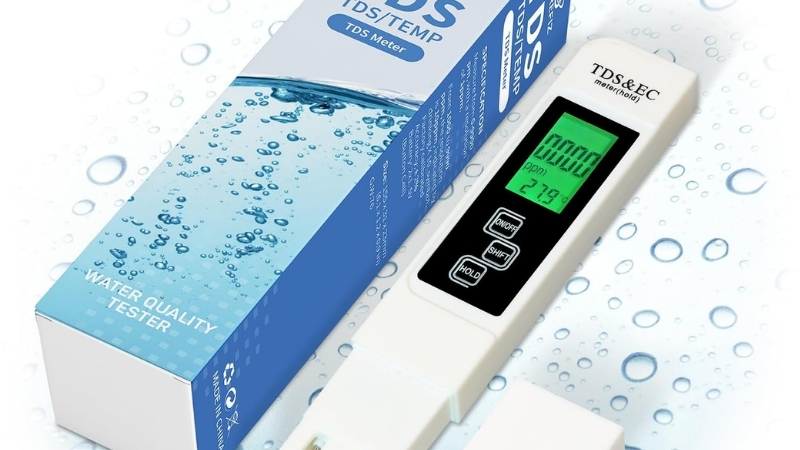
What TDS Actually Tells You
TDS is derived from conductivity and reports total dissolved solids as a single number, not a breakdown of what is in the water. So it does not tell you the exact calcium, magnesium, or nitrate concentration, and a TDS reading cannot stand in for a GH test or a nitrate test.
Treat it as a general indicator of overall dissolved content, useful for consistency rather than diagnosis. Do not assume lower TDS is always healthier, since the right level depends on the species, and a number alone says nothing about which dissolved solids make it up.
Use It for Trends
The meter’s real value is repeatability, letting you see whether your water is drifting over time or staying consistent between changes. Shrimp keepers and RODI users especially rely on TDS to confirm remineralized water matches a target and that water changes are reproducible.
So use it to track trends and catch changes early, not as a single pass-fail score for tank health. A stable TDS that matches your target for the species is the goal, and a sudden shift is a prompt to investigate rather than the meter delivering a verdict on its own.
Calibration Matters
A TDS meter is only as trustworthy as its calibration, and models differ in how they handle it. The COM-100 offers digital calibration with a replaceable probe, the TDS-3 uses manual recalibration, and the TDS-4TM ships factory-calibrated to a 342 ppm NaCl standard, so know your model’s method.
Recalibrate periodically against a known solution so readings stay meaningful, especially before making decisions based on small differences. A drifting, uncalibrated meter can look precise while being wrong, so treat calibration as routine maintenance rather than a one-time setup step.
Know the Range Ceiling
Every meter has a maximum it can read, and exceeding it gives meaningless numbers, which matters if you ever think about saltwater. The TDS-3 and TDS-4TM top out near 9,990 ppm, while the COM-100’s TDS scale maxes at 8,560 ppm on its 0.7 factor or 5,000 ppm on 0.5.
Full-strength seawater is around 35 ppt, roughly 35,000 ppm, which is far outside all of these ranges, so a TDS meter that displays ppt cannot properly measure a marine tank’s salinity. Use a refractometer or salinity meter for saltwater, and keep these TDS meters for freshwater, shrimp, and RODI work.
Top Picks
Four HM Digital meters cover the range from a basic budget pen to a waterproof pro unit, with the overall pick going to the model with a direct aquarium-use claim. Note that three of these have unverified US prices as of 09/2026, so treat cost as unconfirmed except where stated, and none can measure full seawater.
| Model | Best For | Key Spec | Watch Out For |
|---|---|---|---|
| HM Digital TDS-4TM | Best overall freshwater aquarium | 0-9,990 ppm; +/-2%; ATC | US price unverified; not for seawater |
| HM Digital COM-100 | Pro and waterproof | IP67; +/-2%; replaceable probe | TDS scale maxes ~8,560 ppm |
| HM Digital TDS-3 | Simple TDS plus temp | 0-9,990 ppm; +/-2%; 0-80C | US price unverified; manual recal |
| HM Digital TDS-EZ | Basic budget | 0-9,990 ppm; +/-3%; no temp | US price unverified; least accurate |
HM Digital TDS-4TM – Best Overall Freshwater Aquarium
The TDS-4TM is the best all-round freshwater aquarium pick, reading 0 to 9,990 ppm at plus or minus 2% with automatic temperature compensation and a direct aquarium-specific use claim. It ships factory-calibrated to a 342 ppm NaCl standard, which gives it a dependable baseline out of the box.
Its US price was not verified for this guide, so confirm current cost before buying. It earns the overall label on its aquarium-use claim, solid range, and 2% accuracy, but like every meter here it cannot measure full-strength seawater, which sits far above its ceiling.
HM Digital COM-100 – Pro and Waterproof
The COM-100 is the step-up pro option, an IP67 waterproof meter with plus or minus 2% accuracy, digital calibration, and a replaceable probe, around $60 as of 09/2026. It measures EC, TDS, and temperature, and the replaceable probe extends its useful life for heavy users.
Its TDS scale maxes at 8,560 ppm on the 0.7 conversion factor or 5,000 ppm on 0.5, so it still cannot read seawater despite being the most capable here. Choose it for durability, calibration control, and dual EC and TDS readings when you want a meter that lasts.
HM Digital TDS-3 – Simple TDS Plus Temp
The TDS-3 is the straightforward workhorse, reading 0 to 9,990 ppm at plus or minus 2% up to 5,000 ppm and operating from 0 to 80 degrees Celsius, with a temperature readout. It uses manual recalibration, which keeps it simple and serviceable for regular freshwater checks.
Its US price was not verified for this guide, so check current cost before purchase. It is a sensible middle option for keepers who want temperature plus TDS without paying for waterproofing, provided they recalibrate it periodically to keep readings honest.
HM Digital TDS-EZ – Basic Budget
The TDS-EZ is the entry-level pick, reading 0 to 9,990 ppm at plus or minus 3% with manual calibration and no temperature measurement. It covers basic trend monitoring for keepers who just want a rough, repeatable number without extra features.
Its US price was not verified for this guide, so confirm cost before buying, and note its 3% accuracy is looser than the 2% models. That said, do not overstate the gap, since 2% is not simply fifty percent more accurate in everyday use, so the EZ is fine for casual trend tracking.
Frequently Asked Questions
TDS-meter questions focus on target readings, the TDS-versus-GH distinction, saltwater salinity, and calibration. Each answer leads with the direct call, then the caveat that changes it for your particular tank and what TDS can and cannot tell you.
What TDS Should My Tank Be?
It depends entirely on the species, so there is no universal target and lower TDS is not always healthier. Soft-water shrimp and fish suit low TDS, while other species and harder-water shrimp want higher readings, so match the number to what you keep rather than chasing the lowest possible value.
Use your target as a consistency check, confirming water changes and remineralized water land where you intend. The meter tells you the total dissolved content is stable and on target, not whether the water is healthy overall, which still depends on the specific parameters your species need.
Is TDS the Same as GH?
No, TDS is a conductivity-derived total of all dissolved solids, while GH specifically measures calcium and magnesium. So a TDS meter cannot tell you your general hardness, and it does not report the exact calcium concentration that matters for shrimp molting and shell health. Two samples can share the same TDS while holding very different amounts of calcium and magnesium, which is why hardness needs its own test.
Use TDS for overall trends and a GH test for the hardness value itself, since the two are complementary rather than interchangeable. Do not substitute a TDS reading for a GH test when a species needs specific hardness, because identical TDS numbers can come from very different mineral mixes.
Can I Measure Saltwater Salinity?
Not properly with these meters, because full-strength seawater is around 35 ppt, roughly 35,000 ppm, which is far outside their published ranges. Even the COM-100, which displays ppt, tops out well below seawater on its TDS scale, so a reading there would be meaningless.
For a marine tank, use a refractometer or a dedicated salinity meter designed for that range. Keep these TDS meters for freshwater, shrimp, and RODI work, where their ranges and accuracy are appropriate, rather than pushing them past the ceiling they were built for. A meter simply cannot represent a salinity that far above its scale, so forcing it only returns a meaningless number.
How Often Should I Calibrate?
Calibrate periodically against a known standard solution, and always before making decisions that hinge on small differences, since accuracy drifts over time. Models vary in method, with the COM-100 offering digital calibration and the TDS-3 and others using manual recalibration, so follow your unit’s procedure.
A meter that is never calibrated can read confidently while being wrong, which undermines the trend tracking you rely on. Treat calibration as routine maintenance, keep a calibration solution on hand, and recalibrate after a new probe, a battery change, or any reading that looks unexpectedly off.
Final Thoughts
The best digital TDS meter for aquarium use tracks trends within its range rather than diagnosing water, which is why the aquarium-specific TDS-4TM leads, the waterproof COM-100 suits pros, and the TDS-3 and TDS-EZ cover simple and budget needs. Remember TDS is conductivity-derived and does not report exact minerals or GH, that lower is not always healthier, and that full seawater sits far outside every one of these meters’ ranges.
As an Amazon Associate we earn from qualifying purchases at no extra cost to you. Prices and availability are accurate as of the date shown and are subject to change.
Ready to decide? Our #1 pick for 2026 is the HM Digital TDS-4TM.
Live price & availability on Amazon.
Related Reviews & Guides


How to Choose the Right Aquarium Heater Size for Your Tank
Best pH and Temperature Monitor for Aquarium: Expert Pick