Last Updated: October 4, 2026
Cheap water filtration is full of confusing claims, so the best budget rodi system is the affordable unit that actually delivers RO/DI water with the stages you need, at a realistic output for your pressure, rather than an RO-only bargain or a headline GPD that your tap conditions will never reach.
As an Amazon Associate we earn from qualifying purchases.
By David Nguyen
How to Choose a Budget RODI System
A budget RODI system must still do the real job: strip impurities to near-zero total dissolved solids for a reef. The traps: RO-only units sold as RO/DI, GPD quoted at ideal conditions, and filters rated for chlorine but not chloramine. Understanding these before buying is what separates a genuine bargain from a false one.
RO Is Not RO/DI
The most important distinction is that RO and RO/DI are not the same, and a budget unit may be only one. Reverse osmosis alone removes most impurities but leaves some dissolved solids, while a deionization stage after it polishes the water to near-zero TDS that a reef needs. A RODI system includes that DI stage; an RO-only unit does not.
So confirm a budget system is genuinely RO/DI, not RO-only, before buying. The Aquatic Life RO Buddie sold as a 50 GPD four-stage RO/DI includes DI, while its 100 GPD version is a three-stage RO-only unit without it. Do not assume a cheaper, higher-output unit is RO/DI, since the missing DI stage changes what the water is fit for.
GPD Depends on Pressure and Temperature
A system’s gallons-per-day rating is quoted at specific conditions, typically a set pressure and water temperature, and your tap may not match them. The BRS membrane is rated around 77 degrees and a pressure range near 50 to 90 PSI, so cold or low-pressure water produces less than the headline GPD.
So read the GPD as a rating at stated conditions and expect less if your water is cold or low-pressure. A booster pump can help where pressure falls short. Judging output by the conditions the rating assumes, rather than the raw number, keeps your expectations realistic and prevents disappointment with a budget unit.
Stages and What They Do
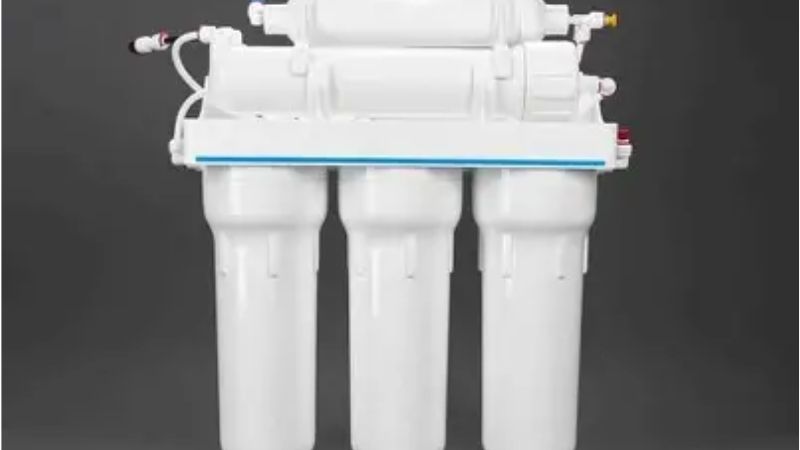
A typical budget RODI system uses several stages: sediment and carbon prefilters, a reverse-osmosis membrane, and a deionization resin. Each stage has a job, with the prefilters protecting the membrane, the membrane doing the heavy removal, and the DI polishing to near-zero TDS. The DI stage is what makes it RO/DI.
The BRS four-stage Value system, for instance, pairs prefilters and a membrane with a single mixed-bed DI stage, achieving high rejection around 96 to 99 percent. Understand what each stage does so you can judge whether a budget unit has the stages your water and reef require, rather than counting stages alone.
Chlorine Is Not Chloramine
Carbon prefilters are often rated to remove chlorine, but many municipal supplies use chloramine, which standard carbon does not fully address. A chlorine-ready filter is not necessarily chloramine-ready, and chloramine can damage the RO membrane. Check your utility’s disinfectant before trusting a budget prefilter.
If your supply uses chloramine, look for a system or an added stage rated specifically for it, such as a catalytic carbon block. Assuming a standard carbon prefilter handles chloramine is a costly mistake for the membrane. Matching the prefilter to your actual water is a step budget buyers often skip at their peril.
Top Picks
These picks are ranked on delivering real RO/DI water affordably, with honest notes on stages, GPD conditions and what is RO-only. Specs are manufacturer-stated and prices change, so confirm current figures and your tap’s pressure and disinfectant. The right budget RODI system suits your water conditions and output needs.
| Product | Best For | Key Spec | Watch Out For |
|---|---|---|---|
| BRS 4-Stage Value 75 GPD | Best budget RO/DI | 75 GPD; under $200; 1 DI stage | ~3:1 waste; needs 50-90 PSI |
| BRS Value Plus | Built-in monitoring | under $250; dual TDS, gauge, restrictor | About 25% pricier than Value |
| Aquatic Life RO Buddie 50 GPD | Most compact RO/DI | 50 GPD at 65 PSI, 77F; 4-stage | Confirm current price |
| RO Buddie 100 GPD | Higher output, RO only | 100 GPD; 3-stage RO-only | No DI; add a stage for reef |
BRS 4-Stage Value 75 GPD — Best Budget RO/DI
The BRS four-stage Value system, listed around $175, is a strong budget benchmark, pairing prefilters and a 75 GPD membrane with a single mixed-bed DI stage for genuine RO/DI water. It achieves high rejection around 96 to 99 percent, which is what a reef needs. For a cost-conscious reefer, it is a sensible starting point.
Note the roughly three-to-one waste ratio and the 50 to 90 PSI range, since low pressure reduces output below the 75 GPD rating. Its single DI stage is adequate but will need replacement as it exhausts. As an affordable, genuine RO/DI unit it covers the basics well, provided your pressure suits it.
BRS Value Plus — Built-In Monitoring
The BRS Value Plus, around $225, adds a dual inline TDS meter, a pressure gauge and a flush restrictor to the Value system, which makes monitoring and maintenance easier. At about 25 percent more, the premium buys visibility rather than more output. For a buyer who wants to track TDS and pressure, it is worth it.
The added monitoring helps you know when the DI resin is exhausting and whether pressure is adequate, which protects water quality. If you are comfortable adding a separate TDS meter later, the plain Value costs about 20 percent less. The Plus suits those who prefer the monitoring built in from the start.
Aquatic Life RO Buddie 50 GPD — Most Compact
The Aquatic Life RO Buddie sold as a 50 GPD four-stage RO/DI unit is a compact, affordable option that includes a DI stage, making it genuine RO/DI. Its small size suits limited space and modest water needs, and it is rated around 65 PSI at 77 degrees. For a small reef with light water demands, it is a tidy budget choice.
Confirm the current price and the conditions its GPD assumes, since output falls with lower pressure or colder water. Being compact, it produces less than larger units, so match it to modest needs. As a small genuine RO/DI system it fits tight spaces, provided you accept the lower output.
RO Buddie 100 GPD — Higher Output, RO Only
The 100 GPD RO Buddie is a three-stage reverse-osmosis-only unit, which produces more water but does not include a DI stage. This is the key caution: as sold it is RO, not RO/DI, so its water is not polished to the near-zero TDS a reef wants. Do not confuse its specs with the 50 GPD RO/DI version.
To use it for a reef you would add a separate DI stage after it, which changes the cost and setup. As an RO-only unit it suits higher-volume RO needs, but for RO/DI you must supply the missing polish. Listing it here is a reminder that higher output can hide a missing DI stage.
Frequently Asked Questions
Budget buyers ask how RO differs from RO/DI, why their output falls short of the GPD rating, whether the upgrades are worth it, and if these units remove chloramine. Each answer gives the practical rule first, then the condition that adjusts it for your water.
What is the difference between RO and RO/DI?
Reverse osmosis alone removes most impurities but leaves some dissolved solids, while RO/DI adds a deionization stage that polishes the water to near-zero TDS. A reef generally wants that near-zero result, so RO/DI is the target. An RO-only unit lacks the DI stage and does not reach the same purity.
So confirm a budget unit is genuinely RO/DI, since some cheaper or higher-output models are RO-only. The RO Buddie 50 GPD includes DI, while its 100 GPD version does not. Checking for the DI stage tells you whether the water will be fit for a reef without adding your own polish.
Why is my output less than the GPD rating?
Because GPD is quoted at specific conditions, usually a set pressure and water temperature that your tap may not match. Cold water and low pressure both reduce output below the headline number, so a unit rated near 77 degrees and 50 to 90 PSI makes less in colder or weaker supplies. The rating is a ceiling, not a promise.
A booster pump can raise low pressure toward the rated range, improving output. Otherwise, expect less than the GPD figure and plan storage accordingly. Reading the rating as conditional on pressure and temperature keeps your expectations realistic for a budget system.
Are the TDS meter and upgrades worth it?
They can be, since a dual inline TDS meter, pressure gauge and flush restrictor make monitoring and maintenance easier, telling you when the DI resin exhausts and whether pressure is adequate. The BRS Value Plus builds these in for about 25 percent more than the plain Value. For hands-on monitoring, that visibility is useful.
If you are comfortable adding a separate TDS meter later, the plain Value costs roughly 20 percent less and does the same filtration. The upgrades add convenience and insight, not purification. Whether they are worth it depends on how closely you want to track performance from the start.
Will a budget unit remove chloramine?
Not necessarily, since standard carbon prefilters are rated for chlorine, and chloramine is a different disinfectant many utilities use. A chlorine-ready filter is not automatically chloramine-ready, and chloramine can damage the RO membrane. Check your utility’s disinfectant before relying on a budget prefilter.
If your supply uses chloramine, look for a system or added stage rated for it, such as a catalytic carbon block. Assuming standard carbon handles chloramine risks the membrane. Matching the prefilter to your actual water is the step that protects a budget system’s most expensive component.
Final Thoughts
For pure water on a budget, the best budget rodi system is the affordable unit that truly delivers RO/DI, with the DI stage a reef needs, honest GPD for your pressure, and a prefilter matched to your disinfectant. Confirm RO/DI over RO-only, read GPD as conditional, and check for chloramine, and the bargain holds up.
Related Reviews & Guides
Best Diy Vs Prebuilt Aquarium Stand For 75 Gallons: Compared

Quick Picks: Best Submersible Aquarium Heaters