Last Updated: September 25, 2026
Automating water changes is about architecture and safety, not raw pump speed. The best automatic water changer for aquarium use is chosen by whether it runs standalone or needs a controller, how many pumps it takes and its fail-safe layer — published mL/min figures are not tested alike, so they do not rank the units.
As an Amazon Associate we earn from qualifying purchases.
By David Nguyen
Quick answer: For most people in 2026, the best automatic water changer for aquarium is the AutoAqua Smart AWC Lite — our #1 rated choice. See the full ranked comparison, alternatives and buying advice below.
How to Choose an Automatic Water Changer
An automatic changer is judged by how it is built, not its flow number. Decide between a standalone unit and a controller-dependent one, count the pumps it truly needs, verify the safety layer, and check its head and tubing limits.
Standalone vs Controller
The first split is independence. The AutoAqua Smart AWC Lite runs as a standalone AWC-plus-ATO unit, while the Neptune DOS QuietDrive requires an A2 or A3 Apex controller — one works on its own, the other needs an ecosystem. Standalone units suit a single tank, while controller-based pumps make more sense once you run several on one platform.
A controller-based unit fits owners already running that platform and adds automation depth; a standalone suits a tank without a controller. Match the architecture to what you own, since a DOS is not a standalone dosing or changer unit. Budget the controller too if you do not own one, since a DOS without an Apex is not a working system.
Count Pumps Required
Some systems need more than one pump. A full automatic change removes old water and adds new, so the EcoTech Versa needs two Versas for a complete cycle — one to drain, one to fill — not a single unit.
That doubles the Versa cost to a pair around $500, which changes the value math. Count the pumps a full change actually requires before comparing prices, since one Versa alone does not complete an automatic change. Confirm whether a listing is one pump or two before comparing prices, since a single Versa only drains or only fills.
Verify Safety Layer
Fail-safes matter most when you are not watching. An automatic changer controls removal and replacement, and anti-siphon or overflow protection manages level errors — the Kamoer X2SR adds an overflow sensor, the AutoAqua an anti-siphon condition. Position the reservoir so a worst-case overflow lands in a sump or a bucket, not on the floor.
Without a safety layer, a stuck pump can overfill or drain a tank. Prioritize documented fail-safes over flow specs, since the worst case of an automated system is exactly what these features exist to prevent. A separate float switch or optical sensor is cheap insurance on any changer, even one with built-in protection.
Check Head/Tubing Limits
Pumps have physical limits. The AutoAqua ships with 19.6 ft of tubing and a 6.5-ft suction head, with an anti-siphon condition requiring less than a 1-ft (30 cm) drop — install outside that window and it will not behave as rated.
Published flows are not comparable because no matched head and tubing test exists across brands. Plan the run within each unit stated head and tubing limits rather than assuming a flow number holds at your install height. Size the reservoir to your change volume rather than the pump rating, since flow is throttled by head anyway.
Top Picks
Four systems span a standalone unit to controller-based and high-flow options, differing in architecture, pump count and safety, not a comparable flow rate. Raw mL/min figures are not tested alike, so weigh design. Prices are relative and shift.
| Product | Best For | Key Spec | Watch Out For |
|---|---|---|---|
| AutoAqua Smart AWC Lite | Best Overall (standalone) | AWC+ATO; 12W PSU; anti-siphon <1 ft; ~$240 | 3.2 GPH not cross-comparable |
| Neptune DOS QuietDrive | Best for Apex ecosystem | 0.1-250 mL/min; needs A2/A3 Apex; ~$375 | Not standalone |
| EcoTech Versa Pair | Best for EcoTech ecosystem | Two Versas for AWC; ~$500 pair | One unit not enough |
| Kamoer X2SR | Best for high-flow + Wi-Fi | 45.6W; overflow sensor; Wi-Fi; ~$572 | Priciest; flow not comparable |
AutoAqua
The AutoAqua Smart AWC Lite takes Best Overall as a standalone AWC-plus-ATO unit, around $240 as of 09/2026 [BRS/AutoAqua, 2026], with a 12W adapter and an anti-siphon safety condition. It automates changes without a separate controller.
Its listed 3.2 GPH is not cross-comparable to other brands, since flows are not tested alike, and the anti-siphon needs a sub-1-ft drop to work. For a tank without a controller, though, it is the most self-contained pick. As a standalone AWC-plus-ATO, it also tops off evaporation between changes, which controller-based pumps handle separately.
Neptune DOS QuietDrive
The Neptune DOS QuietDrive is the Apex-ecosystem pick at about $375, roughly 56% above the AutoAqua [BRS, 2026], with a 0.1-to-250 mL/min range and up to 30 gal/day. It requires an A2 or A3 Apex to run.
It is not a standalone unit, so factor the controller cost if you do not own one. For an existing Apex system, though, the integration and automation depth make it a strong, if pricier, choice. Its exact PSU wattage is unverified. For an existing Apex owner, though, scheduling changes through the same app is a genuine convenience the AutoAqua lacks.
EcoTech Versa Pair
A full EcoTech change needs two Versas — one to drain, one to fill — totaling about $500 as of 09/2026 [BRS, 2026], roughly 108% above the AutoAqua. Each Versa covers a 6uL-to-300-mL/min range.
One Versa alone does not complete an automatic change, so budget for the pair. For an owner invested in EcoTech gear it integrates cleanly, but the two-pump requirement makes it the priciest ecosystem route here. The pair also doses two-part or additives when not running a change, which spreads the roughly $500 cost across jobs.
Kamoer X2SR
The Kamoer X2SR is the high-flow, Wi-Fi option at about $572 [CoralVue, 2026], with a 45.6W supply (24V x 1.9A) and an overflow sensor. Its stated flow exceeds 900 mL/min, though that number is not cross-comparable.
It is the priciest here, and raw flow does not rank it above the others, since conditions differ. The overflow sensor and Wi-Fi control are the real draws, so choose it for the safety and connectivity, not the mL/min figure. Its Wi-Fi control suits owners who travel, letting you check and pause the system remotely from a phone.
Frequently Asked Questions
Automatic-changer questions center on whether it replaces manual work, how many pumps it needs and whether more flow is better. Each answer opens with the verdict, then the detail.
Replace weekly manual changes?
Largely yes, when set up correctly. An automatic changer handles the removal and replacement of water on a schedule, so it can cover routine partial changes — but you still monitor parameters and refill the reservoir.
It does not eliminate maintenance, just the manual lifting. Keep testing water and check the system periodically, since automation shifts the work rather than removing it entirely. You still test water, clean the reservoir and check tubing, since automation shifts the work rather than removing it.
Need two pumps?
For some systems, yes. A full automatic change means draining and filling, so the EcoTech Versa needs two units, while the AutoAqua handles both in one standalone package.
Check the architecture before buying, since a single pump on a two-pump system cannot complete a change. Count the pumps a full cycle requires so the price you compare is the real one. Reading whether a change needs one pump or two is the difference between a $250 and a $500 setup.
Higher mL/min always better?
No. Published mL/min figures are not tested under matched conditions, so a bigger number does not rank one unit above another. Flow specs are not comparable across these brands.
Choose by architecture, safety and ecosystem instead. A high-flow unit like the Kamoer is not automatically superior; the right pump is the one that fits your tank and controller with a solid fail-safe. A pump matched to your controller and tank saves more grief than chasing the highest mL/min on the box.
What if tank overfills?
That is what the safety layer prevents. Anti-siphon conditions and overflow sensors — like the AutoAqua anti-siphon or the Kamoer overflow sensor — stop a stuck pump from overfilling or draining the tank.
Install within the unit stated head and drop limits so those fail-safes work; the AutoAqua anti-siphon needs a sub-1-ft drop. A documented safety layer, correctly installed, is the core of trusting an automated system. Running any changer through a GFCI outlet with a drip loop adds a basic safety layer around water and mains power.
Final Thoughts
The best automatic water changer for aquarium use is chosen by architecture and safety, not flow: the AutoAqua Smart AWC Lite leads as a standalone unit, the Neptune DOS suits Apex owners, the EcoTech Versa pair fits that ecosystem, and the Kamoer adds high-flow Wi-Fi control. Count the pumps a full change needs, verify the fail-safe layer, and treat published mL/min as non-comparable rather than a ranking.
As an Amazon Associate we earn from qualifying purchases at no extra cost to you. Prices and availability are accurate as of the date shown and are subject to change.

enomol Gravel Vacuum for Aquarium Water Changer Fish Tank Cleaning Tools,Siphon Universal Quick Pump Aquarium Water Changing (30ft)
Selected for "Best Automatic Water Changer for Aquarium: Smart Top Picks": this listing is pumps (enomol Gravel Vacuum for Aquarium Water Changer Fish Tank Cleaning Too), matching the equipment this article covers.
View on Amazon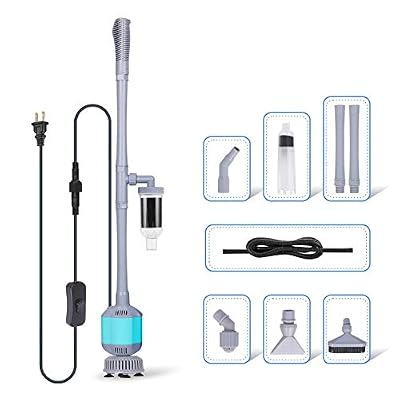
hygger 360GPH Electric Aquarium Gravel Cleaner, 5 in 1 Automatic Fish Tank Cleaning Tool Set Vacuum Water Changer Sand Washer Filter Siphon Adjustable Length 15W
Selected for "Best Automatic Water Changer for Aquarium: Smart Top Picks": this listing is filtration (hygger 360GPH Electric Aquarium Gravel Cleaner, 5 in 1 Automatic Fish ), matching the equipment this article covers.
View on Amazonenomol Gravel Vacuum for Aquarium Water Changer Fish Tank Cleaning Tools,Siphon Universal Quick Pump Aquarium Water Changing (50ft)
Selected for "Best Automatic Water Changer for Aquarium: Smart Top Picks": this listing is pumps (enomol Gravel Vacuum for Aquarium Water Changer Fish Tank Cleaning Too), matching the equipment this article covers.
View on Amazon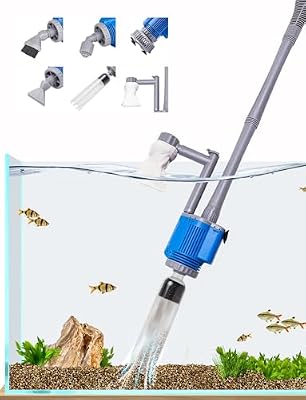
UPETTOOLS Aquarium Gravel Cleaner - Electric Automatic Removable Vacuum Water Changer Sand Algae Cleaner Filter Changer 110V/28W
Selected for "Best Automatic Water Changer for Aquarium: Smart Top Picks": this listing is filtration (UPETTOOLS Aquarium Gravel Cleaner - Electric Automatic Removable Vacuu), matching the equipment this article covers.
View on AmazonReady to decide? Our #1 pick for 2026 is the AutoAqua Smart AWC Lite.
Live price & availability on Amazon.
Related Reviews & Guides

Best Pond Liner for a Waterfall: Top Expert Buying Guide
Best 24/7 Aquarium Light With Sunrise Sunset: Top Picks