Last Updated: October 4, 2026
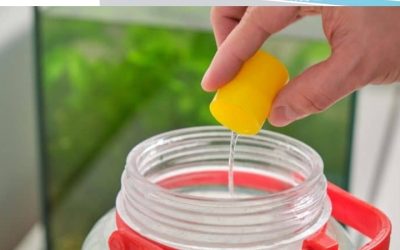
Tap water needs conditioning before it touches fish, but the products vary more than their labels suggest. The best aquarium water conditioner for tap water neutralizes both chlorine and chloramine at the correct dose, and the meaningful differences come down to concentration, real cost per treated gallon, and not confusing a conditioner with a bacteria starter.
As an Amazon Associate we earn from qualifying purchases.
By David Nguyen
Quick answer: For most people in 2026, the best aquarium water conditioner for tap water is the Seachem Prime — our #1 rated choice. See the full ranked comparison, alternatives and buying advice below.
How to Choose a Water Conditioner for Tap Water
A conditioner has to handle chlorine and chloramine, be dosed correctly for the new water, and be understood for what it does and does not do. Knowing those jobs, plus the fact that a conditioner is not a cycling bacteria product, keeps you from underdosing tap water or expecting the wrong result.
Handle Chlorine and Chloramine
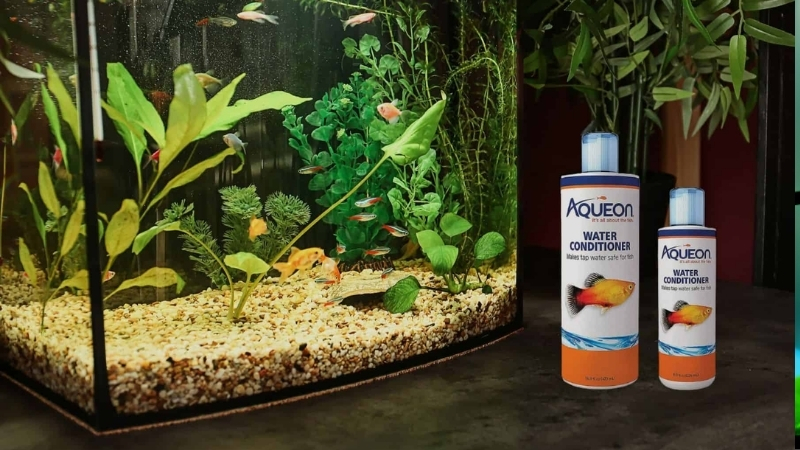
The core job is neutralizing the disinfectants in tap water, and chlorine and chloramine are not the same chemical. Chloramine is more stable and releases ammonia when broken, so a conditioner must handle both, which is why doses sometimes differ, as with API’s separate chlorine and chloramine directions.
Check that your chosen conditioner explicitly treats chloramine, not just chlorine, since many municipal supplies use chloramine now. Seachem Prime, Aqueon, and Tetra AquaSafe Plus all address chloramine, so confirm the label covers what your water utility actually uses before relying on it.
Dose the New Water Correctly
Conditioner is dosed for the water you are adding, and the correct amount depends on the product’s concentration. Prime is highly concentrated at 5 mL per 50 gallons, while Aqueon and Tetra run 5 mL per 10 gallons and API uses 5 mL per 30 gallons for chloramine with a separate 1 mL per 10 gallons for chlorine.
Because concentrations vary so much, always dose by the specific label rather than a generic amount, and note that more conditioner is not always safer. Overdosing a concentrated product wastes it and can stress fish, so measure for the actual volume of new water you are treating.
Understand Temporary Ammonia Binding
Some conditioners, notably Prime, temporarily bind the ammonia released when chloramine is broken, which is a snapshot effect rather than permanent removal. This protects fish briefly, but the ammonia still needs biological processing, so do not treat Prime as permanently removing ammonia.
This is why an ammonia test can still read positive after treating chloramine, since the compound is bound temporarily, not eliminated. Rely on the conditioner to dechlorinate and buy short-term protection, and let the biofilter handle the ammonia over the following hours as it normally would.
Not a Bacteria Starter
A conditioner makes tap water safe to add, but it does not cycle the tank, so do not confuse it with a bacteria starter. Dechlorination neutralizes disinfectants, while cycling is the separate process of establishing nitrifying bacteria that convert ammonia to nitrite and then nitrate over time.
So you still need a proper cycle, and possibly a dedicated bacteria supplement, alongside your conditioner. Use the conditioner every time you add tap water, but recognize it as one step in water changes, not a substitute for the biological filtration your tank depends on.
Top Picks
Four conditioners cover the range from ultra-concentrated to feature-added, and the real separators are chloramine performance and cost per treated gallon. Prices are relative and current as of 09/2026, and because concentrations differ widely, the per-gallon economics matter more than the sticker price on the bottle.
| Product | Best For | Key Spec | Watch Out For |
|---|---|---|---|
| Seachem Prime | Best overall concentrated | 5 mL/50 gal; binds ammonia briefly | Ammonia binding is temporary |
| API Tap Water Conditioner | Best cost per chloramine gallon | 5 mL/30 gal chloramine; ~$0.003/gal | Separate 1 mL/10 gal chlorine dose |
| Aqueon Water Conditioner | Simple measuring | 5 mL/10 gal; adds slime coat | Higher cost per treated gallon |
| Tetra AquaSafe Plus | Added protective formula | 5 mL/10 gal; heavy metals too | Highest cost per treated gallon |
Seachem Prime – Best Overall Concentrated Conditioner
Prime is the concentrated all-rounder, treating chlorine and chloramine at just 5 mL per 50 gallons and temporarily binding the ammonia chloramine releases, at around $10 for 250 mL as of 09/2026. That concentration means a small bottle treats a lot of water, roughly 2,500 gallons of chloramine per 250 mL.
Its cost per treated gallon lands around $0.0035, very close to the value leader, and the temporary ammonia binding adds a safety margin during water changes. Just remember that binding is a temporary snapshot, not permanent removal, so an ammonia test may still register after treating chloramine.
API Tap Water Conditioner – Best Cost per Chloramine Gallon
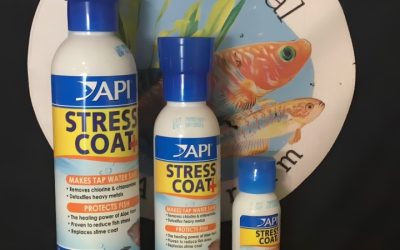
API Tap Water Conditioner is the value leader on chloramine economics, at roughly $0.0030 per treated gallon, with a 16 oz bottle covering around 2,838 gallons of chloramine at about $10 as of 09/2026. For high-volume water changers, that per-gallon cost is the lowest of this group.
The catch is its dual dosing: 5 mL per 30 gallons for chloramine, but a separate 1 mL per 10 gallons for chlorine and heavy metals, so follow the correct direction for your water. Get the dosing right and it is the most economical way to condition tap water at scale here.
Aqueon Water Conditioner – Simple Measuring
Aqueon Water Conditioner keeps things simple with a round 5 mL per 10 gallons dose, treating chlorine, chloramine, ammonia, and heavy metals while adding a slime coat, at around $10 for 16 oz as of 09/2026. The easy math suits keepers who want a straightforward, do-everything bottle.
That convenience comes at a higher cost per treated gallon, around $0.012, since it is far less concentrated than Prime or API. It is a fine choice for smaller tanks or infrequent changes, but for large or frequent water changes the concentrated options stretch much further per dollar.
Tetra AquaSafe Plus – Added Protective Formula
Tetra AquaSafe Plus focuses on a protective formula, treating chloramine and heavy metals at 5 mL per 10 gallons at around $10 for 8.45 oz as of 09/2026. It appeals to keepers who value its protective additives and established brand for routine water changes.
Its cost per treated gallon is the highest here, around $0.019, reflecting the lower concentration and smaller bottle. Choose it for the protective formula on modest volumes rather than for economy, and lean toward Prime or API when you are conditioning large amounts of water regularly.
Frequently Asked Questions
Conditioner questions focus on chloramine, whether to dose new water or the whole tank, the conditioner-versus-bacteria confusion, and ammonia readings after treating chloramine. Each answer leads with the direct call, then the mechanism that changes it for your particular tap water.
Does My Conditioner Treat Chloramine?
It depends on the product, because chlorine and chloramine are not the same chemical and chloramine is more stable. Prime, Aqueon, and Tetra AquaSafe Plus treat chloramine, while API uses a specific 5 mL per 30 gallons chloramine dose distinct from its chlorine dose, so check your label carefully.
Confirm what your water utility uses, since many now use chloramine rather than plain chlorine. If your supply is chloraminated, choose a conditioner that explicitly handles it and follow the chloramine-specific dose, rather than assuming a chlorine-only treatment or a lighter dose is enough.
Do I Dose New Water or the Whole Tank?
Dose for the new water you are adding during a water change, since that is the untreated tap water carrying chlorine or chloramine. Measure the conditioner for the volume of replacement water, not the entire tank, because the existing tank water is already conditioned and cycled.
Some keepers dose to the full tank volume as a safety margin during larger changes, which is acceptable with most conditioners but uses more product. The essential point is to treat the incoming tap water before or as it enters, so no unconditioned water reaches the fish.
Is a Conditioner the Same as a Bacteria Starter?
No, a conditioner neutralizes chlorine and chloramine so tap water is safe, while a bacteria starter seeds the nitrifying bacteria that cycle the tank. They do completely different jobs, so a conditioner does not cycle the aquarium and cannot replace establishing a biofilter.
You typically need both: the conditioner for every water change and, especially in a new tank, a bacteria supplement to build the cycle. Do not expect conditioning tap water to handle ammonia long-term, since that is the biofilter’s role, supported by a bacteria starter while it establishes.
Why Is Ammonia Reading Positive After Treating?
Because breaking chloramine releases ammonia, and some conditioners like Prime bind that ammonia only temporarily rather than removing it. The bound ammonia is far less toxic but can still register on a test, so a positive reading after treating chloramine is expected, not a failure.
The bound form waits for biological processing by the biofilter, so keep the fish protected and let the cycle handle it over the following hours. If ammonia stays high in a tank that should be cycled, look for an underlying cause such as overfeeding, a stalled cycle, or a filter cleaned too aggressively, rather than assuming the conditioner did not work.
Final Thoughts
The best aquarium water conditioner for tap water neutralizes both chlorine and chloramine at the right dose, which is why concentrated Prime leads while API wins on cost per chloramine-treated gallon and Aqueon and Tetra trade economy for convenience. Dose for the new water by the label, remember temporary ammonia binding is not permanent removal, and never mistake a conditioner for the bacteria starter that cycles the tank.
As an Amazon Associate we earn from qualifying purchases at no extra cost to you. Prices and availability are accurate as of the date shown and are subject to change.
Ready to decide? Our #1 pick for 2026 is the Seachem Prime.
Live price & availability on Amazon.
Related Reviews & Guides


Best Medication for Ich in Aquarium: A Careful Buyer Guide
8 Best Ich Treatments for Fish: Top Picks and Guide