Last Updated: September 25, 2026
Best aquarium CO2 system choices are judged on control rather than output. The target is 20-30 ppm dissolved CO2, confirmed by a drop checker holding a green colour, and the ability to hold that figure steadily is what separates the options. Stability matters far more than raw output, and it is what the hardware is really being bought for.
As an Amazon Associate we earn from qualifying purchases.
By David Nguyen
Buying Control Rather Than Output
Choosing the best aquarium CO2 system means buying control, since too much CO2 harms fish and too little grows algae rather than plants. Four criteria settle it, and two of them are safety features rather than performance ones.
The Deciding Number: Dissolved CO2 at 20-30 ppm
Twenty to thirty parts per million is the working band for a planted tank. Below that, plants stay carbon limited and algae competes successfully; above it, fish begin gasping at the surface, which is the point at which the system has started doing harm.
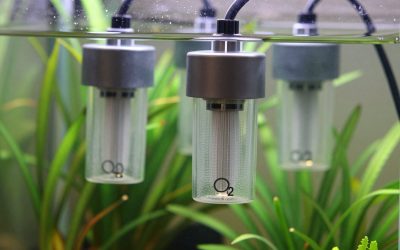
Confirm it with a drop checker rather than by counting bubbles. Filled with a 4 dKH reference solution, the indicator sits blue at low CO2, green in the target range and yellow when the level has gone too far.
Bubble rate is a starting point rather than a target. One to two bubbles per second suits a 20 gallon (76 L) tank as an opening setting, and the drop checker then tells you which direction to adjust across the following days.
Two More Criteria With Numbers Attached
Control hardware decides stability. A needle valve allows fine adjustment that a simple screw does not, and a solenoid on a timer switches gas on one to two hours before lights and off an hour before they go out.
Cylinder size decides how often you refill. A 5 lb (2.3 kg) cylinder typically runs a mid-size planted tank for many months, while a small paintball-style cartridge may need changing every few weeks on the same tank.
Tank Size, Placement and Fit
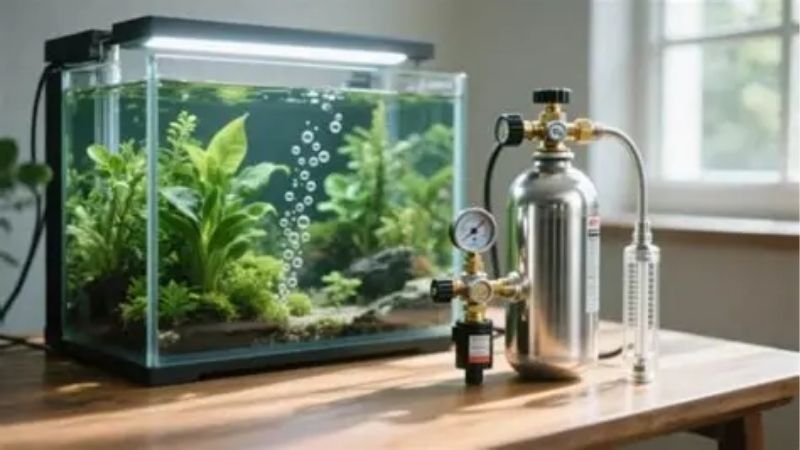
Measure the cabinet height against the cylinder and regulator before ordering, since a 5 lb (2.3 kg) cylinder stands roughly 18 in (46 cm) tall and the regulator adds several inches that have to clear the shelf above it.
Secure the cylinder upright against a wall or inside the cabinet. Compressed gas cylinders should never lie loose on a floor, and a toppled cylinder with a regulator attached can shear the valve, which is the serious safety case here.
The Options by Tank Size and Budget
Four approaches cover essentially every planted tank. Each is matched below to a situation, since the best aquarium CO2 system depends on tank volume, on cabinet space and on how much stability you actually need.
Pressurised System With Small Cylinder: For Nano Planted Tanks
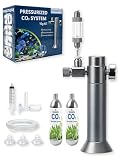
Main numbers: a paintball or small disposable cylinder with a regulator, needle valve and bubble counter, suiting tanks up to about 20 gallons (76 L). Refills are frequent but the whole assembly fits inside a small cabinet.
It suits nano and desktop planted tanks where a full cylinder will not fit. It does not suit larger tanks, since the refill interval becomes impractical, and cartridge cost per gram of gas is considerably higher than a refillable cylinder.
Pressurised System With 5 lb Cylinder: The General-Purpose Choice
Main numbers: a 5 lb (2.3 kg) refillable cylinder, dual-gauge regulator, solenoid and needle valve, running a 20-75 gallon (76-284 L) tank for many months between refills. This is the arrangement most planted tanks settle on.
It suits any tank with cabinet space and an intention to keep demanding plants. It does not suit a tight budget as an initial purchase, though it is the cheapest option per year once the hardware is bought.
DIY Yeast Generator: For Learning, Not for Stability
Main numbers: a sealed bottle of sugar and yeast producing gas at a rate that varies with temperature and age, typically peaking after a few days and fading over two or three weeks before needing a full rebuild.
It suits a small tank where the goal is trying CO2 cheaply. It does not suit anything needing consistency, since output cannot be regulated and drifts continuously, and it cannot be switched off at night without disassembly.
Liquid Carbon Supplements: An Alternative Rather Than CO2
Main numbers: a daily dose measured against tank volume, providing a carbon source that some plants use, with none of the pressure equipment. It does not raise dissolved CO2 and a drop checker will not respond to it.
It suits low-light tanks with undemanding plants and anyone unwilling to run pressurised gas. It does not suit demanding species or high-light setups, and overdosing harms some plants and invertebrates, so the label rate matters.
| Option | Control | Refill interval | Suits tank size | Best for |
|---|---|---|---|---|
| Small cylinder, pressurised | Needle valve, optional solenoid | Weeks | Up to 20 gallons (76 L) | Nano planted tanks |
| 5 lb cylinder, pressurised | Needle valve plus solenoid | Many months | 20-75 gallons (76-284 L) | Most planted tanks |
| DIY yeast generator | None, output drifts | 2-3 weeks, full rebuild | Up to 20 gallons (76 L) | Trying CO2 cheaply |
| Liquid carbon | Dose by volume | Bottle lasts weeks | Any, low-light | Undemanding plants, no hardware |
| No carbon supplementation | Not applicable | Not applicable | Any | Low-light tanks, entirely viable |
Head to Head, and When Not to Buy
Two approaches get compared constantly, and there is a common case where CO2 is the wrong purchase entirely. The best aquarium CO2 system is sometimes no system at all with a shorter photoperiod instead.
Pressurised Versus DIY
Pressurised wins on everything that matters: a needle valve holds a rate, a solenoid switches it off overnight, and a drop checker stays green rather than drifting. Stability is the entire point of adding CO2 in the first place.
DIY wins on entry cost and nothing else. Output rises and falls across each batch, it cannot be switched off at night when plants stop consuming, and a bottle that surges can push a tank past the safe band while nobody is watching.
When CO2 Is the Wrong Fix
Algae in a planted tank is usually light duration and nutrient imbalance rather than a carbon shortage. Cut the photoperiod to six or seven hours and test nitrate before spending, since adding CO2 to an overlit tank often makes algae worse.
Plants failing under weak light will not be rescued by carbon either. Check PAR at the substrate against what the species needs, since CO2 raises the ceiling on growth rather than compensating for a fixture that is too dim.
The Cheaper Route That Works
A low-light planted tank with anubias, java fern, cryptocorynes and mosses needs no CO2 at all and grows steadily for years. That is a legitimate design rather than a compromise, and it removes an entire category of risk.
Where pressurised gas is wanted, buying a used cylinder and a new regulator is the usual saving. Regulators are the part worth buying new, since a cheap or worn one is where end-of-tank dumps and pressure creep come from.
Running It Safely and the 12-Month Cost
The best aquarium CO2 system is the one addition to a planted tank that can kill livestock within hours, so this section covers the safety routine first, then the failures and the running cost across a year.
The Safety Rules That Matter
Watch the fish rather than the plants for the first week. Gasping at the surface, hanging near the outflow or unusual stillness all mean the level has gone too far, and the response is to shut the gas off and increase surface agitation immediately.
Run an air stone or raised surface agitation overnight when the gas is off, since plants stop consuming CO2 in the dark and the level would otherwise stay elevated. A solenoid on a timer handles the switching automatically.
Failure Points to Know About
End-of-tank dump is the classic hazard: as a cylinder empties, a poor regulator can release its remaining gas quickly, pushing the tank far past the safe band. A dual-stage or quality single-stage regulator reduces that risk considerably.
Needle valves creep over weeks, so a rate set once drifts upward or downward. Check the drop checker colour at least weekly, and fit a check valve so water cannot siphon back into the regulator when pressure drops.
Diffusers also clog with mineral deposit and biofilm, which raises back pressure and changes the rate reaching the tank. Soak ceramic diffusers in a dilute bleach or vinegar solution every couple of months and rinse thoroughly.
Cost, Storage and Timing
Recurring spend is cylinder refills, drop checker reference solution and the occasional diffuser or tubing replacement. A 5 lb (2.3 kg) cylinder refill costs little and lasts months, which makes the pressurised route cheap to run once bought.
Store and use the cylinder upright and secured, in a ventilated space rather than a sealed cupboard, since CO2 displaces air. On timing, CO2 hardware discounts most deeply in late June and late November, and prices move constantly.
Best Aquarium CO2 System Questions
These arrive once plants stop growing as expected. Every answer about the best aquarium CO2 system points at the drop checker or at fish behaviour, since those two report what is actually happening in the water.
How many bubbles per second?
One to two per second on a 20 gallon (76 L) tank as an opening setting only. Bubble size varies between diffusers, so the rate means little on its own; adjust across several days until the drop checker sits green.
How do I know if it is too much?
The fish tell you first. Gasping at the surface or crowding the filter outflow means CO2 is too high, and the immediate response is to shut the gas off and increase surface agitation rather than waiting for a test.
Do I need a solenoid?
It is the single most useful component after the needle valve. Plants stop consuming CO2 in darkness, so gas running overnight raises the level with no benefit, and a solenoid on the light timer handles that without attention.
Is liquid carbon the same thing?
No. It provides a carbon source some plants use and does not raise dissolved CO2, so a drop checker will not respond. It suits low-light tanks with undemanding plants, and it is not a substitute in a high-light setup.
See More:
Conclusion
The best aquarium CO2 system for most planted tanks is a pressurised 5 lb (2.3 kg) cylinder with a quality regulator, needle valve and solenoid, tuned by drop checker to hold 20-30 ppm rather than by counting bubbles.
Nano tanks can use a small cylinder version, and low-light tanks need nothing at all. Whichever route is taken, run the gas only during the photoperiod, raise surface agitation overnight, and treat gasping fish as an immediate shut-off.
As an Amazon Associate we earn from qualifying purchases at no extra cost to you. Prices and availability are accurate as of the date shown and are subject to change.

FZONE 5.5L Upgraded Aquarium CO₂ Generator kit for Aquarium Plants Tanks
Selected for "Best Aquarium CO2 System: Bubble Rate, Control and Safety": this listing is tanks (FZONE 5.5L Upgraded Aquarium CO₂ Generator kit for Aquarium Plants Tan), matching the equipment this article covers.
View on Amazon
Desktop CO2 Regulator with 80g Disposable CO2 Cartridge with Solenoid Valve, Complete Aquarium CO2 System, Compatible with 5/8" Threaded for Nano Aquariums
Selected for "Best Aquarium CO2 System: Bubble Rate, Control and Safety": this listing is aquarium equipment (Desktop CO2 Regulator with 80g Disposable CO2 Cartridge with Solenoid ), matching the equipment this article covers.
View on Amazon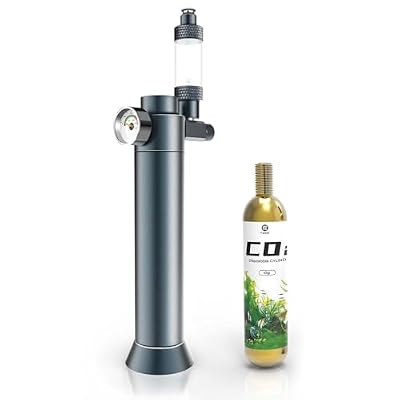
FZONE Desktop Aquarium CO2 System,45g CO2 Cartridge,5/8" & 3/8" Compatible
Selected for "Best Aquarium CO2 System: Bubble Rate, Control and Safety": this listing is aquarium equipment (FZONE Desktop Aquarium CO2 System,45g CO2 Cartridge,5/8" & 3/8" Compat), matching the equipment this article covers.
View on AmazonFZONE 2.5L Upgraded Aquarium CO₂ Generator kit for Aquarium Plants Tanks
Selected for "Best Aquarium CO2 System: Bubble Rate, Control and Safety": this listing is tanks (FZONE 2.5L Upgraded Aquarium CO₂ Generator kit for Aquarium Plants Tan), matching the equipment this article covers.
View on Amazon
Cryptocoryne Wendtii Care: Recover From Melt
Best Substrate for Corydoras Aquarium in 2026: Compared and Ranked