Last Updated: October 4, 2026
The best 300 gpd rodi system for large tanks earns its place by filling a reservoir in hours rather than overnight, but that headline output assumes rated pressure and temperature. Membrane architecture, DI capacity and waste ratio decide what you actually get.
As an Amazon Associate we earn from qualifying purchases.
As an Amazon Associate we earn from qualifying purchases at no extra cost to you. Prices and availability are accurate as of the date shown and are subject to change.
By David Nguyen
Quick answer: For most people in 2026, the best 300 gpd rodi system for large tanks is the SpectraPure Eliminator 6 — our #1 rated choice. See the full ranked comparison, alternatives and buying advice below.
How to Choose a High-Output RO/DI System
Rated output is a starting point, not a promise. Four things determine whether a system delivers for a large reef: the conditions behind its rating, how the membranes are arranged, the DI capacity behind them, and whether your household pressure can drive it. A system rated at 300 gpd on paper can behave like a 200 gpd unit in a cold garage.
Understand the Rating Conditions
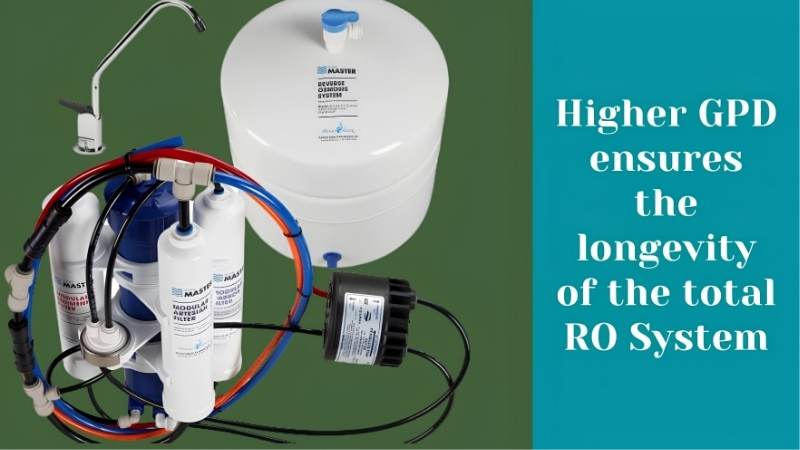
Production figures assume specific test conditions. SpectraPure rates the Eliminator 6 around 60 psi and 77F and states output can vary by roughly 20% either way, which is unusually transparent for this category. Few competitors state a variance range at all, which makes cross-brand output claims hard to trust.
Cold winter feed water and low household pressure both reduce output substantially. Treat 300 GPD as a ceiling under favourable conditions rather than a number you will see year-round, especially if the system sits in an unheated garage. Ask for the rating pressure and temperature on any system that does not publish them openly.
Check the Membrane Architecture
High output usually comes from pairing membranes rather than one large element. The SpectraPure Eliminator 6 reaches 300 GPD using two 150 GPD membranes, and it quotes 98% stabilized rejection at rated conditions. Premier reaches its rating differently across models, so check the element count before ordering spares.
That distinction matters when ordering replacements, since you buy two elements rather than one, and both need changing together. It also means a single fouled membrane drags overall output down while the other continues working normally. Replacing them in pairs also keeps rejection balanced across both elements.
Look at DI Capacity Behind the Membranes
More water through the membranes means more demand on deionisation. SpectraPure pairs its system with MaxCap and SilicaBuster cartridges, while Premier’s 6 Stage Aquarium Reef 300 uses dual DI and the COMRO300DI uses two mixed-bed stages. Silica-specific media matters for reef use, since standard resin exhausts on silica before other ions.
Rejection percentage is not final purity, since DI resin does the last step of the work. Budget resin as a recurring cost that scales with how much water you make, because a large reef running a 300 GPD system consumes it faster. Resin, prefilters and membranes together often cost more over five years than the system itself.
Confirm Pressure and Waste
SpectraPure lists waste around 3:1 on hard water and 2:1 on soft, both condition dependent. Premier’s COMRO300DI includes a booster pump, which addresses low household pressure directly rather than leaving you to add one later. Waste ratio also shifts with temperature, so winter production costs more drain water per gallon made.
Measure your inlet pressure before buying. A high-output system fed at low pressure produces well under its rating and wastes more water per gallon made, which turns a fast system into an expensive slow one. Check drain access too, because a high-output system sends a lot of water down it every hour.
Top Picks
Three systems plus the reservoir maths cover this category. Each entry lists manufacturer specifications, a relative price position as of 09/2026, and one genuine drawback worth weighing.
| Product | Best For | Key Spec | Watch Out For |
|---|---|---|---|
| SpectraPure Eliminator 6 | Best monitoring and transparency | 300 GPD via 2×150; 98% stabilized rejection | Output varies about 20% with conditions |
| Premier 6 Stage Reef 300 | Best value | Up to 300 GPD; dual DI; 5 micron pre + carbon | Rejection data not published the same way |
| Premier COMRO300DI | Best for low pressure | Up to 300 GPD; booster included; 2x mixed-bed DI | Light commercial size and footprint |
| Reservoir fill math | Setting expectations | 300 GPD is about 12.5 GPH in theory | Real output falls below the rating |
SpectraPure Eliminator 6: Best Monitoring and Transparency
At roughly $450 as of 09/2026 the Eliminator 6 pairs two 150 GPD membranes for 300 GPD total, quotes 98% stabilized rejection, and includes a DM-1 monitor plus a pressure gauge. SpectraPure also publishes its rating conditions and expected variance. Built-in monitoring means you see TDS creep before it reaches the tank.
It carries the highest price here, about 18.2% above the Premier basic system, a gap near under $70. Waste sits around 3:1 on hard water and 2:1 on soft, so factor drain volume into whether a high-output system suits your plumbing. SpectraPure supports its own cartridge line well, which keeps replacement sourcing straightforward for years.
Premier 6 Stage Aquarium Reef 300: Best Value
Around $380 as of 09/2026, roughly 15.4% below the SpectraPure, this system offers up to 300 GPD with dual DI, a 5 micron sediment prefilter and a 5 micron carbon block. For a large reef on adequate pressure it covers the essentials. The prefilter stages protect the membranes, which is where most of the replacement cost sits.
Premier does not publish stabilized rejection and waste figures in the same format, so its numbers cannot be compared like for like against SpectraPure’s. Judge it on included stages, monitoring you add yourself, and cartridge availability. Verify cartridge sizing is standard rather than proprietary, since that decides long-term running cost.
Premier COMRO300DI: Best for Low Pressure
For about $405 as of 09/2026, roughly 6.6% above the basic Premier system, the COMRO300DI adds a booster pump to its six stages and two mixed-bed DI cartridges. That inclusion matters if your household pressure sits below rated conditions. Pairing a booster with high output also stabilises production across seasonal pressure changes.
It is described as light commercial, which means a larger footprint and heavier plumbing than a typical under-sink setup. Confirm you have wall space and a suitable drain before ordering, since these systems are awkward to relocate. A booster also needs an electrical outlet near the plumbing, which is easy to overlook in a garage install.
What 300 GPD Means for Reservoir Filling
Divided across a day, 300 GPD works out to about 12.5 gallons per hour in theory, so a 100 gallon reservoir takes roughly eight hours at the rated output. That is the calculation worth doing before deciding you need this class.
Real fill times run longer, because pressure, temperature and membrane age all reduce production. Use the theoretical figure to compare systems against each other, then add margin for your own conditions rather than planning to the exact hour. Membranes gradually lose output as they age, so build the reservoir schedule with headroom from the start.
Frequently Asked Questions
Four questions decide whether this class fits: what hourly output to expect, whether a large tank truly needs 300 GPD, what rejection percentage really promises, and when a booster pump becomes necessary.
Will I really get 12.5 gallons per hour?
Rarely in practice. That figure is 300 GPD divided by 24 hours at rated conditions, and SpectraPure states production can vary by roughly 20% depending on pressure and temperature. Membrane age and prefilter condition push it lower still as the system runs.
Cold feed water in winter and pressure below rated levels both cut output noticeably. Plan reservoir filling around a realistic rate you measure yourself, rather than the arithmetic figure from the specification sheet.
Does a large tank actually need 300 GPD?
It depends on consumption, not display volume. Add your weekly water change volume to daily top-off demand, then check how long a lower-output system would need to keep up with that total. A 200 gallon system changing 10% weekly needs far less capacity than a fish room on the same schedule.
Many large reefs run comfortably on 150 GPD with a reservoir buffering demand. The 300 GPD class earns its cost when you change large volumes frequently, run multiple systems, or have limited time between changes. An automatic top-off system draws steadily all week, which adds up faster than most people estimate.
Does 98% rejection mean zero TDS?
No. Rejection describes what the membrane removes, and the remaining work falls to the DI resin behind it, which is what brings output to zero TDS. A handheld or inline TDS meter is the only way to confirm what leaves the system.
That is why DI capacity and monitoring matter as much as membrane specification. Watch output TDS with a meter and change resin based on those readings rather than a calendar, since feed chemistry drives consumption.
When do I need a booster pump?
When measured inlet pressure sits below the system’s rated requirement, which is common on well systems and upper floors. The Premier COMRO300DI includes one, while other systems leave it as a separate purchase. Pressure below roughly the rated figure is the practical trigger for adding one.
Measure pressure at the tap you will feed from before ordering. Running a high-output system on inadequate pressure produces less water, wastes more per gallon made, and shortens membrane life through poor flux conditions. RO/DI systems and cartridges discount around Prime Day and Black Friday, useful timing when stocking spares.
Final Thoughts
The best 300 gpd rodi system for large tanks matches your real consumption, your household pressure and your tolerance for waste water. SpectraPure’s Eliminator 6 near under $450 documents its performance most clearly, while Premier’s systems trade some transparency for price and an included booster.
Ready to decide? Our #1 pick for 2026 is the SpectraPure Eliminator 6.
Live price & availability on Amazon.
Related Reviews & Guides


4 Best Aquarium Dosing Pumps for Auto-Dosing Reef Tanks (2026)
Best Hang On Back Protein Skimmer for Reef: How to Pick