Last Updated: September 25, 2026
Aquarium plant fertilizer guide advice usually starts with products, which is the wrong end of the problem. Dosing is decided by three things you can measure first: how much light reaches the substrate, whether carbon is limited, and whether your plants feed through roots or through the water column around them.
As an Amazon Associate we earn from qualifying purchases.
As an Amazon Associate we earn from qualifying purchases at no extra cost to you. Prices and availability are accurate as of the date shown and are subject to change.
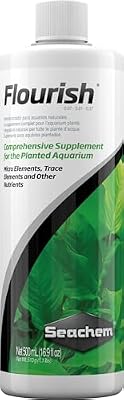
Seachem Flourish Freshwater Plant Supplement
Selected for "Aquarium Plant Fertilizer Guide: How Dosing Actually Works": this listing is aquarium equipment (Seachem Flourish Freshwater Plant Supplement), matching the equipment this article covers.
View on Amazon
API LEAF ZONE Freshwater Aquarium Plant Fertilizer 18-Ounce Bottle White
Selected for "Aquarium Plant Fertilizer Guide: How Dosing Actually Works": this listing is aquarium equipment (API LEAF ZONE Freshwater Aquarium Plant Fertilizer 18-Ounce Bottle Whi), matching the equipment this article covers.
View on Amazon
Crystalpro Flora Multi Minerals All-in-One Aquarium Plant Fertilizer - Plant Food for Fast Root & Leaf Growth - Safe for Fish, Shrimp & Snails (4.2 Oz / 125ml)
Selected for "Aquarium Plant Fertilizer Guide: How Dosing Actually Works": this listing is fish food (Crystalpro Flora Multi Minerals All-in-One Aquarium Plant Fertilizer -), matching the equipment this article covers.
View on Amazon
API LEAF ZONE Freshwater Aquarium Plant Fertilizer 8-Ounce Bottle
Selected for "Aquarium Plant Fertilizer Guide: How Dosing Actually Works": this listing is aquarium equipment (API LEAF ZONE Freshwater Aquarium Plant Fertilizer 8-Ounce Bottle), matching the equipment this article covers.
View on AmazonBy David Nguyen
How Fertiliser Actually Reaches the Plant
Every useful aquarium plant fertilizer guide rests on one idea: nutrients are only the third limit in the chain. Light sets the pace of photosynthesis, carbon feeds it, and fertiliser fills the gaps, so dosing into a light-limited or carbon-limited tank grows algae rather than plants.
The Deciding Numbers: Light, Carbon, Route and Target Levels
Start with PAR at the substrate, not watts on the box. Low light sits near 15-30 micromoles, medium around 30-50, and high above 50, and the same fixture measured at the bed of a 12 in (30 cm) tank delivers roughly double what it delivers at 21 in (53 cm) depth. Measure at the bed, not at the surface.
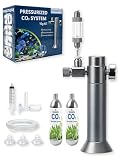
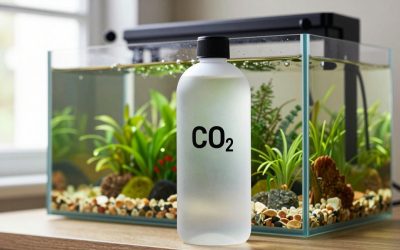
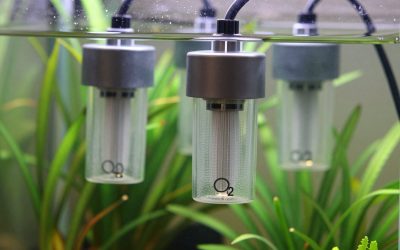
Carbon is the second number and it is binary in practice. Without injected CO2 a tank sits near 2-3 ppm dissolved carbon from the air, while an injected tank targets roughly 30 ppm, which is the point a drop checker reads green rather than blue or yellow. Carbon limitation caps growth however hard you dose.
Third comes the feeding route and its target levels. Water column feeders want nitrate near 10-25 ppm, phosphate 0.5-2 ppm, potassium 10-20 ppm and iron 0.1-0.5 ppm, while root feeders draw the same elements from the substrate. This aquarium plant fertilizer guide treats both routes separately.
Macros, Micros and What Each Shortage Looks Like
Macronutrients are nitrogen, phosphorus and potassium, needed in parts per million. Nitrogen shortage yellows the oldest leaves first because the plant moves it to new growth, while potassium shortage shows as pinholes in mid-age leaves that spread outward into ragged brown edges.
Micronutrients are iron, magnesium, manganese and the rest, needed in fractions of a part per million. Iron shortage yellows the newest leaves while the veins stay green, and magnesium shortage does something similar on older leaves, which is why leaf age matters as much as leaf colour.
Normal Ranges Versus Action Thresholds
The table below separates the level you aim for from the level that demands action. Note that nitrate in a planted tank is deliberately higher than in a fish-only tank: plants consume it, so 10-25 ppm is a working supply rather than a warning about accumulating waste. Fish-only guidance does not transfer here.
| Element | Target in a planted tank | Shortage sign | Action threshold |
|---|---|---|---|
| Nitrate (NO3) | 10-25 ppm | Old leaves yellow, stunted growth | Under 5 ppm, or over 40 ppm |
| Phosphate (PO4) | 0.5-2 ppm | Dark stunted leaves, spot algae | Under 0.2 ppm |
| Potassium (K) | 10-20 ppm | Pinholes in mid-age leaves | Pinholes spreading weekly |
| Iron (Fe) | 0.1-0.5 ppm | New leaves yellow, veins green | New growth pale for 2 weeks |
| Carbon (CO2) | 2-3 ppm ambient, 30 ppm injected | Small leaves, slow growth, algae | Drop checker blue at midday |
| Ammonia (NH3) | 0 ppm | Not a fertiliser, an emergency | Anything above 0.25 ppm |
Applying the Numbers to a Real Tank
Dosing instructions on a bottle assume a tank that does not exist, so this part of the aquarium plant fertilizer guide converts them into your own numbers. The two variables that matter are real water volume and the ratio of root feeders to water column feeders in the layout. Both are easy to establish in an afternoon.
Tank Size, Placement and Fit
Dose against real water volume, never the number on the box. A 20-gallon (76 L) tank holds roughly 17-18 gallons (64-68 L) once substrate, hardscape and the gap at the surface are subtracted, so full-label dosing overshoots by around 15 percent from the very first week. Subtract displacement before calculating anything.
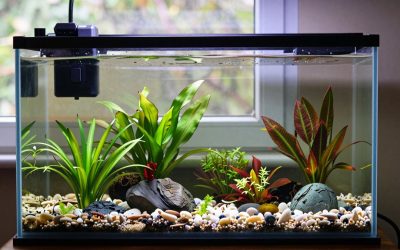
Placement changes the maths as well, since a tank beside a window collects hours of unmeasured light that no fertiliser schedule accounts for. Measure the real numbers before you order: light fixture length against tank length, and floor loading against the weight of a full tank.
What Changes Between 10, 20 and 55 Gallon Tanks
Small tanks punish dosing errors. In a 10-gallon (38 L) tank a single extra millilitre of a concentrated micro mix shifts iron measurably, and because the water volume is small, an overdose is diluted only by the next water change rather than absorbed by plant mass. Half doses suit small tanks better.
A 55-gallon (208 L) tank behaves far more slowly in both directions. Deficiencies take two or three weeks to appear rather than days, which sounds forgiving, but it also means a correction takes just as long to show, so change one variable and wait a fortnight before judging. Patience costs less than a second bottle.
Dosing by Plant Mix and Bioload
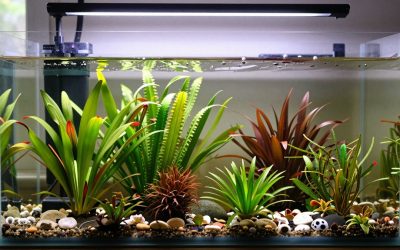
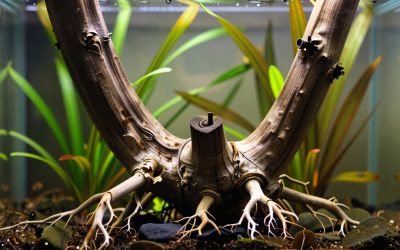
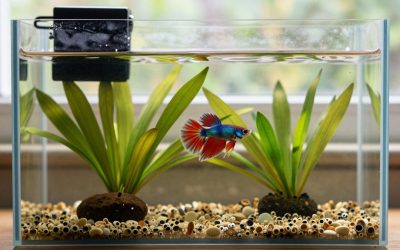
A tank of anubias, java fern and floaters needs liquid dosing and no substrate feeding at all, since epiphytes have no roots in the bed. Swords, crypts and dwarf lilies flip that: they take most of what they need through roots, so tabs do the heavy lifting instead. Match the product to the plant list, not the tank.
Fish load offsets part of the nitrogen requirement but almost none of the potassium, which is why heavily stocked tanks still show pinholes. Feed six fish in a 20-gallon (76 L) tank and nitrate may hold near 20 ppm on its own, while potassium falls steadily every week. Stocking never replaces potassium dosing.
Myths That Cost People Plants
Three claims come up constantly and each one leads people to dose in exactly the wrong direction. Any honest aquarium plant fertilizer guide has to replace them with numbers, because they persist precisely because they sound like common sense at first hearing. Each has a measurable answer.
Myth: Fertiliser Causes Algae
Algae responds to surplus light and to ammonia far more sharply than to nitrate or phosphate. Tanks dosed to 25 ppm nitrate with healthy plant mass frequently run cleaner than lean tanks, because established plants outcompete algae for the same nutrients when they are not starved.
The real sequence is usually light first. A fixture run 10-12 hours over sparse planting produces algae whatever the dosing regime, and cutting the photoperiod to 6-7 hours does more within a fortnight than any reduction in fertiliser will manage on its own. Start with the timer, not the bottle.
Myth: Fish Waste Provides Everything Plants Need
Fish waste supplies nitrogen and some phosphorus, and nothing else in useful quantity. Potassium, iron, magnesium and the trace elements arrive in food only in trace amounts, which is why a fish-only feeding regime produces plants with pinholes and pale new growth over several months.
Hard tap water hides part of this by supplying calcium and magnesium directly, so keepers on water above 8 dGH (143 ppm) often see fewer magnesium symptoms. On soft or RO water none of that arrives, and magnesium has to be dosed deliberately alongside everything else. Check your water report before assuming otherwise.
Myth: More Light Means Faster Growth
Light drives demand rather than supply. Raising PAR from 30 to 60 micromoles roughly doubles what the plant needs in carbon and nutrients every day, and if either one is limited, the surplus energy goes to algae growing on the leaves you were trying to improve. Demand always rises faster than supply.
This is why high-light tanks without CO2 fail so consistently. The correct order is light matched to plant demands, carbon matched to light, then fertiliser matched to both, and reversing that order produces a tank that needs constant chemical intervention to stay presentable. Order matters more than product choice.
Long-Term Dosing, Shelf Life and Twelve-Month Cost
Fertiliser is a subscription rather than a purchase, and the closing section of this aquarium plant fertilizer guide covers what that actually costs across a year. Products expire, test reagents drift, and equipment quietly changes the conditions your dosing schedule was built around.
What to Do Weekly, Monthly and Quarterly
Weekly work is a 20-30 percent water change adjusted to your measured nitrate, followed by dosing macros and micros on separate days so they do not react in the water column. Match replacement water to within 1-2 F (about 1 C) to avoid stressing both fish and root systems. Dose after the change, never before it.
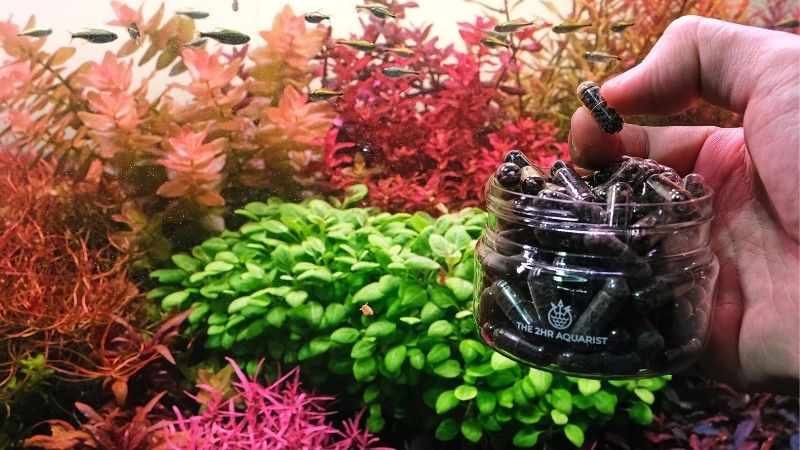
Quarterly work is root tabs in inert substrate, pushed under the heavy feeders rather than scattered, and a full check of your test reagents. Liquid nitrate kits in particular give false low readings when the second bottle has not been shaken hard for a full minute. Expired reagents mislead the same way.
Shelf Life, Storage and Equipment Drift
Most liquid fertilisers keep for one to two years sealed, less once opened, and iron chelates degrade faster in warm, bright storage. A bottle kept on a sunlit windowsill can lose useful chelated iron well before its printed date, which shows up as pale new growth despite dosing.
Equipment drifts alongside the chemistry. LED fixtures lose measurable PAR over several years, heaters wander by 2-4 F (1-2 C) as their thermostats age, and both quietly change plant demand, so a schedule that worked two years ago may now be feeding a slower tank. Recheck light and heater accuracy yearly.
The Twelve-Month Cost of Keeping Plants Fed
Budget for the whole system rather than a single bottle. A 20-gallon (76 L) low-tech tank needs roughly 18-24 root tabs a year plus a comprehensive liquid, while an injected tank adds CO2 refills. Treat any aquarium plant fertilizer guide quoting fixed prices as already out of date.
Demand is seasonal too. From March onward longer daylight and warmer rooms push growth and consumption up noticeably, while a cold winter room slows both, so the same weekly dose that suits a tank in July can accumulate unused in the water column by January. Adjust seasonally rather than annually.
Frequently Asked Questions
These questions come up once someone has bought a bottle, dosed it for a month and cannot tell whether anything improved. Each answer keeps to numbers you can verify with a liquid test kit rather than judging results by eye. Growth in a low-tech tank is slow enough that eye-level judgement misleads badly.
Do I need fertiliser in a low-tech tank?
Usually yes, but far less. A low-light tank without CO2 grows slowly and consumes accordingly, so half the label dose once a week plus root tabs every three to four months covers most stocked tanks running below 30 micromoles of PAR at the substrate. Increase only if new growth stays pale for a fortnight.
Should I follow this aquarium plant fertilizer guide or the bottle instructions?
Start at half the bottle rate calculated on real water volume, then adjust using deficiency signs and test results across a fortnight. Label doses are written for heavily planted, brightly lit tanks and routinely overshoot the low-tech tanks most people are actually running at home.
Can I dose fertiliser with shrimp in the tank?
Standard macro and micro dosing is fine at recommended levels, but check every product for copper before it goes in. Copper is used in some plant supplements and many treatments, and it is lethal to shrimp at concentrations far below what fish tolerate comfortably. Read the full ingredient list first.
How long before dosing changes show in the plants?
Give any change a full fortnight before judging it, and longer than that in a low-tech tank. New growth is the part that responds, so leaves already damaged will not recover their colour however correct the dosing schedule becomes afterwards. Judge progress by the newest leaf on each plant.
Why are my plants still yellow after dosing for a month?
Check light and carbon before adding more fertiliser. If PAR at the substrate sits under 15 micromoles or CO2 is limiting a demanding species, extra nutrients cannot be used and simply accumulate, so measure photoperiod and depth before increasing anything in the dosing schedule.
See More:
Conclusion
The short version of this aquarium plant fertilizer guide is that dosing follows light and carbon rather than leading them. Set PAR to match your plant list, decide whether you are injecting CO2, then feed to roughly 10-25 ppm nitrate and 0.1-0.5 ppm iron. Everything else follows from those three decisions.
Match the delivery route to your plants, dose against real water volume rather than the rating on the box, and change one variable at a time. Deficiency symptoms read by leaf age will tell you more than any fixed schedule copied from another person’s tank. Their light, water and plant mass are not yours.

Aquascape Tweezers Scissors Curved Tool
Choosing the Right Aquarium Substrate for Goldfish Tanks