Last Updated: October 21, 2026
Aquarium pH guide advice usually starts with a target number, which is where most pH problems begin. Stability matters far more than the figure itself, and carbonate hardness rather than pH is what you actually control. This guide covers the mechanism, the ranges, and when to leave the reading alone.
As an Amazon Associate we earn from qualifying purchases.
As an Amazon Associate we earn from qualifying purchases at no extra cost to you.



By David Nguyen
What This Aquarium pH Guide Is Built On
pH describes how acidic or alkaline the water is on a logarithmic scale, so each whole unit represents a tenfold change. That scale is the reason a shift of one unit is a large event for a fish rather than the small adjustment it looks like on paper.
The numbers that matter most
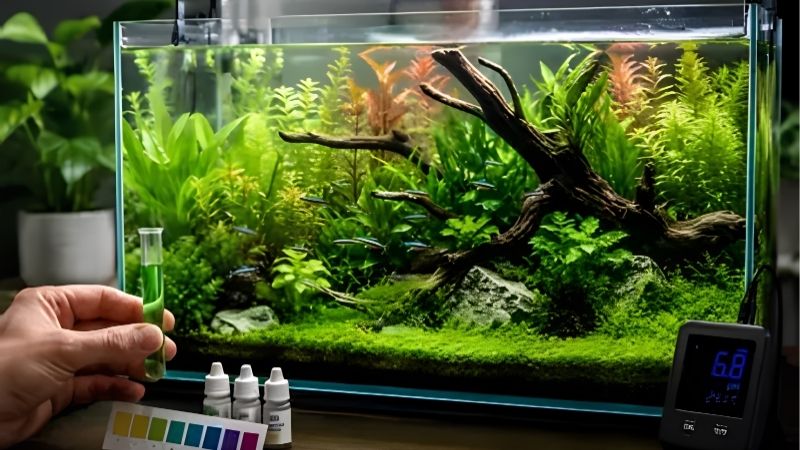
Three figures describe the situation: where the reading sits, how far it moves, and how much buffering stands behind it. Only the last of those is something you can influence directly through maintenance.
Most commercially bred community fish live comfortably between 6.5 and 7.8, and the important figure is how far the reading moves rather than where it sits. Movement of more than about 0.3 units in a day is the point at which it becomes an event.
Carbonate hardness is the number that actually controls pH, measured in dKH or ppm, where 1 dKH is about 17.9 ppm. Above roughly 4 dKH (72 ppm) pH holds steady, and below 3 dKH (54 ppm) the reading becomes unstable and can fall sharply overnight.
General hardness is a separate reading and is often confused with it. GH measures calcium and magnesium that fish, shrimp and snails need biologically, while KH measures the buffering capacity that resists a change in pH. They move independently.
Why pH moves on its own
Understanding the movement matters more than memorising a target, because almost every pH question people ask is really a question about why the number will not stay still.
A tank left alone does not hold a fixed pH, and understanding why explains most of the readings people find alarming. Three separate processes push the number around, and two of the three run continuously.
Nitrification consumes carbonate hardness continuously, so a tank slowly loses buffering between water changes. Once KH runs low the pH can drop quickly, which is why long gaps in maintenance end with an unexpectedly acidic tank rather than a gradual drift.
Carbon dioxide is the other driver, and it explains the daily pattern in planted tanks. CO2 dissolves to form carbonic acid, so pH falls through the photoperiod when injection runs and rises overnight as it disperses, often by half a unit or more.
Substrate and hardscape contribute too. Crushed coral and limestone raise KH and pH steadily, while driftwood and peat release tannins that lower both, which is why two tanks on the same tap water can settle at quite different readings.
| Group | pH range | Typical GH | Notes |
|---|---|---|---|
| General community | 6.5-7.8 | 4-12 dGH (72-215 ppm) | Stability matters more than value |
| Soft water tetras, apistogramma | 6.0-7.0 | 2-8 dGH (36-143 ppm) | Driftwood suits them well |
| Livebearers, goldfish | 7.2-8.0 | 8-15 dGH (143-268 ppm) | Harder water is an advantage |
| Rift lake cichlids | 7.8-8.6 | 10-20 dGH (179-358 ppm) | Needs high KH to stay stable |
| Neocaridina shrimp | 6.5-7.5 | 6-8 dGH (107-143 ppm) | KH 2-5 dKH, no copper |
| Caridina shrimp | 5.5-6.5 | 4-6 dGH (72-107 ppm) | KH near zero, RO water usual |
Target ranges and action thresholds
The table gives ranges rather than targets deliberately, because a tank sitting comfortably at one end of a range needs nothing done to it. The threshold that matters is about movement rather than position.
Treat the species range as guidance and the movement as the real threshold. A reading holding at 7.8 in a community tank needs nothing, while the same tank moving between 7.2 and 7.8 across a week needs the cause found rather than the number corrected.
KH below 3 dKH (54 ppm) is the reading that genuinely calls for action, because it means the buffer protecting everything else has run down. Restoring it with regular water changes is normally enough in any tank running on ordinary tap water.
Applying This Aquarium pH Guide to a Real Tank
Reading the number is straightforward, and interpreting it depends entirely on the tank. This part of the aquarium pH guide covers how volume, stocking and layout change what any given figure actually means in practice.
Tank size, placement and fit
Measure the stand top, the gap behind the tank and the water line against the heater before ordering equipment, since none of it adjusts once the tank is running. Placement affects temperature, and temperature affects how quickly pH responds to everything else.
Volume changes the speed rather than the target. A 10 gallon (38 L) tank with low KH can drop a full unit overnight, while 40 gallons (151 L) with the same hardness moves far more slowly and gives you days rather than hours to notice.
How stocking and plants change the reading
Two tanks on identical tap water can settle at different readings and behave differently through the day, and the difference is usually the biological load rather than anything added deliberately.
Heavy stocking accelerates the loss of carbonate hardness, since nitrification consumes it in proportion to the waste being processed. A crowded tank on soft tap water is the classic setup for a pH that falls sharply in between water changes.
Planted tanks introduce the daily CO2 swing, which is normal and needs no correction. What matters is that the swing sits inside the species range at both ends of the day, rather than dipping below it at some point in the photoperiod.
Matching fish to the water you have
This is the single decision that determines whether pH is ever a problem in a given tank. Made once at the start, it removes an entire category of ongoing maintenance from all the following years.
Test the tap before stocking rather than after. Choosing fish that suit the local supply removes the largest recurring source of pH movement, and it costs nothing beyond one test where adjusting water costs money and attention indefinitely.
Where the tap is very hard, livebearers, rainbowfish and rift lake cichlids all do well. Where it is soft, most tetras, rasboras and dwarf cichlids are comfortable, and neither group needs the water altered at all to keep them healthy.
pH Beliefs That Cause Damage
Three ideas turn a stable tank into an unstable one, and all three of them come from treating pH as a target to be hit rather than a symptom to be read.
Myth: every species needs its published pH
Most fish sold today are bred commercially in water quite unlike their wild habitat and adapt well to a steady local figure. A stable 7.6 suits a wild-range 6.5 species far better than a 6.5 maintained by daily chemical adjustment.
Myth: pH-adjusting products fix the problem
They move the reading temporarily, and in water with any carbonate hardness the buffer pulls it back, producing exactly the swing you were trying to avoid. Where KH is low enough for them to work, the resulting pH is unstable for the same reason.
Myth: a low reading always means trouble
This one causes unnecessary intervention rather than direct harm, though the intervention itself often does the damage. Context decides whether a low figure is a problem or simply the tank’s normal state.
Blackwater tanks run at 5.5 to 6.5 deliberately and their inhabitants thrive there. A low reading matters when it arrived suddenly or keeps moving, not when it has simply been the tank’s stable condition for months.
Using an Aquarium pH Guide to Keep the Reading Steady
Stability is a maintenance outcome rather than a chemical one. Most of this aquarium pH guide reduces to protecting carbonate hardness, since that is the thing actually holding the reading still.
The routine that holds it
Stability comes from replacing what the tank consumes rather than from adding anything designed to move the reading. The routine below does that without any product at all beyond an ordinary dechlorinator.
Change 20 to 30 percent weekly with matched, treated water. Regular changes replace the carbonate hardness that nitrification consumes, and that single habit prevents the majority of pH problems without a single product being added to the tank.
Test pH, GH and KH monthly rather than weekly, and always after a change in the water supply. Sudden movement in a tank that has been stable for months usually points at the tap water rather than at anything happening inside the glass.
What drifts and when
The reading drifts in both directions over months, and the direction depends on what the tank contains rather than on anything you do at the weekend. Two separate sources account for most of it.
KH falls steadily between changes, and faster in heavily stocked tanks. Crushed coral in the filter raises it gradually where the tap is very soft, though the effect is slow and needs monitoring rather than being set up once and then forgotten.
Water supplies change through the year. Utilities switch sources and disinfectants seasonally, and a notice about pipework or treatment is worth reading, since it explains readings that would otherwise appear to come from nowhere at all.
What monitoring costs
Watching pH properly means watching two other readings alongside it, since the number on its own explains very little. That makes the kit list slightly longer and the running cost no higher than an ordinary test kit.
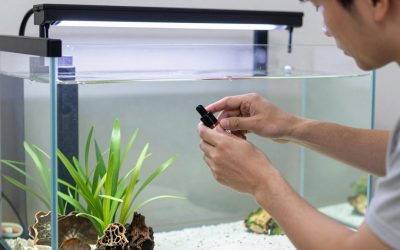
A liquid pH test plus separate GH and KH kits cover everything in this guide, and all of them expire whether used or not. Note the purchase date on the box, since old reagents drift low and hide the very trend you are watching for.
Beyond that, the running cost is the same dechlorinator and water changes the tank already needs. There is no ongoing expense in keeping pH stable, which is one reason chemical adjustment is worth avoiding entirely rather than budgeting for.
Frequently Asked Questions
These come up once someone has a full test kit and finds a pH reading in their tank that does not match a species profile they read online.
What pH does this aquarium pH guide recommend?
Whatever your tap water gives, provided it sits between about 6.5 and 7.8 and holds steady. Choose fish suited to that figure rather than adjusting the water, since stability is worth far more to the fish than any particular value.
Why does my pH drop between water changes?
Carbonate hardness is being consumed faster than it is replaced. Test KH, and if it sits below 3 dKH (54 ppm) the buffer has run down. More frequent changes usually restore it in a tank running on ordinary tap water.
Is a daily pH swing normal in a planted tank?
Yes, where CO2 is injected. The reading falls during the photoperiod and recovers overnight, often by half a unit or more. It only needs attention if either end of the swing sits outside the range that the fish tolerate.
Should I use driftwood to lower pH?
It lowers it gently and unpredictably, releasing tannins that also tint the water. In tanks with meaningful carbonate hardness the effect is small, and it works best in soft water where a lower reading was already largely achievable.
See More:
Reading pH Properly
An aquarium pH guide is really a hardness guide: carbonate hardness holds the reading still, general hardness supplies what the animals need, and pH is the visible result of both of them rather than something to be set directly.
Test the tap, stock to suit it, change water weekly to replace the buffer, and treat movement rather than value as the signal. A steady 7.8 is a better tank than a 7.0 that arrives by bottle and leaves again by the Wednesday.

Aquarium Nitrate Phosphate Removal Media
Betta Fish Hiding All Day: Causes, Checks and How to Fix It