Last Updated: October 21, 2026
- Top Pick: Sukh Ceramic Rings for Aquarium Filter – 15oz Bio Filter Media with 3 Bags
- Best Value: ALEGI Aquarium Sponge Filter Pad, Bio Filter Media Foam Sponges
- Premium Choice: sunjojo Aquarium Filter Media, Newly Premium 8-Layer Filter Pads for Aquarium, Fish Tank Sponge Pad Foam Filter Accessories for Pond (15.7"x11.8"”x0.6“,1pack)
Aquarium filter media order is one of the very few things in this hobby with a single correct answer: mechanical first, then biological, then chemical. Getting that sequence wrong clogs the layer doing the single most important job in the filter, and the tank ends up paying for that one mistake several weeks later.
As an Amazon Associate we earn from qualifying purchases.
As an Amazon Associate we earn from qualifying purchases at no extra cost to you.


By David Nguyen
Mechanical Protects Biological, Chemical Is Optional
Each stage in a filter does a different job and depends on the one before it. Aquarium filter media order is not a preference. Aquarium filter media order exists to protect the biological layer, which is the one keeping ammonia and nitrite at 0 ppm and the one that takes weeks to rebuild.
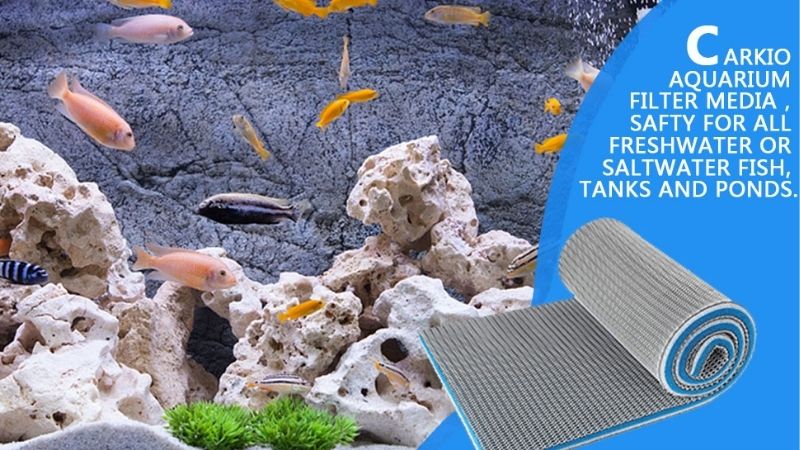
The Deciding Numbers: Chamber Volume, Surface Area and Replacement Cycles
Chamber volume sets how much media you can run. A small hang-on-back may hold under a litre in total, while a canister often holds several litres, and that difference decides whether you can run all three stages at once or have to choose.
Biological surface area is what matters within that volume, not weight. Porous ceramic and sintered glass media provide far more colonisable surface per litre than gravel or bioballs, which is why a small volume of good media can outperform a larger volume of poor media.
Replacement cycles differ by layer, and this is where most damage happens. Mechanical floss is replaced or rinsed monthly, chemical media is exhausted within two to four weeks, and biological media is never replaced at all under normal circumstances.
The Mechanism: What Each Stage Actually Does
Mechanical media traps particles: uneaten food, waste, plant debris and substrate dust. It is a sieve rather than a chemical process, and it needs rinsing before it clogs enough to reduce flow through everything behind it.
Biological media houses the nitrifying bacteria that convert ammonia to nitrite and nitrite to nitrate. This colony is living tissue, takes three to eight weeks to establish, and is destroyed by chlorine, chloramine or being allowed to dry out.
Chemical media adsorbs dissolved compounds. Activated carbon removes tannins, odours and medications, saturating within two to four weeks, and specialised resins target specific compounds. None of it is required in a normal healthy tank.
The dependency runs one direction only. Mechanical protects biological, and biological does the work that keeps fish alive, while chemical is optional throughout. That hierarchy is why the sequence is fixed rather than a matter of preference.
The Layer Table: Position and Replacement
This table sets each layer against its position, purpose and replacement schedule. The replacement column is the part worth memorising, because treating all three the same is the most expensive mistake in filtration.
| Layer | Position | Purpose | Replacement cycle |
|---|---|---|---|
| Coarse sponge | First, water enters here | Traps large debris, protects the rest | Rinse monthly in tank water, replace yearly |
| Fine floss or pad | Second, after coarse | Polishes fine particles | Rinse or replace monthly |
| Biological media | Third, main volume | Houses nitrifying bacteria | Never replaced, rinse gently if clogged |
| Chemical media | Last, if used at all | Adsorbs tannins, odours, medications | Replace every 2-4 weeks while in use |
| Purigen or resins | Last, alongside chemical | Targets specific organics | Regenerate or replace per capacity |
What This Means in a Real Tank
The principle is the same in every filter, and applying it depends on what your housing lets you do. Aquarium filter media order in a canister with four trays is a different practical problem from a hang-on-back with one slot.
Tank Size, Placement and Fit
Chamber volume constrains everything. A small hang-on-back may only fit coarse sponge plus biological media, and adding carbon means removing something else, so the honest answer in that housing is usually to skip chemical media entirely.
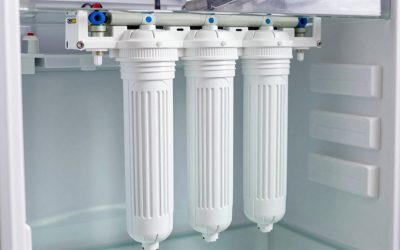
Canisters make the full stack straightforward, with water flowing bottom to top through stacked trays. Check the flow direction in the manual, because a few models run the other way and loading them by assumption puts the stack in reverse.
A pre-filter sponge on the intake changes the arithmetic usefully. It catches large debris before it enters the housing, extends the interval between services, and in a shrimp tank it also stops juveniles being drawn in and lost.
Measure before you order: media volume in litres against the chamber, 4-6 in (10-15 cm) behind the tank for a hang-on-back, cabinet interior height for a canister, and stand capacity against roughly 10 lb/gallon (about 1 kg/L) filled.
How This Differs Across 10, 20 and 55 Gallon Tanks
A 10 gallon (38 L) tank with a small hang-on-back has room for coarse sponge and a modest amount of biological media, which is genuinely sufficient. Adding carbon in that space usually means displacing bacteria for a benefit you do not need.
A 20 gallon (76 L) tank with a media basket fits all three stages if the basket is reasonably deep, and a 55 gallon (208 L) tank with a canister has room to run generous amounts of each with space left over.
Bioload determines how much biological media you actually need. Goldfish and cichlids at 8-10 times turnover need more colonisable surface than a community tank at 4-6 times, and skimping there is what produces ammonia readings under load.
Real water volume feeds into that as well. A 20 gallon (76 L) tank holds roughly 17-18 gallons (64-68 L) after substrate and hardscape, so the media requirement follows the smaller figure rather than the number printed on the tank.
How Stocking, Kits and Cartridges Change the Picture
Cartridge-based filters remove the choice entirely. A sealed cartridge combines floss and carbon in one unit, and replacing it discards the colonised surface along with the spent carbon, which is why those tanks see recurring mini-cycles.
January is when this shows up most. Tanks given over the December holidays are typically kits with cartridge filters, and the first monthly cartridge swap lands in weeks four to six, exactly when the colony is barely established and least able to survive losing it.
Adding a small bag of biological media inside or behind a cartridge housing is the practical workaround. It holds a colony that survives every cartridge change, and it costs a fraction of switching to a different filter entirely.
Running the old and new cartridge together for two to four weeks is the other option. The colony transfers across during that overlap, which turns a monthly reset into a gradual handover and removes the mini-cycle risk almost entirely.
Common Mistakes and Myths to Retire
Three errors in aquarium filter media order account for most filtration problems in otherwise well-run tanks. All three come from treating the three layers as interchangeable.
Myth: Carbon Should Run Permanently
Activated carbon saturates within two to four weeks and then sits in the filter doing nothing while occupying space that biological media could use. It is a periodic tool for tannins, odours or clearing medication, not a permanent stage.
It also removes medications indiscriminately, so it has to come out during any treatment and go back in afterwards to clear residues. Running it continuously in a planted tank strips some nutrients as well, though the effect is modest.
Myth: All Media Should Be Replaced on a Schedule
This is the costliest misunderstanding. Biological media is never replaced under normal circumstances, because it is the colony. Rinse it gently in tank water only if flow has dropped, and put it straight back rather than swapping it for new.
The replacement rule by layer: floss monthly, carbon every two to four weeks while in use, coarse sponge yearly or when it falls apart, biological media never. Anyone replacing all of it together is resetting their nitrogen cycle on a schedule.
When biological media genuinely has to be replaced after several years, do it in stages. Swapping a third at a time across three months lets the colony recolonise the new material before the old is gone, rather than losing most of it at once.
Myth: More Media Always Means Better Filtration
Biological capacity beyond the waste available does nothing, since the colony sizes itself to what it is fed. Packing a canister with the maximum possible bio media does not improve water quality on a lightly stocked tank.
Over-packing also restricts flow. Media compressed too tightly forces water around the stack rather than through it, and a filter that has become quiet and weak at the same time is often over-packed rather than blocked.
Maintaining the Stack Long Term
A correct aquarium filter media order only helps if the maintenance matches it. Nearly every mini-cycle in an established tank traces back to a cleaning session that treated the biological layer like the mechanical one.
What to Do on a Schedule
Rinse mechanical media monthly in a bucket of water siphoned from the tank, never under the tap. Chlorine and chloramine kill nitrifying bacteria on contact, which is the single fastest way to undo months of stability.
Clean only one part of the filter per session. Rinsing the mechanical layer one month and the biological media the next, if it needs it at all, keeps a working colony in the housing at all times.
Test ammonia and nitrite within a week of any filter maintenance. That reading confirms the colony survived, and it catches a problem while it is still a number on a test kit rather than a cloudy tank with fish at the surface.
Gear That Degrades and How It Shows Up
Coarse sponge breaks down over a year or two, losing structure and letting debris through to the layers behind it. Fine floss compacts and channels, so water finds a path around it rather than through it.
Biological media itself degrades slowly. Porous ceramic clogs internally with fine detritus over several years, reducing usable surface area, which is the one circumstance where replacing part of it gradually is reasonable.
Filters lose 30-50% of rated flow as media loads and impellers wear. Every powered device beside water belongs on a GFCI outlet with a drip loop and should carry a UL or ETL mark.
Media bags perish too. Mesh bags holding ceramic media or carbon split over a year or two, spilling contents into the housing where they block flow paths and end up jammed against the impeller intake.
The Twelve-Month Running Cost
For a loose-media filter the recurring items are floss, occasional coarse sponge, and carbon only when you actually need it. Biological media is a one-off purchase that lasts years, which is where the cost difference against cartridges comes from.
Cartridge systems reverse that entirely, with a fixed monthly purchase for the life of the tank. Prices change constantly, so check at the time of purchase, and compare the twelve-month total rather than the price of a single replacement.
Frequently Asked Questions
These five come up most often when someone opens a filter for the first time and finds the trays arranged unexpectedly.
Does the order really matter that much?
Yes. Floss placed after biological media lets debris clog the surfaces housing your bacteria, reducing flow through them and the colony’s oxygen supply. The correct aquarium filter media order exists to keep that layer clean and running.
Can I skip chemical media entirely?
In most tanks, yes. Carbon is useful for removing tannins, odours or medication residues and saturates within two to four weeks. A healthy tank with regular water changes needs none of it as a permanent stage.
How do I know when biological media needs rinsing?
When flow has dropped and rinsing the mechanical layer has not restored it. Rinse gently in tank water, disturb it as little as possible, and return it immediately rather than letting it dry out even for a few minutes.
What if my filter only has one chamber?
Layer within it: coarse sponge at the inflow side, biological media behind. Skip chemical media unless you have a specific reason, since displacing bacteria to make room for carbon is a poor trade in a small housing.
Can I use pot scourers or other substitutes?
Inert plastic scouring pads are widely used as mechanical media and work adequately. Anything with soap, antibacterial treatment or metal content does not belong in a filter, and purpose-made porous media still offers far more biological surface area.
See More:
The Bottom Line on Filter Media Order
The correct aquarium filter media order is mechanical, then biological, then chemical if you use it at all, with water always meeting the coarse sponge first. Replace on different schedules: floss monthly, carbon every two to four weeks while running, coarse sponge yearly, and biological media never. Rinse everything in tank water rather than under the tap, clean one layer per session, and if your filter uses sealed cartridges, tuck a small bag of biological media into the housing so a colony survives every swap.
11 Best Aquarium Canister Filters: Top Picks & Reviews
Best Lava Rock for Aquarium Filtration: Proven Top Picks