Last Updated: September 25, 2026
Best filter for shrimp tank choices are decided by intake safety before flow. Shrimplets measure 2-3 mm at hatching and pass straight through a standard intake slot, so any filter here either draws through sponge or carries a sponge prefilter over the intake. Turnover comes second, and it is lower than most people expect.
As an Amazon Associate we earn from qualifying purchases.
As an Amazon Associate we earn from qualifying purchases at no extra cost to you. Prices and availability are accurate as of the date shown and are subject to change.

Aqueon QuietFlow Internal Filter with SmartClean Technology Shrimp, Small
Selected for "Best Filter for Shrimp Tank: Options Compared by Numbers": this listing is filtration (Aqueon QuietFlow Internal Filter with SmartClean Technology Shrimp, Sm), matching the equipment this article covers.
View on Amazon
NICREW Slim Aquarium Filter for up to 5 Gallon Fish Tank, 42 GPH, 3W
Selected for "Best Filter for Shrimp Tank: Options Compared by Numbers": this listing is filtration (NICREW Slim Aquarium Filter for up to 5 Gallon Fish Tank, 42 GPH, 3W), matching the equipment this article covers.
View on Amazon
AQUANEAT 3 Pack Aquarium Bio Sponge Filter Breeding Fry Betta Shrimp Nano Fish Tank (Small up to 10Gal)
Selected for "Best Filter for Shrimp Tank: Options Compared by Numbers": this listing is filtration (AQUANEAT 3 Pack Aquarium Bio Sponge Filter Breeding Fry Betta Shrimp N), matching the equipment this article covers.
View on Amazon
DEGGOX Aquarium Electric Sponge Filter with Submersible Water Pump Silence Motor for Shrimps,Bettas with Bio Ceramic Media Balls and 2 Spare Sponge,Venturi Nozzle and Rain Mode (S for 10-20 Gal)
Selected for "Best Filter for Shrimp Tank: Options Compared by Numbers": this listing is filtration (DEGGOX Aquarium Electric Sponge Filter with Submersible Water Pump Sil), matching the equipment this article covers.
View on AmazonBy David Nguyen
Quick answer: For most people in 2026, the best filter for shrimp tank is the Air-driven sponge — our #1 rated choice. See the full ranked comparison, alternatives and buying advice below.
Intake Safety Before Anything Else
Picking the best filter for shrimp tank use inverts the usual priorities. Raw flow barely matters, biological surface area matters a great deal, and the single disqualifying fault is an intake that removes each new generation before anyone notices it happening.
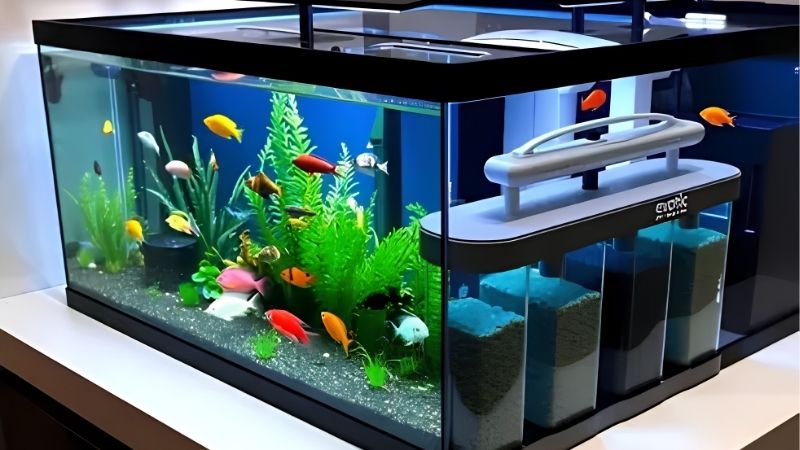
The Deciding Number: Intake Safety and Gentle Turnover
Intake first. Anything drawing water needs a sponge barrier with pores fine enough to stop a 2-3 mm juvenile, which in practice means a coarse aquarium sponge rather than a slotted plastic guard. A guard sized for fish fry is still too open for shrimplets.
Turnover second, and lower than you would expect. A shrimp-only tank runs comfortably at 3-5 times volume per hour, since these animals graze surfaces rather than swim against current. Planted display tanks holding fish as well can go higher, up to 5-8 times.
Two More Criteria With Numbers Attached
Biological surface area does the real work, because a shrimp tank is judged on holding ammonia at 0 ppm rather than on clarity. A large sponge or a filter housing 0.5-1 gallon (1.9-3.8 L) of media outperforms a faster unit running one thin cartridge.
Materials matter more than usual. Avoid any component containing copper alloy in contact with water, and be cautious with second-hand equipment that may have been used during a copper-based treatment, since residue persists in plastics and silicone for a long time.
Tank Size, Placement and Fit
Measure the tank height against the sponge filter stack and the lid gap against the airline before ordering, because an air-driven filter needs vertical clearance plus a lid that still seals around the tubing. Gaps let shrimp climb out, particularly larger species.
In tanks under 10 gallons (38 L), filter footprint competes directly with grazing surface. A sponge that occupies a quarter of a 5 gallon (19 L) tank is fine functionally but leaves little room for the moss and hardscape a colony actually feeds on.
The Options by Tank Type and Goal
Four classes cover essentially every shrimp build. Each is matched below to a tank type and a goal, since the best filter for shrimp tank duty depends on whether the priority is breeding output, plant growth or a display that looks tidy.
Air-Driven Sponge Filter: The Default for Breeding
Main numbers: a coarse sponge with a large surface area, gentle indirect flow, and running costs limited to air stones and a pump diaphragm. Nothing can be drawn in, juveniles graze the sponge itself, and the whole unit costs less than most single replacement cartridges.
It suits breeding tanks, colonies from 5-20 gallons (19-76 L) and anyone whose priority is population growth. It does not suit keepers who dislike visible equipment or air pump hum in a bedroom, and mechanical clearance of visible debris is limited.
Matten Filter or Large Sponge Wall: For Established Colonies
Main numbers: a full-width foam panel driven by air or a small powerhead, giving several times the biological surface of a standard sponge filter and turnover in the 3-5x range. The panel doubles as grazing area, which is a real benefit in a breeding tank.
It suits 10-20 gallon (38-76 L) colonies and anyone wanting the lowest possible maintenance. It does not suit small tanks, since the panel consumes several inches of length, and it is awkward to retrofit into a tank that is already aquascaped and stocked.
Hang-on-Back With Sponge Prefilter: For Planted Display Tanks
Main numbers: 100-200 GPH (379-757 LPH) loaded on a unit rated 150-300 GPH, with a coarse sponge fitted over the intake. The prefilter is not optional here, and it needs rinsing every two to four weeks or loaded flow falls away noticeably within a month.
It suits planted tanks holding shrimp alongside small fish, where mechanical clarity matters. It does not suit dedicated breeding tanks, because even with a prefilter the outflow current in a small tank is stronger than a colony benefits from.
Canister With Prefilter: For Larger Planted Builds
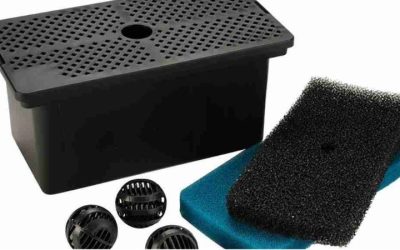
Main numbers: 150-300 GPH (568-1136 LPH) loaded with 1-2 gallons (3.8-7.6 L) of media, plus a mandatory intake sponge. Flow is easily diffused with a spray bar, which suits planted layouts where circulation matters for the plants rather than the shrimp.
It suits 20 gallon (76 L) and larger planted display tanks with mixed stocking. It does not suit small shrimp-only setups, where the media volume is redundant and the risk of a seal failure putting water on the floor is not worth accepting.
| Option | Turnover | Tank range | Recurring cost | Best for |
|---|---|---|---|---|
| Air-driven sponge | Gentle, indirect | 5-20 gallons (19-76 L) | Very low | Breeding, maximum juvenile survival |
| Matten or sponge wall | 3-5x per hour | 10-20 gallons (38-76 L) | Very low | Established colonies, low maintenance |
| Hang-on-back plus prefilter | 100-200 GPH loaded | 10-29 gallons (38-110 L) | Low if media is loose | Planted tanks with small fish |
| Canister plus prefilter | 150-300 GPH loaded | 20 gallons (76 L) and up | Low, loose media | Larger planted display builds |
| Any filter, bare intake | Not applicable | None | Loss of every generation | Never use without a prefilter |
Head to Head, and When Not to Buy
Two of these get compared constantly, and there is a common case where new filtration is the wrong purchase entirely. The best filter for shrimp tank use is often the one already fitted, with a five-dollar sponge added to the intake.
Sponge Filter Versus Hang-on-Back
A sponge filter wins on safety, cost, silence at the tank and juvenile survival, and it is the correct default for any tank whose purpose is breeding. It loses on mechanical clarity and on appearance, since it sits visibly in the display.
A hang-on-back wins on clarity and on keeping the tank glass unobstructed, which matters in a planted display. Fitted with a prefilter it is perfectly safe, but the current in a tank under 10 gallons (38 L) is noticeably stronger than a colony prefers.
When a New Filter Is the Wrong Fix
Disappearing juveniles is almost always an unguarded intake rather than a filtration shortfall. Fit a coarse sponge over the existing intake and wait one breeding cycle before spending anything further, since that single change resolves most cases outright.
Deaths after water changes are a TDS or temperature problem, not a filter problem. Measure TDS in the tank and in the replacement water, keep the difference under 20 ppm, and match temperature within 1-2 °F (about 1 °C) before blaming equipment.
The Cheaper Route That Works
A coarse sponge pushed onto any existing intake is the highest-value purchase in this entire category. It protects juveniles, adds biological surface, keeps debris out of an impeller, and costs a fraction of any filter listed above.
Adding one air-driven sponge filter alongside an existing unit is the other budget move. It raises biological capacity, provides redundancy during a service, and gives you seeded media ready for a second tank when the colony outgrows the first one.
Running It and the 12-Month Cost
The best filter for shrimp tank use runs continuously in a small volume, so its failure mode matters more than its specification sheet does. This section covers what breaks first, what you keep buying afterwards, and the safety points that apply across every option above.
Failure Points by Class
Air-driven units fail gradually and predictably: the air stone clogs so bubbles grow larger, and the pump diaphragm stiffens over one to two years until output falls. Both are cheap to replace, and neither failure is sudden enough to kill a colony overnight.
Hang-on-back units lose prime after a power cut and their intake sponges clog within two to four weeks. Canister seals are the serious failure here, since a gasket that gives way puts water on the floor rather than into a tank you can top up.
Consumables and Recurring Spend
Sponge-based systems are the cheapest to own by a wide margin. A sponge lasts years with rinsing, and the only regular purchases are air stones and a diaphragm kit. Cartridge-based filters cost more annually and discard bacteria every time they are changed.
Rinse mechanical media in old tank water rather than under the tap, because chlorine and chloramine kill the nitrifying colony on contact. In a shrimp tank that matters more than usual, since any resulting ammonia is toxic well below the threshold quoted for fish.
Safety, Electrical Points and Timing
Every powered device beside water should carry a recognised certification such as UL or ETL, sit on a GFCI outlet, and have a drip loop formed in the cable. Air pumps should sit above the water line or use a check valve to prevent back-siphoning.
On timing, filters and small tanks discount most deeply in late June and again in late November, which suits a planned build. A sale changes nothing biological, since the tank still needs three to eight weeks of cycling plus biofilm time, and prices move constantly.
Best Filter for Shrimp Tank Questions
These arrive after the tank is planned but before the order is placed. Every answer about the best filter for shrimp tank use stays with intake safety, turnover and biological surface, since those three decide outcomes far more than the class printed on the box.
Is a sponge filter enough on its own?
For a shrimp-only tank up to 20 gallons (76 L), yes. It provides ample biological capacity and gentle circulation, and juveniles graze the sponge surface directly. Add a second one rather than upgrading class if biological capacity becomes the limit.
Do I need to remove the filter when feeding?
No. Feed a quantity cleared within two hours and remove anything remaining after that. A filter that pulls food away within seconds is running well above the 3-5x turnover a shrimp-only tank needs, which is worth correcting on its own merits.
Can I use activated carbon?
Only when there is a specific reason, such as clearing medication residue from a tank the shrimp were not in. Carbon exhausts within three to four weeks, occupies space biological media would use better, and removes nothing a shrimp tank routinely accumulates.
How often should the sponge be cleaned?
Squeeze it in old tank water monthly, or sooner if flow drops visibly. Never rinse it under the tap, and never replace the whole sponge at once, since a sponge holds both the established bacterial colony and the biofilm that juveniles graze on daily.
See More:
Conclusion
The best filter for shrimp tank use is an air-driven sponge filter for any tank where breeding matters, sized generously and paired with a second unit rather than upgraded. It costs the least to run, cannot harm juveniles, and doubles as grazing surface.
For a planted display holding small fish as well, a hang-on-back or canister with a coarse sponge prefilter is the better fit, kept at 5-8 times turnover with the outflow diffused. In either case the prefilter is the part that actually decides whether the colony grows.
Ready to decide? Our #1 pick for 2026 is the Air-driven sponge.
Live price & availability on Amazon.
Related Reviews & Guides

Best Submersible Pond Pump For Koi Ponds: Trusted Smart
Best 3 Tier Fish Tank Stand: Compared Best Picks for 2026