Last Updated: October 4, 2026
The rotating Bio-Wheel is what sets these filters apart, adding a dedicated aerobic biological stage as the wheel turns through air and water. The best bio wheel filter for freshwater tank use is sized to your volume across the Marineland Penguin Pro range, with the Bio-Wheel understood as biological filtration, not a chemical or nitrate remover.
As an Amazon Associate we earn from qualifying purchases.
By David Nguyen
Quick answer: For most people in 2026, the best bio wheel filter for freshwater tank is the Penguin Pro 125 — our #1 rated choice. See the full ranked comparison, alternatives and buying advice below.
How to Choose a Bio-Wheel Filter
Match the model to your tank size, then understand what the Bio-Wheel actually contributes. Flow figures scale with size but do not equal biological capacity. These four checks keep you from overreading GPH or mishandling the wheel during maintenance.
Match Model to Tank Size
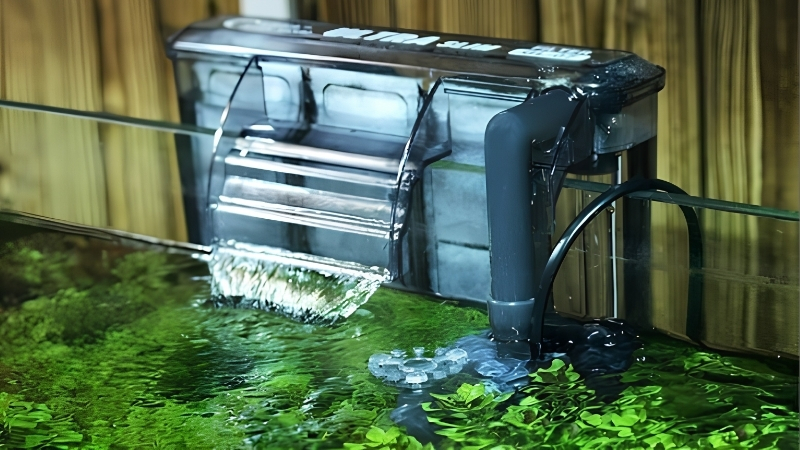
Pick the Penguin Pro sized to your tank. The Pro 125 suits tanks up to 20 gallons, the Pro 175 up to 30 gallons, the Pro 275 up to 50 gallons and the Pro 375 up to 75 gallons, so the range covers common freshwater sizes.
Choosing the model rated for your volume gives appropriate turnover and biological capacity. A filter rated well above your tank can create too much current, while one below it under-filters, so match the Pro model to your actual gallons first.
Understand the Bio-Wheel’s Role
Know what the wheel does. The Bio-Wheel rotates through the air and water in a wet-dry cycle, exposing beneficial bacteria to oxygen for efficient aerobic biological filtration that processes ammonia and nitrite.
It is a biological stage, not a chemical one, so it does not remove nitrate or perform chemical detoxification. Rely on water changes for nitrate, and treat the Bio-Wheel as the filter’s biological engine rather than a solution for every water-quality parameter.
Read Flow Without Overreading It
Interpret GPH carefully. The Pro 125 lists 125 GPH, the Pro 175 175 GPH, the Pro 275 275 GPH and the Pro 375 375 GPH, so flow scales with model size, but flow is not the same as biological capacity.
Do not treat the Pro 375’s 375 GPH as three times the biological filtration of the Pro 125. Higher flow moves more water and suits larger tanks, but the biological benefit comes from the Bio-Wheel and media, so judge by tank rating rather than flow ratios.
Plan Cartridge and Wheel Maintenance
Maintain the two parts differently. The Pro 275 and Pro 375 use Rite-Size C cartridges that need periodic replacement, while the Bio-Wheel itself should not be replaced monthly, since it hosts your biological colony.
Replace or rinse cartridges on schedule for mechanical and chemical filtration, but keep the Bio-Wheel in place and moist to preserve its bacteria. Discarding the wheel routinely would crash biological filtration, so treat it as long-term and the cartridges as consumable.
Top Picks by Tank Size
There is no single universal Best Overall here, since the right Penguin Pro depends on your tank volume. Each model suits a size band. Prices are display figures checked in September 2026 and move with retailer stock.
| Product | Best For | Key Spec | Watch Out For |
|---|---|---|---|
| Penguin Pro 125 | Up to 20gal | 125GPH; Bio-Wheel | Match tank size |
| Penguin Pro 175 | Up to 30gal | 175GPH; Bio-Wheel | Larger tanks |
| Penguin Pro 275 | Up to 50gal | 275GPH; Rite-Size C | Cartridge cost |
| Penguin Pro 375 | Up to 75gal | 375GPH; Rite-Size C | Highest flow |
Marineland Penguin Pro 125
The Penguin Pro 125 suits tanks up to 20 gallons, running at 125 GPH with a Bio-Wheel for aerobic biological filtration, for around $35 as of September 2026. It is the entry point in the range for small freshwater setups.
Its flow and capacity match a modest tank, so avoid oversizing to a much larger aquarium. The Bio-Wheel provides the biological stage, but rely on water changes for nitrate, since the wheel handles ammonia and nitrite biologically rather than removing nitrate.
Marineland Penguin Pro 175
The Penguin Pro 175 covers tanks up to 30 gallons at 175 GPH with a Bio-Wheel, for around $45 as of September 2026, about 27.3 percent above the Pro 125. It steps up flow and capacity for a mid-small freshwater tank.
Its higher flow suits the larger volume, but that extra GPH is not proportionally more biological filtration, just more turnover. Match it to a tank in its range, and keep the Bio-Wheel in place during maintenance to protect the biological colony.
Marineland Penguin Pro 275
The Penguin Pro 275 fits tanks up to 50 gallons at 275 GPH, using Rite-Size C cartridges alongside its Bio-Wheel, for around $50 as of September 2026, about 18.8 percent above the Pro 175. It suits a solid mid-size freshwater setup.
Factor the recurring Rite-Size C cartridge cost into ownership. Replace those cartridges on schedule for mechanical and chemical filtration, but leave the Bio-Wheel in place, since it carries the biological bacteria that a routine cartridge change should never remove.
Marineland Penguin Pro 375
The Penguin Pro 375 is the largest here, rated up to 75 gallons at 375 GPH with Rite-Size C cartridges and a Bio-Wheel, for around $65 as of September 2026, about 26.5 percent above the Pro 275. It handles the biggest tanks in the range.
Its 375 GPH is the highest flow, but do not read that as three times the biological filtration of the smallest model. Match it to a large tank, budget for its cartridges, and preserve the Bio-Wheel to keep its aerobic biological filtration intact.
Frequently Asked Questions
Keepers ask what the Bio-Wheel does and how to size and maintain these filters. The answers below keep flow and biological capacity distinct and protect the wheel from over-replacement.
What Does the Bio-Wheel Actually Do?
It provides aerobic biological filtration. As the wheel rotates through air and water, beneficial bacteria on it get ample oxygen to process ammonia and nitrite efficiently in a wet-dry cycle.
It does not remove nitrate or perform chemical filtration, so use water changes for nitrate control. The Bio-Wheel is the filter’s biological stage, handling the nitrogen cycle’s early steps, not a chemical medium that removes every pollutant.
Is 375 GPH Three Times the Filtration of 125 GPH?
No. The Pro 375’s 375 GPH moves three times the water of the Pro 125’s 125 GPH, but that is flow, not biological capacity, so it does not equal three times the biological filtration.
Higher flow suits larger tanks and provides more turnover, while biological filtration depends on the Bio-Wheel and media. Size by tank rating rather than assuming the GPH ratio translates directly into a filtration-performance multiple.
Should I Replace the Bio-Wheel Monthly?
No. The Bio-Wheel hosts your beneficial bacteria and should stay in place long term, not be replaced monthly. Discarding it routinely would remove the biological colony and disrupt the nitrogen cycle.
Keep the wheel moist and functioning, and replace or rinse the cartridges instead for mechanical and chemical filtration. Treat the Bio-Wheel as a lasting biological component and the Rite-Size C cartridges as the consumable part of the system.
Which Model for a 40-Gallon Tank?
The Penguin Pro 275, rated up to 50 gallons, comfortably covers a 40-gallon tank. It provides appropriate flow and biological capacity for that volume without being oversized the way the 75-gallon Pro 375 would be.
Choosing the model whose rating sits just above your tank gives good turnover without excessive current. For 40 gallons, the Pro 275 is the natural fit, with the Pro 375 reserved for tanks closer to its 75-gallon ceiling.
Final Thoughts
The best bio wheel filter for freshwater tank use is the Penguin Pro model sized to your volume, with the Bio-Wheel understood as aerobic biological filtration rather than a chemical or nitrate remover. The Pro 125 suits up to 20 gallons, the 175 up to 30, the 275 up to 50 and the 375 up to 75, so match the model to your tank, read GPH as turnover not biological capacity, and keep the Bio-Wheel in place through maintenance.
As an Amazon Associate we earn from qualifying purchases at no extra cost to you. Prices and availability are accurate as of the date shown and are subject to change.
Ready to decide? Our #1 pick for 2026 is the Penguin Pro 125.
Live price & availability on Amazon.
Related Reviews & Guides



4 Best Aquarium Power Strips with GFCI Protection
Best Aquarium Chiller for Beginners: Trusted Expert Picks