Last Updated: October 4, 2026
Choosing the best inline heater for sump systems means getting three details right before performance even matters: hose diameter, wattage suited to your temperature gap, and what the unit does when flow stops. These heat water outside the tank and are not submersible.
As an Amazon Associate we earn from qualifying purchases.
As an Amazon Associate we earn from qualifying purchases at no extra cost to you. Prices and availability are accurate as of the date shown and are subject to change.
By David Nguyen
Quick answer: For most people in 2026, the best inline heater for sump systems is the Chihiros Heater Pro US — our #1 rated choice. See the full ranked comparison, alternatives and buying advice below.
How to Choose an Inline Heater for a Sump
An external heater sits in the plumbing rather than the water, which changes the buying criteria completely. Work through hose compatibility, wattage against your real temperature gap, no-flow protection, and how precisely the thermostat holds a setpoint. Get those four right and the heater becomes invisible; get them wrong and it becomes a leak or a safety problem.
Match Hose Diameter First
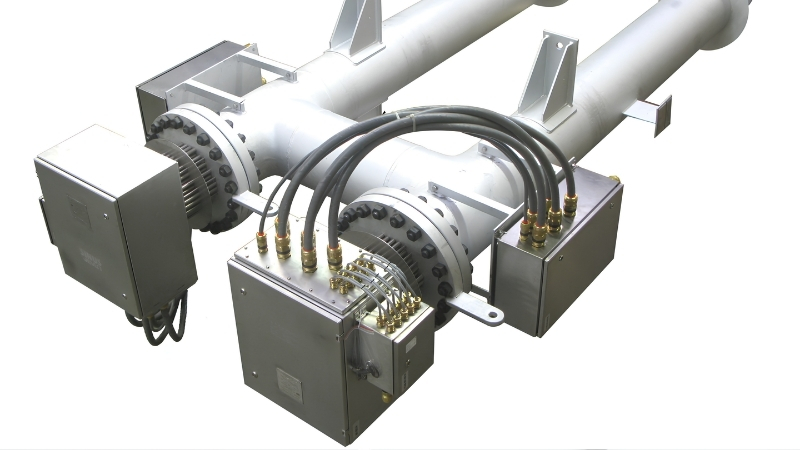
Nothing else matters if the fittings do not fit. Chihiros lists the Heater Pro US for 12/16mm or 16/22mm tubing, Aquael’s Flow Heater 2.0 uses 16/22mm or 19/25mm, and both figures describe inner and outer hose diameter in millimetres. Confirm whether the kit ships with barbed adapters or expects you to supply them.
Measure your existing return or closed-loop tubing before ordering, and budget for adapters if your plumbing uses imperial sizing. Mismatched connections are the most common source of leaks on external heaters, and every extra joint adds another potential failure point. Keep spare clamps on hand, since the originals often need retightening after the first heat cycle.
Size Wattage to Your Temperature Gap
Wattage requirements depend on how far the room sits below your target, not on tank volume alone. The Aquael Flow Heater 2.0 is a fixed 300W unit rated for 100 to 600 litres across a 20 to 33C range, and the ISTA I-H615 is also 300W with two temperature sensors.
The Chihiros works differently, offering a 10 to 800W variable control range rather than a fixed rating, with sizing up to 450 litres and a 10 to 35C range. That control range describes what the unit can modulate to, not a constant 800W draw at the wall. Compare fixed-wattage models against each other, and read variable units on their own terms rather than by peak figures.
Insist on No-Flow Protection
An external heater with water sitting still inside it is a genuine hazard, which is why flow protection matters more here than on a submersible. Aquael specifies automatic shutoff when flow stops, and that feature should be at the top of your checklist.
Pumps fail, impellers jam and power cuts interrupt flow at inconvenient times. Wire the heater and pump so the heater cannot run without circulation, use a controller with a cutoff, and confirm the manufacturer explicitly documents the behaviour rather than assuming it exists. Running costs follow actual watts times hours, so a heater working against a cold room costs noticeably more through winter than the label suggests.
Check Control Accuracy and Sensors
Thermostat quality decides how tightly the system holds. Aquael publishes an accuracy figure of plus or minus 0.5C, while ISTA uses two temperature sensors on its 300W unit, which helps detect a discrepancy between the heater body and the water passing through it.
Verify readings against a calibrated thermometer placed in the display rather than near the heater outlet, since water leaving the unit reads warmer than the tank average. A wide differential setting also lets temperature drift further than the display suggests. Electric heaters are among the most frequently recalled aquarium devices, so check current recall listings by model and year with the CPSC before installing any unit.
Top Picks
These three heaters cover the current market from budget to premium, plus a note on loop layout. Each entry lists manufacturer specifications, a relative price position as of 09/2026, and one genuine drawback worth weighing.
| Product | Best For | Key Spec | Watch Out For |
|---|---|---|---|
| Chihiros Heater Pro US | Best control flexibility | 100-120V; 10-800W range; 12/16 or 16/22mm | Variable range is not a constant draw |
| Aquael Flow Heater 2.0 | Best no-flow safety | 300W; 100-600 L; plus/minus 0.5C; auto shutoff | Stock can run to backorder |
| ISTA I-H615 | Best value | 300W; two temp sensors; fresh and saltwater | Retailer-level documentation only |
| Closed-loop layout | Best install practice | Heater downstream of the pump, before return | Every joint adds leak risk |
Chihiros Heater Pro US: Best Control Flexibility
The Heater Pro US runs on 100 to 120V with a 10 to 800W control range, manufacturer sizing up to 450 litres and a 10 to 35C range, fitting 12/16mm or 16/22mm tubing. At roughly $125 as of 09/2026 it is the premium option, about 14.8% above the Aquael.
That 10 to 800W figure is a variable control range, not a constant consumption number, so it cannot be compared directly against a fixed 300W model. Chihiros also does not publish a standardized minimum flow requirement, which matters for an external unit. Chihiros supports its current generation well, but confirm the model revision on the listing, since these lines refresh frequently.
Aquael Flow Heater 2.0: Best No-Flow Safety
Aquael’s unit is a fixed 300W external heater rated for 100 to 600 litres with a 20 to 33C thermostat range, quoted accuracy of plus or minus 0.5C, automatic shutoff when flow stops, and 16/22mm or 19/25mm hose fittings. It runs near under $150 as of 09/2026. That accuracy figure is rare enough in this category to be a genuine differentiator.
Its published capacity band assumes a particular temperature gap, so a cold room narrows the practical upper limit well below 600 litres. Availability has also been inconsistent, with listings showing backorder status, so confirm stock before planning an install. Replacement seals and fittings are worth sourcing at purchase, because an external heater out of service leaves the system unheated.
ISTA I-H615: Best Value
At roughly $65 as of 09/2026 the I-H615 is by far the cheapest here, around 42.2% below the Aquael and 49.6% below the Chihiros. It offers 300W of heating with two temperature sensors and documented compatibility with both freshwater and saltwater systems.
Documentation comes largely from retailer listings rather than a detailed manufacturer datasheet, and no standardized minimum flow figure is published. For a budget build that is a reasonable trade, but verify the no-flow behaviour before trusting it unattended. At this price a spare unit is affordable insurance for a system that cannot sit cold for long.
Getting the Loop Layout Right
Install the heater downstream of the pump so water is pushed through it whenever the pump runs, upstream of the return to the display, and with unions on both sides for servicing. Keep the unit accessible rather than buried behind a sump.
Inline heaters add joints to a pressurised line, so leak risk rises with every fitting. Use proper clamps, check connections after the first week of running, and place the unit where a small drip lands in the sump rather than on the floor or a power strip. Plug the heater through a GFCI outlet, and keep the power strip mounted above any possible drip path.
Frequently Asked Questions
Four questions come up repeatedly: whether these can go in the sump itself, whether 300W is enough, what happens when the pump stops, and how accurate the thermostats really are in practice.
Can I put an inline heater in the sump?
No. These units are designed for external installation in the plumbing and are not rated for submersion, so putting one in the water risks both the device and your safety. An inline heater belongs in the return line, not in the water.
If you want a heater inside the sump, buy a submersible model designed for it, ideally titanium for saltwater. The two categories are not interchangeable despite both heating the same water. Mixing the two categories voids most warranties as well.
Is 300W enough for my system?
It depends on the gap between room temperature and your target, plus total system volume including the sump. Aquael rates its 300W unit for 100 to 600 litres, but that band assumes a moderate temperature difference.
A cold garage or basement narrows that range considerably. Measure how far the system drops overnight with the heater off, then size for that measured gap rather than relying on the top of a published litre band. Adding a second smaller heater as backup is often safer than one oversized unit, since a stuck-on failure heats less aggressively.
What happens if the pump stops?
On a unit with no-flow protection like the Aquael, the heater shuts off automatically. On a unit without documented protection, stagnant water inside a heating element is a real hazard.
Do not rely on assumption here. Wire heater and pump together or use a controller that cuts heating when flow stops, and test the behaviour deliberately before leaving the system running unattended.
How accurate are the thermostats?
Aquael publishes plus or minus 0.5C, which is a useful figure because most competitors state nothing. ISTA’s two-sensor approach helps catch a mismatch between the heater body and passing water.
Whatever the claim, verify against a calibrated thermometer in the display. Controller hysteresis, sensor placement and flow rate all shift the real swing, so the number on the box describes the sensor rather than the tank. Recheck calibration seasonally, because sensor drift and scale buildup both shift readings over a year of continuous running.
Final Thoughts
The best inline heater for sump systems is whichever one matches your hose size, covers your real temperature gap, and shuts off when flow stops. The ISTA I-H615 near under $70 is the value pick, Aquael leads on documented safety, and Chihiros offers the widest control range.
Ready to decide? Our #1 pick for 2026 is the Chihiros Heater Pro US.
Live price & availability on Amazon.
Related Reviews & Guides

Best Aquarium Stand For Small Spaces: Essential Perfect

Best Solar Powered Pond Pump: Well-Researched, Reliable Picks